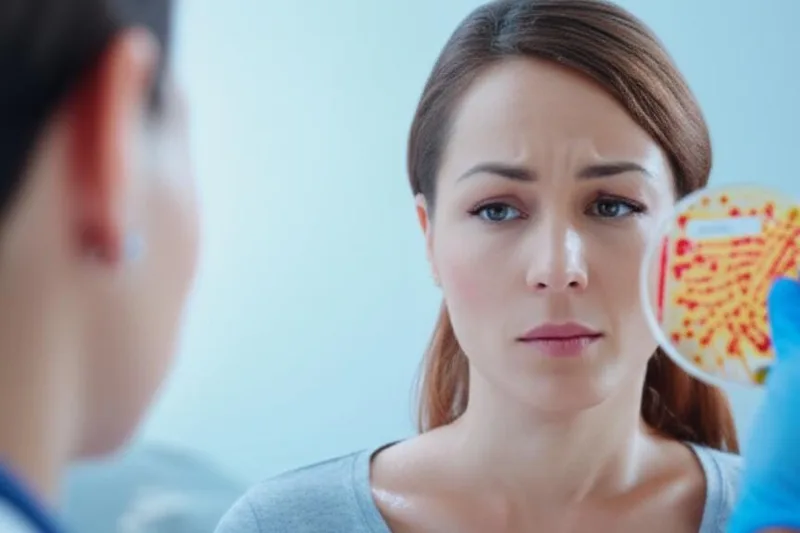
Do you have a bacterial infection? Let's learn more about this (Bacteria Culture Test)!

Do you have a bacterial infection? Let's learn more about this (Bacteria Culture Test)!

You sometimes get sick, don't you? Fever, cough, stomach ache, a wound that is festering. Some of these illnesses are caused by very small organisms that are invisible to the naked eye. We call them bacteria. These bacteria are everywhere, even inside our bodies. Many bacteria are actually good for us and help us. However, there are some types of bacteria that make us sick. So, this is a very important test that helps us find out exactly whether you have such a bacterial infection, and if so, what type of bacteria it is. Let's talk about this in more detail today, okay?

What exactly is this (Bacteria Culture Test)?

Simply put, this is a test to confirm whether you have a bacterial infection . Not only that, this test can also find out exactly what type of bacteria you have. Imagine, if we want to fight an enemy, we need to know who that enemy is and what kind of enemy he is. That's how it is with this.

This information is very important for a doctor to choose the right treatment for you. Because, there are specific `(Antibiotics)` (antibiotics) that are suitable for each type of bacteria and can destroy them. Not every `(Antibiotic)` is suitable for every bacteria. So, with this test, the doctor can decide which medicine is best for your illness.

So, at what time is this (Bacteria Culture Test) done?

This is a commonly used test. A doctor may order this test if, during an examination, they suspect you have a bacterial infection based on your symptoms. Here are a few examples:

  • If you have a cough with difficulty breathing, it could be bronchitis .
  • If you experience stomach upset, vomiting, or diarrhea after eating bad food, it could be food poisoning .
  • If you experience burning when urinating and a frequent need to urinate, it could be a kidney infection (Kidney infection) or a urinary tract infection (Urinary Tract Infection - UTI) .
  • If you have a high fever, chest pain, and difficulty breathing, it could be pneumonia .
  • Sometimes there are severe infections that spread throughout the body, like sepsis . This test is also essential in such cases.
  • If you have a sore throat along with a fever and difficulty swallowing, it could be a condition called strep throat .
  • If a wound, such as a cut or burn, becomes infected and pus is coming out, it may be a wound infection .

When you have symptoms like these, this test is very helpful in determining the exact cause.

Who recommends doing this (Bacteria Culture Test)?

There are several doctors who can order this test. Also, the sample can be taken and sent to the lab by different health workers.

  • Your family doctor (Primary care providers)
  • Pediatricians : They are the ones who often recommend this for young children.
  • Nurses
  • Specialists : For example, a urologist may recommend this test for a urinary tract problem, a gastroenterologist for a stomach problem, and a pulmonologist for a lung problem.
  • Phlebotomists : If it's a blood test, they're the ones who take the blood.

How exactly does this test work? It's very simple!

This is not very complicated. Your doctor or health care provider will take a small sample from your body. The location of the sample will depend on your symptoms and the type of infection your doctor suspects.

Then this sample is sent to a laboratory . The experts in the lab, just like we grow a plant at home, grow any microorganisms, such as bacteria, in this sample. They add special nutrients to it, creating a good environment for them to grow. After a few days, when these microorganisms grow well, they look at them under a microscope to identify what type of bacteria they are, or whether they are another type of microorganism, such as yeast.

Imagine, it's like the police looking for evidence to catch a thief. Here, the evidence is bacteria!

Are there different types of Bacteria Culture Test?

Yes, there is. The type of infection suspected will determine where the sample is taken. There are several main types:

  • Blood culture : This is done to check for a condition called sepsis , which is a widespread infection in the body. A small amount of blood is usually taken from a vein in your arm. This is usually done less often in people who have not been hospitalized. Sometimes this may need to be repeated every few days.
  • Cerebrospinal Fluid (CSF) Culture : There is a fluid that surrounds our brain and spinal cord, called cerebrospinal fluid. This involves taking a sample of this fluid and testing it. A doctor carefully inserts a needle into your spine between two vertebrae to take the sample. This procedure is also called a spinal tap or lumbar puncture .
  • Testing a stool sample (`(Stool Culture)`): This is done to check for an infection in your digestive system, that is, your intestines. The doctor will give you a special clean cup, put your stool in it, close it, and send it to the lab.
  • Throat culture : This is done to check for a throat infection, such as strep throat . A doctor or nurse will take a sample of cells from the back of your throat using a swab.
  • Sputum culture : If your doctor suspects that you have a deep lung infection, they may do a sputum culture. Sputum is a thick secretion that comes from deep in your lungs. Your doctor will ask you to cough up a small amount of sputum, which will be used as a sample.
  • Urine culture : This helps to find out if there is an infection in the urinary tract, including the kidneys. The doctor will ask you to clean your genital area thoroughly and then urinate directly into a small, clean cup. The cup is sealed and sent to the lab. For someone in the hospital, a urine sample may also be taken through a catheter ( a tube that is inserted into the urethra).
  • Wound culture (or skin culture) : This test is done if you have a wound, such as a cut or burn, that you think is infected. Your doctor may use a syringe to take a small amount of pus or fluid from the wound. Sometimes, a small piece of tissue from the wound will be taken and sent to a lab.

How should I prepare for this test?

Most of the time, this (Bacteria Culture Test) does not require any special preparation. However, be sure to ask your doctor if there are any special instructions . Sometimes, for example, when you give a urine sample, your doctor will tell you about a special way to collect it. So it's best to ask and not panic.

Are there any risks with this test?

This is the best news! For the most part, the risk of any complications from this (Bacteria Culture Test) is very low . Most tests have no known risks.

However, when taking a blood sample (`(Blood Culture)`) or spinal fluid (`(CSF Culture)`), because the skin is pierced with a needle, there is a very small chance of infection at that site, or a little blood may come out. But that is a very rare occurrence. Especially, a `(CSF Culture)` is often done on someone who is seriously ill, or who is likely to become so soon. So doctors are very careful about it. So don't be afraid .

When will I know the test results (report)?

As we've already discussed, after the sample goes to the lab, the lab staff uses special methods to grow the cells (bacteria) that may be in it. ThisIt can take anywhere from one to five days, depending on the type of bacteria.

Once the lab has enough bacterial cells, they can look at them under a microscope or do various chemical tests. One of these is an antibiotic susceptibility test (Antimicrobial Susceptibility Testing - AST) . This can help determine exactly which antibiotic will be most effective for your infection.

If there are enough bacteria in the sample, the lab will confirm that you have an infection. They will then tell your doctor what type of bacteria they found. With this `(AST)` report, your doctor can decide whether to change the `(Antibiotic)` you started on or continue with the same one. Because some `(Antibiotics)` are more effective against some bacteria .

So, a few final things to remember

Okay, we've talked a lot about this (Bacteria Culture Test) now, haven't we? In short, this is it:

  • A test that helps you know for sure if you have a bacterial infection .
  • This can be done with a variety of samples, such as blood, stool, urine, skin, mucus, or spinal fluid.
  • This test can help your doctor determine the exact cause of your infection and determine the most effective treatment .

So, if a doctor asks you to do a test like this, don't worry about it. It's for your own good. If you have any questions, don't be afraid to ask your doctor. I wish you a speedy recovery!


` Bacteria Culture Test, Infection, Bacteria, Antibiotics, Laboratory Tests, Diseases, Health

⚠️ Important: The medical articles and information on Nirogi Lanka are for general awareness only, and are by no means a substitute for professional medical advice, diagnosis, or treatment. For any medical problem you have, consult a qualified physician immediately.

💬 Comments (0)

No comments have been posted yet. Add your comment here for the first time.

Add your comment

Please calculate: 7 + 9 =
Do you have a bacterial infection? Let's learn more about this (Bacteria Culture Test)!

Do you have a bacterial infection? Let's learn more about this (Bacteria Culture Test)!

You sometimes get sick, don't you? Fever, cough, stomach ache, a wound that is festering. Some of these illnesses are caused by very small organisms that are invisible to the naked eye. We call them bacteria. These bacteria are everywhere, even inside our bodies. Many bacteria are actually good for us and help us. However, there are some types of bacteria that make us sick. So, this is a very important test that helps us find out exactly whether you have such a bacterial infection, and if so, what type of bacteria it is. Let's talk about this in more detail today, okay?

What exactly is this (Bacteria Culture Test)?

Simply put, this is a test to confirm whether you have a bacterial infection . Not only that, this test can also find out exactly what type of bacteria you have. Imagine, if we want to fight an enemy, we need to know who that enemy is and what kind of enemy he is. That's how it is with this.

This information is very important for a doctor to choose the right treatment for you. Because, there are specific `(Antibiotics)` (antibiotics) that are suitable for each type of bacteria and can destroy them. Not every `(Antibiotic)` is suitable for every bacteria. So, with this test, the doctor can decide which medicine is best for your illness.

So, at what time is this (Bacteria Culture Test) done?

This is a commonly used test. A doctor may order this test if, during an examination, they suspect you have a bacterial infection based on your symptoms. Here are a few examples:

  • If you have a cough with difficulty breathing, it could be bronchitis .
  • If you experience stomach upset, vomiting, or diarrhea after eating bad food, it could be food poisoning .
  • If you experience burning when urinating and a frequent need to urinate, it could be a kidney infection (Kidney infection) or a urinary tract infection (Urinary Tract Infection - UTI) .
  • If you have a high fever, chest pain, and difficulty breathing, it could be pneumonia .
  • Sometimes there are severe infections that spread throughout the body, like sepsis . This test is also essential in such cases.
  • If you have a sore throat along with a fever and difficulty swallowing, it could be a condition called strep throat .
  • If a wound, such as a cut or burn, becomes infected and pus is coming out, it may be a wound infection .

When you have symptoms like these, this test is very helpful in determining the exact cause.

Who recommends doing this (Bacteria Culture Test)?

There are several doctors who can order this test. Also, the sample can be taken and sent to the lab by different health workers.

  • Your family doctor (Primary care providers)
  • Pediatricians : They are the ones who often recommend this for young children.
  • Nurses
  • Specialists : For example, a urologist may recommend this test for a urinary tract problem, a gastroenterologist for a stomach problem, and a pulmonologist for a lung problem.
  • Phlebotomists : If it's a blood test, they're the ones who take the blood.

How exactly does this test work? It's very simple!

This is not very complicated. Your doctor or health care provider will take a small sample from your body. The location of the sample will depend on your symptoms and the type of infection your doctor suspects.

Then this sample is sent to a laboratory . The experts in the lab, just like we grow a plant at home, grow any microorganisms, such as bacteria, in this sample. They add special nutrients to it, creating a good environment for them to grow. After a few days, when these microorganisms grow well, they look at them under a microscope to identify what type of bacteria they are, or whether they are another type of microorganism, such as yeast.

Imagine, it's like the police looking for evidence to catch a thief. Here, the evidence is bacteria!

Are there different types of Bacteria Culture Test?

Yes, there is. The type of infection suspected will determine where the sample is taken. There are several main types:

  • Blood culture : This is done to check for a condition called sepsis , which is a widespread infection in the body. A small amount of blood is usually taken from a vein in your arm. This is usually done less often in people who have not been hospitalized. Sometimes this may need to be repeated every few days.
  • Cerebrospinal Fluid (CSF) Culture : There is a fluid that surrounds our brain and spinal cord, called cerebrospinal fluid. This involves taking a sample of this fluid and testing it. A doctor carefully inserts a needle into your spine between two vertebrae to take the sample. This procedure is also called a spinal tap or lumbar puncture .
  • Testing a stool sample (`(Stool Culture)`): This is done to check for an infection in your digestive system, that is, your intestines. The doctor will give you a special clean cup, put your stool in it, close it, and send it to the lab.
  • Throat culture : This is done to check for a throat infection, such as strep throat . A doctor or nurse will take a sample of cells from the back of your throat using a swab.
  • Sputum culture : If your doctor suspects that you have a deep lung infection, they may do a sputum culture. Sputum is a thick secretion that comes from deep in your lungs. Your doctor will ask you to cough up a small amount of sputum, which will be used as a sample.
  • Urine culture : This helps to find out if there is an infection in the urinary tract, including the kidneys. The doctor will ask you to clean your genital area thoroughly and then urinate directly into a small, clean cup. The cup is sealed and sent to the lab. For someone in the hospital, a urine sample may also be taken through a catheter ( a tube that is inserted into the urethra).
  • Wound culture (or skin culture) : This test is done if you have a wound, such as a cut or burn, that you think is infected. Your doctor may use a syringe to take a small amount of pus or fluid from the wound. Sometimes, a small piece of tissue from the wound will be taken and sent to a lab.

How should I prepare for this test?

Most of the time, this (Bacteria Culture Test) does not require any special preparation. However, be sure to ask your doctor if there are any special instructions . Sometimes, for example, when you give a urine sample, your doctor will tell you about a special way to collect it. So it's best to ask and not panic.

Are there any risks with this test?

This is the best news! For the most part, the risk of any complications from this (Bacteria Culture Test) is very low . Most tests have no known risks.

However, when taking a blood sample (`(Blood Culture)`) or spinal fluid (`(CSF Culture)`), because the skin is pierced with a needle, there is a very small chance of infection at that site, or a little blood may come out. But that is a very rare occurrence. Especially, a `(CSF Culture)` is often done on someone who is seriously ill, or who is likely to become so soon. So doctors are very careful about it. So don't be afraid .

When will I know the test results (report)?

As we've already discussed, after the sample goes to the lab, the lab staff uses special methods to grow the cells (bacteria) that may be in it. ThisIt can take anywhere from one to five days, depending on the type of bacteria.

Once the lab has enough bacterial cells, they can look at them under a microscope or do various chemical tests. One of these is an antibiotic susceptibility test (Antimicrobial Susceptibility Testing - AST) . This can help determine exactly which antibiotic will be most effective for your infection.

If there are enough bacteria in the sample, the lab will confirm that you have an infection. They will then tell your doctor what type of bacteria they found. With this `(AST)` report, your doctor can decide whether to change the `(Antibiotic)` you started on or continue with the same one. Because some `(Antibiotics)` are more effective against some bacteria .

So, a few final things to remember

Okay, we've talked a lot about this (Bacteria Culture Test) now, haven't we? In short, this is it:

  • A test that helps you know for sure if you have a bacterial infection .
  • This can be done with a variety of samples, such as blood, stool, urine, skin, mucus, or spinal fluid.
  • This test can help your doctor determine the exact cause of your infection and determine the most effective treatment .

So, if a doctor asks you to do a test like this, don't worry about it. It's for your own good. If you have any questions, don't be afraid to ask your doctor. I wish you a speedy recovery!


` Bacteria Culture Test, Infection, Bacteria, Antibiotics, Laboratory Tests, Diseases, Health

⚠️ Important: The medical articles and information on Nirogi Lanka are for general awareness only, and are by no means a substitute for professional medical advice, diagnosis, or treatment. For any medical problem you have, consult a qualified physician immediately.

💬 Comments (0)

No comments have been posted yet. Add your comment here for the first time.

Add your comment

Please calculate: 7 + 9 =