Hello! Have you ever thought about how important even the smallest ducts inside our bodies are? One such important thing, but perhaps something we don't talk about much, is the bile duct. So today we will talk about this bile duct in simple terms, what it is, what happens to it, what diseases it causes, and how we can take care of it.
What is the Bile Duct? What does it do?
Simply put, the bile duct is a system of thin tubes that connect some organs in our digestive system. It is like a pipe that carries water. Its main function is to transport a substance called
'bile' between these organs. Our liver, gallbladder, and small intestine, along with these bile ducts, form
the biliary system . So, why are these bile ducts needed? Our body needs bile for various functions. The bile ducts help to safely transport this bile from one place to another. This system of tubes is essential for transporting bile to the body at any time, anywhere, without interfering with anything else, and without harming other organs. Now look, this bile is a liquid made by our liver. It contains a type of substance called
bile acids . These are what help us digest the fats and proteins in the food we eat. But these bile acids are a bit harsh and can be harmful to organs that are not used to them. Also, some
digestive enzymes from our pancreas also pass through these bile ducts. Similarly, if they don't go to the right place, problems can arise.
How is this bile duct connected to our organs?
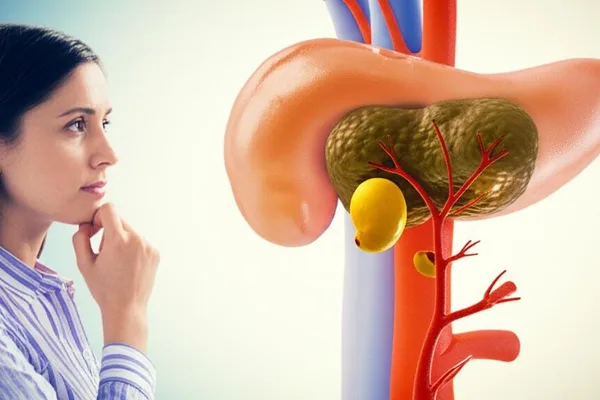
Think of it like a branching tree. It starts with our liver. The liver is located in the upper right side of our abdomen. Inside the liver are very fine, branching bile ducts. We call these
the intrahepatic bile ducts . When the liver makes bile, it collects it through these ducts. Then, these small ducts inside the liver join together to form the slightly larger right and left hepatic ducts. These two ducts come out of the liver and join together to form
the common hepatic duct . The ducts outside the liver are called
the extrahepatic ducts . Now, this common hepatic duct joins with
the cystic duct that comes from our gallbladder to
form the common bile duct.Creates. About half of the bile that comes from the liver goes directly into this common bile duct. The other half goes to the gallbladder. The gallbladder is located right under the liver. It's like a little bag that stores bile. It stores the bile that's not being used at the time. The gallbladder stores it until our small intestine needs it. When our small intestine senses that there are fats and proteins to digest, it sends a signal to the gallbladder. Then the gallbladder contracts and sends the bile along the cystic duct to the common bile duct. From there, the bile goes to the small intestine. This
common bile duct is the largest bile duct that we have. It's about 10 centimeters long. All the other bile ducts branch off from this. Our pancreatic duct also connects to the same place where this common bile duct opens into the small intestine, but as a separate duct. Got it?
What are the conditions that affect the bile ducts?
Okay, so now let's see what kinds of diseases can affect this important bile duct system.
1. Inflammation
Some infections and other inflammatory conditions can cause problems with the bile ducts. This can be short-term or long-term. In the short term, acute inflammation can block the ducts and stop the flow of bile. However, in the long term, chronic inflammation can cause
scarring of the tissue inside the bile ducts. This scar tissue causes the ducts to narrow – this is called
a stricture . Eventually, the blood supply is cut off and the bile ducts can become damaged. This inflammation of the bile ducts is called
cholangitis . Infections and blockages can cause
acute cholangitis . Also,
autoimmune diseases can cause
chronic cholangitis .
Primary Biliary Cholangitis (PBC) and
Primary Sclerosing Cholangitis (PSC) are two such chronic conditions.
2. Obstruction
The most common cause of bile duct problems is blockage . One of the most common is
gallstones . These stones are crystals that form in the gallbladder or bile ducts. They grow slowly over many years. Often, gallstones break free and travel into the common bile duct. This specific condition is called
choledocholithiasis.If these stones inside the bile ducts become large, they can block the flow of bile. Also,
bile duct stricture , which is a narrowing of the bile ducts, can block the flow of bile. Long-term inflammation can cause scar tissue to form in the bile ducts, narrowing them in this way. Some
birth disorders – for example
, biliary atresia and
Alagille Syndrome – can also cause this condition.
3. Cancer
Bile duct cancer is called
cholangiocarcinoma . It can develop in the extrahepatic ducts – which are the most common – or in the ducts inside the liver (intrahepatic ducts). This is different from liver cancer. However, if liver cancer develops, it can also damage the bile ducts inside the liver by causing inflammation or obstruction.
What happens if a bile duct becomes blocked?
Just like a clogged drain, if bile cannot flow through the bile ducts, it backs up and starts accumulating in the organs. This can cause
inflammation and
damage to those organs. For example, inflammation of the gallbladder (
cholecystitis ), inflammation of the pancreas (
gallstone pancreatitis ), and inflammation of the liver and bile ducts themselves. When bile flow stops (
cholestasis ), infections are more likely to occur. Infections in the biliary system are very painful and dangerous. If they spread to the liver, they can enter the bloodstream and cause
septicemia throughout the body, leading to a dangerous condition called
sepsis .
Important: Sepsis is a life-threatening emergency.
Also, when the bile that is backed up starts to leak into the bloodstream, it can cause a variety of diseases. You can develop
jaundice – a yellowing of the skin and eyes – nausea, itching, and sometimes
mild cognitive impairment (hepatic encephalopathy) . Blocked bile ducts can’t properly empty bile into the small intestine. This can cause digestive problems. Your digestive system has trouble digesting fats and absorbing fat-soluble vitamins. This
malabsorption can also lead to
malnutrition .
How do you know if you have a bile duct problem?
Chronic conditions often develop slowly over many years. So you may not have any symptoms until your bile ducts are significantly damaged. However, if you have
an acute condition , such as a blockage or infection, you will often experience symptoms called
biliary colic .
What is biliary colic?- This is abdominal pain.
- It often comes with nausea , and sometimes vomiting .
- This usually occurs after eating a fatty meal .
- The pain starts slowly, gradually increases in intensity over the course of an hour, and then subsides again within another hour or two.
This type of biliary colic occurs when your biliary system tries to send bile into your small intestine to help digest food. The gallbladder then contracts, which increases pressure inside the bile ducts. If your bile ducts are infected or blocked, that pressure is what causes the pain.
Remember: If you have symptoms of biliary colic, even if it is not very severe, go to the hospital immediately . Medical tests can quickly determine what the problem is. If you do not have severe pain, but have other symptoms related to the biliary system, such as jaundice , it may be a sign of a chronic disease.
How to cure a blocked bile duct?
There are several methods that doctors use to find and remove blockages in the bile ducts. The method recommended for you will depend on your condition, whether it is chronic or acute, and how urgent it is.
- Endoscopic Retrograde Cholangiopancreatography (ERCP): This is a non-surgical procedure. A long tube with a camera attached (endoscope) is inserted through the mouth and passed down the GI tract. The doctor can do the necessary things through this endoscope.
- Bile duct exploration: This is a surgical procedure. It can often be done using minimally invasive methods . That is , laparoscopic surgery , which involves making one or more small incisions in the abdomen. It is sometimes done during surgery to remove the gallbladder for gallstones.
The doctor can either cut the bile duct to remove the blockage or insert a
stent to keep it open. Sometimes both are done. If the bile ducts are very wide (dilated) due to scarring and stenosis, they may also remove parts of the ducts.
How do I take care of my bile ducts?
The biggest risk to your bile ducts is
gallstones . The main cause of gallstones is high
cholesterol in the blood. The extra cholesterol in the blood can eventually build up in the bile ducts, causing them to harden and form cholesterol stones. You can reduce this risk
by reducing cholesterol in your diet . The second biggest risk is
liver disease . If you have chronic liver disease, you can reduce the damage to your liver and biliary system by adopting a healthy lifestyle.
- Do exercise .
- Reduce dietary fats from your diet.
- Avoid alcohol and drugs.
These will help a lot.
The bile ducts are very small, but they do a great job for our bodies. Every day, several of our organs and body processes depend on these bile ducts. If bile can't get where it needs to go, it can eventually leak into the bloodstream and affect the entire body.
Bile duct disorders can affect other organs in the biliary system. In turn, problems in those organs can affect the bile ducts. Therefore,
if you have symptoms related to the biliary system, such as biliary colic or jaundice, seek medical advice immediately . This can help protect your delicate biliary system, including the bile ducts.
So, what are the most important things to remember from what we've talked about today?
- The bile duct is a small but very important system of tubes that carries bile between our liver , gallbladder, and small intestine.
- Gallstones and inflammation are the main problems that affect the bile ducts.
- Be careful if you experience symptoms such as stomach pain (biliary colic) and jaundice after eating fatty foods.
- Maintaining a healthy diet and lifestyle is very important for the health of the bile ducts.
- If you have any symptoms, seeing a doctor immediately and seeking advice can help you avoid major problems.





💬 Comments (0)
No comments have been posted yet. Add your comment here for the first time.
Add your comment