

Asthma is a chronic disease of the airways in the lungs that affects millions of people worldwide. Although breathing difficulties occur during exacerbations, with proper medical advice and medication, it can be successfully controlled and a normal life can be led.
Kavinda, a 26-year-old bank clerk, who had been experiencing a severe cough at night and in the early morning for several weeks, along with a feeling of heaviness in the chest and a "wheezing" sound when breathing, suddenly found it difficult to breathe due to dust while sweeping the room and came to see Dr. Priya. Through their discussion, let's learn scientifically how asthma occurs, identifying triggers, and treating it.
Doctor-patient dialogue: "Why does asthma occur, doctor?"
Kavinda (uncomfortably): "Dr. Priya, for the past few weeks I have been having a severe cough at night and in the morning, along with a feeling of heaviness in my chest. I hear a 'wheezing' sound when I breathe. Yesterday, while sweeping the room, I got dust and suddenly couldn't breathe. Do I have asthma, doctor? Can this be cured?"
Dr. Priya (kindly): "Kavinda, don't worry. The symptoms you are describing are the basic symptoms of bronchial asthma."
Asthma is a chronic disease. Three main things happen in the airways:
1. Bronchospasm: Narrowing of the airways due to tightening of the muscles around the airways.
2. Inflammation: Swelling and redness of the inner walls of the airways.
3. Mucus production: Excess mucus secretion in the airways, further blocking the airways.
"These conditions block the flow of air into and out of the lungs, causing shortness of breath and wheezing. Although asthma cannot be completely cured, it can be 100% controlled with proper treatment."
🔍 Asthma Types & Triggers
Asthma can be triggered by a variety of factors. Some of the main types are:
- Allergic Asthma: Allergic asthma occurs when things like dust mites, pollen, pet dander, or mold enter the body.
- Non-allergic asthma: Asthma that is triggered by excessive exercise, cold wind, colds, or stress.
- Occupational Asthma: Asthma caused by substances in the workplace such as wood dust, chemical fumes, and flour.
- Asthma-COPD overlap syndrome (ACOS): A serious condition in which asthma coexists with chronic obstructive pulmonary disease (COPD) .
🚨 Red Flags that require immediate medical attention
A severe asthma attack can be life-threatening. Seek emergency medical attention immediately if you experience the following symptoms:
1. Inhaler not providing relief: Breathing difficulty not decreasing after 20 minutes of using a quick-relief rescue inhaler.
2. Difficulty speaking: Being unable to speak a complete sentence at a time due to stuttering and having to speak word by word.
3. Lips and nails turning blue: Lips and nails turning blue or gray due to lack of oxygen to the body.
4. Chest indrawing: The ribs and center of the chest are drawn inward due to intense breathing.
5. Fainting or severe restlessness: Fainting, fear, or confusion due to lack of oxygen to the brain.
🛠️ Action Steps to Control Asthma
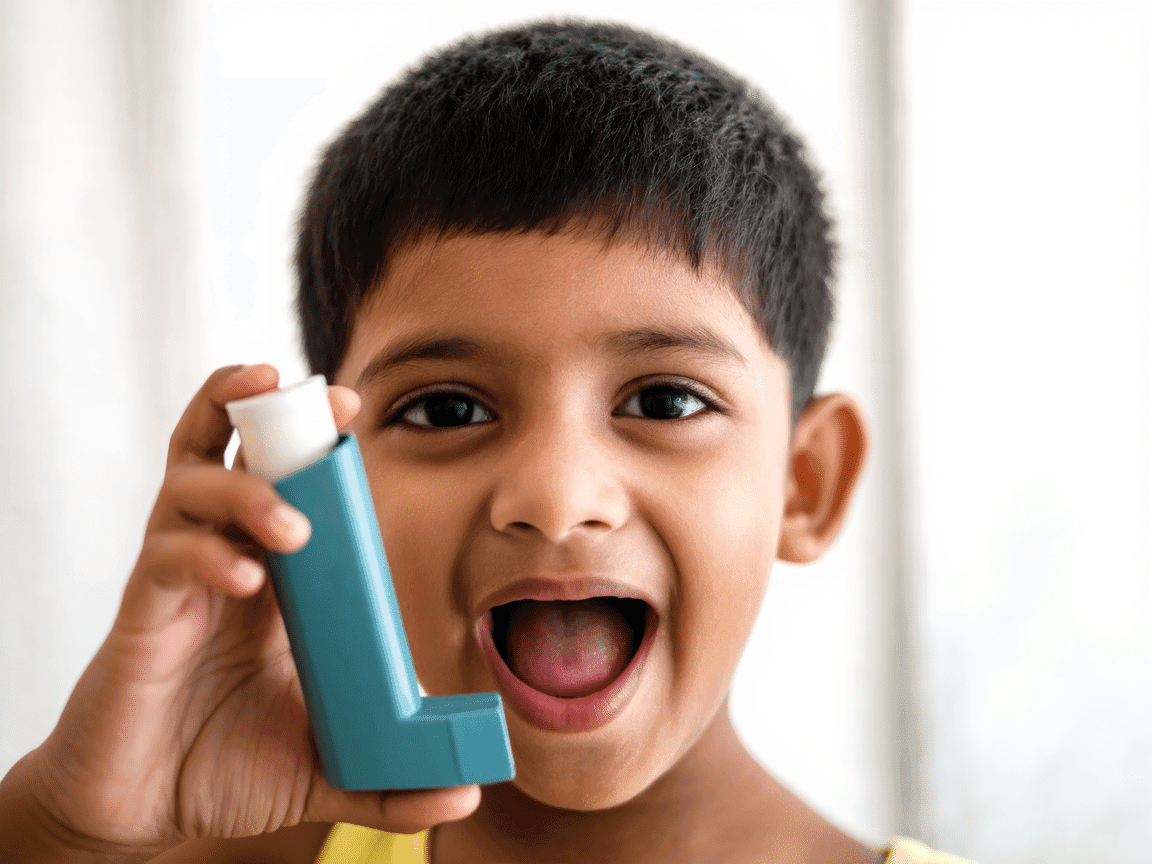
- First step (in case of emergency): Immediately after an asthma attack, sit up straight (do not lie down). Inhale 2-4 puffs of a blue rescue inhaler (e.g. Salbutamol). If there is no relief, go to the nearest hospital immediately.
- Step Two: See a pulmonologist and have a spirometry test performed to measure lung function.
- Step Three: Have your doctor create a written Asthma Action Plan that details how to adjust your medication dosage based on your symptoms.
- Step four: Use the inhaler correctly.
- Preventer/Controller Inhaler: Should be used daily, morning and evening, even if you do not have asthma (to prevent airway inflammation).
- Reliever/Rescue Inhaler: Used for relief only when shortness of breath occurs.
- Step Five: Wash bedding once a week in hot water at 60 degrees Celsius to prevent house dust mites. Avoid smoking completely.
📊 Do's & Don'ts
| Do's | Don'ts |
|---|---|
| Use the preventer inhaler prescribed by your doctor every day, even if you do not have asthma symptoms. | Do not stop using your inhaler just because you think your asthma is cured. |
| Always keep your blue reliever inhaler with you. | Avoid sleeping horizontally in bed immediately after experiencing difficulty breathing (it makes breathing even more difficult). |
| Use a spacer device as directed by your doctor to help the inhaler medication go directly into your lungs. | Avoid exposure to tobacco smoke, vehicle exhaust, or strong perfumes. |
| Get the influenza vaccine as recommended by your doctor every year to prevent viral flu and colds. | Do not try to control your asthma by using only tablets instead of your inhaler. |
❓ Frequently Asked Questions (FAQ)
[DECORATOR:faq_container]
#### Does the body become addicted to using inhalers?
No. Inhalers deliver a very small dose of medication. Since it goes directly to the lungs, side effects are minimal and the body is not addicted. Using an inhaler is much safer than using pills.
#### Why use a Peak Flow Meter?
This is a small device that can be used at home to measure the speed at which air can be exhaled from the lungs. This can help the patient and the doctor to determine the level of asthma control and whether asthma may worsen in the future.
#### What are the causes of asthma exacerbation at night?
Asthma can naturally narrow at night due to changes in hormone levels in the body. Sleeping on your back, breathing in dust mites in the bedroom, and exposure to cool air can all exacerbate asthma at night.
#### Can asthma patients do sports and exercise?
Yes. Patients whose asthma is well controlled can exercise and play sports as usual. Exercise-induced bronchospasm can be prevented by using a reliever inhaler before exercise as directed by a doctor.
[/DECORATOR:faq_container]
📖 Sources and Scientific References
- NHS (UK) Guidance on Asthma Diagnosis and Management: NHS Asthma Overview (Accessed 2026)
- PubMed Central (PMC) Clinical Review: Correct Inhalation Technique is Critical in Achieving Good Asthma Control (PMC6442870)
! Asthma


💬 Comments (0)
No comments have been posted yet. Add your comment here for the first time.
Add your comment