
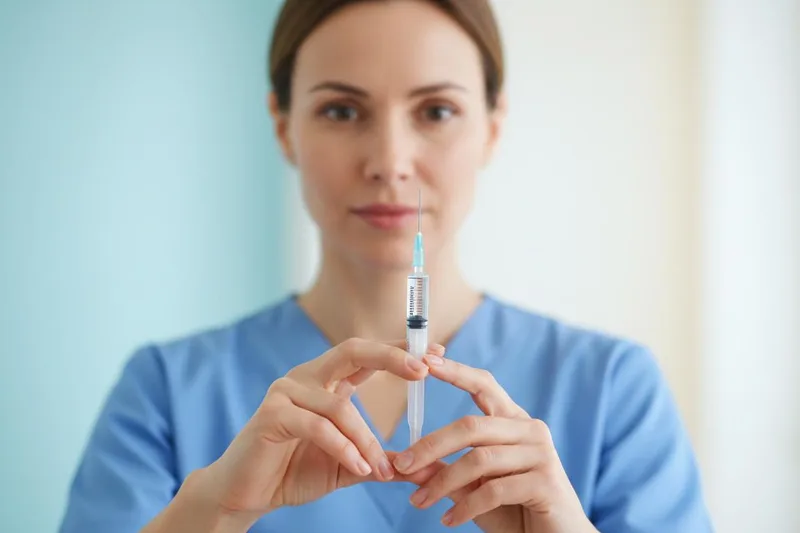
What you need to know about Atropine injection

What you need to know about Atropine injection

Sometimes we don't know exactly what medicines doctors use in emergencies, do we? Atropine is a very important medicine that is used in such life-saving and other special situations. It is usually given as an injection. It has several benefits. So, let's talk about this in a little more detail and simply today.

Why is Atropine so important?

Simply put, atropine is a drug that can help with a number of different medical conditions. Let's take a look at what it's mainly used for.

  • Before surgery: Imagine that when you are having an operation, you need to reduce the amount of saliva in your mouth and secretions in your respiratory tract. Because if these secretions go into your lungs while you are under anesthesia, it can cause severe infections (aspiration pneumonia). This atropine injection is used to reduce that risk.
  • When poison is ingested: This is one of the most important uses of this medicine. One of the most common uses in our country is when insecticides are ingested. This is given as a treatment for such severe poisonings. It is also used in cases of eating certain poisonous mushrooms. This can really save lives.
  • Emergency heart conditions: If a person's heart rate suddenly drops too low (bradycardia), this medicine is also used as an emergency treatment to bring it back to normal.

In addition to these, doctors may use this medication for several other medical reasons. So if you have any questions about this, it's best to ask your doctor.

Things you need to tell your doctor before taking this medicine

It is very important to give your doctor a complete account of your health before taking any medication. Especially before using a medication like atropine, be sure to tell your doctor if you have any of the conditions listed below.

Health conditions you may have A simple explanation
Glaucoma (eye condition)A condition that increases pressure in the eye. Atropine can make this condition worse.
Heart disease or previous heart attack Since this medication affects the heart rate, the way it affects heart patients may vary.
Kidney disease Medicines are eliminated from the body through the kidneys. Problems can occur if the kidneys are not functioning properly.
Prostate trouble Especially if men have difficulty urinating, this medicine may increase it.
Food pipe obstruction If your bowel function is impaired, this medicine may worsen the condition.
Allergies to atropine or other substances Be sure to tell us if you have any allergies to atropine, other medications, foods, or dyes.
If you are pregnant or expecting a baby The doctor should be aware of the use of medication during pregnancy.
If a mother is breastfeeding her child Since the medicine can pass to the baby through breast milk, tell the doctor about this as well.

How to use the medicine and what you need to know

This medicine is given as an injection into a muscle, vein, or under the skin . This is usually done in a hospital or clinic by a doctor or trained nurse.

If you are given this medicine for use at home on a very rare, special occasion, you will be given proper training on how to use it. You should follow those instructions exactly.

The most important thing!

Never throw used needles and syringes in the trash. They should be disposed of in a special sharps container. If you don't have one, ask your doctor about how to get one.

What if I take too much medicine?

This is usually given in a hospital setting, so the chances of this happening are low. However, if you think you have taken too much of this medicine, immediately contact the National Poisons Information Centre at the Colombo National Hospital, or go to the Emergency Department (ETU) of the nearest hospital. Treat this as an emergency.

Other medications that may interact with atropine

Other medications you are taking may interact with atropine. This means that the effects of one may affect the effects of another. For example:

  • Some medications for mental illness and mental disorders
  • Medications for Parkinson's disease
  • Some medicines for colds and allergies
  • Stimulant medications for attention disorders
  • There are several other types of medicines.

So it's best to tell your doctor about every medication, herb, vitamin, or supplement you're taking. If you smoke or drink alcohol, tell them about it too, because it can interact with the medication.

Things to consider when taking medication

  • Drowsiness and dizziness: You may feel drowsy and dizzy. Therefore , avoid driving, operating machinery, or doing anything that requires concentration until you know exactly how this medicine affects you.
  • Be careful when changing positions: When you get up from sitting or from bed, don't get up suddenly. Get up slowly. Be especially careful if you are elderly. Otherwise, you may get dizzy and fall.
  • Dry mouth: Dry mouth is common. You can control this by chewing sugar-free gum, sucking on sugar-free candy, and drinking plenty of water.
  • Dry eyes and blurred vision: Dry eyes may cause some blurring of vision. If you wear contact lenses, you may experience some discomfort. Lubricating eye drops may be used. If the problem persists or is severe, tell your doctor.
  • Beware of excessive heat:This is very important. This medicine reduces the amount of sweat produced by the body. Therefore, your body's ability to cool itself is reduced. Therefore, avoid staying in places with high temperatures. Otherwise, your body temperature may increase dangerously and a condition called heat stroke may occur.

What side effects might I experience?

Like any medicine, atropine can cause side effects. Some are serious, some are common.

Possible Side Effects
Side effects that you should report to your doctor immediately
  • Allergies (skin rash, itching, swelling of the face/lips/tongue)
  • Extreme restlessness, agitation
  • Vision changes
  • Confusion
  • Heart rate that is too fast or too slow
  • Fainting, dizziness
  • Seeing or hearing things that are not really there (Hallucinations)
  • Memory loss
  • Story twist
  • Difficulty urinating or a change in the amount of urine you produce
  • Feeling unusually tired or weak
  • Vomiting
Side effects that usually do not require medical advice, but should be reported if they persist
  • Constipation
  • Dry mouth
  • Redness of the face or skin within 15-20 minutes of the injection
  • Nausea
  • Take-Home Message

    • Atropine is a very important, life-saving drug used in special medical situations such as surgery, poisoning, and cardiac emergencies.
    • Before taking this medicine, tell your doctor about all medical conditions you have, such as glaucoma, heart disease, kidney disease, and prostate problems.
    • It is also essential to inform your doctor about all other medications, herbs, and vitamins you are taking.
    • Be aware of side effects such as drowsiness and dry mouth. Be especially careful in extreme heat, as sweating may decrease.
    • If you suspect an overdose, immediately go to the National Poisons Information Center or the nearest hospital Emergency Department (ETU).
    • This medicine is for you only. Never share it with others.

    Atropine, injection, poison, aphrodisiac, heart palpitations, surgery, side effects

    👩🏽‍⚕️ Additional questions (FAQs)

    💬 Atropine injection is given for which disease?

    This is an extremely powerful life-saving drug that is injected directly into a vein (IV) in the hospital's Emergency Department (ICU) to save the patient's life at the last moment in the event of a severe 'heart attack or when the heart rate is about to stop (Severe Bradycardia / Cardiac Arrest)'! It is also used to eliminate pesticides/poisons (Organophosphate Poisoning) when ingested.

    💬 When the heart is about to stop, how can this injection (Atropine) suddenly increase the heart rate?

    The heart is slowed down by disrupting the work of the SA Node, which sends electrical signals to the heart, through the vagus nerve. The command given from there is 'Acetylcholine'. Once this vaccine enters the body, the messenger called 'Acetylcholine' completely blocks/closes all the gates (Muscarinic receptors) that lead to the heart. Since the message is not received, the SA Node works uncontrollably and the heart beats faster.

    💬 What are the dangerous side effects of this vaccine given in the event of a fatal heart attack?

    Even if you take this to save your life, the biggest problem is (Anticholinergic Toxicity) that it dries up all the water/fluid in the body! When you take this, your mouth will be 100% dry (can't even talk), your vision will become blurry/eyes will become large (Dilated pupils), and you may not be able to urinate and have urine retention (Urinary retention). Also, some people's heart may beat too fast and become abnormal.

    ⚠️ Important: The medical articles and information on Nirogi Lanka are for general awareness only, and are by no means a substitute for professional medical advice, diagnosis, or treatment. For any medical problem you have, consult a qualified physician immediately.

    💬 Comments (0)

    No comments have been posted yet. Add your comment here for the first time.

    Add your comment

    Please calculate: 9 + 6 =
    What you need to know about Atropine injection
    MedicationsApril 17, 2026

    What you need to know about Atropine injection

    Sometimes we don't know exactly what medicines doctors use in emergencies, do we? Atropine is a very important medicine that is used in such life-saving and other special situations. It is usually given as an injection. It has several benefits. So, let's talk about this in a little more detail and simply today.

    Why is Atropine so important?

    Simply put, atropine is a drug that can help with a number of different medical conditions. Let's take a look at what it's mainly used for.

    • Before surgery: Imagine that when you are having an operation, you need to reduce the amount of saliva in your mouth and secretions in your respiratory tract. Because if these secretions go into your lungs while you are under anesthesia, it can cause severe infections (aspiration pneumonia). This atropine injection is used to reduce that risk.
    • When poison is ingested: This is one of the most important uses of this medicine. One of the most common uses in our country is when insecticides are ingested. This is given as a treatment for such severe poisonings. It is also used in cases of eating certain poisonous mushrooms. This can really save lives.
    • Emergency heart conditions: If a person's heart rate suddenly drops too low (bradycardia), this medicine is also used as an emergency treatment to bring it back to normal.

    In addition to these, doctors may use this medication for several other medical reasons. So if you have any questions about this, it's best to ask your doctor.

    Things you need to tell your doctor before taking this medicine

    It is very important to give your doctor a complete account of your health before taking any medication. Especially before using a medication like atropine, be sure to tell your doctor if you have any of the conditions listed below.

    Health conditions you may have A simple explanation
    Glaucoma (eye condition)A condition that increases pressure in the eye. Atropine can make this condition worse.
    Heart disease or previous heart attack Since this medication affects the heart rate, the way it affects heart patients may vary.
    Kidney disease Medicines are eliminated from the body through the kidneys. Problems can occur if the kidneys are not functioning properly.
    Prostate trouble Especially if men have difficulty urinating, this medicine may increase it.
    Food pipe obstruction If your bowel function is impaired, this medicine may worsen the condition.
    Allergies to atropine or other substances Be sure to tell us if you have any allergies to atropine, other medications, foods, or dyes.
    If you are pregnant or expecting a baby The doctor should be aware of the use of medication during pregnancy.
    If a mother is breastfeeding her child Since the medicine can pass to the baby through breast milk, tell the doctor about this as well.

    How to use the medicine and what you need to know

    This medicine is given as an injection into a muscle, vein, or under the skin . This is usually done in a hospital or clinic by a doctor or trained nurse.

    If you are given this medicine for use at home on a very rare, special occasion, you will be given proper training on how to use it. You should follow those instructions exactly.

    The most important thing!

    Never throw used needles and syringes in the trash. They should be disposed of in a special sharps container. If you don't have one, ask your doctor about how to get one.

    What if I take too much medicine?

    This is usually given in a hospital setting, so the chances of this happening are low. However, if you think you have taken too much of this medicine, immediately contact the National Poisons Information Centre at the Colombo National Hospital, or go to the Emergency Department (ETU) of the nearest hospital. Treat this as an emergency.

    Other medications that may interact with atropine

    Other medications you are taking may interact with atropine. This means that the effects of one may affect the effects of another. For example:

    • Some medications for mental illness and mental disorders
    • Medications for Parkinson's disease
    • Some medicines for colds and allergies
    • Stimulant medications for attention disorders
    • There are several other types of medicines.

    So it's best to tell your doctor about every medication, herb, vitamin, or supplement you're taking. If you smoke or drink alcohol, tell them about it too, because it can interact with the medication.

    Things to consider when taking medication

    • Drowsiness and dizziness: You may feel drowsy and dizzy. Therefore , avoid driving, operating machinery, or doing anything that requires concentration until you know exactly how this medicine affects you.
    • Be careful when changing positions: When you get up from sitting or from bed, don't get up suddenly. Get up slowly. Be especially careful if you are elderly. Otherwise, you may get dizzy and fall.
    • Dry mouth: Dry mouth is common. You can control this by chewing sugar-free gum, sucking on sugar-free candy, and drinking plenty of water.
    • Dry eyes and blurred vision: Dry eyes may cause some blurring of vision. If you wear contact lenses, you may experience some discomfort. Lubricating eye drops may be used. If the problem persists or is severe, tell your doctor.
    • Beware of excessive heat:This is very important. This medicine reduces the amount of sweat produced by the body. Therefore, your body's ability to cool itself is reduced. Therefore, avoid staying in places with high temperatures. Otherwise, your body temperature may increase dangerously and a condition called heat stroke may occur.

    What side effects might I experience?

    Like any medicine, atropine can cause side effects. Some are serious, some are common.

    Possible Side Effects
    Side effects that you should report to your doctor immediately
    • Allergies (skin rash, itching, swelling of the face/lips/tongue)
    • Extreme restlessness, agitation
    • Vision changes
    • Confusion
    • Heart rate that is too fast or too slow
    • Fainting, dizziness
    • Seeing or hearing things that are not really there (Hallucinations)
    • Memory loss
    • Story twist
    • Difficulty urinating or a change in the amount of urine you produce
    • Feeling unusually tired or weak
    • Vomiting
    Side effects that usually do not require medical advice, but should be reported if they persist
  • Constipation
  • Dry mouth
  • Redness of the face or skin within 15-20 minutes of the injection
  • Nausea
  • Take-Home Message

    • Atropine is a very important, life-saving drug used in special medical situations such as surgery, poisoning, and cardiac emergencies.
    • Before taking this medicine, tell your doctor about all medical conditions you have, such as glaucoma, heart disease, kidney disease, and prostate problems.
    • It is also essential to inform your doctor about all other medications, herbs, and vitamins you are taking.
    • Be aware of side effects such as drowsiness and dry mouth. Be especially careful in extreme heat, as sweating may decrease.
    • If you suspect an overdose, immediately go to the National Poisons Information Center or the nearest hospital Emergency Department (ETU).
    • This medicine is for you only. Never share it with others.

    Atropine, injection, poison, aphrodisiac, heart palpitations, surgery, side effects

    👩🏽‍⚕️ Additional questions (FAQs)

    💬 Atropine injection is given for which disease?

    This is an extremely powerful life-saving drug that is injected directly into a vein (IV) in the hospital's Emergency Department (ICU) to save the patient's life at the last moment in the event of a severe 'heart attack or when the heart rate is about to stop (Severe Bradycardia / Cardiac Arrest)'! It is also used to eliminate pesticides/poisons (Organophosphate Poisoning) when ingested.

    💬 When the heart is about to stop, how can this injection (Atropine) suddenly increase the heart rate?

    The heart is slowed down by disrupting the work of the SA Node, which sends electrical signals to the heart, through the vagus nerve. The command given from there is 'Acetylcholine'. Once this vaccine enters the body, the messenger called 'Acetylcholine' completely blocks/closes all the gates (Muscarinic receptors) that lead to the heart. Since the message is not received, the SA Node works uncontrollably and the heart beats faster.

    💬 What are the dangerous side effects of this vaccine given in the event of a fatal heart attack?

    Even if you take this to save your life, the biggest problem is (Anticholinergic Toxicity) that it dries up all the water/fluid in the body! When you take this, your mouth will be 100% dry (can't even talk), your vision will become blurry/eyes will become large (Dilated pupils), and you may not be able to urinate and have urine retention (Urinary retention). Also, some people's heart may beat too fast and become abnormal.

    ⚠️ Important: The medical articles and information on Nirogi Lanka are for general awareness only, and are by no means a substitute for professional medical advice, diagnosis, or treatment. For any medical problem you have, consult a qualified physician immediately.

    💬 Comments (0)

    No comments have been posted yet. Add your comment here for the first time.

    Add your comment

    Please calculate: 9 + 6 =