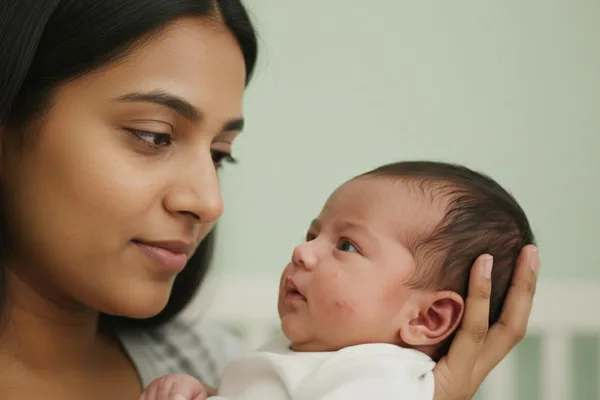
Does your baby have acne? Let's talk about baby acne.

Does your baby have acne? Let's talk about baby acne.

Have you ever been a little scared when you saw that your little one's face suddenly had small pimple-like bumps? Many parents of newborn babies get worried when they see this. But most of the time, this is nothing to worry about. Today, we're talking about baby acne, or baby acne.

What is Baby Acne?

Simply put, baby acne is a common and temporary condition that affects newborn babies, especially on their face and chest. Just like the acne we get when we're young, it can cause small bumps, bumps, or pus-filled bumps on your baby's skin. The condition usually clears up on its own within a few days or two to three weeks.

Other medical names for this are ``neonatal acne'' and ``neonatal cephalic pustulosis''.

How is this different from Infantile Acne?

Yes, there is a slight difference between the two. Although the symptoms are similar, the difference lies in the age at which the baby develops this condition. To understand this, see the table below.

Characteristic Baby Acne Infantile Acne
Age of onset About 2 weeks after birth. Some babies may have it right at birth. Between 2 months and a year.
Appearance Small red bumps, pus-filled blisters. But no blackheads. Like regular acne, blackheads can occur along with bumps and blisters.
Time to get better. It usually gets better on its own within a few weeks.It may take longer to get better and may require medical treatment.

The most important thing is that if your baby starts getting acne after 2 months , it's a good idea to talk to your doctor about it.

What does baby acne look like?

Baby acne is, to be precise, a smaller version of the acne we get when we're younger. You may see symptoms like these:

  • Small, red, raised bumps: We call these papules.
  • Pustules: These may have a red ring around them. These are called pustules.

When the baby cries, gets hot, or his skin is rubbed against a rough cloth, these pimples may appear a little cracked, meaning they may become even redder . Don't worry about that.

Places where acne can occur

Baby acne is most often seen on babies':

  • Cheeks
  • Nose
  • Forehead
  • Chin
  • Skull
  • Neck
  • Chest and upper back

Why do babies get these pimples?

Although the exact reason for this has not been found, hormonal influences are thought to be the main cause.

Think about it, before the baby is born, the hormones in the mother's body pass through the placenta to the baby. These hormones can stimulate the baby's sebaceous glands, which produce oil on the skin. The oily secretion produced by these glands is called sebum. When this sebum is produced in excess, it clogs the tiny pores in the baby's skin, causing acne.

In addition, babies' skin is very sensitive. When milk is vomited or saliva is drooled, if these things remain on the face for too long, they can also cause skin irritation and increase acne.

Does breastfeeding cause acne?

This is a question that many mothers ask. Although the hormones in breast milk can have some effect on the baby, it is not the main cause of baby acne. Baby acne is a temporary condition. Therefore, do not stop breastfeeding your baby just because he has acne. This condition will go away on its own as the baby grows and his body gets used to the new environment.

Does baby sucking cause acne?

Absolutely not. Lovingly stroking a baby does not cause acne. As we discussed earlier, the main reason for this is hormonal influences.

How is it treated and what can be done at home?

The good news is that baby acne usually doesn't require any treatment. It gets better on its own. However, keeping your baby's skin clean can help speed up the healing process.

Do these things at home:

  • Clean your baby's face: Once a day, gently wipe your baby's face with a clean, soft cloth or cotton swab soaked in lukewarm water. If you use soap, use a gentle, unscented baby soap.
  • Don't rub your skin too hard: Don't rub or pick at acne spots too hard. This can damage the skin and make the condition worse.
  • Gently pat dry: After cleansing your face, gently pat dry with a clean, soft towel.
  • Avoid lotions and oils: Avoid using oily lotions, creams, or oils on your baby's face while he or she has acne. These can further clog the skin's pores.
  • Don't squeeze pimples: Never squeeze or pop pimples. Doing so can cause scarring and infection on your baby's delicate skin.

Sometimes, if the acne is a bit more severe or looks like it's infected, your doctor may prescribe an antifungal cream or a low-strength steroid cream like hydrocortisone. However, don't put anything on your baby's face without a doctor's advice.

When should you definitely see a doctor?

Although baby acne is nothing to worry about, there are times when you should seek medical advice. If the following symptoms are present, it is best to take your baby to a doctor.

  • If the acne doesn't get better after a few weeks or gets worse.
  • If the baby has other symptoms along with the acne, such as fever, body aches, and loss of appetite.
  • If you see blisters or peeling skin instead of pimples.
  • If the acne appeared after the baby turned 2 months old .

In cases like this, it may not be baby acne, but another skin condition. Therefore, it is very important to see a doctor for an accurate diagnosis.

Take-Home Message

  • Baby acne is a very common and harmless condition that occurs in newborn babies.
  • The main reason for this is hormones from the mother, not dirt or a loving kiss.
  • Often, no treatment is required and it heals on its own within a few weeks.
  • Keep your baby's face clean with lukewarm water and a soft cloth. Avoid applying oily lotions or creams.
  • Do not squeeze or pop pimples for any reason. This can cause scarring and infection.
  • If the acne doesn't get better, gets worse, or your baby has other symptoms, be sure to see your doctor.

Baby acne, baby acne, newborn babies, skin diseases, neonatal acne, baby skin

Frequently Asked Questions (FAQ)

Does baby sucking cause acne?

Absolutely not. Lovingly stroking a baby does not cause acne. As we discussed earlier, the main reason for this is hormonal influences.

⚠️ Important: The medical articles and information on Nirogi Lanka are for general awareness only, and are by no means a substitute for professional medical advice, diagnosis, or treatment. For any medical problem you have, consult a qualified physician immediately.

💬 Comments (0)

No comments have been posted yet. Add your comment here for the first time.

Add your comment

Please calculate: 4 + 9 =
Does your baby have acne? Let's talk about baby acne.

Does your baby have acne? Let's talk about baby acne.

Have you ever been a little scared when you saw that your little one's face suddenly had small pimple-like bumps? Many parents of newborn babies get worried when they see this. But most of the time, this is nothing to worry about. Today, we're talking about baby acne, or baby acne.

What is Baby Acne?

Simply put, baby acne is a common and temporary condition that affects newborn babies, especially on their face and chest. Just like the acne we get when we're young, it can cause small bumps, bumps, or pus-filled bumps on your baby's skin. The condition usually clears up on its own within a few days or two to three weeks.

Other medical names for this are ``neonatal acne'' and ``neonatal cephalic pustulosis''.

How is this different from Infantile Acne?

Yes, there is a slight difference between the two. Although the symptoms are similar, the difference lies in the age at which the baby develops this condition. To understand this, see the table below.

Characteristic Baby Acne Infantile Acne
Age of onset About 2 weeks after birth. Some babies may have it right at birth. Between 2 months and a year.
Appearance Small red bumps, pus-filled blisters. But no blackheads. Like regular acne, blackheads can occur along with bumps and blisters.
Time to get better. It usually gets better on its own within a few weeks.It may take longer to get better and may require medical treatment.

The most important thing is that if your baby starts getting acne after 2 months , it's a good idea to talk to your doctor about it.

What does baby acne look like?

Baby acne is, to be precise, a smaller version of the acne we get when we're younger. You may see symptoms like these:

  • Small, red, raised bumps: We call these papules.
  • Pustules: These may have a red ring around them. These are called pustules.

When the baby cries, gets hot, or his skin is rubbed against a rough cloth, these pimples may appear a little cracked, meaning they may become even redder . Don't worry about that.

Places where acne can occur

Baby acne is most often seen on babies':

  • Cheeks
  • Nose
  • Forehead
  • Chin
  • Skull
  • Neck
  • Chest and upper back

Why do babies get these pimples?

Although the exact reason for this has not been found, hormonal influences are thought to be the main cause.

Think about it, before the baby is born, the hormones in the mother's body pass through the placenta to the baby. These hormones can stimulate the baby's sebaceous glands, which produce oil on the skin. The oily secretion produced by these glands is called sebum. When this sebum is produced in excess, it clogs the tiny pores in the baby's skin, causing acne.

In addition, babies' skin is very sensitive. When milk is vomited or saliva is drooled, if these things remain on the face for too long, they can also cause skin irritation and increase acne.

Does breastfeeding cause acne?

This is a question that many mothers ask. Although the hormones in breast milk can have some effect on the baby, it is not the main cause of baby acne. Baby acne is a temporary condition. Therefore, do not stop breastfeeding your baby just because he has acne. This condition will go away on its own as the baby grows and his body gets used to the new environment.

Does baby sucking cause acne?

Absolutely not. Lovingly stroking a baby does not cause acne. As we discussed earlier, the main reason for this is hormonal influences.

How is it treated and what can be done at home?

The good news is that baby acne usually doesn't require any treatment. It gets better on its own. However, keeping your baby's skin clean can help speed up the healing process.

Do these things at home:

  • Clean your baby's face: Once a day, gently wipe your baby's face with a clean, soft cloth or cotton swab soaked in lukewarm water. If you use soap, use a gentle, unscented baby soap.
  • Don't rub your skin too hard: Don't rub or pick at acne spots too hard. This can damage the skin and make the condition worse.
  • Gently pat dry: After cleansing your face, gently pat dry with a clean, soft towel.
  • Avoid lotions and oils: Avoid using oily lotions, creams, or oils on your baby's face while he or she has acne. These can further clog the skin's pores.
  • Don't squeeze pimples: Never squeeze or pop pimples. Doing so can cause scarring and infection on your baby's delicate skin.

Sometimes, if the acne is a bit more severe or looks like it's infected, your doctor may prescribe an antifungal cream or a low-strength steroid cream like hydrocortisone. However, don't put anything on your baby's face without a doctor's advice.

When should you definitely see a doctor?

Although baby acne is nothing to worry about, there are times when you should seek medical advice. If the following symptoms are present, it is best to take your baby to a doctor.

  • If the acne doesn't get better after a few weeks or gets worse.
  • If the baby has other symptoms along with the acne, such as fever, body aches, and loss of appetite.
  • If you see blisters or peeling skin instead of pimples.
  • If the acne appeared after the baby turned 2 months old .

In cases like this, it may not be baby acne, but another skin condition. Therefore, it is very important to see a doctor for an accurate diagnosis.

Take-Home Message

  • Baby acne is a very common and harmless condition that occurs in newborn babies.
  • The main reason for this is hormones from the mother, not dirt or a loving kiss.
  • Often, no treatment is required and it heals on its own within a few weeks.
  • Keep your baby's face clean with lukewarm water and a soft cloth. Avoid applying oily lotions or creams.
  • Do not squeeze or pop pimples for any reason. This can cause scarring and infection.
  • If the acne doesn't get better, gets worse, or your baby has other symptoms, be sure to see your doctor.

Baby acne, baby acne, newborn babies, skin diseases, neonatal acne, baby skin

Frequently Asked Questions (FAQ)

Does baby sucking cause acne?

Absolutely not. Lovingly stroking a baby does not cause acne. As we discussed earlier, the main reason for this is hormonal influences.

⚠️ Important: The medical articles and information on Nirogi Lanka are for general awareness only, and are by no means a substitute for professional medical advice, diagnosis, or treatment. For any medical problem you have, consult a qualified physician immediately.

💬 Comments (0)

No comments have been posted yet. Add your comment here for the first time.

Add your comment

Please calculate: 4 + 9 =