A treatment for a hole in the heart - Let's learn about Cardiac Closure Device in simple terms

A treatment for a hole in the heart - Let's learn about Cardiac Closure Device in simple terms

When the doctor told you that you have a hole in your heart, you must have felt very scared and shocked. You must have thought, "Oh my God, there's a hole in my heart?" But don't worry. This is not as dangerous as we think, and there are now very advanced and successful treatments for this. The fatigue you feel, the difficulty breathing when you exert yourself a little, may be due to this condition. So today we will talk about these holes in the heart, and about the 'Cardiac Closure Device', a small device used to close them.

Let's first see, what is this hole in the heart?

Simply put, our heart is like a house with four rooms. Two rooms upstairs and two rooms downstairs. We call these two rooms upstairs the Atria. The right atrium and the left atrium. There is a wall between these two rooms. We call this wall the 'Interatrial Septum'. Sometimes, a hole can form in this wall at birth. This is what we medically call Atrial Septal Defect (ASD) .

Imagine, when building a house, a wall is built between two rooms, and a small space is left unplastered. This is a congenital condition.

There is another condition that is similar to this, but a little different. It is called a Patent Foramen Ovale (PFO) . This is not really a real hole like an ASD. When we are all in the womb, there is a small opening between these two atria. Because our lungs are not working at that time, this opening is essential for blood circulation. After we are born, when we start breathing, this opening closes automatically. But in some people, this does not close completely, but remains like a little lid. It can open when needed. This is called a PFO.

An ASD is a real hole in the wall. A PFO is like a small opening that doesn't close properly. Both are located between the two upper chambers of the heart.

Why is it a problem to have these holes?

Okay, now you might be asking, "So what happens when there's that hole?" Here's what happens.

The left side of our heart contains oxygen-rich, clean blood. This blood is pumped throughout the body. The right side contains used, oxygen-poor, impure blood. This blood is sent to the lungs to be re-oxygenated.

Now imagine, what would happen if there was a hole in the wall between these two sides? It's like a hole between a well-filtered tank of clean water and a tank of used water. Some of the good oxygenated blood mixes with the deoxygenated blood. Then the amount of oxygenated blood that needs to go to the body decreases.

As a result of this, you will:

  • Feeling tired and exhausted .
  • Difficulty breathing occurs.
  • Palpitations begin to feel like an abnormal heart rate.

In the case of a PFO, it can be even more dangerous. Small blood clots that form in our bodies, especially in our legs, sometimes travel to the heart. Normally, they travel to the lungs and are removed from there. But in someone with a PFO hole, this blood clot can jump from the right side to the left side and go straight to the blood vessels that go to the brain. If that happens, the risk of a stroke is higher.

How do you close this hole? - The function of the Cardiac Closure Device

In the past, to close a hole like this, you had to do a major open-heart surgery. But now, because of advanced technology, this is done in a very simple way in more than 80% of cases. That's why this small device called a Cardiac Closure Device is used.

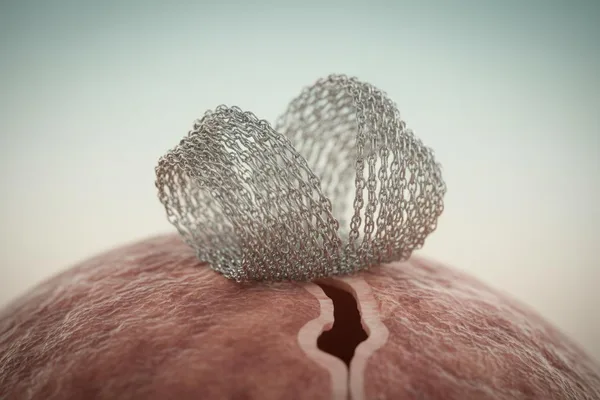
It's like two small umbrellas connected together, or a button-like device. It's made of a wire mesh made of a metal alloy called Nitinol, and it's covered in a polyester fabric.

The treatment method is very simple.

This is done by a cardiologist.

1. First, you will be given medication to make you unconscious or intoxicated.

2. Then, a small tube called a catheter is inserted into a large blood vessel in your leg.

3. This catheter is passed through the blood vessel all the way to the heart. All of this is done under the guidance of technology such as X-ray and ultrasound.

4. When the catheter approaches the hole in the heart, they first insert something like a small balloon to measure the exact size of the hole.

5. Then, the closure device, which is the right size, is passed through the catheter in a folded position to the site of the hole.

6. When it's in the right place, the catheter is removed. Then the two folded umbrella-like parts open on either side of the hole, completely closing the hole. It's stuck to the wall on both sides, like a sandwich.

7. After confirming that the device is firmly in place, the catheter is removed.

That's it. No need to cover your chest. No big cuts.

Treatment method Description
Transcatheter ClosureA small tube is inserted through a vein in the leg and a device is passed through it to the heart to close the hole. This is the most commonly used, simple, and quick-healing method.
Open-Heart Surgery If the hole is very large or there are other complications, the chest may be opened and the hole stitched or patched closed. This is rarely used now.

What are the benefits and possible side effects of this treatment?

As with any medical treatment, there are benefits as well as some very rare risks.

Main advantages

  • High success rate: Studies have found that this treatment is more than 93% successful.
  • Faster recovery: With catheter-based surgery, you only have to stay in the hospital for one night. You can return to your normal life in about two weeks. You recover much faster than with open surgery.
  • Less pain: There is very little pain because there is no large incision.
  • Reducing the risk of stroke: Especially for people with PFO, this method can reduce the risk of stroke more than taking medication.

Possible side effects (these are very rare)

  • Blood clots: Blood clots may form around the device.
  • Device shaking: Very rarely, the device may move slightly from where it was mounted.
  • Abnormal heart rhythms: The rhythm of the heartbeat may change for a short time.
  • Endocarditis risk: This is a bacterial infection of the inner lining of the heart.
  • Device erosion: This is very, very rare (around 0.04% - 0.3%). The device can become stuck to the heart wall and damage the wall over time.

Don't worry! Your doctor is aware of all these risks and will take all necessary steps to prevent them.

What should we do to avoid side effects?

After treatment, there are a few things you need to do on your part. By following these exactly, you can prevent even those rare side effects.

1. To prevent blood clots

Your doctor will tell you to take an anticoagulant or antiplatelet medication, such as aspirin, every day for about 6 months after your treatment. It is very important to take this medication on time and never forget to take it .

2. To prevent endocarditis infection (this is very important!)

After the device is inserted, it takes about 6 months for your body's tissues to grow and completely cover it. During this time, if bacteria from elsewhere in your body get into your bloodstream, it can travel to the device and cause an infection. To prevent this:

  • Keep your teeth and gums very clean. Brush your teeth thoroughly every day.
  • Before any dental treatment (such as tooth extraction, cleaning, filling), you must tell the dentist that you have such a device in your heart.
  • Before any medical test or surgery that may cause bleeding , you will need to take antibiotics . This is to protect against infection.
  • If you develop symptoms of an infection, such as fever, body aches, or sore throat, call your doctor immediately.

The doctor will give you a card with information about this. Keep it with you at all times.

Back to normal life after treatment...

If you have had the treatment through a catheter, you will be able to stay in the hospital overnight and go home the next day. Although you will be able to return to normal activities in two to three days, it is best to avoid heavy lifting or strenuous activities for about two weeks.

Over time, your heart tissue will grow and completely cover this device. Then it becomes a part of your heart. You won't even feel it's there. You'll have complete freedom to live a normal life, exercise, and do whatever you want.

If you have to have an MRI scan, there may be some restrictions. So, before doing anything, it's best to talk to your heart doctor and get advice.

Take-Home Message

  • A hole in the heart (ASD or PFO) is a congenital condition that can reduce the amount of oxygen the body receives and increase the risk of stroke.
  • A Cardiac Closure Device is a very effective and safe device used to close a hole in the heart using a catheter, without injecting the chest.
  • This treatment method is very simple, less painful, and takes a very short time to heal.
  • After treatment, it is essential to take the blood- thinning medication prescribed by the doctor exactly for the prescribed period.
  • Before dental treatment or other surgery within the first 6 months, talk to your doctor about taking antibiotics to prevent infections.
  • If you experience symptoms such as chest pain or loss of consciousness, contact your doctor immediately. It is very important to undergo the necessary medical tests.

Hole in the heart, Cardiac Closure Device, Atrial Septal Defect, ASD, Patent Foramen Ovale, PFO, Heart disease, Catheter therapy
⚠️ Important: The medical articles and information on Nirogi Lanka are for general awareness only, and are by no means a substitute for professional medical advice, diagnosis, or treatment. For any medical problem you have, consult a qualified physician immediately.

💬 Comments (0)

No comments have been posted yet. Add your comment here for the first time.

Add your comment

Please calculate: 5 + 6 =
A treatment for a hole in the heart - Let's learn about Cardiac Closure Device in simple terms
SurgeriesJuly 7, 2026

A treatment for a hole in the heart - Let's learn about Cardiac Closure Device in simple terms

When the doctor told you that you have a hole in your heart, you must have felt very scared and shocked. You must have thought, "Oh my God, there's a hole in my heart?" But don't worry. This is not as dangerous as we think, and there are now very advanced and successful treatments for this. The fatigue you feel, the difficulty breathing when you exert yourself a little, may be due to this condition. So today we will talk about these holes in the heart, and about the 'Cardiac Closure Device', a small device used to close them.

Let's first see, what is this hole in the heart?

Simply put, our heart is like a house with four rooms. Two rooms upstairs and two rooms downstairs. We call these two rooms upstairs the Atria. The right atrium and the left atrium. There is a wall between these two rooms. We call this wall the 'Interatrial Septum'. Sometimes, a hole can form in this wall at birth. This is what we medically call Atrial Septal Defect (ASD) .

Imagine, when building a house, a wall is built between two rooms, and a small space is left unplastered. This is a congenital condition.

There is another condition that is similar to this, but a little different. It is called a Patent Foramen Ovale (PFO) . This is not really a real hole like an ASD. When we are all in the womb, there is a small opening between these two atria. Because our lungs are not working at that time, this opening is essential for blood circulation. After we are born, when we start breathing, this opening closes automatically. But in some people, this does not close completely, but remains like a little lid. It can open when needed. This is called a PFO.

An ASD is a real hole in the wall. A PFO is like a small opening that doesn't close properly. Both are located between the two upper chambers of the heart.

Why is it a problem to have these holes?

Okay, now you might be asking, "So what happens when there's that hole?" Here's what happens.

The left side of our heart contains oxygen-rich, clean blood. This blood is pumped throughout the body. The right side contains used, oxygen-poor, impure blood. This blood is sent to the lungs to be re-oxygenated.

Now imagine, what would happen if there was a hole in the wall between these two sides? It's like a hole between a well-filtered tank of clean water and a tank of used water. Some of the good oxygenated blood mixes with the deoxygenated blood. Then the amount of oxygenated blood that needs to go to the body decreases.

As a result of this, you will:

  • Feeling tired and exhausted .
  • Difficulty breathing occurs.
  • Palpitations begin to feel like an abnormal heart rate.

In the case of a PFO, it can be even more dangerous. Small blood clots that form in our bodies, especially in our legs, sometimes travel to the heart. Normally, they travel to the lungs and are removed from there. But in someone with a PFO hole, this blood clot can jump from the right side to the left side and go straight to the blood vessels that go to the brain. If that happens, the risk of a stroke is higher.

How do you close this hole? - The function of the Cardiac Closure Device

In the past, to close a hole like this, you had to do a major open-heart surgery. But now, because of advanced technology, this is done in a very simple way in more than 80% of cases. That's why this small device called a Cardiac Closure Device is used.

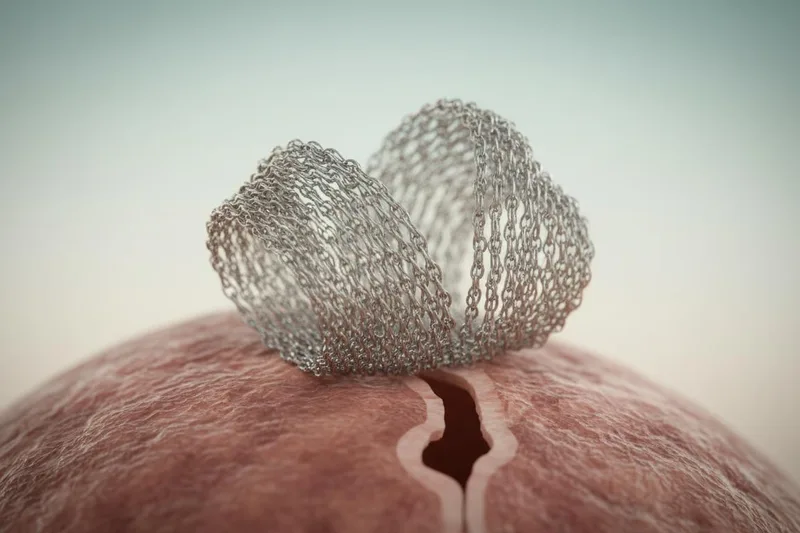
It's like two small umbrellas connected together, or a button-like device. It's made of a wire mesh made of a metal alloy called Nitinol, and it's covered in a polyester fabric.

The treatment method is very simple.

This is done by a cardiologist.

1. First, you will be given medication to make you unconscious or intoxicated.

2. Then, a small tube called a catheter is inserted into a large blood vessel in your leg.

3. This catheter is passed through the blood vessel all the way to the heart. All of this is done under the guidance of technology such as X-ray and ultrasound.

4. When the catheter approaches the hole in the heart, they first insert something like a small balloon to measure the exact size of the hole.

5. Then, the closure device, which is the right size, is passed through the catheter in a folded position to the site of the hole.

6. When it's in the right place, the catheter is removed. Then the two folded umbrella-like parts open on either side of the hole, completely closing the hole. It's stuck to the wall on both sides, like a sandwich.

7. After confirming that the device is firmly in place, the catheter is removed.

That's it. No need to cover your chest. No big cuts.

Treatment method Description
Transcatheter ClosureA small tube is inserted through a vein in the leg and a device is passed through it to the heart to close the hole. This is the most commonly used, simple, and quick-healing method.
Open-Heart Surgery If the hole is very large or there are other complications, the chest may be opened and the hole stitched or patched closed. This is rarely used now.

What are the benefits and possible side effects of this treatment?

As with any medical treatment, there are benefits as well as some very rare risks.

Main advantages

  • High success rate: Studies have found that this treatment is more than 93% successful.
  • Faster recovery: With catheter-based surgery, you only have to stay in the hospital for one night. You can return to your normal life in about two weeks. You recover much faster than with open surgery.
  • Less pain: There is very little pain because there is no large incision.
  • Reducing the risk of stroke: Especially for people with PFO, this method can reduce the risk of stroke more than taking medication.

Possible side effects (these are very rare)

  • Blood clots: Blood clots may form around the device.
  • Device shaking: Very rarely, the device may move slightly from where it was mounted.
  • Abnormal heart rhythms: The rhythm of the heartbeat may change for a short time.
  • Endocarditis risk: This is a bacterial infection of the inner lining of the heart.
  • Device erosion: This is very, very rare (around 0.04% - 0.3%). The device can become stuck to the heart wall and damage the wall over time.

Don't worry! Your doctor is aware of all these risks and will take all necessary steps to prevent them.

What should we do to avoid side effects?

After treatment, there are a few things you need to do on your part. By following these exactly, you can prevent even those rare side effects.

1. To prevent blood clots

Your doctor will tell you to take an anticoagulant or antiplatelet medication, such as aspirin, every day for about 6 months after your treatment. It is very important to take this medication on time and never forget to take it .

2. To prevent endocarditis infection (this is very important!)

After the device is inserted, it takes about 6 months for your body's tissues to grow and completely cover it. During this time, if bacteria from elsewhere in your body get into your bloodstream, it can travel to the device and cause an infection. To prevent this:

  • Keep your teeth and gums very clean. Brush your teeth thoroughly every day.
  • Before any dental treatment (such as tooth extraction, cleaning, filling), you must tell the dentist that you have such a device in your heart.
  • Before any medical test or surgery that may cause bleeding , you will need to take antibiotics . This is to protect against infection.
  • If you develop symptoms of an infection, such as fever, body aches, or sore throat, call your doctor immediately.

The doctor will give you a card with information about this. Keep it with you at all times.

Back to normal life after treatment...

If you have had the treatment through a catheter, you will be able to stay in the hospital overnight and go home the next day. Although you will be able to return to normal activities in two to three days, it is best to avoid heavy lifting or strenuous activities for about two weeks.

Over time, your heart tissue will grow and completely cover this device. Then it becomes a part of your heart. You won't even feel it's there. You'll have complete freedom to live a normal life, exercise, and do whatever you want.

If you have to have an MRI scan, there may be some restrictions. So, before doing anything, it's best to talk to your heart doctor and get advice.

Take-Home Message

  • A hole in the heart (ASD or PFO) is a congenital condition that can reduce the amount of oxygen the body receives and increase the risk of stroke.
  • A Cardiac Closure Device is a very effective and safe device used to close a hole in the heart using a catheter, without injecting the chest.
  • This treatment method is very simple, less painful, and takes a very short time to heal.
  • After treatment, it is essential to take the blood- thinning medication prescribed by the doctor exactly for the prescribed period.
  • Before dental treatment or other surgery within the first 6 months, talk to your doctor about taking antibiotics to prevent infections.
  • If you experience symptoms such as chest pain or loss of consciousness, contact your doctor immediately. It is very important to undergo the necessary medical tests.

Hole in the heart, Cardiac Closure Device, Atrial Septal Defect, ASD, Patent Foramen Ovale, PFO, Heart disease, Catheter therapy
⚠️ Important: The medical articles and information on Nirogi Lanka are for general awareness only, and are by no means a substitute for professional medical advice, diagnosis, or treatment. For any medical problem you have, consult a qualified physician immediately.

💬 Comments (0)

No comments have been posted yet. Add your comment here for the first time.

Add your comment

Please calculate: 5 + 6 =