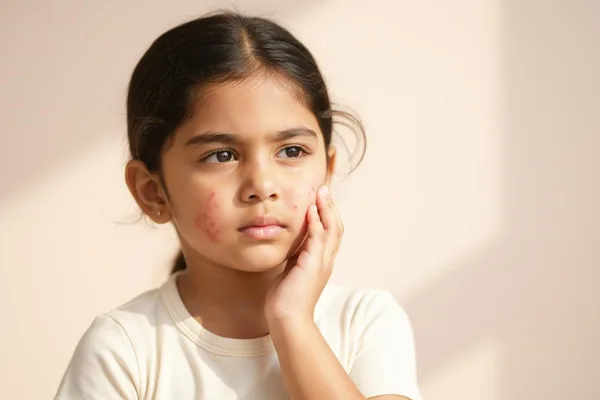
Are you afraid that your baby will get chickenpox? Let's learn everything about the chickenpox vaccine!

Are you afraid that your baby will get chickenpox? Let's learn everything about the chickenpox vaccine!

Remember when we were kids, if one child in a class got chickenpox, half the class would be home in a few days. They would have blisters all over their bodies and would itch for days, which was really annoying. For some, chickenpox is a "god's disease" that requires them to stay home. But nowadays, chickenpox is very rare. It is rare to see chickenpox spreading like an epidemic in schools. The main reason for this is the chickenpox vaccine . So today, let's talk about everything about this chickenpox vaccine, which is very important for your baby and for you.

Simply put, what is the Varicella Vaccine?

The chickenpox vaccine is a vaccine that protects you or your child from chickenpox. It is usually given in a two-dose series . Chickenpox is a highly contagious disease that causes a rash and itching all over the body. It can also sometimes cause serious complications.

When this vaccine is given, most people are completely protected from getting chickenpox. Even if a small number of people do get the disease, it is usually a mild illness . This vaccine protects us from developing a more serious illness.

Most importantly, getting your child vaccinated not only protects your family, but also others around you. This is especially helpful for those who cannot get vaccinated (for example, those with weakened immune systems) and who can become seriously ill if they get chickenpox.

Simply put, the more people in society get vaccinated, the safer we all are. Chickenpox is caused by the varicella-zoster virus . That's why this vaccine is also called the "Varicella Vaccine" in medical terms.

What types of chickenpox vaccines are given in Sri Lanka?

There are two types of chickenpox vaccines approved for use in the world. These are also available from the private sector in Sri Lanka.

1. Varivax®: This is a vaccine that only protects against chickenpox. It can be given to children over 12 months of age and adults.

2. ProQuad® (MMRV vaccine): This vaccine protects against not only chickenpox, but also measles, mumps, and rubella. That's why it's called the MMRV vaccine . It's only approved for children 12 months to 12 years of age.

So what is the difference between these two?

Both vaccines provide the same protection against chickenpox. However, the MMRV vaccine also provides protection against three additional diseases. But here's a little something. If a child under 48 months (4 years) is given the first dose of MMRV, the risk of side effects, such as fever or febrile seizures, is slightly higher than if the two vaccines are given separately.

Therefore, under the National Immunization Program in Sri Lanka, the MMR vaccine and the chickenpox vaccine are usually given separately. In the private sector, you can talk to your doctor and choose the most appropriate method based on your child's age and condition.

Type of vaccine Description Who is it suitable for?
Varivax® Provides protection against chickenpox only. For children over 12 months and adults.
ProQuad® (MMRV) It provides protection against all four diseases: chickenpox, measles, mumps, and rubella. For children from 12 months to 12 years.

Your doctor will tell you more about these options and help you choose what is best for your child.

Who should get this vaccine?

In general, this vaccine is recommended for all children and adults who have not had chickenpox before and who have not received the full course of vaccination. "Fully received" means that both doses of the vaccine have been received.

Vaccination schedule for children

The recommended vaccination schedule for children is as follows:

  • First dose: Between 12 and 15 months of age.
  • Second dose: Between 4 and 6 years of age.

In case of emergency, a second dose can be given 3 months after the first dose. Your pediatrician will advise you about this.

Do adults need vaccinations?

Yes, absolutely. Some adults may not have had chickenpox as children. The vaccine was not widely available at that time. So there is no protection for such people. Don't think that chickenpox is a minor illness that only affects children. When adults get chickenpox, it is more likely to be severe and cause serious complications like pneumonia and brain infections.

So if you're not sure if you've had chickenpox before, or if you've been vaccinated, talk to your doctor. They may be able to do a blood test to see if you're immune to chickenpox. If you're not, that means you haven't had the disease, so it's best to get vaccinated.

It is especially important for the following adults to get vaccinated:

  • People who work in the health sector (such as doctors, nurses).
  • School teachers or those who work in kindergartens.
  • People who work or live in residential facilities like nursing homes.
  • People who live with or care for someone with a weakened immune system.
  • Women who are hoping to get pregnant.
  • People living with young children.
  • University students.
  • Those in military service.
  • People who travel abroad frequently.

Are there people who should not get the chickenpox vaccine?

Yes, some people are not suitable for this vaccine. Doctors recommend not getting the vaccine or postponing it due to certain medical conditions, medications, or other reasons.

If you or your child falls into one of the following categories, be sure to discuss this with your doctor before getting the vaccine:

  • If you have an immune system disorder or are taking medications that affect the immune system.
  • If a close family member (parents, siblings) has a weakened immune system.
  • If you have tuberculosis.
  • If you are pregnant or hoping to become pregnant.
  • If you are taking medications such as aspirin and steroids (e.g. prednisone).
  • If you have cancer.
  • If you have recently received blood or blood products.
  • If you have received another live virus vaccine within the last 28 days.
  • If you have previously had a severe allergic reaction to the chickenpox vaccine or anything in it.
  • If you have other severe allergies.

Your doctor will carefully examine these conditions and give you the most appropriate advice.

Are there any side effects or risks to the vaccine?

The chickenpox vaccine is generally a very safe vaccine . However, like any medicine, it can cause minor side effects. Most of the time, these are not serious and will go away in a day or two.

Type of side effect Description
Common, mild side effects
Pain Soreness, redness, or swelling at the injection site.
Fever Having a slight fever.
A little eczema A few small blisters at the injection site or elsewhere on the body.
Joint pain Temporary joint pain or stiffness.
Very rare, serious side effects
Severe eczema A severe rash that spreads all over the body.
Other infections Infections such as pneumonia or meningitis.
Febrile convulsions Febrile seizures (seizures with high fever).

Emergency! As with any vaccine, a severe allergic reaction (anaphylaxis) can occur very rarely. If you or your child experience the following symptoms, go to the nearest hospital Emergency Department (ETU) immediately.

- Hives (hives)

- Swelling of the face and throat

- Difficulty breathing

- Rapid heartbeat

- Dizziness or weakness

Can I get chickenpox even if I get the vaccine?

This is a question that many people have. The answer is,There's a very small chance, but it's possible. Medically, this is called breakthrough varicella . That means the disease breaks through the protection provided by the vaccine.

But the important thing here is that if someone who has received both doses of the vaccine gets chickenpox, it tends to be very mild. There are just a few blisters, no severe itching, and no fever, and it goes away in two to three days.

A person who has only received one dose of the vaccine may experience the same symptoms as someone who has not been vaccinated. This is why it is important to get both doses for complete protection.

When should you talk to your doctor?

It's normal to have questions and concerns about vaccines. So don't be afraid to talk openly with your doctor about anything that's on your mind. They can give you the most accurate and up-to-date information.

Seek medical advice, especially in the following cases:

  • If you are not sure whether you or your child needs the vaccine.
  • If you are not sure whether you or your child has received both doses of the vaccine.
  • If you have questions about the safety of the vaccine.
  • If you want to know about the vaccination schedule.
  • If you want to know more about the benefits and risks of the chickenpox vaccine.

Take-Home Message

  • Chickenpox is a disease that can cause serious complications, especially for the elderly, pregnant women, and those with weakened immune systems. So don't take it lightly.
  • The chickenpox vaccine is the safest and most effective way to prevent chickenpox. It has been used worldwide for decades.
  • It is essential to receive both doses of the vaccine for complete and lifelong protection.
  • Always discuss any medical conditions or concerns you may have with your doctor before vaccinating yourself or your child.
  • Vaccination protects not only your child, but also the entire society, especially at-risk individuals.

Chickenpox, chickenpox vaccine, varicella vaccine, chickenpox vaccine, childhood vaccinations, MMRV, Varivax, chickenpox symptoms, childhood diseases
⚠️ Important: The medical articles and information on Nirogi Lanka are for general awareness only, and are by no means a substitute for professional medical advice, diagnosis, or treatment. For any medical problem you have, consult a qualified physician immediately.

💬 Comments (0)

No comments have been posted yet. Add your comment here for the first time.

Add your comment

Please calculate: 8 + 6 =
Are you afraid that your baby will get chickenpox? Let's learn everything about the chickenpox vaccine!
Preventive HealthJuly 7, 2026

Are you afraid that your baby will get chickenpox? Let's learn everything about the chickenpox vaccine!

Remember when we were kids, if one child in a class got chickenpox, half the class would be home in a few days. They would have blisters all over their bodies and would itch for days, which was really annoying. For some, chickenpox is a "god's disease" that requires them to stay home. But nowadays, chickenpox is very rare. It is rare to see chickenpox spreading like an epidemic in schools. The main reason for this is the chickenpox vaccine . So today, let's talk about everything about this chickenpox vaccine, which is very important for your baby and for you.

Simply put, what is the Varicella Vaccine?

The chickenpox vaccine is a vaccine that protects you or your child from chickenpox. It is usually given in a two-dose series . Chickenpox is a highly contagious disease that causes a rash and itching all over the body. It can also sometimes cause serious complications.

When this vaccine is given, most people are completely protected from getting chickenpox. Even if a small number of people do get the disease, it is usually a mild illness . This vaccine protects us from developing a more serious illness.

Most importantly, getting your child vaccinated not only protects your family, but also others around you. This is especially helpful for those who cannot get vaccinated (for example, those with weakened immune systems) and who can become seriously ill if they get chickenpox.

Simply put, the more people in society get vaccinated, the safer we all are. Chickenpox is caused by the varicella-zoster virus . That's why this vaccine is also called the "Varicella Vaccine" in medical terms.

What types of chickenpox vaccines are given in Sri Lanka?

There are two types of chickenpox vaccines approved for use in the world. These are also available from the private sector in Sri Lanka.

1. Varivax®: This is a vaccine that only protects against chickenpox. It can be given to children over 12 months of age and adults.

2. ProQuad® (MMRV vaccine): This vaccine protects against not only chickenpox, but also measles, mumps, and rubella. That's why it's called the MMRV vaccine . It's only approved for children 12 months to 12 years of age.

So what is the difference between these two?

Both vaccines provide the same protection against chickenpox. However, the MMRV vaccine also provides protection against three additional diseases. But here's a little something. If a child under 48 months (4 years) is given the first dose of MMRV, the risk of side effects, such as fever or febrile seizures, is slightly higher than if the two vaccines are given separately.

Therefore, under the National Immunization Program in Sri Lanka, the MMR vaccine and the chickenpox vaccine are usually given separately. In the private sector, you can talk to your doctor and choose the most appropriate method based on your child's age and condition.

Type of vaccine Description Who is it suitable for?
Varivax® Provides protection against chickenpox only. For children over 12 months and adults.
ProQuad® (MMRV) It provides protection against all four diseases: chickenpox, measles, mumps, and rubella. For children from 12 months to 12 years.

Your doctor will tell you more about these options and help you choose what is best for your child.

Who should get this vaccine?

In general, this vaccine is recommended for all children and adults who have not had chickenpox before and who have not received the full course of vaccination. "Fully received" means that both doses of the vaccine have been received.

Vaccination schedule for children

The recommended vaccination schedule for children is as follows:

  • First dose: Between 12 and 15 months of age.
  • Second dose: Between 4 and 6 years of age.

In case of emergency, a second dose can be given 3 months after the first dose. Your pediatrician will advise you about this.

Do adults need vaccinations?

Yes, absolutely. Some adults may not have had chickenpox as children. The vaccine was not widely available at that time. So there is no protection for such people. Don't think that chickenpox is a minor illness that only affects children. When adults get chickenpox, it is more likely to be severe and cause serious complications like pneumonia and brain infections.

So if you're not sure if you've had chickenpox before, or if you've been vaccinated, talk to your doctor. They may be able to do a blood test to see if you're immune to chickenpox. If you're not, that means you haven't had the disease, so it's best to get vaccinated.

It is especially important for the following adults to get vaccinated:

  • People who work in the health sector (such as doctors, nurses).
  • School teachers or those who work in kindergartens.
  • People who work or live in residential facilities like nursing homes.
  • People who live with or care for someone with a weakened immune system.
  • Women who are hoping to get pregnant.
  • People living with young children.
  • University students.
  • Those in military service.
  • People who travel abroad frequently.

Are there people who should not get the chickenpox vaccine?

Yes, some people are not suitable for this vaccine. Doctors recommend not getting the vaccine or postponing it due to certain medical conditions, medications, or other reasons.

If you or your child falls into one of the following categories, be sure to discuss this with your doctor before getting the vaccine:

  • If you have an immune system disorder or are taking medications that affect the immune system.
  • If a close family member (parents, siblings) has a weakened immune system.
  • If you have tuberculosis.
  • If you are pregnant or hoping to become pregnant.
  • If you are taking medications such as aspirin and steroids (e.g. prednisone).
  • If you have cancer.
  • If you have recently received blood or blood products.
  • If you have received another live virus vaccine within the last 28 days.
  • If you have previously had a severe allergic reaction to the chickenpox vaccine or anything in it.
  • If you have other severe allergies.

Your doctor will carefully examine these conditions and give you the most appropriate advice.

Are there any side effects or risks to the vaccine?

The chickenpox vaccine is generally a very safe vaccine . However, like any medicine, it can cause minor side effects. Most of the time, these are not serious and will go away in a day or two.

Type of side effect Description
Common, mild side effects
Pain Soreness, redness, or swelling at the injection site.
Fever Having a slight fever.
A little eczema A few small blisters at the injection site or elsewhere on the body.
Joint pain Temporary joint pain or stiffness.
Very rare, serious side effects
Severe eczema A severe rash that spreads all over the body.
Other infections Infections such as pneumonia or meningitis.
Febrile convulsions Febrile seizures (seizures with high fever).

Emergency! As with any vaccine, a severe allergic reaction (anaphylaxis) can occur very rarely. If you or your child experience the following symptoms, go to the nearest hospital Emergency Department (ETU) immediately.

- Hives (hives)

- Swelling of the face and throat

- Difficulty breathing

- Rapid heartbeat

- Dizziness or weakness

Can I get chickenpox even if I get the vaccine?

This is a question that many people have. The answer is,There's a very small chance, but it's possible. Medically, this is called breakthrough varicella . That means the disease breaks through the protection provided by the vaccine.

But the important thing here is that if someone who has received both doses of the vaccine gets chickenpox, it tends to be very mild. There are just a few blisters, no severe itching, and no fever, and it goes away in two to three days.

A person who has only received one dose of the vaccine may experience the same symptoms as someone who has not been vaccinated. This is why it is important to get both doses for complete protection.

When should you talk to your doctor?

It's normal to have questions and concerns about vaccines. So don't be afraid to talk openly with your doctor about anything that's on your mind. They can give you the most accurate and up-to-date information.

Seek medical advice, especially in the following cases:

  • If you are not sure whether you or your child needs the vaccine.
  • If you are not sure whether you or your child has received both doses of the vaccine.
  • If you have questions about the safety of the vaccine.
  • If you want to know about the vaccination schedule.
  • If you want to know more about the benefits and risks of the chickenpox vaccine.

Take-Home Message

  • Chickenpox is a disease that can cause serious complications, especially for the elderly, pregnant women, and those with weakened immune systems. So don't take it lightly.
  • The chickenpox vaccine is the safest and most effective way to prevent chickenpox. It has been used worldwide for decades.
  • It is essential to receive both doses of the vaccine for complete and lifelong protection.
  • Always discuss any medical conditions or concerns you may have with your doctor before vaccinating yourself or your child.
  • Vaccination protects not only your child, but also the entire society, especially at-risk individuals.

Chickenpox, chickenpox vaccine, varicella vaccine, chickenpox vaccine, childhood vaccinations, MMRV, Varivax, chickenpox symptoms, childhood diseases
⚠️ Important: The medical articles and information on Nirogi Lanka are for general awareness only, and are by no means a substitute for professional medical advice, diagnosis, or treatment. For any medical problem you have, consult a qualified physician immediately.

💬 Comments (0)

No comments have been posted yet. Add your comment here for the first time.

Add your comment

Please calculate: 8 + 6 =