

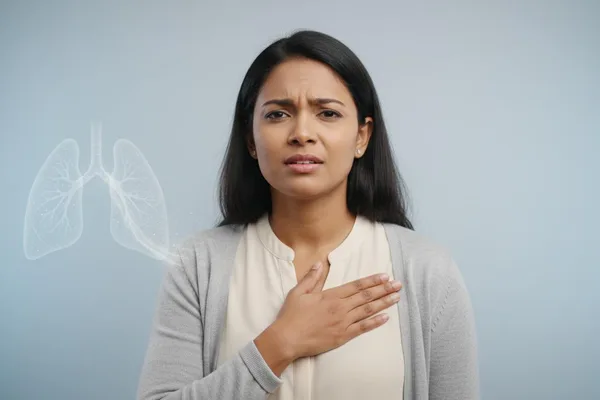
"Oh, doctor, I feel a stabbing pain in one side of my chest when I breathe, and it's really hard to breathe." Maybe you've experienced this, or maybe you've heard someone say it. One reason for this sudden chest pain is a collapsed lung, which we call 'pneumothorax' in medicine. Don't be scared when you hear this name. Today, we'll talk simply about what it is, why it happens, and what to do.
Simply put, what does it mean when a lung contracts?
Think of our lungs as two balloons. These lungs are located inside our chest. There is a very thin space between the lungs and the inner wall of the chest. We call this the pleural space. Normally, there is only a very small amount of fluid inside this space. This helps the lungs expand easily without any friction when we breathe.
Now, what happens if air accumulates in this pleural space for some reason? Then the pressure of that air causes the lung to collapse, like a balloon being deflated. This is what we call a collapsed lung, or pneumothorax. This can sometimes be a small amount, or it can completely collapse the lung.
This condition can sometimes require emergency medical treatment, so it is very important to be aware of the symptoms.
What are the different ways in which pneumothorax occurs?
Pneumothorax can be divided into several main types based on how it occurs. Understanding this will help you better understand the disease.
| Type of pneumothorax | To put it simply, how does this happen... |
|---|---|
| Primary Spontaneous Pneumothorax (The kind that changes suddenly for no reason) | This can happen to someone who doesn't have any lung disease. Some people are born with small air bubbles (blebs) in their lungs. These can suddenly burst, allowing air into the pleural space. This is more likely to happen to tall, thin young boys. |
| Secondary Spontaneous Pneumothorax (Type caused by another lung disease) | This happens to people with lung diseases like asthma, COPD, and tuberculosis. These diseases can cause the bullae (weakened areas) in the lungs to burst, causing this condition. |
| Traumatic Pneumothorax (The type caused by an injury) | This can happen due to an injury to the chest. For example, a car accident that causes a broken rib and punctured lung, or a knife stab wound. |
| Iatrogenic Pneumothorax (The type that occurs during medical treatment) | This is a little different. Sometimes, during medical procedures such as taking a sample of tissue from the lung for testing (lung biopsy) or inserting a tube into a large vein in the neck (central line insertion), a lung can be accidentally punctured. |
| Tension Pneumothorax (Very dangerous, emergency) | This is when air enters the pleural space, but has no way to get back out. It's like a one-way valve. This causes the pressure inside the chest to increase, potentially squeezing the heart and large blood vessels. This is a life-threatening emergency. |
What are the symptoms of a pneumothorax?
These symptoms can start suddenly. They may appear while you are just standing or sleeping.
- A sudden, sharp pain on one side of the chest. This pain increases especially when taking a deep breath.
- Difficulty breathing (Dyspnea). It feels like you are suffocating and have to work hard to breathe.
- Rapid breathing.
- Rapid heartbeat.
- Cough.
- Feeling tired (Fatigue).
- In severe cases, the skin, lips, or fingernails may turn blue (cyanosis). This means that the body is not getting enough oxygen.
If you have one or more of these symptoms,Go to the nearest hospital Emergency Department (ETU) immediately. This is not something you can treat at home.
Why does this happen? What are the risk factors?
There are several causes and risk factors that can lead to a pneumothorax.
Possible causes
- Lung diseases: People with diseases such as asthma, COPD (Chronic Obstructive Pulmonary Disease), Cystic Fibrosis, lung cancer, and tuberculosis are at higher risk.
- Injuries: As we discussed earlier, injuries to the chest.
- Medical treatment: It can occur as a side effect of some medical treatments.
- Lifestyle:
- Smoking: People who smoke are at a higher risk of developing this condition.
- Drug use: especially inhalant drugs.
- Activities where air pressure changes suddenly: Things like scuba diving, flying.
Factors that increase risk
- Family history: If someone in your family has had pneumothorax before, you may also be at risk.
- Body type: Young men, especially those with tall, thin bodies, are more likely to develop Primary Spontaneous Pneumothorax.
- Some genetic diseases: For example, a condition called Marfan Syndrome.
- Endometriosis: This condition only affects women. Very rarely, this disease can cause the lungs to collapse (catamenial pneumothorax).
How do you find this, Doctor?
When you go to the hospital, the doctor will first ask you about your symptoms and then examine you.
- Examination with a stethoscope: The doctor will place a stethoscope on your chest and listen to the sounds you make when you breathe. Breathing sounds may be much quieter or not heard at all on the side where the lung is compressed.
- Chest X-ray: This is the best and easiest way to confirm a pneumothorax. The X-ray can clearly show how the lungs are compressed and the amount of air that has accumulated.
- CT scan (Computed Tomography scan): Sometimes, a CT scan may be done if the X-ray is not clear or if more details are needed.
- Arterial Blood Gas (ABG) test: This measures the levels of oxygen and carbon dioxide in your blood.
How is it treated?
Treatment depends on the size of your pneumothorax, its cause, and the severity of your symptoms.
1. Observation: If the lung collapse is very small and you are not experiencing any major discomfort, your doctor may keep you in the hospital for observation. The body can gradually expel the accumulated air.
2. Oxygen Therapy: Oxygen therapy reduces breathing difficulty and increases the rate at which air in the pleural space is absorbed into the body.
3. Needle Aspiration / Thoracentesis: If the pneumothorax is relatively large, the doctor may numb the chest, insert a needle between two ribs, and use a syringe to draw out the accumulated air.
4. Chest Tube Drainage: This is a treatment that is often used. In this, the skin on the chest is numbed, a small incision is made, and a tube is inserted into the pleural space. The other end of the tube is connected to a system like a water bottle. This allows the air inside to escape, but prevents the air from going back in. The tube is left in place for a while and the lungs are fully expanded again, and then the tube is removed.
5. Pleurodesis procedure: If a person continues to have pneumothorax, this treatment is done to prevent the lung from collapsing again. This involves inserting a special chemical (such as talcum powder) through the chest tube, which causes the lining of the lung and the inner wall of the chest to stick together. This then eliminates the possibility of air collecting between them again.
6. Surgery: If other treatments are not successful, surgery may be necessary to repair the air leak in the lung or to remove air bubbles (blebs/bullae).
Recovery and relapse prevention
It usually takes a few days to two weeks for a pneumothorax to heal. If you have a chest tube inserted, you will need to stay in the hospital for a few days.
Take care of these things after you go home:
- If you smoke, definitely quit. This is the best thing you can do.
- Avoid heavy lifting and strenuous exercise until your doctor tells you to.
- Avoid things like air travel and deep sea diving completely for a few weeks.
- Be sure to go to the clinic on the follow-up dates given by the doctor.
A person who has had a pneumothorax once has a chance of developing it again. Therefore, if symptoms recur, seek medical advice immediately without delay.
Take-Home Message
- If you suddenly experience sharp pain on one side of your chest and difficulty breathing, it could be a sign of a pneumothorax.
- Do not ignore these symptoms. Go to a hospital's Emergency Treatment Unit (ETU) immediately.
- Smoking is a major cause of pneumothorax. You can greatly reduce this risk by quitting smoking.
- Most pneumothorax cases can be completely cured with proper medical treatment. So don't panic, do the right thing at the right time.




💬 Comments (0)
No comments have been posted yet. Add your comment here for the first time.
Add your comment