What you need to know about the crystalline lens

What you need to know about the crystalline lens

Have you ever wondered how our eyes, like a good camera, focus clearly on things that are far away and near? A very important part of our eyes helps with this amazing task. That is the "lens". Today we are talking about this small, but very valuable lens.

What is the lens of the eye? Let's understand it simply.

The lens of the eye is just like the lens in a camera. Imagine you are taking a photo of a beautiful flower. The lens of the camera collects the light from the flower, focuses it, and sends it to the sensor on the back of the camera. That is when a clear picture is created.

The lens of our eye does exactly this. It is a completely transparent, curved structure located deep inside our eye. Light entering the eye passes through this lens, is focused to a single point, and falls on the screen-like part of the eye called the retina. This retina is the camera sensor in our eye. From there, that data goes to the brain and we see it as an image.

What's really going on with this little lens?

The main function of the lens of the eye is focusing . But this is more complicated than you might think.

Imagine you are looking at a mountain in the distance, and the next second you are reading the book in your hand. To see clearly at both distances, the lens of the eye has to change its shape.

  • When looking far away: the lens becomes a little flatter.
  • When looking up close: The lens comes up a little and becomes rounder.

This ability to automatically change shape is what allows us to see clearly at different distances. But remember, the cornea, the clear part of the eye at the front of the eye, does about 70% of the focusing power. The lens does the fine-tuning work of the remaining 30%.

Where is the lens of the eye located?

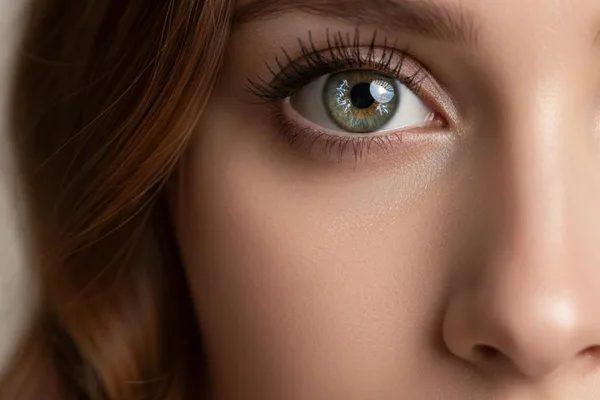
If you look at your own eye in a mirror, you can see the colored part of the eye (brown/black in our case). We call it the iris. The small black circular part in the middle is called the pupil. Simply put, this pupil is the entrance through which light enters the eye.

The lens of our eye is located right behind this cornea. This means that light first enters through the cornea, then falls onto the lens, and from there, is focused onto the retina.

What is this amazing lens made of?

The lens of the eye is truly an amazing creation. It is made up of a special type of protein called ``Crystallins''. The lens of the eye is the place where there is the highest concentration of protein of any tissue in our body. It is because of these special proteins that the lens gets its transparent nature and focusing power.

The important thing is that as the cells in this lens mature, they lose parts like their nuclei. That's why the lens becomes completely transparent without any obstruction. But this has a side effect. Because there is no nucleus, these cells cannot divide and grow new ones. That means that the lens cells that we have when we are born are the same throughout our lives. New cells accumulate on the outside, but old cells crowd into the middle. Like the rings of a tree trunk. Over time, the oldest cells in the middle begin to weaken.

Problems with the lens of the eye as we age (cataracts and vision impairment)

Over time, especially due to sun exposure and other environmental factors, the old protein cells in our eye's lens begin to break down and degrade. This causes the cells to lose their transparency, become cloudy, and become cloudy. This is what we call "Age-related Cataracts."

Also, as we age, the lens loses its flexibility. This means that it loses its ability to become spherical when looking up close. This is when things that are close up become blurry, especially when reading a book or newspaper. We call this condition `(Presbyopia)`.

Medical condition What happens and symptoms
Cataracts The proteins in the lens break down and become cloudy/scaly . The world appears foggy and unclear. The black iris of the eye appears gray or white.
Presbyopia Difficulty seeing near due to decreased flexibility of the lens. Having to read things like a newspaper or book from a distance. Eye strain when working near.

What does a cataract look like when it forms?

When cataracts develop, the world looks like it is looking through a dirty glass. Everything seems blurry and foggy. Initially, this clouding can start in a small area, and over time, it can spread to the entire lens. To an outside observer, the black pupil in the center of the eye may appear grayish-white instead of black. (Sometimes, due to genetic reasons, babies are born with cataracts, and this is one of the main signs that can help you recognize them.)

Nearsightedness (Presbyopia)

As the flexibility of the lens decreases, it becomes difficult for you to focus on things that are close to you. You may have seen the elderly in our homes reading the newspaper with their arms outstretched and far away. This is the reason for this. Or, when reading a book or looking at the phone, your eyes may feel tired quickly.

What are the treatments for these conditions?

There are now very effective treatments for both of these problems, so there is no reason to be afraid.

The most important thing is that if you notice any changes in your vision, see a qualified doctor as soon as possible and have your eyes examined.

Treatment for nearsightedness (Presbyopia)

Since this is a common condition that occurs with age, there are several solutions:

  • Glasses: Wearing glasses with the appropriate power is the simplest and most common method.
  • Contact Lenses: This is a good option for those who don't like glasses.
  • Eye Drops: Some modern medications can temporarily improve near vision to some extent.
  • Vision Correction Surgery: This condition can be corrected through methods such as laser treatment.

Your doctor will examine the condition of your eyes and explain to you what treatment is best for you.

Treatment for cataracts

The only and most effective treatment for cataracts is surgery. This is now the most common and safest surgery in the world.

This involves a surgeon removing your cloudy natural lens and replacing it with an artificial lens (Intraocular Lens, or IOL) . This is a very successful treatment, and many people regain clear vision after surgery.

Sometimes, before cataracts develop, this type of artificial lens implantation surgery is performed to correct near/far vision problems. It is called `(Refractive Lens Exchange)`.

How can we protect the lenses of our eyes?

Although we can't stop aging, there are several things we can do to prevent the lens in our eyes from weakening quickly and minimize the damage.

  • Sun protection: The ultraviolet rays in strong sunlight are harmful to the lens of the eye. Therefore, wear good quality sunglasses when going out in the sun.
  • Avoid smoking: Smoking and exposure to secondhand smoke significantly increase the risk of developing cataracts.
  • Diabetes control: If you have diabetes, it is very important to control it well, as uncontrolled diabetes is a major risk factor for cataracts.
  • Regular eye exams: Having your eyes checked by a doctor regularly, especially after the age of 40, can help identify any problems early and seek treatment.

The lens of our eye is a unique structure that is essential for clear vision. It is normal for it to change over time. However, if we are aware of it and take proper care of our eyes, we can see the world clearly throughout our lives.

Take-Home Message

  • The lens of the eye is like the lens of a camera, a part that helps focus light and create a clear image.
  • As we age, the lens becomes cloudy (cataracts) and its flexibility decreases (presbyopia). These are common conditions.
  • The only treatment for cataracts is surgery to remove the cloudy lens and replace it with an artificial lens. It is a very successful and safe treatment.
  • Treatments such as glasses, contact lenses, or surgery can be used to correct nearsightedness.
  • Wearing sunglasses, avoiding smoking, and controlling diseases like diabetes can help maintain the health of your eye lens for the long term.
  • If you notice any changes in your vision, seek medical advice immediately.

crystalline lens, cataracts, presbyopia, nearsightedness, eyesight, eye diseases

Frequently Asked Questions (FAQ)

What does a cataract look like when it forms?

When cataracts develop, the world looks like it is looking through a dirty glass. Everything seems blurry and foggy. Initially, this clouding can start in a small area, and over time, it can spread to the entire lens. To an outside observer, the black pupil in the center of the eye may appear grayish-white instead of black. (Sometimes, due to genetic reasons, babies are born with cataracts, and this is one of the main signs that can help you recognize them.)

⚠️ Important: The medical articles and information on Nirogi Lanka are for general awareness only, and are by no means a substitute for professional medical advice, diagnosis, or treatment. For any medical problem you have, consult a qualified physician immediately.

💬 Comments (0)

No comments have been posted yet. Add your comment here for the first time.

Add your comment

Please calculate: 3 + 6 =
What you need to know about the crystalline lens
How the Body WorksJuly 7, 2026

What you need to know about the crystalline lens

Have you ever wondered how our eyes, like a good camera, focus clearly on things that are far away and near? A very important part of our eyes helps with this amazing task. That is the "lens". Today we are talking about this small, but very valuable lens.

What is the lens of the eye? Let's understand it simply.

The lens of the eye is just like the lens in a camera. Imagine you are taking a photo of a beautiful flower. The lens of the camera collects the light from the flower, focuses it, and sends it to the sensor on the back of the camera. That is when a clear picture is created.

The lens of our eye does exactly this. It is a completely transparent, curved structure located deep inside our eye. Light entering the eye passes through this lens, is focused to a single point, and falls on the screen-like part of the eye called the retina. This retina is the camera sensor in our eye. From there, that data goes to the brain and we see it as an image.

What's really going on with this little lens?

The main function of the lens of the eye is focusing . But this is more complicated than you might think.

Imagine you are looking at a mountain in the distance, and the next second you are reading the book in your hand. To see clearly at both distances, the lens of the eye has to change its shape.

  • When looking far away: the lens becomes a little flatter.
  • When looking up close: The lens comes up a little and becomes rounder.

This ability to automatically change shape is what allows us to see clearly at different distances. But remember, the cornea, the clear part of the eye at the front of the eye, does about 70% of the focusing power. The lens does the fine-tuning work of the remaining 30%.

Where is the lens of the eye located?

If you look at your own eye in a mirror, you can see the colored part of the eye (brown/black in our case). We call it the iris. The small black circular part in the middle is called the pupil. Simply put, this pupil is the entrance through which light enters the eye.

The lens of our eye is located right behind this cornea. This means that light first enters through the cornea, then falls onto the lens, and from there, is focused onto the retina.

What is this amazing lens made of?

The lens of the eye is truly an amazing creation. It is made up of a special type of protein called ``Crystallins''. The lens of the eye is the place where there is the highest concentration of protein of any tissue in our body. It is because of these special proteins that the lens gets its transparent nature and focusing power.

The important thing is that as the cells in this lens mature, they lose parts like their nuclei. That's why the lens becomes completely transparent without any obstruction. But this has a side effect. Because there is no nucleus, these cells cannot divide and grow new ones. That means that the lens cells that we have when we are born are the same throughout our lives. New cells accumulate on the outside, but old cells crowd into the middle. Like the rings of a tree trunk. Over time, the oldest cells in the middle begin to weaken.

Problems with the lens of the eye as we age (cataracts and vision impairment)

Over time, especially due to sun exposure and other environmental factors, the old protein cells in our eye's lens begin to break down and degrade. This causes the cells to lose their transparency, become cloudy, and become cloudy. This is what we call "Age-related Cataracts."

Also, as we age, the lens loses its flexibility. This means that it loses its ability to become spherical when looking up close. This is when things that are close up become blurry, especially when reading a book or newspaper. We call this condition `(Presbyopia)`.

Medical condition What happens and symptoms
Cataracts The proteins in the lens break down and become cloudy/scaly . The world appears foggy and unclear. The black iris of the eye appears gray or white.
Presbyopia Difficulty seeing near due to decreased flexibility of the lens. Having to read things like a newspaper or book from a distance. Eye strain when working near.

What does a cataract look like when it forms?

When cataracts develop, the world looks like it is looking through a dirty glass. Everything seems blurry and foggy. Initially, this clouding can start in a small area, and over time, it can spread to the entire lens. To an outside observer, the black pupil in the center of the eye may appear grayish-white instead of black. (Sometimes, due to genetic reasons, babies are born with cataracts, and this is one of the main signs that can help you recognize them.)

Nearsightedness (Presbyopia)

As the flexibility of the lens decreases, it becomes difficult for you to focus on things that are close to you. You may have seen the elderly in our homes reading the newspaper with their arms outstretched and far away. This is the reason for this. Or, when reading a book or looking at the phone, your eyes may feel tired quickly.

What are the treatments for these conditions?

There are now very effective treatments for both of these problems, so there is no reason to be afraid.

The most important thing is that if you notice any changes in your vision, see a qualified doctor as soon as possible and have your eyes examined.

Treatment for nearsightedness (Presbyopia)

Since this is a common condition that occurs with age, there are several solutions:

  • Glasses: Wearing glasses with the appropriate power is the simplest and most common method.
  • Contact Lenses: This is a good option for those who don't like glasses.
  • Eye Drops: Some modern medications can temporarily improve near vision to some extent.
  • Vision Correction Surgery: This condition can be corrected through methods such as laser treatment.

Your doctor will examine the condition of your eyes and explain to you what treatment is best for you.

Treatment for cataracts

The only and most effective treatment for cataracts is surgery. This is now the most common and safest surgery in the world.

This involves a surgeon removing your cloudy natural lens and replacing it with an artificial lens (Intraocular Lens, or IOL) . This is a very successful treatment, and many people regain clear vision after surgery.

Sometimes, before cataracts develop, this type of artificial lens implantation surgery is performed to correct near/far vision problems. It is called `(Refractive Lens Exchange)`.

How can we protect the lenses of our eyes?

Although we can't stop aging, there are several things we can do to prevent the lens in our eyes from weakening quickly and minimize the damage.

  • Sun protection: The ultraviolet rays in strong sunlight are harmful to the lens of the eye. Therefore, wear good quality sunglasses when going out in the sun.
  • Avoid smoking: Smoking and exposure to secondhand smoke significantly increase the risk of developing cataracts.
  • Diabetes control: If you have diabetes, it is very important to control it well, as uncontrolled diabetes is a major risk factor for cataracts.
  • Regular eye exams: Having your eyes checked by a doctor regularly, especially after the age of 40, can help identify any problems early and seek treatment.

The lens of our eye is a unique structure that is essential for clear vision. It is normal for it to change over time. However, if we are aware of it and take proper care of our eyes, we can see the world clearly throughout our lives.

Take-Home Message

  • The lens of the eye is like the lens of a camera, a part that helps focus light and create a clear image.
  • As we age, the lens becomes cloudy (cataracts) and its flexibility decreases (presbyopia). These are common conditions.
  • The only treatment for cataracts is surgery to remove the cloudy lens and replace it with an artificial lens. It is a very successful and safe treatment.
  • Treatments such as glasses, contact lenses, or surgery can be used to correct nearsightedness.
  • Wearing sunglasses, avoiding smoking, and controlling diseases like diabetes can help maintain the health of your eye lens for the long term.
  • If you notice any changes in your vision, seek medical advice immediately.

crystalline lens, cataracts, presbyopia, nearsightedness, eyesight, eye diseases

Frequently Asked Questions (FAQ)

What does a cataract look like when it forms?

When cataracts develop, the world looks like it is looking through a dirty glass. Everything seems blurry and foggy. Initially, this clouding can start in a small area, and over time, it can spread to the entire lens. To an outside observer, the black pupil in the center of the eye may appear grayish-white instead of black. (Sometimes, due to genetic reasons, babies are born with cataracts, and this is one of the main signs that can help you recognize them.)

⚠️ Important: The medical articles and information on Nirogi Lanka are for general awareness only, and are by no means a substitute for professional medical advice, diagnosis, or treatment. For any medical problem you have, consult a qualified physician immediately.

💬 Comments (0)

No comments have been posted yet. Add your comment here for the first time.

Add your comment

Please calculate: 3 + 6 =