

Have you ever injured your finger while playing, doing household chores, or in a minor accident? Your finger is probably swollen, blue, and very painful. When you go to see a doctor at a time like this, he or she may tell you to put on a "finger splint." When you suddenly hear this name, you may wonder what this is. Don't worry. It's very simple, and it helps your finger heal quickly. Today, we'll talk about this finger splint in a very simple way.
Simply put, what is a finger splint?
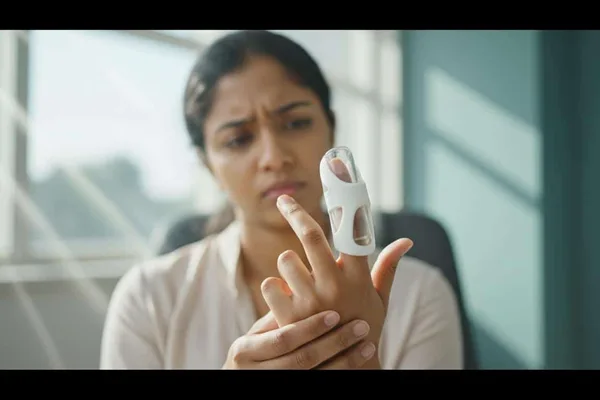
A finger splint is a medical device used to immobilize your injured finger in one position. It's like a small ' spatula ' that's placed on your finger. It's used to give your injured finger a rest and create the environment it needs to heal quickly. Doctors sometimes call these finger braces.
The type of splint you need and how long you need to wear it will depend on the nature of the injury to your finger. This can vary depending on things like whether a bone in your finger is broken or a nerve is torn. Your doctor will explain this to you clearly.
What actually happens with this splint?
Think about it, when a part of our body is injured, it takes a while to heal. Just like when a branch of a tree is broken, it takes a while to grow back. Whether a bone in a finger is broken, or a ligament or tendon is injured, those parts need to be reconnected and healed. What happens if we constantly bend and straighten that finger during this healing period? Healing is delayed, and it may not heal properly.
This is where a splint comes in. It is made of a sturdy material like plastic or metal. It also has a soft material like foam on the inside, otherwise the skin on the finger could be injured. When the splint is put on, it keeps the finger in one place without letting it move. In medicine, we call this 'immobilization' .
When the finger doesn't move:
- The injured parts get rest.
- Therefore, pain and swelling are greatly reduced.
- Because things like bones and ligaments heal when they are in the right place, it is easier to restore the function of the finger.
What types of finger splints are there?
There are several types of splints used depending on the damage to the finger. Your doctor will tell you exactly which type you need. Let's look at the main types.
| Splint type | A simple explanation |
|---|---|
| Gutter splints | This is like a tube cut in half. You can put your finger inside it. It gives you a good spot on the underside and sides of your finger. |
| Ulnar gutter splints | This is a bit long. It starts at the wrist and covers the ring finger and pinkie finger. |
| Two-finger splints (Buddy splints) | This involves placing the injured finger and the adjacent healthy finger together and taping it together. It's called a 'buddy' because the other finger gives a spot , like a friend. |
| Stack splints | This is like a little cap that you put on the tip of your finger. It is used for fingertip injuries, especially a condition called mallet finger. |
| Dynamic splints | These are a little different. This splint has small springs or joints in it. When put on, it keeps the finger from moving and also allows you to exercise the finger to some extent according to the doctor's instructions. |
| Thumb spica splints | This is especially used for thumb injuries. It starts at the wrist and wraps around the thumb. |
Remember, your doctor will tell you which splint is right for you and how to apply it. Never go to the pharmacy to get one on your own.
For what conditions is a finger splint used?
Here are some common uses for a finger splint:
- Sprained fingers: A ligament in a finger is pulled while playing sports or in a fall.
- Finger dislocations: A finger joint moving out of its normal position.
- Broken fingers: A bone in the finger is broken or broken into small pieces. Not all fractures require a splint, and sometimes a cast may be needed.
- Mallet finger: Damage to the tendon that helps extend the fingertips.
- Osteoarthritis: Control pain and swelling caused by joint wear and tear.
What is the difference between a splint and a cast?
Many people get the two confused. Both of these are meant to keep the injured area from moving, but there are slight differences.
- Cast: This is usually made of plaster or fiberglass. A doctor applies it to the injured arm or leg to make it fit snugly. This provides more support and protection. However, it cannot be removed on its own.
- A splint: This is often a pre-made splint. It can be made with Velcro® straps or tape to fit your finger. It is less painful than a cast, but it is easier to put on and take off. This is very useful because you can loosen it a little when there is swelling.
A splint is often used instead of a cast for a finger injury. However, if a bone in the hand or wrist is broken, a cast may be necessary.
Are there any risks to using a splint?
There are generally no major risks involved in using a finger splint. However, minor problems can occur if not used properly or kept clean.
- Skin damage: The skin may become red and pressure sores may form where the splint is pressed tightly against the skin.
- Infections: If the splint gets wet and sweaty, skin infections can occur. Therefore, it is important to keep the area clean and dry at all times.
- Nerve compression: If the splint is too tight, the nerves underneath it may be compressed, causing numbness or loss of sensation in the finger.
If you feel anything like this , call your doctor immediately.I have to say.
How long should I wear the splint?
This depends entirely on the nature of your injury. It usually lasts for a few weeks. It can even last a month or more. Never take the splint off at any time. Your doctor will tell you how long you should keep it on and when you can take it off.
Ask your doctor if you can remove the splint, such as when you shower. If he or she allows you to do so, you should be very careful and not put too much pressure on your finger.
How to control symptoms during this time?
Even with the splint in place, there may be some pain and swelling in the first few days.
- Painkillers: You can take a painkiller such as paracetamol or NSAIDs (nonsteroidal anti-inflammatory drugs) on the advice of your doctor. Be sure to talk to your doctor before taking painkillers for more than a few days.
- Ice: To reduce swelling, you can place an ice pack wrapped in a cloth over the splint for about 15-20 minutes, as directed by your doctor.
- Elevate the arm: Keep the arm above the level of the heart whenever possible. Propping the arm up on a pillow can help reduce swelling.
When should you definitely see a doctor?
If you experience any of these symptoms while wearing a splint, you should see a doctor immediately without delay. Or go to the Emergency Department (ETU) of the nearest hospital.
- If the pain is unbearable .
- If the swelling is increasing day by day.
- If the color of the finger changes (like becoming very blue, pale).
- If you lose feeling in your finger or feel numb .
- If the splint breaks or becomes too loose.
Take-Home Message
- A finger splint is a device that immobilizes an injured finger and helps it heal faster.
- Only your doctor can determine the type of splint that is right for you and how long you should wear it.
- It is very important to wear the splint exactly as the doctor tells you, for the entire time. Do not take it off at will.
- Keep the skin under the splint clean and dry. If it gets wet, dry it immediately.
- If the pain increases, the swelling increases, the finger becomes numb, or the color changes, seek medical advice immediately.




💬 Comments (0)
No comments have been posted yet. Add your comment here for the first time.
Add your comment