
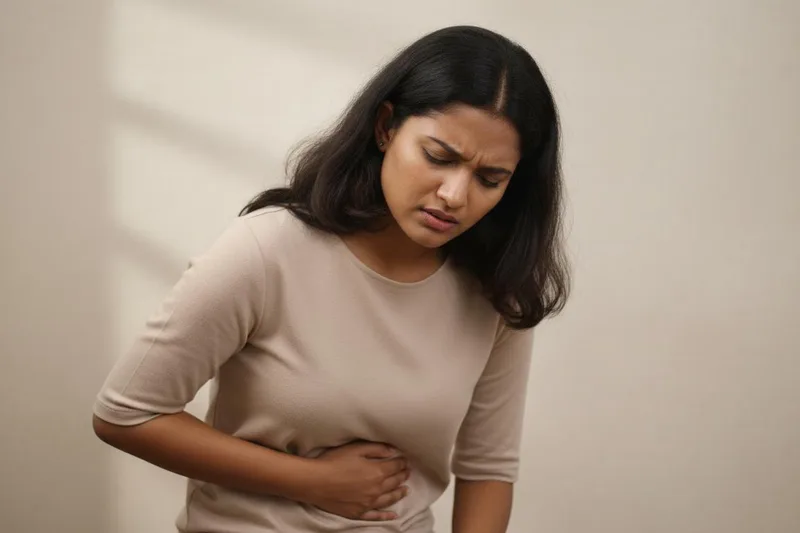
Do you also experience severe pain in the right side of your stomach, below your ribs, along with nausea and vomiting? Most of the time, we think it's gastritis, but it could be something more serious. Today, we're going to talk about a condition that many people don't know about, but it's very important to know about. That's inflammation of the gallbladder, or in medical terms, cholecystitis.
What is this gallbladder? What is this inflammation?
Simply put, the gallbladder is a small pear-shaped sac-like organ located under our liver. Its main function is to temporarily store a liquid called "bile" produced by the liver. When we eat a meal that is high in fat or oil, the gallbladder releases some bile into our small intestine to help digest it. This bile travels through a system of small tubes that are like water pipes. Doctors call these "bile ducts."
Now imagine, what happens if one of these bile ducts becomes blocked for some reason, or if the gallbladder becomes infected? That's when the gallbladder swells and becomes painful and inflamed. We call this condition cholecystitis .
Are there main types of gallbladder inflammation?
Yes, we can see this situation in two main ways.
1. Acute Cholecystitis: This is a severe condition that starts suddenly. The pain is very severe.
2. Chronic Cholecystitis: This is not a sudden condition . It is a condition where the gallbladder becomes weak over time, causing intermittent pain that subsides.
In addition, it is also classified according to the cause. If it is caused by gallstones, it is called ``Calculous cholecystitis''. If it is caused by other causes without stones, it is called ``Acalculous cholecystitis''. However, it is important to remember that in about 95% of cases, the cause is gallstones .
What are the symptoms of gallbladder inflammation?
It is very important to recognize these symptoms accurately, so that you can seek medical advice quickly.
| Symptom | Description |
|---|---|
| Severe pain in the upper right side of the abdomen | This is the main symptom. The pain suddenly increases and reaches a peak. Some people may feel this pain moving to the right shoulder or back. The pain may increase when taking a deep breath. Some people even mistake this for chest pain or a heart attack. |
| Nausea and vomiting | It is very common to experience severe stomach pain along with nausea and vomiting. |
| Fever | Some people can have a fever over 100 degrees Fahrenheit. A fever can mean that there is an infection or inflammation that is more serious. However, older people are less likely to have a fever. |
| Other features | Symptoms such as bloating, pain when touching the stomach, lethargy, and loss of appetite can be seen, especially in older people. |
The important thing is that in a chronic condition, these symptoms may not be as severe. After eating a particularly fatty meal, you may experience stomach discomfort and nausea for a few hours and then it will go away.
Why does this gallbladder inflammation occur?
As we mentioned earlier, the main and most common cause is gallstones . These are formed when various substances in the bile accumulate and harden over time, like pebbles. If these stones get stuck in the gallbladder or in a bile duct, the bile cannot flow out and accumulates inside the gallbladder. Then the gallbladder becomes swollen, inflamed, and can even become infected with bacteria.
But it's not just stones, there could be other reasons as well.
- Biliary stricture: Other diseases can cause scarring of the bile ducts and narrow them.
- Biliary dyskinesia: The muscles in the gallbladder do not contract properly, preventing the bile from being released.
- Gallbladder cancer: Very rarely, cancer of the gallbladder or bile ducts can also cause blockage of the bile ducts.
- Reduced blood supply (Ischemia): If the amount of blood supplied to the gallbladder decreases for some reason, inflammation can occur.
- Infections:Even without gallstones, the gallbladder can rarely become infected due to bacterial infections.
Who is most at risk of developing this condition?
People who are more likely to develop gallstones are at higher risk of developing this inflammation. They are:
- Women
- Pregnant mothers
- Obesity (overweight)
- People with diabetes
- People with high blood cholesterol levels
- People who have suddenly lost a lot of weight
- People over 40 years old
Is this a serious condition? What are the possible complications?
Yes, this is not a condition to be taken lightly . In an acute condition, the bile duct becomes blocked, causing bile to back up into the blood. This can cause the entire body to feel heavy.
Some of the serious complications that can occur if left untreated are:
- Gangrene: Excessive swelling can cut off blood flow to the gallbladder and cause the tissue to die.
- Gallbladder perforation: After tissue death, the gallbladder wall becomes perforated, allowing bile and toxins to leak into the abdomen.
- Peritonitis: When bile leaks into the abdomen, germs can enter the delicate lining of the abdomen and cause a serious infection.
- Septicemia: If this infection spreads to the blood, it can be life-threatening.
- Pancreatitis: Depending on the location of the stone, the pancreas may also be affected.
Therefore, if you have symptoms like these, the best thing to do is to see a doctor immediately , rather than staying home and thinking "it might be gastritis."
How does a doctor diagnose this?
When you go to the doctor, he will ask you about your symptoms. Then he will examine you. There is a well-known test to check for gallbladder inflammation. In it, the doctor will press on the upper right side of your abdomen and ask you to take a deep breath. If you feel severe pain, that is a key sign of gallbladder inflammation (`Murphy's sign`).
After that, you can refer to the following tests to confirm the disease:
- Blood tests: Complete blood count (CBC) and liver function tests.
- Abdominal ultrasound: This can clearly detect things like gallstones and swelling.
- CT scan: This is done if a clearer picture is needed.
- HIDA scan: This can accurately determine how well the gallbladder is functioning and whether there is any blockage in the bile ducts.
How is it treated? Can this be cured?
Yes, absolutely. If you are diagnosed with gallbladder inflammation, you will be admitted to the hospital and treatment will begin.
Initial treatment:
- Saline (IV fluids): This is a fluid infusion that provides your body with the fluids it needs while giving your digestive system a rest.
- IV antibiotics: Antibiotics are given through a vein to prevent or treat infection if it is present.
- IV pain relief: Strong painkillers are given to control severe pain.
The main and most permanent treatment:
The most permanent and best treatment for gallstones is surgical removal of the gallbladder (`Cholecystectomy`) . Most of the time, the root cause of all these problems is the gallbladder and the stones in it, and removing it completely resolves the problem.
Don't be afraid of "oh, surgery!" This is a very common, low-risk surgery now. Most of the time, it is done laparoscopically . This means that the gallbladder is removed using a camera instead of a large incision in the abdomen. This can help you recover faster and reduce your hospital stay. However, in some complex cases, open surgery may be necessary.
Are there other options for people who cannot have surgery?
Sometimes, someone with other serious medical conditions may not be able to have surgery right away. In such cases, a temporary procedure called drainage can be used to relieve pressure on the gallbladder. Or, a procedure called endoscopic retrograde cholangiopancreatography (ERCP) can be used to remove stones from the bile ducts. However, these are often temporary solutions. Ultimately, the best solution is to remove the gallbladder.
Is there no problem after removing the gallbladder?
This is a question that many people have. Is it possible to live without a gallbladder? Absolutely. The gallbladder's only job was to store bile. When it is removed, bile from the liver makes its way directly into the small intestine.
It can take a few weeks or months for the body to adjust to this new system. During that time, some people may experience temporary discomfort, such as:
- It is a little difficult to digest oily and fatty foods.
- Some people experience diarrhea-like symptoms.
But over time, your body will adjust to this. Your doctor will advise you on a suitable diet.
Take-Home Message
- Severe pain in the upper right side of the abdomen, nausea, and fever can be symptoms of gallbladder inflammation. Don't ignore it, thinking it's "gastritis."
- The main reason for this is gallstones.
- If left untreated, this can develop into a serious condition that can lead to gallbladder rupture, abdominal infections, and even life-threatening complications.
- If you have these symptoms, see a doctor immediately. If necessary, go to the Emergency Department (ETU) of the nearest hospital.
- Surgical removal of the gallbladder is the most permanent and safest treatment. There is no obstacle to living a normal life without a gallbladder.


💬 Comments (0)
No comments have been posted yet. Add your comment here for the first time.
Add your comment