

"Doctor, after eating a meat curry last night and going to bed, I suddenly felt an unbearable pain in the right side of my chest and upper abdomen. The pain spread to my back. The doctor came because I was afraid I was having a heart attack." 45-year-old Kamini came to the clinic with great fear.
Dr. Priya sat her down and explained, "Kamini, don't worry. Your ECG is completely normal. That means it's not a heart attack. You have a condition called biliary colic, which is caused by gallstones. When you eat a fatty meal, the gallbladder contracts, and a stone gets stuck in the bile duct, causing this severe pain."
What are gallstones? In this article, we will simply understand their causes, symptoms, and medical and surgical treatments.
What are gallstones?
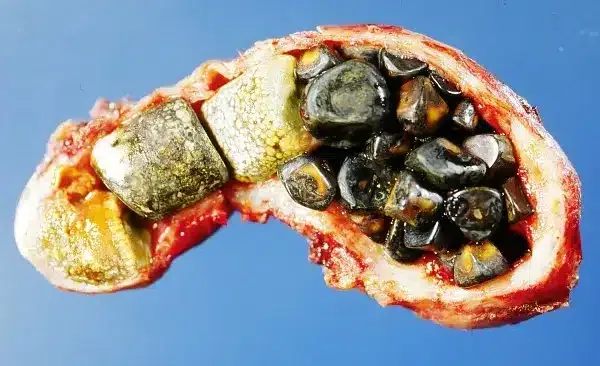
Gallstones are hardened bile stones that form in the gallbladder or bile ducts. The gallbladder is a small sac-like organ located on the right side of the abdomen that stores bile produced by the liver. In medicine, the condition of gallstones is called cholelithiasis .
Are gallstones dangerous?
Not everyone who has gallstones will experience symptoms. Many people live without knowing they have gallstones. However, if a stone breaks free from the gallbladder and becomes lodged in the bile ducts, it can block the flow of bile, causing severe pain and various complications.
About 10% of adults have gallstones, 75% of whom are women. Of these, only 20% develop symptoms.
What are the symptoms of gallstones?
There are no symptoms until a stone becomes lodged in a bile duct. When an obstruction occurs, the following symptoms occur:
- Severe pain in the upper right part of the abdomen.
- Nausea and vomiting.
- Excessive sweating.
- High fever and chills.
- Increased heart rate (Tachycardia).
- Yellowing of the eyes and skin (jaundice).
- Dark urine and pale stools.
#### What is a Gallstone Attack / Biliary Colic?
This is a sudden, sharp, unbearable pain that occurs after eating a fatty meal. It occurs when a stone gets stuck in a duct when the gallbladder contracts to digest the fat. The pain may start in the right upper quadrant of the abdomen and radiate to the right shoulder, back between the shoulder blades, or the center of the chest (this can be similar to the pain of a heart attack). The pain can last from a few minutes to a few hours.
What are the causes of gallstones?
An imbalance in the components of bile causes chemicals to build up in the gallbladder and form stones:
- High cholesterol (Cholesterol Stones): Too much cholesterol is secreted by the liver that cannot be dissolved by the acids in bile (most gallstones are cholesterol stones).
- Pigment Stones: Excessive accumulation of bilirubin, a hormone produced during the breakdown of red blood cells, in the bile due to liver disease or blood diseases.
- Bile Acid Deficiency: Decreased absorption of bile acids due to intestinal diseases, making it difficult to dissolve cholesterol in bile.
- Gallbladder Stasis: Bile accumulates and thickens when the gallbladder does not contract properly and completely empty it.
Risk factors for gallstones
- Gender and hormones: Women are 3 times more likely to develop gallstones. The hormone estrogen increases cholesterol in the bile, while progesterone slows down the rate at which the gallbladder contracts.
- Overweight and Obesity: Increased body fat increases the risk of developing cholesterol stones.
- Rapid weight loss: When you lose too much weight in a short period of time, body fat melts and a large amount of cholesterol is added to the bile at once.
- Genetic influence: Family members have a history of gallstones.
🩺 Diagnosis and tests
- Abdominal Ultrasound: This is the main and simplest test to detect gallstones.
- MRCP (Magnetic Resonance Cholangiopancreatography): A specialized MRI test used to look for stones stuck in the bile ducts.
- HIDA Scan (Hepatobiliary Scan): Measures the contractility and function of the gallbladder.
- ERCP (Endoscopic Retrograde Cholangiopancreatography): A test in which a tube with a camera is passed through the stomach into the bile duct to identify stones and remove them at the same time.
🚨 Red Flags that require immediate medical attention
A gallstone that remains stuck in a bile duct for a long time can cause fatal complications. Seek immediate medical attention if you experience the following symptoms:
- Acute Cholecystitis: Severe abdominal pain lasting more than 6 hours.
- Jaundice: Dark yellowing of the skin and eyes, tea-colored urine (due to bile mixing with blood).
- Acute Pancreatitis: Severe abdominal pain that radiates to the abdomen and persistent vomiting (due to blockage of the pancreatic duct).
- Septicemia: Fever and chills and a rapid drop in blood pressure.
🛠️ Action Steps to Control and Treat Gallstones
- First step:If you frequently experience pain in the right side of your stomach after eating, see a doctor immediately and have an abdominal ultrasound.
- Step 2: If gallstones cause frequent pain, undergo a gallbladder removal surgery (cholecystectomy) to permanently cure the condition.
- Third step: For patients who cannot undergo surgery, obtain Ursodeoxycholic Acid (Ursodiol) tablets, which dissolve cholesterol stones, on medical advice (this is a treatment that takes many months).
- Step Four: Limit the consumption of foods high in oil and fat (coconut milk, fried foods, red meat) to prevent gallstones.
- Step Five: When losing weight, lose weight gradually and slowly, following the advice of a doctor or nutritionist.
📊 Treatment Options Comparison
| Treatment | How it works | Prognosis |
|---|---|---|
| Laparoscopic Cholecystectomy | Complete removal of the gallbladder by making 3-4 small incisions in the abdomen. | Permanent cure is achieved. Stones will not form again. Recovery can occur within a few days. |
| Open Cholecystectomy | Removal of the gallbladder through an incision in the right side of the abdomen (in cases where laparoscopy is not possible). | Permanent healing occurs, but it takes several weeks to heal. |
| Drug treatment (Ursodiol) | Slowly dissolving cholesterol stones with medication. | Success is low. The risk of stones forming again after stopping the medication is high. |
❓ Some other questions you may have (FAQ)
Will there be digestive problems after gallbladder removal? ▼
No. Even if the gallbladder is removed, the liver continues to produce bile. Bile is not stored and flows directly into the intestines. Some people may have loose stools for the first few weeks, but this will return to normal over time.
Can gallstones dissolve on their own and pass out with stool? ▼
Very small stones, like grains of sand, can travel down the bile duct into the intestines and be passed out with the stool. However, larger stones do not dissolve on their own. They can become lodged in the ducts and cause complications, so treatment is essential.
How to prevent gallstones? ▼
Maintaining a healthy body weight, eating more fiber-rich foods (vegetables, fruits), limiting foods high in oil and cholesterol, and gradually losing weight can greatly reduce this risk.
Is there a connection between mastitis and cholecystitis? ▼
No. These are inflammations that occur in two completely different organ systems. Breast inflammation occurs in breastfeeding mothers, while cholecystitis is caused by gallstones blocking the bile ducts.
📖 Sources and Scientific References
- NHS (UK) Guidance on Gallstones: NHS Gallstones Overview (Accessed 2026)
- NCBI Bookshelf Clinical Review: Gallstones (Cholelithiasis) Pathology (StatPearls - NBK470440)




💬 Comments (0)
No comments have been posted yet. Add your comment here for the first time.
Add your comment