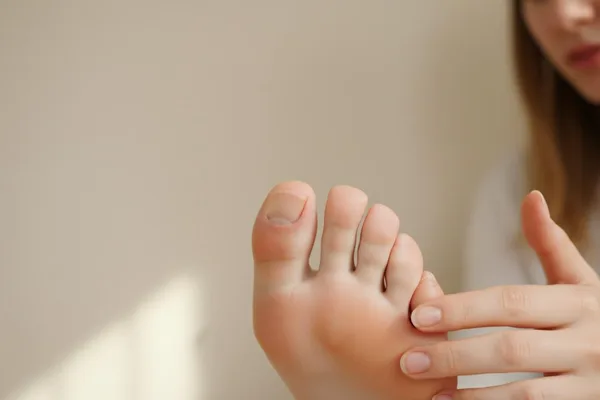
Does your nail hurt when it goes into the muscle? (Ingrown Toenail) Let's talk about this!

Does your nail hurt when it goes into the muscle? (Ingrown Toenail) Let's talk about this!

Sometimes the corner of your big toe just starts to hurt, doesn't it? It's a little red, swollen, and hurts to touch. When you look, the corner of the nail has grown into the skin. Have you experienced this? This is a common problem for many people. In medicine, we call this condition "Ingrown Toenail". Although this is usually not a major health risk, it can be very painful and lead to infection if not managed properly. So, let's talk about this very simply, in a way that you can understand.

Simply put, what does it mean when a nail goes into a muscle?

This is very simple. What we call an 'Ingrown Toenail' is when a corner of your toenail, especially the side of the nail, instead of growing straight forward, starts to grow into the surrounding muscle, that is, the skin. It's like the nail is going the wrong way.

Although this condition can occur in any toe, it is most common in the big toe (95% of cases) . This is because it is the toe that bears the most pressure when walking and running. When the nail penetrates the skin, the area becomes red, swollen, and painful. Sometimes, bacteria can get inside and cause an infection.

Who is most likely to develop this condition?

Actually, this can happen to anyone, but some people are at a higher risk.

  • For young people and athletes: Their feet sweat a lot. Sweating can soften the skin around the nail and the nail itself. Then the nail can easily tear, break, and become ingrown.
  • For people with diabetes: People with diabetes may have reduced blood supply to their feet. And if there is nerve damage, even a small wound may not be felt. Therefore, even a small nail problem is more likely to develop into a major infection.
  • Poor blood circulation in the feet: When blood circulation is poor, wounds heal more slowly. So even a small wound from a nail can become a big problem.
  • For those with nail infections: An infection of the skin around the nail, called ``paronychia'', is more likely to spread to the nail bed if there is such a condition.

The most important thing is that if you have a condition like diabetes, you should be very careful about even a small change in your nail. See your doctor immediately before trying any home treatments.

Why do nails get so sore? Let's look at the main reasons.

There is no single reason for this. There could be several reasons. I will explain them in this way to make it easier for you to understand.I will take the table .

Cause How does it happen? (How it Happens)
Cutting nails incorrectly This is the main reason. Many people cut their nails in a circular shape, following the shape of their finger. When cut that way, the corner of the nail is more likely to go into the skin. You should cut your nails straight across . Also, it is not good to cut them too short.
Wearing tight shoes If your shoes are tight in the front, they can squeeze your toes together and put pressure on your nails. This pressure can force your nails to grow into your skin. Pointed shoes and high heels are especially prone to this.
Tearing off a corner of the nail Some people cut their nails by hand instead of cutting them. When they do this, the corner of the nail may not break properly, leaving a sharp edge. This sharp edge will later penetrate the skin.
Trauma to the finger Imagine that you stubbed your toe on a chair. Or someone stepped on your foot and something heavy fell on your toe. An injury like this can damage the nail and cause it to grow incorrectly.
Finger and nail shape Some people are born with nails that are a little larger or curved inward. Also, some people have skin that naturally grows over the nail. These people are also more likely to have ingrown toenails.

What are the symptoms of an infected nail?

What may initially be just a minor pain, as the nail grows deeper into the skin, bacteria can enter and become infected. If this happens, you may experience the following symptoms:

  • Severe pain: The pain is so unbearable that you can't even move your hand.
  • Swelling and redness: The area of ​​the finger becomes very swollen and red or dark in color.
  • Pus or fluid: Yellowish pus or fluid begins to ooze from between the nail and the skin.
  • Warmth: The infected finger feels warmer to the touch than the other fingers.
  • Bad odor: Sometimes an infection can cause a bad odor.

If you have symptoms of infection like this, it's best to stop treating your infection at home and see a doctor immediately . It's possible for the infection to spread to the bones, but this is very rare.

What can you do for this at home? (Self-Care)

If there are no signs of infection, meaning it's just a little sore and a little red, there are a few simple things you can do at home.

1. Soak in hot water: Soak your foot in warm water for about 15-20 minutes twice a day. It's even better if you add a little Epsom salt or soap to the water. This will reduce pain, soften the skin, and make it easier to remove the nail.

2. Keep your feet dry: After soaking in water, and at all other times, dry your feet thoroughly. Moisture increases the chance of bacteria growing.

3. Place a cotton ball under the nail: After soaking your feet, carefully lift the corner of the nail and place a small piece of cotton ball or dental floss between it and the skin. This will force the nail to grow above the skin. This cotton ball should be changed every day.

4. Apply an antibiotic cream: Ask your doctor for an appropriate antibiotic cream, apply it to the area, and cover it with a clean bandage.

5. Wear loose-fitting shoes: Wear a pair of sandals that allow as much air as possible to your feet. If you're going out, choose shoes that have room for your toes and are loose-fitting.

6. Painkillers: If the pain is unbearable, you can take a painkiller like Paracetamol. However, it is best to consult your doctor before taking any medication.

Extremely important: If you have signs of infection or are in severe pain, never try to cut, pull, or dig into your nail yourself. Doing so can make the condition worse.

When do you need to see a doctor?

If the pain does not subside after two or three days of home treatment, or if it feels like it is getting worse, be sure to see your doctor.

In particular, seek medical advice immediately if you have any of these conditions:

  • Diabetes
  • If the nerves in the feet are damaged (Severe nerve damage)
  • Poor circulation in the legs
  • If there are signs of infection, such as pus

The doctor will examine your finger and prescribe the necessary treatment. They will probably do the same treatment you would do at home, using clean, sterilized equipment. If there is an infection, they may give you an antibiotic to take.

Treatment in severe cases

In very severe cases, or if this condition occurs frequently, the doctor may decide to perform a minor surgery. Don't worry, this is not a major operation.

This is called ``nail avulsion''. What is done here is to first numb the finger, and then carefully cut off only the part of the nail that has penetrated the skin. Sometimes it may be necessary to remove the entire nail. It takes several months for the nail to grow back. If this problem occurs frequently, a permanent solution can be provided by applying a chemical substance to the nail base to prevent that corner from growing back.

How to prevent recurrence?

Prevention is better than cure. So, if you follow these simple habits, you can stay away from this problem.

  • Cut your nails properly: This is the most important thing. When cutting your nails, cut them straight across . Don't try to round the corners. Cut the corners of the nail so that they are slightly above the skin.
  • Soak your feet before cutting: Before cutting your nails, soak your feet in warm water for a while. This will soften the nails and make them easier to cut. It's also a good idea to cut them right after you've finished bathing.
  • Choose good shoes: Wear shoes that have plenty of room in the front for your toes. It's best to buy shoes in the evening, as your feet swell a bit at the end of the day.
  • Don't break your nails by hand: Stop breaking or tearing your nails completely. Always use a good, clean nail trimmer.
  • Foot hygiene: Wash your feet thoroughly with soap every day and keep them dry.

Take-Home Message

  • An ingrown toenail is a very common and painful condition, but it is usually not dangerous.
  • The main reason for this is cutting your nails incorrectly, i.e. rounding the corners. Always cut your nails straight across.
  • In the early stages, simple home treatments such as soaking in hot water and wearing loose-fitting shoes can often cure the condition.
  • If there are signs of infection, such as pus, severe swelling, and redness, do not try to cut or dig the nail yourself, but see a doctor immediately.
  • If you have a condition such as diabetes or poor blood supply to your feet, do not ignore even a small change in your nail and seek medical advice immediately.

Ingrown toenail, ingrown toenail sinhala, nail pain, toe swelling, nail infection, how to cut nails properly, foot health
⚠️ Important: The medical articles and information on Nirogi Lanka are for general awareness only, and are by no means a substitute for professional medical advice, diagnosis, or treatment. For any medical problem you have, consult a qualified physician immediately.

💬 Comments (0)

No comments have been posted yet. Add your comment here for the first time.

Add your comment

Please calculate: 3 + 3 =
Does your nail hurt when it goes into the muscle? (Ingrown Toenail) Let's talk about this!

Does your nail hurt when it goes into the muscle? (Ingrown Toenail) Let's talk about this!

Sometimes the corner of your big toe just starts to hurt, doesn't it? It's a little red, swollen, and hurts to touch. When you look, the corner of the nail has grown into the skin. Have you experienced this? This is a common problem for many people. In medicine, we call this condition "Ingrown Toenail". Although this is usually not a major health risk, it can be very painful and lead to infection if not managed properly. So, let's talk about this very simply, in a way that you can understand.

Simply put, what does it mean when a nail goes into a muscle?

This is very simple. What we call an 'Ingrown Toenail' is when a corner of your toenail, especially the side of the nail, instead of growing straight forward, starts to grow into the surrounding muscle, that is, the skin. It's like the nail is going the wrong way.

Although this condition can occur in any toe, it is most common in the big toe (95% of cases) . This is because it is the toe that bears the most pressure when walking and running. When the nail penetrates the skin, the area becomes red, swollen, and painful. Sometimes, bacteria can get inside and cause an infection.

Who is most likely to develop this condition?

Actually, this can happen to anyone, but some people are at a higher risk.

  • For young people and athletes: Their feet sweat a lot. Sweating can soften the skin around the nail and the nail itself. Then the nail can easily tear, break, and become ingrown.
  • For people with diabetes: People with diabetes may have reduced blood supply to their feet. And if there is nerve damage, even a small wound may not be felt. Therefore, even a small nail problem is more likely to develop into a major infection.
  • Poor blood circulation in the feet: When blood circulation is poor, wounds heal more slowly. So even a small wound from a nail can become a big problem.
  • For those with nail infections: An infection of the skin around the nail, called ``paronychia'', is more likely to spread to the nail bed if there is such a condition.

The most important thing is that if you have a condition like diabetes, you should be very careful about even a small change in your nail. See your doctor immediately before trying any home treatments.

Why do nails get so sore? Let's look at the main reasons.

There is no single reason for this. There could be several reasons. I will explain them in this way to make it easier for you to understand.I will take the table .

Cause How does it happen? (How it Happens)
Cutting nails incorrectly This is the main reason. Many people cut their nails in a circular shape, following the shape of their finger. When cut that way, the corner of the nail is more likely to go into the skin. You should cut your nails straight across . Also, it is not good to cut them too short.
Wearing tight shoes If your shoes are tight in the front, they can squeeze your toes together and put pressure on your nails. This pressure can force your nails to grow into your skin. Pointed shoes and high heels are especially prone to this.
Tearing off a corner of the nail Some people cut their nails by hand instead of cutting them. When they do this, the corner of the nail may not break properly, leaving a sharp edge. This sharp edge will later penetrate the skin.
Trauma to the finger Imagine that you stubbed your toe on a chair. Or someone stepped on your foot and something heavy fell on your toe. An injury like this can damage the nail and cause it to grow incorrectly.
Finger and nail shape Some people are born with nails that are a little larger or curved inward. Also, some people have skin that naturally grows over the nail. These people are also more likely to have ingrown toenails.

What are the symptoms of an infected nail?

What may initially be just a minor pain, as the nail grows deeper into the skin, bacteria can enter and become infected. If this happens, you may experience the following symptoms:

  • Severe pain: The pain is so unbearable that you can't even move your hand.
  • Swelling and redness: The area of ​​the finger becomes very swollen and red or dark in color.
  • Pus or fluid: Yellowish pus or fluid begins to ooze from between the nail and the skin.
  • Warmth: The infected finger feels warmer to the touch than the other fingers.
  • Bad odor: Sometimes an infection can cause a bad odor.

If you have symptoms of infection like this, it's best to stop treating your infection at home and see a doctor immediately . It's possible for the infection to spread to the bones, but this is very rare.

What can you do for this at home? (Self-Care)

If there are no signs of infection, meaning it's just a little sore and a little red, there are a few simple things you can do at home.

1. Soak in hot water: Soak your foot in warm water for about 15-20 minutes twice a day. It's even better if you add a little Epsom salt or soap to the water. This will reduce pain, soften the skin, and make it easier to remove the nail.

2. Keep your feet dry: After soaking in water, and at all other times, dry your feet thoroughly. Moisture increases the chance of bacteria growing.

3. Place a cotton ball under the nail: After soaking your feet, carefully lift the corner of the nail and place a small piece of cotton ball or dental floss between it and the skin. This will force the nail to grow above the skin. This cotton ball should be changed every day.

4. Apply an antibiotic cream: Ask your doctor for an appropriate antibiotic cream, apply it to the area, and cover it with a clean bandage.

5. Wear loose-fitting shoes: Wear a pair of sandals that allow as much air as possible to your feet. If you're going out, choose shoes that have room for your toes and are loose-fitting.

6. Painkillers: If the pain is unbearable, you can take a painkiller like Paracetamol. However, it is best to consult your doctor before taking any medication.

Extremely important: If you have signs of infection or are in severe pain, never try to cut, pull, or dig into your nail yourself. Doing so can make the condition worse.

When do you need to see a doctor?

If the pain does not subside after two or three days of home treatment, or if it feels like it is getting worse, be sure to see your doctor.

In particular, seek medical advice immediately if you have any of these conditions:

  • Diabetes
  • If the nerves in the feet are damaged (Severe nerve damage)
  • Poor circulation in the legs
  • If there are signs of infection, such as pus

The doctor will examine your finger and prescribe the necessary treatment. They will probably do the same treatment you would do at home, using clean, sterilized equipment. If there is an infection, they may give you an antibiotic to take.

Treatment in severe cases

In very severe cases, or if this condition occurs frequently, the doctor may decide to perform a minor surgery. Don't worry, this is not a major operation.

This is called ``nail avulsion''. What is done here is to first numb the finger, and then carefully cut off only the part of the nail that has penetrated the skin. Sometimes it may be necessary to remove the entire nail. It takes several months for the nail to grow back. If this problem occurs frequently, a permanent solution can be provided by applying a chemical substance to the nail base to prevent that corner from growing back.

How to prevent recurrence?

Prevention is better than cure. So, if you follow these simple habits, you can stay away from this problem.

  • Cut your nails properly: This is the most important thing. When cutting your nails, cut them straight across . Don't try to round the corners. Cut the corners of the nail so that they are slightly above the skin.
  • Soak your feet before cutting: Before cutting your nails, soak your feet in warm water for a while. This will soften the nails and make them easier to cut. It's also a good idea to cut them right after you've finished bathing.
  • Choose good shoes: Wear shoes that have plenty of room in the front for your toes. It's best to buy shoes in the evening, as your feet swell a bit at the end of the day.
  • Don't break your nails by hand: Stop breaking or tearing your nails completely. Always use a good, clean nail trimmer.
  • Foot hygiene: Wash your feet thoroughly with soap every day and keep them dry.

Take-Home Message

  • An ingrown toenail is a very common and painful condition, but it is usually not dangerous.
  • The main reason for this is cutting your nails incorrectly, i.e. rounding the corners. Always cut your nails straight across.
  • In the early stages, simple home treatments such as soaking in hot water and wearing loose-fitting shoes can often cure the condition.
  • If there are signs of infection, such as pus, severe swelling, and redness, do not try to cut or dig the nail yourself, but see a doctor immediately.
  • If you have a condition such as diabetes or poor blood supply to your feet, do not ignore even a small change in your nail and seek medical advice immediately.

Ingrown toenail, ingrown toenail sinhala, nail pain, toe swelling, nail infection, how to cut nails properly, foot health
⚠️ Important: The medical articles and information on Nirogi Lanka are for general awareness only, and are by no means a substitute for professional medical advice, diagnosis, or treatment. For any medical problem you have, consult a qualified physician immediately.

💬 Comments (0)

No comments have been posted yet. Add your comment here for the first time.

Add your comment

Please calculate: 3 + 3 =