
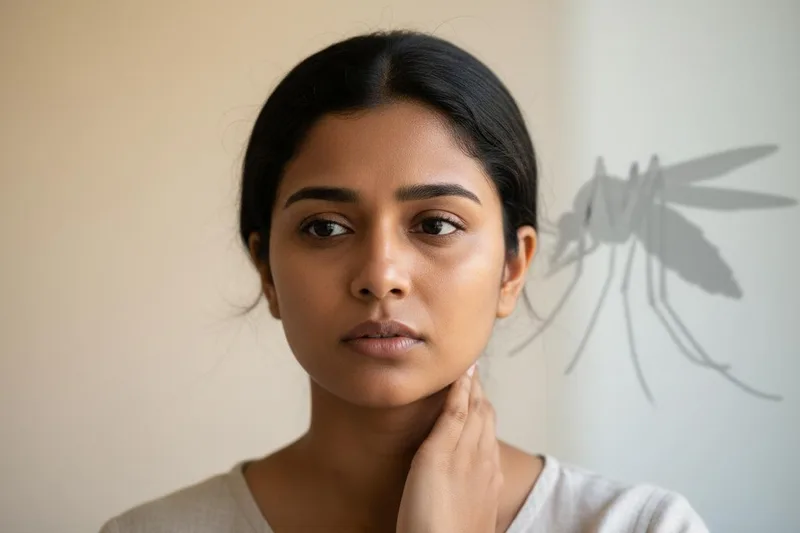
Mosquitoes are not a strange thing in our country. From bothering us at night when we go to sleep to causing diseases like dengue, mosquitoes cause us many problems. But today we are going to talk about another disease that is equally dangerous and is spread by mosquitoes. That is malaria. You may have heard this name, but you may not be aware of its seriousness. Especially if you have recently traveled to a country like Africa or South America, or if you have someone in your house who has returned from such a country, this article will be very important for you.
Simply put, what is malaria?
Malaria is a mosquito-borne disease. But not all mosquitoes. This disease is caused by a mosquito that carries a special parasite that is so small that it is invisible to the naked eye. Just like dengue fever is caused by a mosquito that carries the dengue virus.
This parasite enters our blood with the mosquito's saliva. From there, it goes directly to our liver. It silently multiplies inside the liver, that is, it reproduces, and then enters our blood again by the thousands. That's when the symptoms start to show. If not treated in time, this is a serious condition that can even be life-threatening . This can be very dangerous, especially for children under 5 years of age.
What are the symptoms of malaria?
The symptoms of malaria initially appear like a bad cold, so some people may ignore it, thinking it's just a common cold. However, these symptoms can gradually become more severe.
Symptoms usually appear within a few days to a month after being bitten by a mosquito. However, surprisingly, some people can go for up to a year without any symptoms and then suddenly develop the disease.
The table below will help you understand these symptoms better.
| Symptom | A little explanation about that |
|---|---|
| Fever and Chills | This is the main symptom. Suddenly, the body becomes very hot and feverish. At the same time, the body becomes unbearably cold and begins to shiver. Even if you wrap yourself in an ax, the cold does not subside. |
| Headache and body aches | My head hurts a lot. My muscles and joints hurt a lot too. I feel like I've been working hard for days. |
| Fatigue | I feel like I can't do anything. I'm always sleepy and my body feels lifeless. |
| Vomiting, nausea, and stomach upset | It feels like your stomach is turning over, and you want to vomit. Some people may even have a loose stomach. |
| Yellowing of the eyes and skin (Jaundice) | The whites of the eyes and skin begin to turn yellow. This indicates that the liver is affected. |
| Difficulty breathing | As the disease becomes severe, it may become difficult to breathe. |
| Change in urine color | The urine may become dark, sometimes bloody. |
| Seizures | This is a very serious condition. When the disease affects the brain, conditions like seizures can occur. |
The most important thing is that if you have traveled to a country where malaria is common and have any of these symptoms, you should see a doctor immediately , rather than assuming it's just a common cold.
How does this malaria parasite get into our bodies?
This is caused by a parasite called Plasmodium. There are five types that can infect humans. Of these, Plasmodium falciparum and Plasmodium vivax are the most common. P. falciparum in particular can cause severe illness.
The main way this is transmitted is through mosquito bites. Imagine, a mosquito bites a person with malaria. Then some of those parasites go into the mosquito's body. Then when that mosquito bites a healthy person, some of those parasites enter that person's body. The cycle is complete.
In addition to mosquito bites, it can also be transmitted through other means, very rarely.
- Transmission from pregnant mother to child.
- Blood transfusions.
- Organ donation from an infected person.
- People who use drugs use the same injection needles.
Who is most at risk?
Although anyone can get malaria, some people are more likely to develop serious complications. Let's take a look at who they are in the table below.
| Risk category | Why is the risk higher? |
|---|---|
| Young children under 5 years old | Because their immune systems are not yet fully developed, they have a hard time fighting off the disease, which can quickly lead to serious complications. |
| Pregnant mothers | During pregnancy, a mother's immunity naturally decreases slightly. If malaria develops, it can affect both the mother and the unborn child. |
| People with low immunity | People with diseases such as HIV/AIDS, cancer, or those taking medications that suppress the immune system belong to this category. |
| Travelers to malaria-prone areas | People who live in those areas develop some immunity over time. However, the disease can become more severe in a newcomer, as the parasite is unfamiliar to the body. |
Which countries are most prone to malaria?
Malaria is most common in countries with hot, humid climates.
- African countries
- Central and South American countries
- Caribbean islands (such as Haiti, Dominican Republic)
- Some countries in South and Southeast Asia
- Some islands in the Pacific Ocean
Serious complications that can occur if left untreated
Malaria is not a disease to play with. If not treated promptly, it can lead to very serious complications. These can even be life-threatening.
- Cerebral Malaria: This occurs when red blood cells filled with malaria parasites block the small blood vessels that supply blood to the brain. This can cause swelling of the brain, seizures, coma, and even death.
- Organ Failure: Vital organs such as the kidneys, liver, and spleen may be damaged and lose their function.
- Severe Anemia: Because the parasite destroys red blood cells, the amount of blood in the body can rapidly decrease, causing severe anemia.
- Breathing difficulties: Fluid may accumulate in the lungs, causing difficulty breathing.
How does a doctor diagnose malaria?
After asking about your symptoms and the areas you have recently traveled to, the doctor will perform a blood test to confirm the disease.
This involves taking a small drop of blood from your finger and examining it under a microscope. This will show you exactly whether there are malaria parasites in your blood, and if so, what type. This test is essential to confirm the diagnosis and to decide on the best treatment for you.
So, when you go to see the doctor, be sure to tell him about every country and region you've visited in the past year . That information could help save your life.
What are the treatments for malaria?
The good news is that malaria is a completely curable disease , but treatment needs to start early.
Treatment is with antimalarial medications. The type of medication you are given will depend on several factors:
- Where you got the disease: Malaria parasites in some parts of the world are drug-resistant, so the medication will vary depending on where you've been.
- The type of parasite you are infected with: Treatment may vary for a more severe type, such as `P. falciparum`.
- The severity of your condition: If the condition is severe, you may need to be given intravenous (IV) medication and treated in the hospital.
- Whether you are pregnant or breastfeeding.
- your age.
These are some of the commonly prescribed medications:
- Artemether-lumefantrine
- Atovaquone-proguanil
- Chloroquine or hydroxychloroquine
- Doxycycline ( Doxycycline ) , tetracycline or clindamycin
- Mefloquine
- Quinine
- Primaquine
- Tafenoquine
You may be given one or a combination of these medications. The most important thing is to take the medication exactly as your doctor prescribes, for the full duration of the course. Do not stop taking the medication halfway through just because you feel better. Doing so may cause the parasites to re-emerge.
How to protect yourself from malaria?
"It is better to prevent a disease than to treat it," they say. The same applies to malaria. There are several things you can do to stay safe from malaria.
| Prevention method | Description |
|---|---|
| Preventive Medications | Before you travel to a country where malaria is common, you should consult a doctor. He or she will prescribe you special medication to take before, during, and after your trip. This can greatly reduce your risk of contracting the disease. |
| Protection from mosquito bites | This is the most important thing. Use bug spray containing DEET. Wear long, full-length clothing when going out in the evening and at night. Be sure to use a mosquito net when sleeping. |
| Vaccination | A vaccine for malaria is now available. It is currently recommended for young children living in areas where malaria is common. It is not currently recommended for travelers. |
Although malaria is a serious disease, there are ways to protect ourselves from it. If detected and treated early, we can recover completely. The most important thing is to protect ourselves from mosquito bites. If you are going to a country where malaria is common, see a doctor a few weeks in advance to get the necessary advice and preventive medication. Also, if you develop symptoms such as fever after traveling, ignore them and seek medical advice immediately.
Take-Home Message
- Malaria is a serious disease transmitted by the bite of a mosquito carrying a special parasite.
- High fever, chills, body aches, and extreme fatigue are the main symptoms.
- If you have recently traveled to a malaria-prone country and have a fever, think it may be malaria and see your doctor immediately .
- Malaria can be completely cured with medication if detected early.
- When traveling, you can protect yourself from the disease by using mosquito nets, mosquito repellents, and taking preventive medications.




💬 Comments (0)
No comments have been posted yet. Add your comment here for the first time.
Add your comment