
Does the heart valve leak blood? Let's learn about the non-surgical treatment method (Paravalvular Leak Closure)

Does the heart valve leak blood? Let's learn about the non-surgical treatment method (Paravalvular Leak Closure)

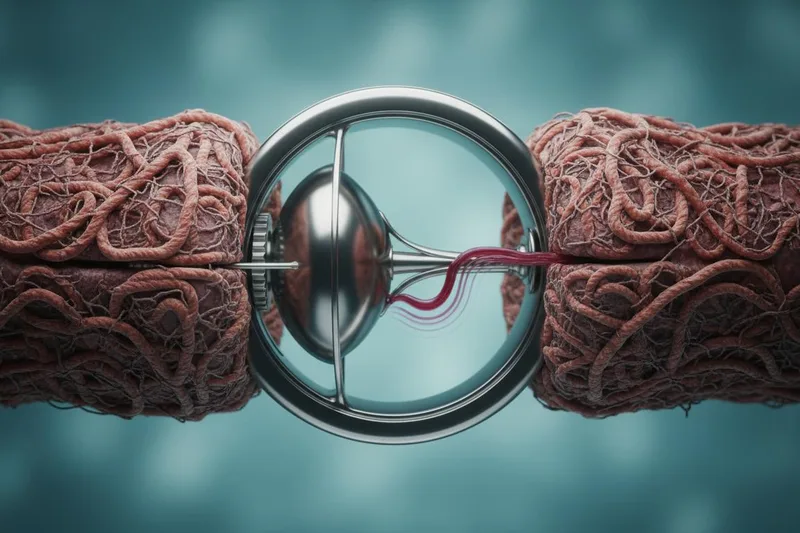
Imagine that you have had a heart valve replacement surgery and are hoping that everything is going well. Most of the time, everything goes well. But, sometimes, in a very small number of people, a small gap is left between the newly inserted artificial valve and the heart wall, and a little blood can start to leak back through it. It's like when we tighten a water pipe, a little water leaks out of the joint. In medicine, we call this a 'Paravalvular Leak' (PVL) . So today we are going to talk about a very simple, modern treatment that can close this kind of leak without having to open the chest and do major surgery.

Simply put, what is Paravalvular Leak Closure?

This is very simple. Paravalvular Leak Closure is a nonsurgical treatment. It stops the blood leakage that I mentioned earlier that occurs after replacing a heart valve. Usually, when a leak like this occurs, it can only be repaired by doing another surgery. But think about how risky it is for someone who has had heart surgery once to have such a major surgery again. This risk is especially high for someone who is older and has other diseases.

So, interventional cardiologists use this modern method to reduce this risk.

In most cases, if the leak is small, your doctor will prescribe medication. However, if the medication doesn't control the leak and you feel that further surgery is too risky, your doctor may recommend PVL closure. This is a minimally invasive procedure that can repair the leak around the heart valve and significantly reduce your symptoms.

Who really needs this treatment?

Not everyone needs this treatment. But there are some special cases where this treatment can be of great benefit. Let's see what they are.

Status Simply put...
If you have had more than one surgery If you have already had several heart valve replacement surgeries, it is risky to have another surgery. This method is best for such people.
Backward flow of blood If the leak is causing a lot of blood to flow backward (moderate or severe), it means the heart has to work harder. This can damage the heart.
Difficulty breathing (Dyspnea) If you have difficulty breathing even when you are just standing or doing small tasks, this leak may be the cause. This treatment can reduce that discomfort.
Hemolytic Anemia When blood leaks through that small gap at a high rate, the red blood cells begin to break down and be destroyed. This causes anemia, or blood loss. This is called hemolytic anemia .
Calcium deposits around the valve (Calcification) If the annulus around the valve is heavily calcified, it may be difficult to re-sew it surgically. This method is also useful in such cases.
Heart infections (Endocarditis) If you are being treated for an infection of the inner lining of the heart (endocarditis), major surgery is risky. This method may still be considered in such cases.

But it's important to remember that this treatment is not one-size-fits-all. It's best to talk to your doctor about what treatment is best for your condition, and he or she will make the best decision.

What happens before treatment?

Before undergoing this type of treatment, your doctor will perform a complete examination of you. They will assess your health and how your heart is functioning. They may also perform a series of blood cultures to rule out an infection of the heart (endocarditis).

In addition, several special tests are performed to see exactly where the leak is, how big it is, and how to reach it. These include taking pictures of the heart.

  • ECG (Electrocardiogram): A test that looks at the electrical activity of the heart.
  • Echocardiogram: A scan of the heart. This allows you to clearly see the heart's chambers, valves, and blood flow.
  • Transesophageal echocardiogram (TEE): This is also an echo scan. However, a small camera-equipped tube is inserted through the mouth, passed down the esophagus, and taken clearer pictures of the back of the heart. This is very important for finding the exact location of the leak.
  • Angiogram: A procedure that takes X-ray pictures of the blood vessels of the heart by injecting a special liquid into them.
  • Cardiac CT scan and cardiac MRI: These can produce highly detailed, three-dimensional (3D) images of the heart.

How is the treatment done and how do you prepare?

This treatment is performed by an interventional cardiologist. He is assisted by heart imaging specialists. This is usually done in a special lab in a hospital. We call it the 'Cardiac Catheterization Lab' .

Your preparation before treatment

The doctor will give you clear instructions on what to do before treatment.

  • Eating and drinking: You will be asked to stop eating and drinking a few hours before the treatment.
  • Clothing: Advice on what to wear that day.
  • Medications: You may be asked to temporarily stop or change the dosage of some medications you are taking, especially anticoagulants or nonsteroidal anti-inflammatory drugs (NSAIDs).
  • Things to inform: You should definitely tell your doctor about any allergies you have, any medications, or vitamins you are taking.

How the treatment is done

Don't be scared when you hear this, it's a very simple process.

1. First, you will be given a numbing medicine to numb the pain. So you won't feel anything, you will be relaxed.

2. Then, the doctor inserts a very fine, thin tube, called a catheter , into the main blood vessel (femoral artery) in your upper leg, which is in your groin.

3. Next, under the guidance of scanners, an even finer wire is passed through this catheter to the exact location of the leak in the heart.

4. Once the leak is located, a small device (closure device) is passed along the wire, completely closing the gap. This is like sealing a hole with a plug.

5. After scanning and confirming that the work was done correctly, the owner carefully removes the tube.

Sometimes, if you have two prosthetic valves, instead of inserting them through the groin, a very small incision can be made in the side of the chest and the catheter can be inserted through that. The important thing is that you don't have to completely open your chest, as you would with a major operation.

How long does the treatment take? What happens afterwards?

The entire process usually takes about two to three hours . You may be wondering what happens to that little device that's been placed inside your heart. Over time, your heart tissue grows around the device, and it becomes a natural part of your heart.

After treatment, you will stay in the hospital overnight for observation. You will usually be able to go home the next morning. Your doctor will give you clear instructions on how to stay home, what to do, and what not to do. You can ask your doctor when you can return to your normal activities.

Usually, about three months after treatment, a scan is performed again to check whether the leak has completely closed and whether the valve is working properly.

What are the advantages of this method over traditional surgery?

When compared to open surgery, the PVL Closure method has several clear advantages.

  • Faster recovery: Since there is no major incision, the recovery time is very short.
  • Low risk of infection: Since there is no major wound, the risk of infection is very low.
  • Less time in the hospital: Since you can go home overnight, you don't have to stay in the hospital for weeks.
  • Minor cuts and scars: Only a very small cut is left on the body.

When should I see the doctor again?

It is very important to follow your doctor's instructions exactly and attend your appointments on time. If you develop any unusual symptoms after treatment, such as unexplained fever, pain in the groin area, or swelling , notify your doctor immediately.

If you have had a heart valve replacement, it is important to have regular checkups. Sometimes, even a new valve can leak over time. If that happens, treatment may include medication, re-surgery, or the Paravalvular Leak Closure procedure we discussed. Talk to your doctor about which option is best for your needs and health.

Take-Home Message

  • Paravalvular leak (PVL) is the leakage of blood around a heart valve after it has been replaced.
  • Paravalvular Leak Closure is a modern, non-surgical treatment that closes this leak without re-inflating the chest.
  • This treatment is done using a thin tube (catheter) inserted into a blood vessel in the upper leg.
  • This method has much less recovery time, risk, and hospital stay than major surgery.
  • Your cardiologist will decide if this treatment is right for you. Always follow his or her instructions.

Heart Valve, Paravalvular Leak, PVL Closure, Heart Leak, Heart Surgery, Catheter Therapy, Interventional Cardiology
⚠️ Important: The medical articles and information on Nirogi Lanka are for general awareness only, and are by no means a substitute for professional medical advice, diagnosis, or treatment. For any medical problem you have, consult a qualified physician immediately.

💬 Comments (0)

No comments have been posted yet. Add your comment here for the first time.

Add your comment

Please calculate: 9 + 8 =
Does the heart valve leak blood? Let's learn about the non-surgical treatment method (Paravalvular Leak Closure)
SurgeriesJuly 7, 2026

Does the heart valve leak blood? Let's learn about the non-surgical treatment method (Paravalvular Leak Closure)

Imagine that you have had a heart valve replacement surgery and are hoping that everything is going well. Most of the time, everything goes well. But, sometimes, in a very small number of people, a small gap is left between the newly inserted artificial valve and the heart wall, and a little blood can start to leak back through it. It's like when we tighten a water pipe, a little water leaks out of the joint. In medicine, we call this a 'Paravalvular Leak' (PVL) . So today we are going to talk about a very simple, modern treatment that can close this kind of leak without having to open the chest and do major surgery.

Simply put, what is Paravalvular Leak Closure?

This is very simple. Paravalvular Leak Closure is a nonsurgical treatment. It stops the blood leakage that I mentioned earlier that occurs after replacing a heart valve. Usually, when a leak like this occurs, it can only be repaired by doing another surgery. But think about how risky it is for someone who has had heart surgery once to have such a major surgery again. This risk is especially high for someone who is older and has other diseases.

So, interventional cardiologists use this modern method to reduce this risk.

In most cases, if the leak is small, your doctor will prescribe medication. However, if the medication doesn't control the leak and you feel that further surgery is too risky, your doctor may recommend PVL closure. This is a minimally invasive procedure that can repair the leak around the heart valve and significantly reduce your symptoms.

Who really needs this treatment?

Not everyone needs this treatment. But there are some special cases where this treatment can be of great benefit. Let's see what they are.

Status Simply put...
If you have had more than one surgery If you have already had several heart valve replacement surgeries, it is risky to have another surgery. This method is best for such people.
Backward flow of blood If the leak is causing a lot of blood to flow backward (moderate or severe), it means the heart has to work harder. This can damage the heart.
Difficulty breathing (Dyspnea) If you have difficulty breathing even when you are just standing or doing small tasks, this leak may be the cause. This treatment can reduce that discomfort.
Hemolytic Anemia When blood leaks through that small gap at a high rate, the red blood cells begin to break down and be destroyed. This causes anemia, or blood loss. This is called hemolytic anemia .
Calcium deposits around the valve (Calcification) If the annulus around the valve is heavily calcified, it may be difficult to re-sew it surgically. This method is also useful in such cases.
Heart infections (Endocarditis) If you are being treated for an infection of the inner lining of the heart (endocarditis), major surgery is risky. This method may still be considered in such cases.

But it's important to remember that this treatment is not one-size-fits-all. It's best to talk to your doctor about what treatment is best for your condition, and he or she will make the best decision.

What happens before treatment?

Before undergoing this type of treatment, your doctor will perform a complete examination of you. They will assess your health and how your heart is functioning. They may also perform a series of blood cultures to rule out an infection of the heart (endocarditis).

In addition, several special tests are performed to see exactly where the leak is, how big it is, and how to reach it. These include taking pictures of the heart.

  • ECG (Electrocardiogram): A test that looks at the electrical activity of the heart.
  • Echocardiogram: A scan of the heart. This allows you to clearly see the heart's chambers, valves, and blood flow.
  • Transesophageal echocardiogram (TEE): This is also an echo scan. However, a small camera-equipped tube is inserted through the mouth, passed down the esophagus, and taken clearer pictures of the back of the heart. This is very important for finding the exact location of the leak.
  • Angiogram: A procedure that takes X-ray pictures of the blood vessels of the heart by injecting a special liquid into them.
  • Cardiac CT scan and cardiac MRI: These can produce highly detailed, three-dimensional (3D) images of the heart.

How is the treatment done and how do you prepare?

This treatment is performed by an interventional cardiologist. He is assisted by heart imaging specialists. This is usually done in a special lab in a hospital. We call it the 'Cardiac Catheterization Lab' .

Your preparation before treatment

The doctor will give you clear instructions on what to do before treatment.

  • Eating and drinking: You will be asked to stop eating and drinking a few hours before the treatment.
  • Clothing: Advice on what to wear that day.
  • Medications: You may be asked to temporarily stop or change the dosage of some medications you are taking, especially anticoagulants or nonsteroidal anti-inflammatory drugs (NSAIDs).
  • Things to inform: You should definitely tell your doctor about any allergies you have, any medications, or vitamins you are taking.

How the treatment is done

Don't be scared when you hear this, it's a very simple process.

1. First, you will be given a numbing medicine to numb the pain. So you won't feel anything, you will be relaxed.

2. Then, the doctor inserts a very fine, thin tube, called a catheter , into the main blood vessel (femoral artery) in your upper leg, which is in your groin.

3. Next, under the guidance of scanners, an even finer wire is passed through this catheter to the exact location of the leak in the heart.

4. Once the leak is located, a small device (closure device) is passed along the wire, completely closing the gap. This is like sealing a hole with a plug.

5. After scanning and confirming that the work was done correctly, the owner carefully removes the tube.

Sometimes, if you have two prosthetic valves, instead of inserting them through the groin, a very small incision can be made in the side of the chest and the catheter can be inserted through that. The important thing is that you don't have to completely open your chest, as you would with a major operation.

How long does the treatment take? What happens afterwards?

The entire process usually takes about two to three hours . You may be wondering what happens to that little device that's been placed inside your heart. Over time, your heart tissue grows around the device, and it becomes a natural part of your heart.

After treatment, you will stay in the hospital overnight for observation. You will usually be able to go home the next morning. Your doctor will give you clear instructions on how to stay home, what to do, and what not to do. You can ask your doctor when you can return to your normal activities.

Usually, about three months after treatment, a scan is performed again to check whether the leak has completely closed and whether the valve is working properly.

What are the advantages of this method over traditional surgery?

When compared to open surgery, the PVL Closure method has several clear advantages.

  • Faster recovery: Since there is no major incision, the recovery time is very short.
  • Low risk of infection: Since there is no major wound, the risk of infection is very low.
  • Less time in the hospital: Since you can go home overnight, you don't have to stay in the hospital for weeks.
  • Minor cuts and scars: Only a very small cut is left on the body.

When should I see the doctor again?

It is very important to follow your doctor's instructions exactly and attend your appointments on time. If you develop any unusual symptoms after treatment, such as unexplained fever, pain in the groin area, or swelling , notify your doctor immediately.

If you have had a heart valve replacement, it is important to have regular checkups. Sometimes, even a new valve can leak over time. If that happens, treatment may include medication, re-surgery, or the Paravalvular Leak Closure procedure we discussed. Talk to your doctor about which option is best for your needs and health.

Take-Home Message

  • Paravalvular leak (PVL) is the leakage of blood around a heart valve after it has been replaced.
  • Paravalvular Leak Closure is a modern, non-surgical treatment that closes this leak without re-inflating the chest.
  • This treatment is done using a thin tube (catheter) inserted into a blood vessel in the upper leg.
  • This method has much less recovery time, risk, and hospital stay than major surgery.
  • Your cardiologist will decide if this treatment is right for you. Always follow his or her instructions.

Heart Valve, Paravalvular Leak, PVL Closure, Heart Leak, Heart Surgery, Catheter Therapy, Interventional Cardiology
⚠️ Important: The medical articles and information on Nirogi Lanka are for general awareness only, and are by no means a substitute for professional medical advice, diagnosis, or treatment. For any medical problem you have, consult a qualified physician immediately.

💬 Comments (0)

No comments have been posted yet. Add your comment here for the first time.

Add your comment

Please calculate: 9 + 8 =