

Are you also suffering from back pain these days? Especially as the baby approaches and the belly grows, many mothers feel this back pain very well. In fact, by the age of seven or eight months, some people have such a bad back that they can't even stand or sit. Isn't that a very annoying situation? But don't worry, this is something that happens to many people. Today, let's talk about what you can do for backache during pregnancy and how to get some relief.
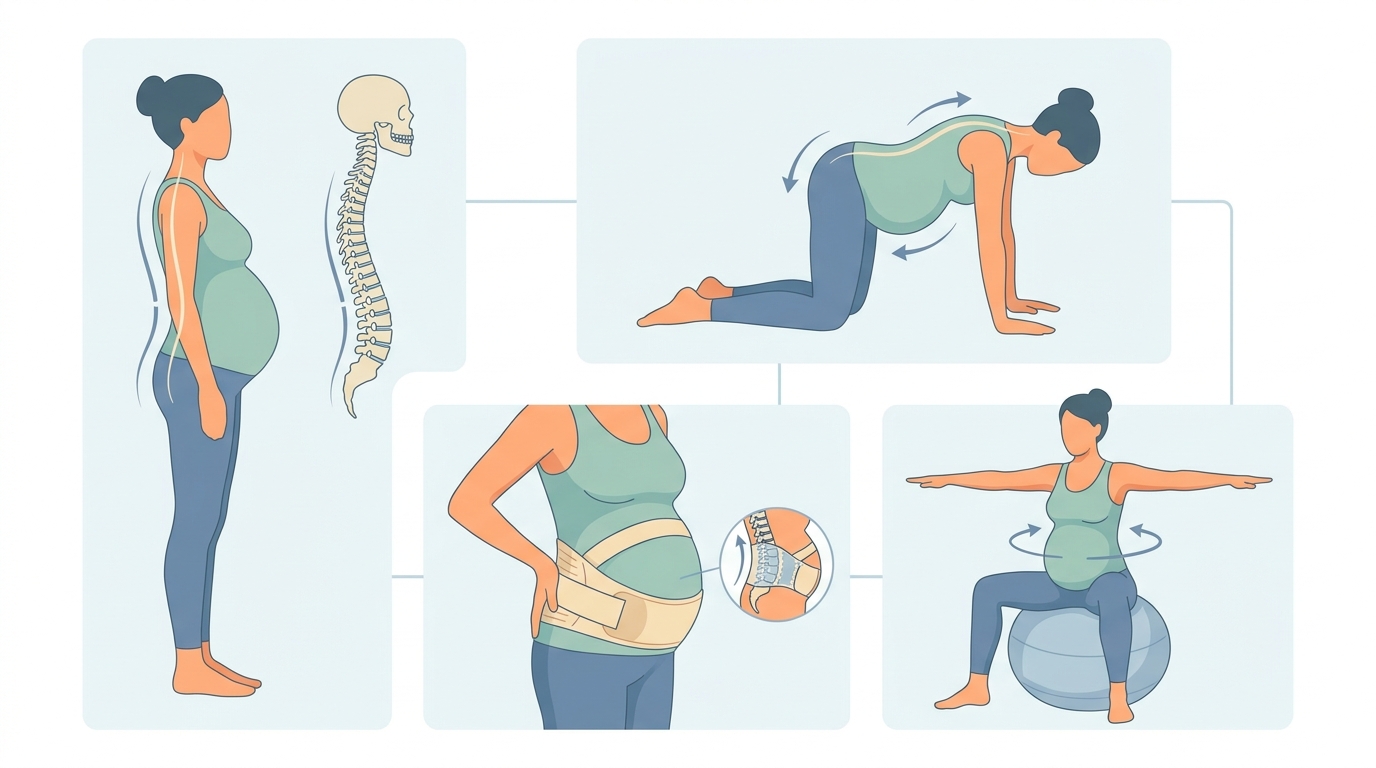
Why does our back hurt so much during pregnancy?
There are several main reasons for this. Let's see what they are.
1. Abdominal bloating and weight gain:
The simple fact is that as the baby inside your womb grows, your belly also grows . At the same time, your body weight increases by a few kilos more than normal. Your back and the muscles around your back have to work hard to bear this increased weight. Imagine, carrying a bag with rocks on it is more difficult than carrying a bag with stones on it. That's how it is. Your body's ``center of gravity`` also moves forward , which puts more pressure on your back.
2. Effect of the hormone `Relaxin`:
This is a bit of a medical issue. During pregnancy, your body produces a special hormone called `Relaxin` . The main function of this hormone is to loosen the joints and ligaments in your pelvic area a little, making the way for childbirth easier. However, this `Relaxin` hormone does not only affect the pelvis, it also loosens the ligaments in other joints in the body. Especially when the ligaments around the spine are loose, the stability of the spine decreases . Just like a nail that has been driven in tightly will bend if it loosens a little. Then, even with a slight wrong posture, even lifting a small weight, there is a high chance of injury and pain to the spine. Do you understand?
So how do you get some relief from this back pain?
Okay, now let's see what we can do to reduce this annoying back pain. Although these may seem like small things, if you follow them properly, you will be able to get great relief from the pain you are feeling.
1. Be very careful when lifting weights!
Avoid lifting heavy objects as much as possible during this time. Let's say, don't lift anything more than two or three kilos. Maybe if you have a small child at home, there will be times when you have to lift him. Or, if you absolutely have to lift something heavy during household chores, you should practice lifting it correctly .
- Never lift weights with your back bent at the waist! This is the biggest mistake many people make. Doing this puts all the weight on your back.
- Instead, bend your knees, go as low as you can (like doing a squat), and use the strength of your legs to lift the weight.. Lift heavy objects close to your body. This will reduce the pressure on your back. Think of it like bending your knees and reaching down to pick up a toy from the floor.
2. The way you sit and stand is also very important!
Standing for long periods of time or sitting for long periods of time is not good at all during this time.
- If you have to stand for a long time, either because of your job or for any other reason, keep a small stool or a small box nearby to put your feet on . Keep one leg on it. Switch legs every few minutes. Also, take a short break (`break`) at least every half hour, walk around a bit, and change positions.
- When sitting , if possible , use a special type of chair called an `ergonomic chair` that has good back support . If you don't have one, place a small pillow or rolled towel under your lower back (the `small of your back`) in the chair you are sitting in. This will support the natural curve of your back and reduce pain.
- Try to keep your back as straight as possible, both when sitting and standing. As your belly grows, you may be tempted to push your belly forward and arch your back. Instead, try to keep your shoulders back and sit up straight. This can be a little difficult to get used to, but it's great for your back.
3. A warm, healing infusion
For back pain , apply a hot water bottle, a warm towel, or a `heating pad` on the lowest setting for about 15 minutes . This will relax the muscles in your back, improve blood circulation, and provide some pain relief. But remember, don't keep it too hot , as it can burn your skin.
4. The choice of clothes and shoes also affects
Yes, the things you wear can also affect back pain.
- It is a good idea to wear an `abdominal support garment` or a `maternity belt` that provides good support for the stomach. These provide some support for the weight of the stomach, reducing the pressure on the back. Alternatively, wear `maternity pants` with a wide elastic waistband that fits under the stomach.
- Wearing high heels is not recommended during this time . Wearing high heels changes the body's balance, puts unnecessary pressure on the back, and increases the risk of falling. Therefore, choose a pair of shoes that are not too high, are comfortable for the foot, and have good arch support, that is, a pair of shoes that have good support for the sole .
5. Be careful about your sleeping position and mattress.
Sleeping properly during pregnancy can be a big challenge, but try these things to reduce back pain.
- Sleep on your side as much as possible . Sleeping on your left side is best.Sleep with at least one knee bent. This is the easiest position for your back and is good for blood circulation during pregnancy.
- If you want more comfort, place a pillow between your legs. You can also place a small pillow under your belly. There are special types of pillows on the market called `pregnancy pillows` , which provide support to your body, making it much easier to sleep.
- A firm mattress is best for this time of year. If your mattress is too spongy , your back may not be getting the support it needs. If so, try placing a large slat between the mattress and the box spring (slats). This can add a little firmness to the mattress.
6. Exercise and gentle massage as directed by a doctor
- Ask your doctor about simple stretching exercises for back pain . Also, ask if you can do low-impact exercises, such as walking or swimming, that are suitable for you. Doing exercises correctly, safely, and regularly can strengthen your back muscles and provide significant pain relief. But remember, don't start any new exercise routine without medical advice, okay?
- If your doctor allows it, you can get a special gentle massage (pregnancy massage) for pregnant women . It is important to get someone trained for this. This will also reduce fatigue and pain in the body, and will also make you feel very relaxed.
7. Think not twice, but thrice before popping a pill!
It's normal to feel like taking a painkiller when your back hurts. However, during pregnancy, do not take any medicine without talking to a doctor and getting a prescription . Even common painkillers that you can buy at the pharmacy can be harmful to the baby during this time. Therefore, no matter how difficult it is, do not take any medicine you feel like taking . If you can't bear the pain, tell your doctor. He or she will recommend something that is safe for you and your baby.
When should we definitely talk to a doctor about this back pain?
Although back pain is common during pregnancy, not all back pain can be simply dismissed. Sometimes it can be a symptom of something more serious.
Remember, if you have even the slightest doubt or fear about something, don't hesitate to talk to your doctor about it. Don't think, "Oh, is this something I should ask?" Your safety and that of your baby are more important than anything else.
In such cases, you should definitely seek medical advice:
- If your back pain is very severe, if it seems to be getting worse, or if the pain does not subside at all even after you do the things mentioned above.
- If the pain is constant, or comes and goes in a rhythm (this may be a sign of labor starting).
- If you have other symptoms along with your back pain, such as fever, chills, burning when urinating, blood in your urine (these could be signs of a urinary tract infection (UTI)), or an unusual watery or bloody discharge from your vagina.
- If your back pain radiates down your legs, your legs feel numb, or your legs feel like they are losing their power.
If you have these symptoms, it could be more than just a simple backache. So it's wise to see a doctor right away and get checked out.
So, let's summarize what we've talked about. (Take-Home Message)
Back pain during pregnancy is a common experience for many mothers. However, it's not something we just have to endure. There are things we can do to manage it and find relief.
The main thing is to be mindful of your daily posture, avoid putting pressure on your back when lifting weights and working, and choose comfortable, supportive clothing and shoes.
- Try all the little things we've talked about - sitting and standing properly, sleeping properly, taking hot baths, and doing some exercises as prescribed by your doctor. You'll feel relief gradually.
- Never, ever, for any reason, take any medication without consulting a doctor. This is something you should keep in mind.
- If you feel that your back pain is severe, or if you have other unusual symptoms, do not ignore it and definitely see your doctor.
As you embark on this beautiful journey, you may encounter small difficulties like these. But, may you find the strength to face them all! We sincerely wish you and your little one in your womb good health!
` Pregnancy Backache, Pregnant Mother, Pregnancy Backache, Backache Remedies, Pregnancy Wellness, Relaxin, Pregnancy Exercises
ukat juk’ampinaka Doctoran qillqatapa
ukat juk’ampinaka Usuñ pachanx qhipäx usux mä jan walt’awiwa, ukax 50%-70% usurnukstat taykanakan uñstayatawa. Ukax jilpachax ligamentos articulares ukanakax hormonas de embarazo (Relaxin) ukanakamp samarañapawa ukat utero ukan pesaje ukax cuerpon centro de gravedad ukar nayrar sartañapatakiw yanapt’i. Ukjja, taykajj sum saytʼasiñapawa, jaqontat yänak apthapisin qhepäjjat kʼuchuñat sipansa, qontʼasiñapawa, ukat suma chʼiyar zapato uchasirakispawa. Sinti usutächi ukhaxa, jankʼakiw qullirir jisktʼasiñama.
❓ ukat juk’ampinaka Mä qawqha juk’amp jiskt’äwinakampiw jikisipxasma (FAQ) .
ukat juk’ampinaka ¿Kunjamatsa usurïkasax chhuxriñchjasiñax juk’amp jisk’achasispa?▼
ukat juk’ampinaka Qunqurinaka taypin almohadampi, junt’u/thaya compresas ukanakampi, ukhamaraki cinturones de apoyo maternidad ukanakampi lado tuqiru ikiñaxa qullirina iyawsatapampiwa lurasispa.
ukat juk’ampinaka ¿Qhipäx usutakix usuchjasiñ qullanak umañax walikïskiti?▼
ukat juk’ampinaka Paracetamol ukax qullirinakan iwxt’awiparjamax jan kuna usunïkchisa, AINEs ukanakax ibuprofeno ukham uñt’atawa, usuriptañ pachanx janiw umañax wakiskiti.
¿Kunapachas chhuxriñchjasiñax mä jachʼa usunïtap uñachtʼayaspa?▼
ukat juk’ampinaka Qhipäx usux vaginal wilañcha jan ukax secreción, infección urinaria (UTI) jan ukax calentura ukanakamp chikt’atax utjaspa ukhaxa, ukax janïr pachapar ususiñ jan ukax infección uñacht’ayaspawa, ukat jank’akiw hospitalar apasiñapa.


💬 Comments (0)
No comments have been posted yet. Add your comment here for the first time.
Add your comment