

Today we are going to talk about some of the smallest things that we cannot see with our eyes, but can have a big impact on our lives. Yes, those are germs! Sometimes we also call them 'germs'. So it is very important for you, your family, and especially young children, to know exactly what these germs are, how dangerous they are, and how to protect yourself from them.
What are these 'germs'?
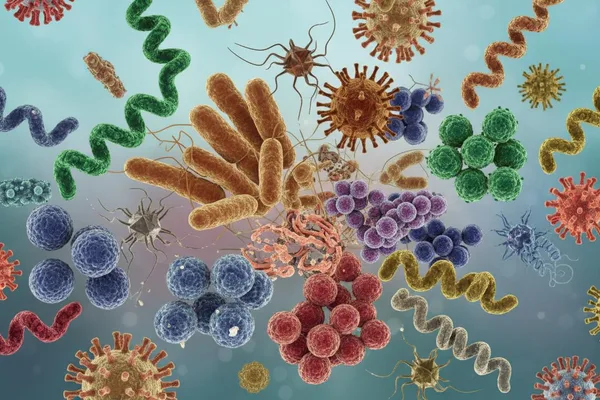
Simply put, 'germs' are tiny living things that we cannot see with our eyes, that is, they can only be seen with a microscope. If these people get inside our bodies, they can cause diseases. However, we must remember that not all germs are bad.
There are four main types of these germs:
- Bacteria
- Viruses
- Fungi
- and Protozoa
The best and simplest way to protect yourself from these germ-borne illnesses is to wash your hands regularly and thoroughly . It's like our first line of defense.
Shall we now look at the types of germs separately?
Okay, so let's talk about each of these types of germs in a little more detail so that you can have a better understanding of them.
First, let's talk about bacteria.
Bacteria are very small, single-celled organisms. They get their nutrition from the environment they live in. Sometimes that environment can be your child's body, your body, or another animal or plant.
The benefits of good bacteria for us
Remember, not all bacteria are bad for us. There are also good bacteria that help our bodies a lot .
- For example, some bacteria in our intestines help us digest the food we eat.
- Also, these good bacteria help prevent the bad bacteria that make us sick from settling inside our bodies.
- Another thing is that bacteria are also used to make some medicines, for example, some antibiotics and vaccines .
So it turns out, bacteria aren't just bad guys. They can also be useful to us.
Bad bacteria and antibiotics
However, some bacteria are harmful to us. These are the ones that cause various diseases.
- Cavities
- Urinary Tract Infections
- Ear infections
- Some throat infections, for example, strep throat
Doctors use antibiotics to treat bacterial infections like these. Remember when you had an ear infection when you were a kid and your doctor gave you antibiotics? That's how it is. Antibiotics either kill the bacteria or stop them from growing.
Next, let's look at viruses.
Viruses are much smaller than bacteria. In fact, a virus is not even a complete cell. It's more like a bit of genetic material (DNA or RNA) surrounded by a protein coat. Think of it as a small package, it has some important information inside, but it can't do anything on its own.
What happens when viruses enter our bodies?
Viruses cannot reproduce on their own, that is, they cannot reproduce themselves. To do this, they need the help of another living cell. That is, they need to enter another living thing, such as a person, an animal, or a plant, in order to survive.
Viruses can only survive for a short time outside of other living cells, such as on a table or doorknob. Viruses in bodily fluids from an infected person, even if they are on such surfaces, will die if they do not come into contact with a living body soon.
However, once inside a person's body, viruses can easily spread and make that person sick.
- Common cold
- Common illnesses like the flu
- Also, dangerous diseases like smallpox and HIV/AIDS are caused by viruses.
Why don't antibiotics work against viruses?
Here is a very important thing : Antibiotics are not effective for viral infections. Because antibiotics are designed only for bacteria. Viruses have a completely different structure and function than bacteria. That is why antibiotics are not effective for colds. Antiviral medicines have now been developed that can only be used against certain types of viruses.
Now let's talk about fungi.
Fungi are multicellular, somewhat plant-like organisms that feed on plants, food, and animals in warm, moist environments.
The fungal infections we see most often, for example athlete's foot (sometimes called athlete's foot) and yeast infections, are not serious conditions for a healthy person. They can be treated.
However, for people whose immune systems are weakened by a disease like HIV or cancer treatment, fungal infections can be a bit more dangerous . They are at greater risk of developing more severe fungal infections.
Finally, let's learn about Protozoa.
Protozoa are single-celled organisms like bacteria. However, they are larger than bacteria. They also have a nucleus and other cellular structures inside their cells. Therefore, they are somewhat similar to plant cells and animal cells.
Protozoa love moisture. Therefore, diseases caused by them, such as stomach and diarrheal diseases (e.g., amebiasis, giardiasis), are often transmitted through dirty, contaminated water.
Some protozoa are parasites. This means that they must live on or inside another organism (either an animal or a plant) to survive.
- For example, the protozoa that cause malaria grow inside human red blood cells and eventually destroy them.
Another amazing thing is that some protozoa can form a very strong protective shell around their bodies, called a cyst. These cysts allow them to survive for long periods of time outside the human body, even in harsh, dry environments.
How can you stay healthy and free from these germs?
Now you understand what this germ is like. So how do we avoid the problems it causes?
- Wash your hands often and thoroughly: This is the most important thing. Always wash your hands with soap and water for at least 20 seconds, such as before eating, before preparing food, after using the bathroom, and after coming home from outside.
- Keep the environment clean: Keep areas like the door, kitchen, and bathroom clean.
- Take care of your food and drink: Eat well-cooked food. Drink clean water.
- Personal hygiene: Take care of your personal hygiene. Cover your mouth with a tissue when sneezing or coughing.
- Healthy lifestyle: Keep your immune system strong through things like a balanced diet, adequate sleep, and exercise. Then it will be easier to resist diseases.
What time do you need to see a doctor?
Something as minor as a common cold may subside in two or three days. However,
- If the fever does not subside within a few days,
- If you have difficulty breathing,
- If vomiting and diarrhea don't stop,
- Or if you have any doubts or fears about the disease, definitely see a doctor .
Don't be reckless, especially when it comes to illnesses in young children. If you notice anything unusual, it's best to see a doctor.
The most important things we need to remember from this story (Take-Home Message)
Okay, so here are the most important things to take into your head from what we've talked about:
- Germs are tiny organisms that are all around us. Not all of them are bad, there are some good ones.
- There are four main types of organisms: bacteria, viruses, fungi, and protozoa. Each of them has its own unique characteristics.
- Washing your hands is the best way to protect yourself from germs!
- Antibiotics do not work for viral infections. Therefore, do not take antibiotics without consulting a doctor.
- It's important to be aware of these germs and live a clean, healthy life. There's no need to be unnecessarily afraid, but it's worth being careful.
So, I hope this information has been very useful to you. I wish you and your family good health!
` Germs, Bacteria, Viruses, Fungi, Protozoa, Handwashing, Antibiotics




💬 Comments (0)
No comments have been posted yet. Add your comment here for the first time.
Add your comment