

You've probably heard of stem cell transplants. They're actually a very useful, life-saving treatment for some diseases. But they take a while to fully recover. Shall we talk about this in a little more detail, like we're talking to a friend?
What are Stem Cells?
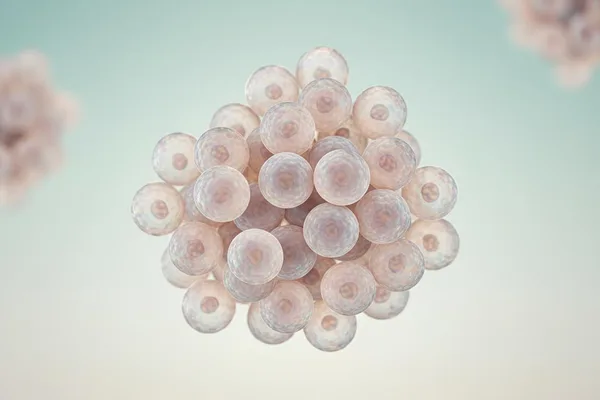
Simply put, stem cells are a very special type of cell in our body. These cells have the amazing ability to develop into many different types of cells. The stem cells we are talking about in this stem cell transplant are the ones that give rise to the essential cells in our blood. That is:
- Red blood cells: These are what carry oxygen throughout the body.
- White blood cells: These cells protect us by fighting germs and diseases that enter our bodies.
- Platelets: These are the ones that help blood clot when there is an injury.
Think of it like these stem cells are like a lump of clay that can be made into anything. Depending on the need, it can be used to make red blood cells, white blood cells, or platelets.
Why are these stem cell transplants performed?
Now, let's see in what cases these stem cell transplants can help. This is not something that is done for every disease, but in some severe cases, this is the best solution.
- For people with serious blood-related diseases: For example, some types of leukemia, which occur when the bone marrow does not function properly.
- For people with some types of cancer: Cancers like lymphoma or multiple myeloma.
- For those with severe immune deficiency: Their immune system is so weak that their bodies cannot fight off diseases.
- For people with certain autoimmune diseases: For example, in diseases like lupus, when the body's own cells attack the body.
- This treatment is also very effective for other hereditary blood diseases: Thalassemia or Sickle Cell Disease.
Where do we get these stem cells?
Okay, now you're probably wondering where we get these precious stem cells. There are three main places where doctors can get these cells:
1. Bone Marrow: This is the most popular method. This is often called a 'Bone Marrow Transplant'. Bone marrow is the soft, spongy part inside our large bones. It is where blood cells are made.
2. Through the Bloodstream: By giving special medications, stem cells from the bone marrow can be released into the bloodstream, and then these cells can be collected through a machine similar to a regular blood donation. This is called a Peripheral Blood Stem Cell (PBSC) collection.
3.Umbilical Cord Blood: After a baby is born, when the umbilical cord is removed, the blood left behind contains these valuable stem cells. These can be collected and used by someone in need.
In this way, we call the person who gives the stem cells a 'donor' . What is very important is that in some diseases, the person with the disease can also be his own donor. That is, his own stem cells are taken before the treatment of the disease begins, frozen, and then transplanted back to him when needed. This is called 'Autologous Transplant' .
But most of the time, someone else donates these cells. This is called an 'Allogeneic Transplant' . If stem cells are taken from someone else, the genetic makeup of those cells, especially the HLA (Human Leukocyte Antigen) markers, must be very similar. To put it simply, every cell in our body has a little ID card. These two ID cards must be very similar, otherwise the body will not accept the new cells. Usually, a sibling of a child is the best match. Sometimes, a match can be found from a parent or an unrelated donor. There are large databases (registries) for this to find compatible donors.
What happens if a matching donor is not found?
Imagine, if the stem cells from the donor are not an exact match (sometimes even if they are a perfect match, these issues can occur to a greater or lesser extent), two main problems can arise:
1. Rejection: This is when the patient's immune system attacks the newly transplanted donor cells. It thinks, "These are not our own cells, they are like foreign invaders," and tries to destroy them. This is prevented by immunosuppressive drugs.
2. Graft-versus-Host Disease (GVHD): This is the opposite. The newly transplanted donor's immune cells (specifically T-lymphocytes) begin to attack the healthy cells in the patient's body, thinking, "This body is not ours." This can affect areas such as the skin, liver, and intestines. There are medications to control this as well.
How does this stem cell transplant process happen?
Okay, so let's see how this transplant process works. It's a multi-step process.
1. Preparation:
Before a stem cell transplant, doctors will insert something called a 'central line', or 'central venous catheter' . This is like a large, special IV (intravenous) line. It is inserted into a large vein near the heart, under the skin in the neck, chest, or groin. This central line can be left in place for a longer period of time than a regular IV. This makes it easier for doctors and nurses to give you medicine, take blood samples, and give you the transplanted cells. You don't need to get frequent needles.
2. Conditioning treatment:
Stem cell transplants are done in a special unit in the hospital. First, the person who is going to receive the donor cells (the recipient) is given high doses of chemotherapy and/or radiation for several days. This is called conditioning treatment. This is done for two main reasons:
- Destroy bad, harmful cells (e.g. cancer cells, bone marrow cells that don't work properly) that cause disease.
- Weaken his immune system so that the newly donated cells can be properly engrafted without being rejected.
3. Stem cell transplantation:
After the treatment is complete, after a day or two of rest, the stem cells from the donor are infused into the patient through a central line (just like giving blood). This is a process that takes several hours. These cells travel through the blood and settle in the bone marrow, where they begin to make new, healthy blood cells.
What happens after the transplant?
After a person receives a stem cell transplant, it takes a while for their body to make new red blood cells, white blood cells, and platelets. It usually takes about 2-4 weeks for these new cells to start working. During this time, the risk of infections, bleeding, and other problems is very high. This is because the number of blood cells is very low while the old blood cells are being destroyed and new ones are being made.
Most people stay in a special room in the hospital for 3 to 5 weeks (or even longer) after their transplant. During this time, the medical team is very careful about the following:
- Blood tests are performed daily to see if new blood cells are being produced from the transplanted stem cells.
- Medication is given to prevent rejection and Graft-versus-Host Disease (GVHD).
- Medications such as antibiotics, antifungals, and antivirals are given to prevent infections.
- If necessary, red blood cells and platelets are given externally (transfusions).
- It checks whether organs like the liver and kidneys are working properly.
- Any problems such as mouth sores, vomiting, diarrhea, infections, bleeding, rejection, or GVHD are treated promptly.
- Ensure that the patient is receiving adequate nutrition. This may include tube feeding or total parenteral nutrition (TPN).
- Everyone who comes to the hospital is checked to make sure they are following infection prevention rules. That means:
- No one with any illness (even a cold) can come to see the patient.
- Everyone should wash their hands thoroughly before entering the room.
- Everyone must wear a mask, gloves, and a gown.
How can parents (if a child) help?
After a child receives a stem cell transplant, hisIt takes 6 to 12 months, or even longer, for the immune system to fully recover. Until then, even minor infections can be very difficult for children. Even a common cold can be dangerous. Here are some things you can do to help protect your child from infections:
- Your child, family members, and visitors (who are allowed to visit) should wash their hands thoroughly and frequently with antibacterial soap and/or hand sanitizer. This is the most important thing.
- Do not bring anyone who is sick near the child.
- Bathe your child every day with a mild shampoo and soap. Keep the skin clean.
- Follow the doctor's instructions exactly:
- When can the child go to school or other public places (crowded places, cinemas, shopping malls).
- When should a child wear a mask when going out?
- What foods are good for the child to eat and what foods are bad for the child to eat (e.g. raw salads, undercooked meat and fish).
- Can the child be around pets and touch them?
What else do we need to know?
Many children (and adults) recover after receiving a stem cell transplant. However, the time spent in the hospital and the time spent recovering at home can be a challenge for both the patient and their family, both mentally and physically.
"Don't try to go on this journey alone. Ask for help."
Get support from other family members, friends, your medical team, a counselor, or a social worker. You can only take good care of your patient (or child, if it's a child) if you take good care of yourself.
To help your patient recover and stay healthy, do these things:
- Keep all follow-up doctor visits and give your medication on time.
- Support and encourage the patient during physical changes (e.g., hair loss, fatigue, skin changes) that may occur due to chemotherapy and/or radiation.
- Help them deal with the loneliness and isolation that comes with being away from friends and family during their recovery. Provide opportunities to talk, even through video calls.
- Ask the patient if they would like to talk to a counselor or social worker to help them deal with feelings such as sadness, fear, and anger that may arise during recovery.
- Help the patient (especially a child) establish a simple daily routine that includes light exercise (if approved by the doctor), meals at regular times, and activities they enjoy, such as playing, reading, and drawing.
When do we need to see a doctor soon?
There are some risks when you return home after your transplant. If you have any of the following symptoms:You need to call the doctor immediately, without delaying even a minute, or you need to be taken to the hospital:
- If the temperature is 38.0°C (100.4°F) or higher when viewed from the mouth (this is the most dangerous sign).
- If you have a runny nose, cough, chest tightness, or difficulty breathing.
- If vomiting or diarrhea persists.
- If you are passing black, tarry stools (poops) (this could be a sign of bleeding in the intestines).
- If you bruise easily or have unstoppable bleeding (e.g. from the nose or gums).
- If there is blood in the urine, or if the color of the urine has changed.
- If you have a severe headache, dizziness, or blurred vision.
- It's okay to cough up blood, but if you can't control a nosebleed within a few minutes,
- If something new appears on the body, such as a rash.
Finally, some important things to remember
So, a stem cell transplant can be a very successful, life-changing treatment for some serious illnesses. But it is a major procedure, and recovery takes time, patience, and dedication. The most important thing is to follow the doctor's instructions exactly, give the patient (if a child, the child) love, affection, and unwavering support, and especially protect them from infections.
Remember, you and your patient are not alone in this challenging journey! The medical team, family, and friends are all with you. If you have any questions or doubts, no matter how small, don't be afraid to ask the medical team. They are there to help you.
` Stem Cell Transplant, Stem Cell Transplant, bone marrow transplant, blood diseases, cancer, immunity, children's health, Sinhala medical information, bone marrow transplant




💬 Comments (0)
No comments have been posted yet. Add your comment here for the first time.
Add your comment