

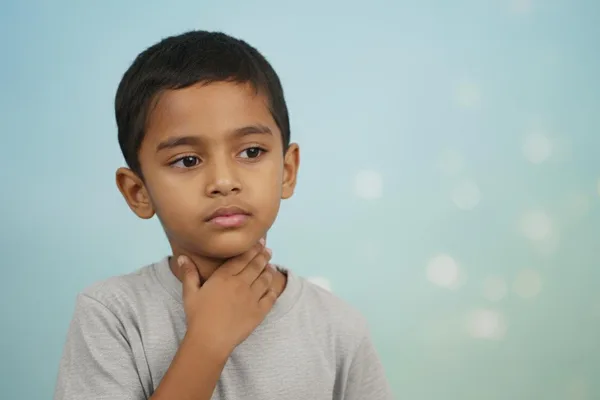
Tonsillitis is a common sore throat that many people, especially young children, experience. Some people also call it 'a sore throat.' What exactly is tonsillitis? Why does it occur? Let's talk about all this in a simple way today, in a way that you can understand.
Let's first see what these tonsils are?
Tonsils are two small lumps of flesh located in the back of our throat, on either side of the tongue. Think of them as two guards at the entrance to our body. These tonsils help protect our body from germs, that is, from small organisms that cause diseases, that try to enter through our mouths and noses. They are actually part of our immune system , that is, our body's defense system that fights diseases.
So what is Tonsillitis?
Simply put, tonsillitis is an inflammation of those two tonsils we talked about. "Inflammation" may not be what you're referring to. It means that these tonsils become red, swollen, and painful as they fight off a germ. It's like our two guards getting sick and not being able to do their job properly.
What are the symptoms of Tonsillitis?
If you or a young child in your household has tonsillitis, you may experience one or more of these symptoms. It's important to remember that not everyone will have all of these symptoms.
- Severe sore throat: This is the main and often the first symptom. The throat can hurt not only when swallowing and talking, but also when just standing. Young children may cry because they cannot eat or drink, and may refuse to eat.
- Tonsils are red and swollen: When you open your mouth and shine a torch on your tonsils, you can see that they are red and swollen. Sometimes they may have a whitish or yellowish coating on them, or they may look like small white spots.
- Fever: You may develop a fever, which can be very high, meaning it can be over 38 degrees Celsius (100.4 Fahrenheit).
- Bad breath: Infection of the tonsils can cause your breath to smell worse than usual.
- Swollen lymph nodes in the neck: In our language, this is called 'swollen neck'. If you put your hand on the sides of the neck, under the jaw, you can feel small lumps. These can also hurt when you press them a little. These are swollen lymph nodes , which also swell because they fight germs.
- Difficulty swallowing: It can be difficult to swallow food and drinks because of a sore throat. Even liquids can be difficult to swallow. This is why young children refuse to eat.
- Stomachache:Young children, especially, may experience stomach upset and nausea along with a sore throat.
- Headache: Headaches can occur with or without fever.
- Body aches and fatigue: Like with a common viral fever, you may feel achy and lifeless.
- Voice changes: Sometimes the voice may become hoarse or change. It may even feel like something is stuck in the throat.
Why do we get tonsillitis? What are the causes?
Okay, now let's look at why this annoying tonsil problem occurs. There are two main reasons that contribute to this:
1. Viruses: Most of the time, roughly 70% - 80% of tonsillitis cases are caused by viral infections. The same viruses that cause colds and flu are the most common causes. For example, the main types of viruses are Adenovirus, Influenza virus (which causes the flu), Parainfluenza virus, Enteroviruses (which causes hand, foot and mouth disease), and Epstein-Barr virus (which also causes Infectious Mononucleosis, which also causes swollen tonsils). The most important thing is that antibiotics usually do not work for tonsillitis caused by viruses.
2. Bacteria: The remaining 20% - 30% of tonsillitis is caused by bacterial infections. The main bacteria that we should be most concerned about is the Streptococcus species. Tonsillitis caused by the bacteria Group A beta-hemolytic Streptococcus (GABHS) can be quite severe and can lead to other complications if not treated properly. This is what we also call 'strep throat'. This type of bacterial infection must be treated with antibiotics.
Is Tonsillitis contagious?
Yes, tonsillitis is definitely a contagious disease. Just like the common cold, flu, and the flu. When someone with the infection coughs or sneezes, the germs can enter the air through droplets of saliva that are released into the air, or if someone touches objects such as dishes, cups, or towels that they have used and then touches their own mouth, nose, or eyes, this can spread to others. That is why it is recommended that a child with tonsillitis be kept home for a while instead of being sent to school, to stop the spread to others.
Do we need to see a doctor? When should we seek medical advice?
Sometimes tonsillitis can go away on its own in a few days, especially if it's caused by a virus. But in cases like this, it's always a good idea to see a doctor, as sometimes the condition can be serious:
- Sore throat for more than two daysIf it continues, especially if it increases.
- If you have a high fever (over 38.3 degrees Celsius / 101 degrees Fahrenheit).
- If it is too difficult to swallow food , especially if you are unable to drink fluids (this can lead to dehydration).
- If you feel like you are having trouble breathing , if you are making a snoring sound when you breathe, or if you feel like you are suffocating while sleeping.
- If you feel like you can't open your mouth properly , it means your jaw is locked.
- If there is swelling and severe pain on only one side of the neck (this could be a peritonsillar abscess, which is an emergency and needs to be treated immediately).
- If you have a fever and sore throat along with a red rash on some parts of your body (this could be related to a streptococcus infection, such as scarlet fever).
- If you have frequent tonsillitis (for example, more than 5-7 times a year, or 3-4 times a year for several years in a row).
- If the child is very upset, sleepy, and refusing to eat or drink .
- If you come with an earache.
- If your urine has changed color (dark brown) (this can be a condition that affects the kidneys after a strep infection).
Remember, if a young child has these symptoms, it's best to take them to a doctor without wasting any time. Because a bacterial infection, especially GABHS, can sometimes lead to dangerous complications like rheumatic fever (which can damage the heart) if not treated properly.
How does a doctor diagnose tonsillitis?
When you go to a doctor, they will first ask you about your symptoms. How long has it been going on, do you have a fever, or are you having trouble swallowing? Then they will open your mouth and examine your throat and tonsils. They will look at your tonsils to see if they are red, swollen, or have white spots. They will feel your neck to see if your lymph nodes are swollen or tender.
Often, the doctor can tell if you have tonsillitis just by looking at it this way.
However, if you want to know for sure whether it's caused by bacteria (specifically Streptococcus), your doctor may do a throat swab . This involves taking a small swab from the surface of your tonsils and the back of your throat and sending it to a lab to see if it contains germs. This is the only way to tell for sure whether it's a bacterial infection or a viral one. Sometimes a rapid strep test is done.It can be done, and it can tell you in a few minutes whether or not you have strep bacteria. If this test is positive, meaning strep is present, treatment can begin. If it is negative, you may have to wait for the culture to be sent to the lab.
What are the treatments for Tonsillitis?
Treatment for tonsillitis depends on the cause, whether it is caused by a virus or bacteria.
If it is a virus infection:
As we mentioned earlier, there is no specific treatment for tonsillitis caused by viruses. These usually resolve on their own within 7-10 days. Antibiotics are not given for this, as they do not work against viruses. In the meantime, all you can do is do things that will help reduce your symptoms and make you feel better:
- Get plenty of rest: Resting your body helps your body recover faster. If it's a child, it's best to limit play and let them sleep.
- Drink plenty of fluids: Warm water (but not too hot), warm soups, unsweetened fruit juices, and orange water are soothing to the throat and help prevent dehydration.
- Gargling: Dissolve a teaspoon of salt in a glass of lukewarm water and gargle with it to reduce the pain. Do this several times a day. However, do not force it on young children as it may be difficult to do.
- Painkillers and fever reducers: Painkillers such as paracetamol or ibuprofen can be used in the prescribed dosage as directed by your doctor to reduce fever, sore throat, and body aches. Aspirin should not be given to children under 18 years of age, especially when they have a viral illness, as it can cause a dangerous condition called Reye's syndrome.
- Soft foods: If your throat is sore, eat soft foods that are easy to swallow, such as porridge, yogurt, rice, soup, and mashed potatoes. Avoid spicy, oily, and sour foods for a few days. While cold things like ice cream may be soothing to some people, they can be difficult for others.
- Humidifier: If the air in the room is dry, using a humidifier can reduce throat dryness and bring relief.
If it is a bacterial infection:
If the doctor confirms that you have a bacterial infection (especially strep throat), he or she will likely prescribe antibiotics , such as penicillin or amoxicillin.
This is something you need to remember very, very importantly: take the antibiotics your doctor prescribes exactly, in the right dose, for the right number of times, and for the right length of time.You should take it. Never stop taking the medicine just because your sore throat has subsided in two or three days and you feel better. If you don't finish the full course, the remaining bacteria can become stronger and the infection can come back, or dangerous complications like rheumatic fever or kidney infection (Post-streptococcal glomerulonephritis) can occur. So take the medicine exactly as prescribed.
Surgery if tonsillitis occurs frequently?
Some people, especially children, get tonsillitis several times a year, and it can be very severe. Or if the tonsils are chronically enlarged and causing difficulty breathing or sleeping (a condition called sleep apnea), your doctor may recommend a surgical procedure called a tonsillectomy to remove the tonsils. But this is only done if absolutely necessary, and there are specific criteria for it (for example, severe tonsillitis has occurred 7 times in the past year, or 5 times a year in the past 2 years, or 3 times a year in the past 3 years).
Can Tonsillitis be prevented?
While it's impossible to say "I've completely prevented it," there are a few simple, yet very important things we can do to reduce our risk of developing tonsillitis:
- Maintaining good hygiene habits:
- Wash your hands thoroughly with soap and water for at least 20 seconds before eating, before preparing food, after using the bathroom, and when you return home from outside. Use an alcohol-based hand sanitizer when soap is not available.
- When coughing or sneezing, cover your mouth and nose with the inside of your elbow or a tissue . If you use a tissue, throw it in the trash immediately. Wash your hands afterward.
- Do not share your used dishes, cutlery, water bottles, and towels with others .
- Stay away from people who have tonsillitis or a sore throat: especially in the early days of the illness.
- Avoid smoking and avoid being around people who smoke: Passive smoking can also damage the tonsils, making them more susceptible to infections.
- Maintain a strong immune system: Eating a balanced diet, getting enough sleep, and exercising can increase your body's ability to resist illness.
Finally, take-home message
Okay, so I hope you have a good understanding of Tonsillitis from what we have discussed. Let's remind ourselves of these facts again:
- Tonsillitis is a swelling and pain caused by an infection of the tonsils, glands located on either side of the throat.
- This can mainly be caused by viruses or bacteria.
- The main symptoms are severe sore throat, fever, difficulty swallowing, red and swollen tonsils, and sometimes white spots.
- Home care (rest, fluids, painkillers) is often sufficient for tonsillitis caused by viruses.
- For a bacterial infection, especially a condition like strep throat, it is essential to take antibiotics prescribed by a doctor for the full duration of the course.
- If your sore throat is severe, you have difficulty breathing, have difficulty swallowing, or if you have frequent bouts of tonsillitis , be sure to seek medical advice .
- Practicing good hygiene habits can reduce the risk of developing tonsillitis and other respiratory illnesses.
Most importantly, this article is only written to provide you with general knowledge and understanding about Tonsillitis. If you or someone in your family has any of these symptoms, please do not speculate or rely solely on information on the internet, but consult a qualified doctor for proper medical advice and treatment. That is always the best and safest thing to do. Wishing you all good health!
` Tonsillitis, Sore throat, Tonsils, Flu, Antibiotics, Viruses, Bacteria, Children's diseases, Throat infections, Strep throat




💬 Comments (0)
No comments have been posted yet. Add your comment here for the first time.
Add your comment