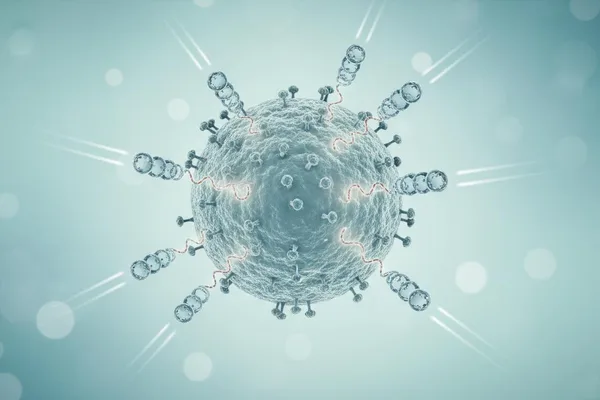
Peptide Receptor Radionuclide Therapy (PRRT) is a treatment that targets cancer cells.

Peptide Receptor Radionuclide Therapy (PRRT) is a treatment that targets cancer cells.

You probably know that treating cancer when it spreads from one part of the body to another is very challenging. But thanks to the advancements in medicine today, there are special treatments that can target cancer cells like a missile and only damage them. Today, we are talking about a very advanced treatment method that is used to treat a type of cancer called `neuroendocrine tumors (NETs). This is called PRRT, which stands for `Peptide Receptor Radionuclide Therapy`.

Simply put, what is PRRT treatment?

PRRT is a targeted cancer therapy. It involves delivering a radioactive substance directly into cancer cells and destroying them. Think of it like selectively killing cancer cells without harming healthy cells in our body.

How does this work? It's amazing!

To understand this, let's take a small example. Every cancer cell has special receptors on its surface, like a keyhole in a door. When special proteins that match only these receptors come together like a key, the door opens to let things into the cell.

This is what PRRT treatment does:

1. Creating the "key": A protein (peptide) that exactly matches the receptors on the surface of the cancer cells is created in the laboratory.

2. Attaching the "bomb": Then, a radioactive element called a radionuclide, which actually kills the cancer cell, is attached to the engineered protein.

3. Traveling to the target: When this drug is introduced into the body, the protein finds its way and binds to the receptors on the cancer cells.

4. Destruction of the cancer cell: Like a key opening a door, when the protein binds to the receptor, the radioactive drug enters the cell. Once inside, the radioactivity released by it damages the cancer cell's DNA, destroying the cell from within.

The biggest advantage of this method is that it targets only cancer cells, so the damage to surrounding healthy cells is minimal.

What types of PRRT are used in the world?

The main PRRT drug approved in the world so far is `lutetium Lu 177 dotatate (LUTATHERA®).` In this, `dotatate`, a synthetic protein, is attached to the radioactive element `lutetium-177`.

This protein called `dotatate` is similar to the hormone `somatostatin` in our body. Some `NET` type cancer cells have specific receptors for this `somatostatin` hormone. This protein called `dotatate` goes to those receptors and sticks tightly. Therefore, the drug goes right into the cancer cell.

In addition, other PRRT compounds are being researched, some of which are already in clinical trials.

Who is this PRRT treatment suitable for?

Currently, PRRT treatment is mainly used for cancers called `gastroenteropancreatic NETs`, which are cancers that develop in the digestive tract. For example:

  • Pancreas
  • Rectum
  • Small and large intestines
  • Stomach

Whether this treatment is suitable for someone depends on several factors. See the table below.

Status Description
Unsuitability for surgery If the cancer has spread ( metastasized ) to multiple locations in the body, it is difficult to cure with surgery alone. For many people diagnosed with NET cancer, the cancer has already spread.
Failure to respond to other treatments If surgery is not possible, hormone therapy is usually given. However, in some people, the tumors continue to grow uncontrollably despite these treatments.
Presence of Somatostatin receptors in cancer cells This is the most important thing. For the PRRT drug to work, the cancer cells must have those special receptors. Your doctor will do a special scan, such as an octreotide scan, to confirm whether these receptors are present.

How do you prepare before treatment?

If you are already taking other medications for NET cancer, your doctor may advise you to temporarily stop some of them before PRRT treatment.

  • Typically, long-acting somatostatin injections must be stopped at least 4 weeks before treatment.
  • Short-acting somatostatin injections may have been stopped 24 hours prior to treatment.
  • Also, you should avoid taking high-dose steroids such as glucocorticosteroids during this treatment.

A week before each treatment, you will have several blood tests to see if your body is ready for it.

What happens on the day of treatment?

PRRT treatment is usually given every two months for 4 sessions over a period of 8 months. This is an outpatient procedure, meaning you don't have to stay in the hospital. The entire procedure takes about 5-6 hours.

1. First, an intravenous (IV) cannula will be inserted into a vein in your arm.

2. Medicine is given to prevent nausea and vomiting one hour before the treatment begins.

3. Then, you will be given an amino acid solution through an IV for about 4 hours to protect your kidneys.

4. Approximately 30 minutes after the amino acid solution is started, the PRRT medication is given through a separate IV over a period of 30-45 minutes.

5. After all the solutions have been administered, the IV cannula is removed.

The day after treatment, a special scan is performed to see how the medicine has spread throughout the body.

What are the benefits and risks of PRRT treatment?

What are the advantages?

PRRT is a very successful treatment. In many people who receive it, their tumors disappear or stop growing. This allows patients to live longer and maintain a good quality of life .

But one thing to remember is that PRRT is not a cure for cancer. For many people, the cancer can come back after a while.

Risks and side effects

Vomiting and nausea are the most common immediate side effects of this treatment, but they can be largely controlled by medication given before the treatment.

Other possible complications are:

  • Kidney or liver problems.
  • Low blood cell count. This can cause difficulty breathing, increased risk of infections, and bleeding or bruising.
  • There is a very rare risk of developing blood cancers such as myelodysplastic syndrome and leukemia.

Your doctor will monitor you with regular blood tests throughout the 8 months of treatment. If any problems arise, he will decide to change or stop your treatment.

The most urgent situation: Carcinoid Crisis

This is a rare but serious, potentially life-threatening condition. It is caused by a sudden surge of hormones from the cancer cells. Symptoms usually appear within 48 hours of receiving treatment.

If you experience any of these symptoms, go to the nearest hospital's Emergency Department (ETU) immediately.

* Difficulty breathing

* Redness or burning sensation of the skin on the face or neck (flushing)

* Low blood pressure (Hypotension)

* Palpitations (fast heartbeat)

* Severe diarrhea

Recovery and daily life

Most people tolerate PRRT treatment well and recover quickly.

Can I go back to work?

PRRT uses a very small amount of radioactive material. This radioactive material is excreted from your body in your urine and stool for a few days after treatment. Your doctor will advise you to stay at least one meter away from other people during this time, especially pregnant women and young children . It is also important to wash your hands frequently.

Is it possible to travel during this time?

There may be a very small amount of radiation in your body for up to 3 months after your treatment. This can be detected by radiation screening equipment at airports, for example. Your doctor will give you a special card that will detail the treatment you have received. It is important to keep this card and a copy of your treatment notes with you wherever you go for up to 3 months after your treatment.

Take-Home Message

  • PRRT is an advanced treatment method that targets only cancer cells and uses radiation to destroy them.
  • It is mainly used for neuroendocrine tumors (NETs) that have spread throughout the body and are not responding to surgery or other treatments.
  • Although this is not a treatment that completely cures cancer, it is very helpful in controlling the disease and improving survival time and quality of life.
  • It is imperative to follow the doctor's instructions to protect yourself from radiation for a few days after treatment.
  • If you develop symptoms of Carcinoid Crisis , such as difficulty breathing, flushing of the skin, and rapid heartbeat, immediately go to a hospital's Emergency Department (ETU) .
  • If any problems or side effects arise regarding treatment, talk to your doctor about it.

PRRT, Peptide Receptor Radionuclide Therapy, neuroendocrine tumors, NETs, ​​cancer treatment, targeted therapy, Lutetium-177, somatostatin, carcinoid crisis, cancer, cancer treatment
⚠️ Important: The medical articles and information on Nirogi Lanka are for general awareness only, and are by no means a substitute for professional medical advice, diagnosis, or treatment. For any medical problem you have, consult a qualified physician immediately.

💬 Comments (0)

No comments have been posted yet. Add your comment here for the first time.

Add your comment

Please calculate: 8 + 2 =
Peptide Receptor Radionuclide Therapy (PRRT) is a treatment that targets cancer cells.

Peptide Receptor Radionuclide Therapy (PRRT) is a treatment that targets cancer cells.

You probably know that treating cancer when it spreads from one part of the body to another is very challenging. But thanks to the advancements in medicine today, there are special treatments that can target cancer cells like a missile and only damage them. Today, we are talking about a very advanced treatment method that is used to treat a type of cancer called `neuroendocrine tumors (NETs). This is called PRRT, which stands for `Peptide Receptor Radionuclide Therapy`.

Simply put, what is PRRT treatment?

PRRT is a targeted cancer therapy. It involves delivering a radioactive substance directly into cancer cells and destroying them. Think of it like selectively killing cancer cells without harming healthy cells in our body.

How does this work? It's amazing!

To understand this, let's take a small example. Every cancer cell has special receptors on its surface, like a keyhole in a door. When special proteins that match only these receptors come together like a key, the door opens to let things into the cell.

This is what PRRT treatment does:

1. Creating the "key": A protein (peptide) that exactly matches the receptors on the surface of the cancer cells is created in the laboratory.

2. Attaching the "bomb": Then, a radioactive element called a radionuclide, which actually kills the cancer cell, is attached to the engineered protein.

3. Traveling to the target: When this drug is introduced into the body, the protein finds its way and binds to the receptors on the cancer cells.

4. Destruction of the cancer cell: Like a key opening a door, when the protein binds to the receptor, the radioactive drug enters the cell. Once inside, the radioactivity released by it damages the cancer cell's DNA, destroying the cell from within.

The biggest advantage of this method is that it targets only cancer cells, so the damage to surrounding healthy cells is minimal.

What types of PRRT are used in the world?

The main PRRT drug approved in the world so far is `lutetium Lu 177 dotatate (LUTATHERA®).` In this, `dotatate`, a synthetic protein, is attached to the radioactive element `lutetium-177`.

This protein called `dotatate` is similar to the hormone `somatostatin` in our body. Some `NET` type cancer cells have specific receptors for this `somatostatin` hormone. This protein called `dotatate` goes to those receptors and sticks tightly. Therefore, the drug goes right into the cancer cell.

In addition, other PRRT compounds are being researched, some of which are already in clinical trials.

Who is this PRRT treatment suitable for?

Currently, PRRT treatment is mainly used for cancers called `gastroenteropancreatic NETs`, which are cancers that develop in the digestive tract. For example:

  • Pancreas
  • Rectum
  • Small and large intestines
  • Stomach

Whether this treatment is suitable for someone depends on several factors. See the table below.

Status Description
Unsuitability for surgery If the cancer has spread ( metastasized ) to multiple locations in the body, it is difficult to cure with surgery alone. For many people diagnosed with NET cancer, the cancer has already spread.
Failure to respond to other treatments If surgery is not possible, hormone therapy is usually given. However, in some people, the tumors continue to grow uncontrollably despite these treatments.
Presence of Somatostatin receptors in cancer cells This is the most important thing. For the PRRT drug to work, the cancer cells must have those special receptors. Your doctor will do a special scan, such as an octreotide scan, to confirm whether these receptors are present.

How do you prepare before treatment?

If you are already taking other medications for NET cancer, your doctor may advise you to temporarily stop some of them before PRRT treatment.

  • Typically, long-acting somatostatin injections must be stopped at least 4 weeks before treatment.
  • Short-acting somatostatin injections may have been stopped 24 hours prior to treatment.
  • Also, you should avoid taking high-dose steroids such as glucocorticosteroids during this treatment.

A week before each treatment, you will have several blood tests to see if your body is ready for it.

What happens on the day of treatment?

PRRT treatment is usually given every two months for 4 sessions over a period of 8 months. This is an outpatient procedure, meaning you don't have to stay in the hospital. The entire procedure takes about 5-6 hours.

1. First, an intravenous (IV) cannula will be inserted into a vein in your arm.

2. Medicine is given to prevent nausea and vomiting one hour before the treatment begins.

3. Then, you will be given an amino acid solution through an IV for about 4 hours to protect your kidneys.

4. Approximately 30 minutes after the amino acid solution is started, the PRRT medication is given through a separate IV over a period of 30-45 minutes.

5. After all the solutions have been administered, the IV cannula is removed.

The day after treatment, a special scan is performed to see how the medicine has spread throughout the body.

What are the benefits and risks of PRRT treatment?

What are the advantages?

PRRT is a very successful treatment. In many people who receive it, their tumors disappear or stop growing. This allows patients to live longer and maintain a good quality of life .

But one thing to remember is that PRRT is not a cure for cancer. For many people, the cancer can come back after a while.

Risks and side effects

Vomiting and nausea are the most common immediate side effects of this treatment, but they can be largely controlled by medication given before the treatment.

Other possible complications are:

  • Kidney or liver problems.
  • Low blood cell count. This can cause difficulty breathing, increased risk of infections, and bleeding or bruising.
  • There is a very rare risk of developing blood cancers such as myelodysplastic syndrome and leukemia.

Your doctor will monitor you with regular blood tests throughout the 8 months of treatment. If any problems arise, he will decide to change or stop your treatment.

The most urgent situation: Carcinoid Crisis

This is a rare but serious, potentially life-threatening condition. It is caused by a sudden surge of hormones from the cancer cells. Symptoms usually appear within 48 hours of receiving treatment.

If you experience any of these symptoms, go to the nearest hospital's Emergency Department (ETU) immediately.

* Difficulty breathing

* Redness or burning sensation of the skin on the face or neck (flushing)

* Low blood pressure (Hypotension)

* Palpitations (fast heartbeat)

* Severe diarrhea

Recovery and daily life

Most people tolerate PRRT treatment well and recover quickly.

Can I go back to work?

PRRT uses a very small amount of radioactive material. This radioactive material is excreted from your body in your urine and stool for a few days after treatment. Your doctor will advise you to stay at least one meter away from other people during this time, especially pregnant women and young children . It is also important to wash your hands frequently.

Is it possible to travel during this time?

There may be a very small amount of radiation in your body for up to 3 months after your treatment. This can be detected by radiation screening equipment at airports, for example. Your doctor will give you a special card that will detail the treatment you have received. It is important to keep this card and a copy of your treatment notes with you wherever you go for up to 3 months after your treatment.

Take-Home Message

  • PRRT is an advanced treatment method that targets only cancer cells and uses radiation to destroy them.
  • It is mainly used for neuroendocrine tumors (NETs) that have spread throughout the body and are not responding to surgery or other treatments.
  • Although this is not a treatment that completely cures cancer, it is very helpful in controlling the disease and improving survival time and quality of life.
  • It is imperative to follow the doctor's instructions to protect yourself from radiation for a few days after treatment.
  • If you develop symptoms of Carcinoid Crisis , such as difficulty breathing, flushing of the skin, and rapid heartbeat, immediately go to a hospital's Emergency Department (ETU) .
  • If any problems or side effects arise regarding treatment, talk to your doctor about it.

PRRT, Peptide Receptor Radionuclide Therapy, neuroendocrine tumors, NETs, ​​cancer treatment, targeted therapy, Lutetium-177, somatostatin, carcinoid crisis, cancer, cancer treatment
⚠️ Important: The medical articles and information on Nirogi Lanka are for general awareness only, and are by no means a substitute for professional medical advice, diagnosis, or treatment. For any medical problem you have, consult a qualified physician immediately.

💬 Comments (0)

No comments have been posted yet. Add your comment here for the first time.

Add your comment

Please calculate: 8 + 2 =