
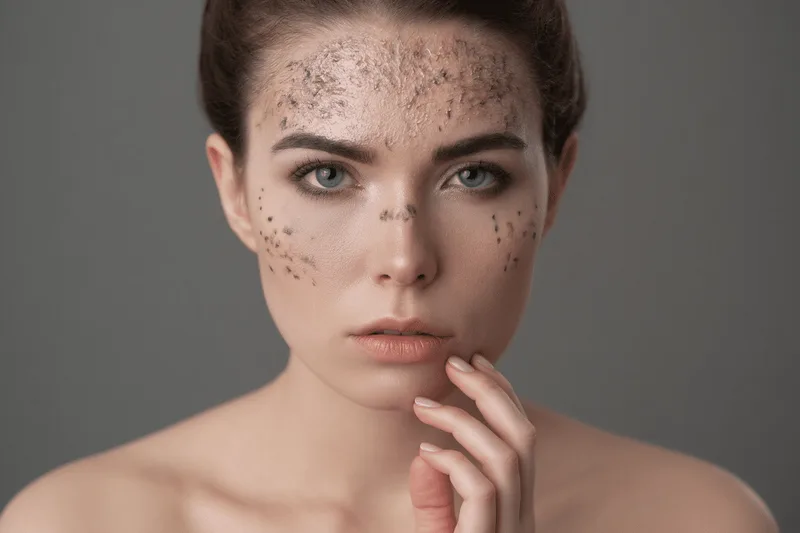
"Doctor, my elbows and scalp are red and have silvery scales. It's very itchy. My friends are afraid to sit with me because they think they'll catch it. Is this a contagious disease, doctor?" 32-year-old Ruwan asked Dr. Priya, feeling very stressed.
Dr. Priya calmed him down and explained gently, "Ruwan, don't worry. This is called psoriasis. It is not contagious at all. So there is no need to worry about infecting those around you. These thick scales are caused by an abnormal increase in the rate of skin cell production due to an imbalance in our immune system."
What is psoriasis, which is caused by the accelerated growth cycle of skin cells? In this article, we will simply discuss its symptoms, different types, causes, and how to live successfully while controlling the disease.
What is psoriasis?
Psoriasis is an autoimmune disease caused by a defect in the body's immune system. Normally, it takes about 30 days for a new skin cell to form and reach the surface of our body. However, due to the confusion of the immune system in psoriasis patients, this process occurs in as little as 3-4 days.
New skin cells are produced very rapidly, and they accumulate on the skin's surface before the old cells can be shed, forming thick, silvery-scaly plaques. This is a chronic, recurring condition.
🤒 What are the symptoms?
- Thick, red plaques covered with silvery or white scales that form on the skin.
- Severe dryness, cracking, and bleeding of the skin.
- Unbearable itching and inflammation of the skin.
- Pitting, thickening, discoloration, or peeling of the nails.
- Joint swelling and severe pain (psoriatic arthritis).
❓ Classification of Psoriasis (Types of Psoriasis)
1. Plaque Psoriasis: The most common type (about 90%). Red, thick, scaly patches appear on the elbows, knees, lower back, and scalp.
2. Inverse Psoriasis: Occurs in areas where the skin folds, such as the armpits, groin, under the breasts, and genital areas. It causes smooth, dark red patches without scales.
3. Guttate Psoriasis: Small, teardrop-shaped spots appear all over the body of children and young adults, often after contracting strep throat.
4. Pustular Psoriasis: A painful condition in which the skin becomes red and pus-filled blisters appear on it.
5. Erythrodermic Psoriasis: A life-threatening medical emergency in which the entire body becomes red and scaly, covering more than 90% of the body's skin, and the body temperature cannot be controlled.
6. Sebopsoriasis:A condition that combines the symptoms of both seborrheic dermatitis and psoriasis and occurs on the face and scalp.
🤔 Causes and triggers of psoriasis
Psoriasis is mainly caused by genetic influences (family history of the disease) and immune system defects, and the following factors can cause the disease to appear for the first time or worsen:
- Stress: Stress is one of the main factors that most often exacerbates psoriasis.
- Skin injuries: cuts, scrapes, insect bites, or severe sunburn (Koebner phenomenon).
- Climate: Dry and cold climate causes skin to lose moisture.
- Infections: Throat infections (Streptococcal infections) or skin infections.
- Harmful habits: smoking and excessive alcohol consumption.
- Medications: Medications such as lithium or beta-blockers for high blood pressure.
🚨 Red Flags that require immediate medical attention
Psoriasis patients should be hospitalized immediately if they have the following symptoms:
- Erythrodermic Psoriasis: Red, scaly skin all over the body, chills, fever, and extreme fatigue.
- Generalized Pustular Psoriasis: Pustular psoriasis spreads throughout the body within a few hours, causing fever and severe pain.
- Severe joint swelling: Swelling and pain that gradually deforms the fingers and joints (Psoriatic Arthritis).
🛠️ Action Steps to Control Psoriasis
- Step 1: If you have thick, scaly patches on your skin, see a dermatologist to confirm the condition.
- Step 2 (Moisturize): Every day, immediately after bathing, apply a thick moisturizer all over your body to keep your skin moisturized.
- Step Three (Applying Cream): Apply Calcipotriol (vitamin D3 derivative) or a mild steroid cream that controls skin cell division, as directed by your doctor.
- Step Four (Shampoo): For scalp psoriasis, use a medicated shampoo containing Coal Tar or Salicylic Acid.
- Step Five (Lifestyle): Practice meditation or yoga to manage stress. Avoid smoking and alcohol completely.
📊 Comparison of Treatment Options (Psoriasis Treatment Options)
| Treatment | How it works | Indications |
|---|---|---|
| Topical Therapy | Controlling skin cell growth with steroids, vitamin D analogues, or tar ointments. | When the psoriasis condition is mild or moderate. |
| Light therapy (Phototherapy) | Specific UV-B rays slow down the rate of skin cell division. | For moderate-level patients who do not respond to topical treatments. |
| Systemic drugs (Systemic / Biologics) | Giving immune-suppressing pills or injections such as Methotrexate and Cyclosporine. | For severe psoriasis and joint diseases that have spread throughout the body. |
❓ Some other questions you may have (FAQ)
Can psoriasis be spread by touching someone with the disease? ▼
No. Psoriasis is not a contagious disease. It is not an infection caused by fungi, bacteria, or viruses, so it is not spread by being with the patient, shaking hands, or sharing utensils.
Is diet important for psoriasis patients? ▼
There are no foods that have been scientifically proven to directly cause or cure psoriasis, but losing weight and eating an anti-inflammatory diet rich in vegetables, fruits, and whole grains can help control the disease.
What is Psoriatic Arthritis? ▼
About 30% of psoriasis patients develop arthritis, which causes swelling, pain, and stiffness in the joints when they wake up in the morning. If left untreated, this can lead to permanent joint deformity.
Is sunlight exposure good for psoriasis? ▼
Yes. Ultraviolet (UV) rays from the sun slow down the growth of skin cells. However, a short exposure to mild morning sunlight is sufficient, while exposure to intense sunlight that burns the skin can worsen the condition.
📖 Sources and Scientific References
- NHS (UK) Guidance on Psoriasis: NHS Psoriasis Information (Accessed 2026)
- NCBI Bookshelf Review: Psoriasis Pathophysiology and Management (StatPearls - NBK448194)




💬 Comments (0)
No comments have been posted yet. Add your comment here for the first time.
Add your comment