

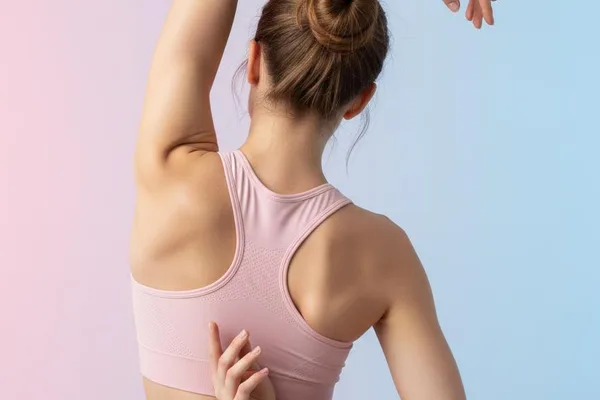
When you wake up in the morning, stretch your arms out, put your hands behind your back, and take a deep breath, two bones protrude from your upper back, right? Like two wings. Most of us don't think much about this bone, but it's actually essential for the movement and strength of our shoulders. So today, let's talk about this amazing bone, which is what we medically call the 'scapula' or what we commonly call the 'shoulder blade'.
Simply put, what is this scapula?
The scapula is a bone in your shoulder. We all call it the shoulder blade . It's one of the three main bones that make up our shoulder joint. Think of it like a bridge. It connects your collarbone, which is the clavicle , to your upper arm bone, which is the humerus .
If you have shoulder pain, especially after a fall or an accident like while playing sports, you should definitely see a doctor . It is very rare for the shoulder blade to be injured on its own. However, any injury to the shoulder can affect it.
What benefits does this shoulder blade have for our body?
This small, flat bone does a lot of work. It performs several very important functions for our body.
- Bone connection: As I mentioned earlier, this connects your upper arm bone (humerus) to your collarbone (clavicle). Simply put, your arm is connected to your torso through this scapula.
- Formation of the shoulder joint: The top end of your upper arm bone connects to a small hollow in the scapula. Together, these two bones form the shoulder joint. To be precise, this bone forms the back of the shoulder joint.
- Shoulder Movement: This is the most amazing thing. The scapula is connected to 17 muscles , 12 tendons, 6 ligaments, and 2 nerves. This huge network of connections allows our shoulder to move in six directions. In fact, no other joint in our body has this much movement.
- Protecting the chest: The scapula is like a natural shield attached to our chest. Although it doesn't directly protect the organs, it is a strong bone that helps absorb external impacts and protect what's inside.
What is the structure of the scapula? (Anatomy)
The scapula is called the "shoulder blade" because of its flat, triangular shape. Although it's one bone, it has several major parts. Now let's take a look inside... like opening the bonnet of a car and looking at the engine. To make it easier to understand its structure, I'll put this description in a table.
| Part of the Scapula | Simply put... (Simple Explanation) |
|---|---|
| Costal surface | This is the part that faces our rib cage. It has a small hollow area that supports a major muscle that helps move our shoulder (the rotator cuff muscle). |
| Lateral surface | This is the outer edge of the bone, which is on the side of our upper arm. This is where the glenoid fossa, which forms the shoulder joint, is located. It is also where the two major muscles of our arm (biceps and triceps) attach. |
| Posterior surface | This is the part that faces our back. It contains the spine, the pointy part at the top of the shoulder blade, and the acromion, which is connected to it and moves with the shoulder blade when we move our shoulder. It also contains two important muscle attachment points. |
Can you see how complex and important this single bone is? It's because all these parts work together that we can lift and rotate our arms without any difficulty.
Common disorders and conditions affecting the scapula
Shoulder injuries are very common because it has so many complex parts and we use it all day long. As I mentioned earlier, it is very rare for the scapula to be injured on its own. However, it can also be injured by accidents to the shoulder.
Shoulder Injuries
- Shoulder sprains
- Dislocated shoulders
- Separated shoulders
Although it is possible to break the scapula in a shoulder fracture, it is very rare . This bone is usually only broken in severe trauma , such as a car accident or a fall from a height such as a ladder.
Diseases affecting the shoulder
These conditions can affect other parts of the shoulder as well as the scapula.
- Shoulder impingement syndrome
- Shoulder arthritis
- Shoulder bursitis
- Scapular winging - This is when the shoulder blades protrude outward, looking like wings.
What are the symptoms of a shoulder injury?
Since it is rare for the scapula to be damaged alone without affecting other parts of the shoulder, it usually presents with the general symptoms of a shoulder injury.
- Shoulder pain: This is the main symptom.
- Swelling: The injured area may swell.
- Difficulty moving: Difficulty lifting or rotating the arm.
- Shoulder stiffness: A feeling of tightness in the shoulder.
- Bruising or skin discoloration: The injury site may turn blue/purple.
How does the doctor diagnose these conditions?
When you go to see a doctor with shoulder pain, he will first examine you. He will ask you questions about where you are hurting and how the accident happened. Then, he may order several tests to confirm the exact cause of your pain.
- Shoulder X-ray: This helps to check for damage to the bones, such as fractures.
- CT Scan (Computed Tomography - CT scan): This can provide clearer, more detailed images of the bones.
- MRI (Magnetic Resonance Imaging - MRI): This can best look for damage to soft tissues such as muscles and tendons.
- EMG (Electromyography): This test can be done if there is any suspicion of nerve damage.
What are the treatments?
The treatment you need will depend on the disorder or condition you have. Not everyone is given the same treatment.
- Immobilization: Resting the shoulder by placing the arm around the neck and wearing a sling.
- Rest: The doctor advises you to stay away from activities that strain your shoulders and those that caused the accident for a while.
- Physical therapy: This treatment is very important to strengthen muscles and restore shoulder mobility, especially after a shoulder injury.
- Shoulder surgery: In some serious cases, such as a fracture, surgery may be necessary.
What should we do to keep this bone healthy?
To keep your entire shoulder, including your shoulder blade, healthy, you just need to do a few simple things. The main things are to eat a good nutritious diet and get enough exercise.
In addition, be aware of these things to protect yourself from accidents:
- Always wear a seatbelt when riding in a vehicle.
- Wear proper safety equipment when playing sports and other risky activities.
- Keep your home and workplace clean by removing things that could cause you to slip and fall.
- When picking up something from above, use a suitable device (such as a ladder) instead of climbing on chairs or tables.
- If you have difficulty walking, or are at high risk of falling, use crutches or a walker .
We don't think much about our shoulder blades except when we wake up in the morning, do we? But they do a great job of supporting our shoulders, moving them, and doing a lot of silent work throughout the day. Normally, these bones stay healthy without any special care. However, shoulder pain that lasts for more than a week should never be ignored. If you have pain, stiffness, or other symptoms that are so severe that you are unable to perform your daily activities, you should definitely see a doctor for advice .
Take-Home Message
- The scapula, or shoulder blade, is an important bone that is essential for the movement and stability of our shoulder.
- It is very rare for this bone to be damaged on its own. It is usually damaged in conjunction with another injury to the shoulder.
- If you have shoulder pain that lasts for more than a week, don't ignore it and see a doctor immediately.
- You can prevent many accidents and keep your shoulders healthy by eating a nutritious diet, exercising, and following simple safety practices.




💬 Comments (0)
No comments have been posted yet. Add your comment here for the first time.
Add your comment