

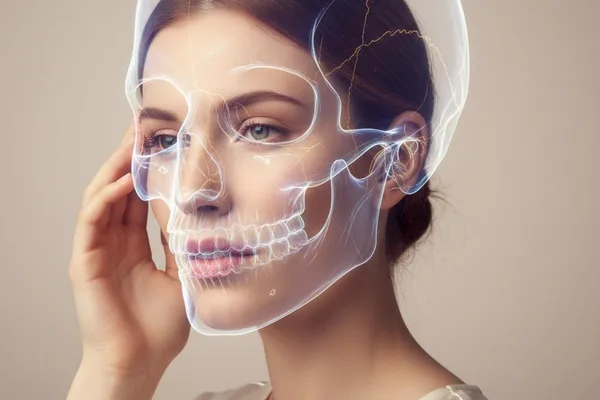
Have you ever wondered how important this skeletal system inside your head, the skull, is? It's not just a bunch of bones. It's like a fortress that protects a very sensitive organ like our brain. Not only that, but our main sensory organs like our eyes, ears, and nose are also located on this skull. So today, let's talk a little more in depth about this amazing structure.
When we are born, our skull is not fully formed. Some parts of it, specifically the "fontanelles" on the top of a baby's head, are very soft. Medically, we call these ``fontanelles''. This softness allows the baby's brain and skull to develop properly. Also, there are places where the bones of the skull connect to each other. We call them ``sutures''. Some of these connections are formed when we are young, but some may not be formed until we are about 60 years old.
What benefits do skulls provide us?
Simply put, the skull performs two main functions.
- Protection: Like a good helmet, the strong bones in our skull work together to protect our precious, sensitive organs, such as our brain, eyes, and ears, from external dangers.
- Shape and Structure: Our face and head get their unique shape because of the skull. Also, the muscles in the face are attached to the skull. Therefore, when we smile, talk, and express various emotions with our faces, the skull is the basis for all of that.
There are two main parts of the skull...
Although our skull looks like a single bone, it is actually made up of two main parts.
1. Cranial vault or neurocranium: This is the part that surrounds and protects our brain. This is what we usually think of when we say "skull."
2. Facial skeleton or viscerocranium: As the name suggests, this part is where the structure of our face is made up. These bones support parts like the eyes, nose, and mouth.
Now let's look at the bones in these two parts separately. Although these names may seem a little complicated, they are very easy to understand once you know where they are.
Bones of the cranial vault
This part is the main protective covering surrounding the brain.
| Bone Name | Simply put, where is it? |
|---|---|
| Frontal bone | This is the single bone that forms your forehead. |
| Sphenoid bone | It is located below and in front of the brain, but behind the bones of the face. It also helps form the underside of your eye socket. |
| Ethmoid bone | This is located below the brain, in front, filling an empty space in the skull. |
| Temporal bones | These two bones are located on either side of the head, where the ears are. The holes that lead into the ears are located in these bones. |
| Parietal bones | These two bones come together to form the top, middle, and top back of the head. |
| Occipital bone | This is the single bone at the back, bottom of the skull. |
Bones of the facial skeleton
These bones together give shape and support to our face.
| Bone Name | Simply put, where is it? |
|---|---|
| Nasal bones | The bridge of your nose is made up of these bones. |
| Vomer | This is like the floor of the nasal cavity behind the nose. |
| Lacrimal bones | These bones form the inner, middle, lower part of the eye socket. |
| Palatine bones | A small part of the inner side of the eye socket. |
| Zygomatic bones | These are your cheekbones. They also form the outer, lower edge of your eye socket. |
| Maxilla | This single bone forms your upper jaw and also the middle part of your cheeks. |
| Mandible | This is your lower jaw. This is the only movable bone in your skull . This is the bone that moves when you eat and talk. |
Common diseases and conditions affecting the skull
There are many diseases and conditions that can affect our skull. Some are congenital. This means that we are born with those conditions.
Some examples of congenital conditions are `Anencephaly`, `Apert syndrome`, `Craniosynostosis`, `Encephalocele` and `Microcephaly`. These are usually diagnosed by doctors at birth.
Also, there are situations and dangers that can arise at any time in life.
- Temporomandibular joint disorders
- Jaw tumors and cancer
- Injuries to the jaw, for example, a fractured or dislocated jaw
- Skull fractures and related traumatic brain injuries (TBIs)
What are the symptoms of a skull problem?
Symptoms can vary greatly depending on the problem in the skull.
In congenital conditions, changes in the appearance of the skull or face are the main ones seen.
In later cases, symptoms such as these may be seen:
- Headaches, especially frequent headaches
- A "clicking" sound or pain in the jaw joint when opening or closing the mouth
- If the brain is affected, conditions such as confusion or coma may occur.
- Bruising, especially around the eyes (this can be a key sign of a skull fracture)
Tests to detect such problems
Various imaging tests are mainly used to diagnose skull problems.
- X-rays, including dental X-rays
- CT scans
- MRI scan `(MRI)`
If there is a suspicion of a congenital condition, doctors may also refer you for genetic testing. Your doctor will decide which test is best for you based on your symptoms and condition.
How do we take care of our skull?
The best thing we can do is to protect this precious skull that protects our brain from harm.
- Always wear seat belts when riding in vehicles. It is the best way to prevent head injuries in a car accident.
- Wear helmets and other protective gear. Wearing a helmet is essential when riding bicycles, motorbikes, and in some jobs.
- See a dentist regularly. Since the teeth and jaw are directly connected to the skull, any problems with the teeth or jaw can be detected before they become serious.
- Don't ignore persistent symptoms. If you have a problem with your scalp, eyes, ears, nose, or mouth that has been going on for a long time, don't ignore it. Sometimes it can be a sign of a disease that affects the skull or brain. So see a doctor right away.
Take-Home Message
- Your skull isn't just a bunch of bones; it's a natural protective shell that protects your brain and major sensory organs.
- The skull is made up of many different bones connected to each other. The only bone in it that can move is the lower jaw (mandible).
- Any head injury should be treated seriously. If you have a head injury, especially if you are unconscious or vomiting, go to a hospital's Emergency Department (ETU) immediately.
- Safety is the most important thing. Wear a seat belt when driving, a helmet when riding a bike. These simple things can save your life.
- If you have a persistent headache or jaw pain, don't ignore it and see a doctor.




💬 Comments (0)
No comments have been posted yet. Add your comment here for the first time.
Add your comment