
When talking about genital Genital Herpes , many people are very afraid and have many questions. In particular, "Can a person with herpes transmit the virus to another person even when there are no visible blisters or sores on their body?" is a big question for many people. This is really a very important issue. Because, knowing this correctly has a great impact on your health as well as that of your partner. So today we will talk clearly about this, that is, the possibility of transmitting herpes without symptoms, and how to protect yourself from it.
First of all, what is Genital Herpes herpes?
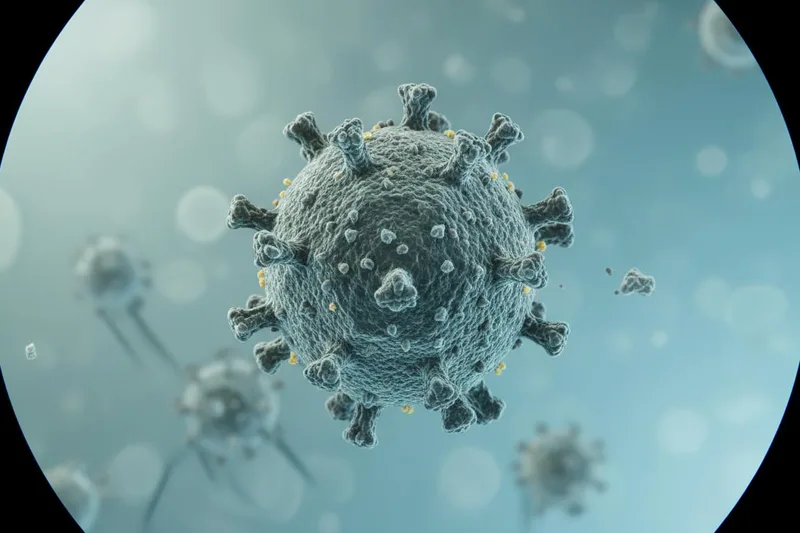
Genital herpes is a sexually transmitted infection ( STI ) caused by Herpes Simplex Virus HSV ). There are two main types of HSV :
-
HSV-1(HSV type one): This type is what most often causescold sores(also known as "fever blisters") on the mouth and lips. However,HSV-1can also cause genital herpes (for example, through oral sex). -
HSV-2(HSV type two): This type most commonly causes genital herpes.
The virus is mainly spread through direct contact with herpes blisters or sores on the skin of an infected person. This often happens during sexual activity, such as vaginal, anal, or oral sex. The important thing is that once a person is infected with HSV , the virus remains dormant (sleeping) in the nerve cells of the body for the rest of their lives. This means that the virus cannot be completely cured. However, treatment can control the symptoms.
Herpes symptoms: Are they always visible?
Some people think that if you have herpes, you must have blisters or sores on your body. But that's not the case.
- Herpes Blisters/Sores (
Outbreaks): When some people are infected with the virus, one or more small, painful, fluid-filled blisters appear on the genitals, buttocks, and thighs. These blisters then crack, become sores, and dry up within a few days. When herpes first appears, these blisters may be accompanied by symptoms such as fever, body aches, and swollen lymph nodes. The appearance of these blisters is calledoutbreak) One is that thesecan occur every few months, every few years, or even just rarely. -
Asymptomatic Infection: This is something that many people don't know, but it's very important. Many people don't develop any symptoms after being infectedHSV. Or, the symptoms are so subtle (e.g., a little itching, redness) that they don't recognize it as herpes. They may not even know they have herpes!
How herpes can be transmitted even without sores: " Asymptomatic Viral Shedding "
This is our main topic today. Even though a person with herpes may not have any visible blisters or sores on their skin, the virus can sometimes be active on the surface of the skin. Then the virus can be shed from the skin. This is what is called " Asymptomatic Viral Shedding " in medical science.
Just like when we sneeze, viral particles are released into the air without us realizing it. During this Asymptomatic Viral Shedding , the herpes virus can come to the surface of the skin without any symptoms and can be transmitted if it touches someone else's skin.
That means, yes! Even on "good days" when a person with herpes doesn't have any sores or blisters on their body, they can still pass the herpes virus on to someone else. This is one reason why the herpes virus spreads so easily and why many people don't know they have herpes.
This Asymptomatic Viral Shedding can occur more frequently in the days before blisters appear and while the blisters are healing. However, it can also sometimes occur on days when there is no at all.
So, how can you reduce the risk of spreading herpes?
There are things that both a person with herpes and their partner can do to reduce this risk:
- Avoid having sex during a cold sore outbreak: Avoid having sex completely during an
(i.e., when you have visible cold sores, blisters, or symptoms such as itching or burning that precede the blisters). This is when the risk of transmitting the virus is highest. Wait until the sores have completely healed and new skin has formed. - Use Antiviral
Antiviral MedicationsProperly: There are antiviral medicationsAcycloviras,,Valacyclovirthat are used toFamciclovirherpes.- When an
occurs, you can take this medicine as prescribed by your doctor to help it heal quickly. - For those who have frequent
, your doctor may recommend that you take a low dose of these antiviral medications daily (calledSuppressive Therapy). This not only reduces the number of, but it also significantly reduces theAsymptomatic Viral Sheddingwe talked about. This means that you are less likely to pass herpes on to your partner. It is very important to take these medications exactly as your doctor tells you.
- When an
- Use
Condomsduring every sexual encounter: Always use condoms made oflatexorpolyurethanecorrectly during vaginal, anal, or oral sex.- But remember this: A condom only covers part of the penis or vagina. The herpes virus can be present in areas of skin that are not covered by the condom (e.g., buttocks, thighs, parts of the external genital area). So, although a condom can reduce the risk of herpes transmission, it cannot prevent it 100%. However, using it is much better than not using it.
- Use Dental
Dental Dams: Using a - Talk openly with your partner: This is probably the hardest thing to do, but it's also the most important. If you have herpes, it's important to tell your partner and work together to find ways to protect yourself. This also helps build trust.
- Don't touch sores: Avoid touching blisters or sores during an
. If you do, wash your hands with soap and water immediately. Otherwise, you could spread the virus to other parts of your body or to someone else.
Let's imagine a small incident?
Imagine, a friend of yours finds out that he has herpes. He doesn't have any blisters now. If he has sex with his partner and doesn't use a condom, thinking, "There's no problem now because there are no blisters," there is a chance that he could pass the virus on to his partner because of Asymptomatic Viral Shedding , right? But, if he takes antiviral medication daily and uses a condom, that risk can be greatly reduced.
Don't forget general STD prevention too!
Herpes is just one STD . There are many other STDs that can be spread through unprotected sex. Therefore, it is very important to be aware of safe sex practices in general.
100% Safe Method: Abstinence
As a reminder, the only surefire way to protect yourself from all STDs , including herpes, and unwanted pregnancies is to Abstinence from sex. This is also a choice you have.
Get medical advice and support.
If you have questions about herpes or any other sexual health issue, don't keep them to yourself.
- Talk to a trusted doctor. They can examine you, give you an accurate diagnosis, advise you on treatment options, and answer your questions.
- You can also get free advice and services from places like government sexual
Sexual Health Clinicsclinics and the FamilyFamily Planning AssociationAssociation. - Herpes is nothing to be ashamed of. It's a very common condition. So, take heart and get the help you need.
Final Take-Home Message
So, from what we've discussed today, it should be clear to you that Genital Herpes herpes can be transmitted even without blisters.
- Yes, even if someone with herpes does not have visible blisters or sores on their skin, they can still spread the virus to others due to
Asymptomatic Viral Shedding. - Reduce the risk of contracting herpes:
- Avoid having sex when you have blisters/wounds.
- If prescribed by your doctor, take
Antiviral Medicationsmedications daily. - Use
Condomscorrectly during every sexual encounter (but remember that they are not 100% safe).
- It is very important to talk openly with your partner and to follow safe methods together.
- Don't be shy or afraid to talk to a doctor about your sexual health. Accurate knowledge is your greatest protection.
Living with herpes can be challenging, but it is not impossible to manage it and live a healthy, happy life. The important thing is to be aware of it and take responsibility.
Genital Herpes, Herpes, STDs, Asymptomatic Transmission, Antiviral Medications, Condoms, Sexual Health, Genital Herpes, Asymptomatic Transmission, HSV, Herpes Simplex Virus


💬 Comments (0)
No comments have been posted yet. Add your comment here for the first time.
Add your comment