
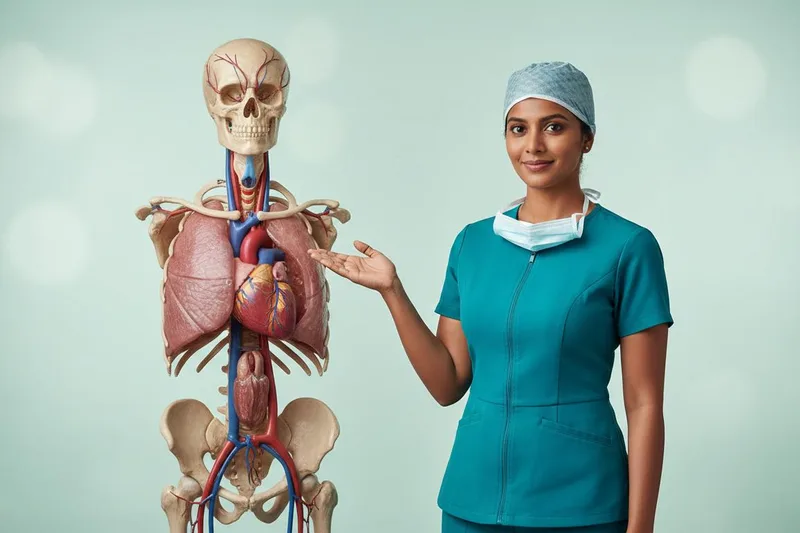
When we hear the word chest surgery or operation, many people feel a little scared. It's very normal. Because inside our chest are organs that are essential to life, like the heart and lungs. So it's not unusual to feel a little nervous when we hear the word surgery in such a place. But don't worry, today we will talk about everything very simply, in a way that you can understand.
What exactly is thoracic surgery?
Simply put, any surgery performed on your chest (thorax) falls into this category. When we think of the chest, the heart immediately comes to mind, but these surgeries are not limited to the heart. In addition, many other organ-related surgeries fall into this category.
Imagine, surgeries performed for organ problems like these:
- Lungs: Surgery for tumors, cancer, or other infections in the lungs.
- Esophagus: The tube that carries the food we eat to the stomach.
- Trachea: The main tube through which we breathe.
- Diaphragm: The large muscle that separates the chest and abdomen.
- Chest wall: This includes the ribs, the breastbone in the middle, and the muscles around it.
- Mediastinum: This is the space between the lungs. It contains things like the heart and major blood vessels.
Now you probably understand how broad this is.
There are two methods of surgery.
Doctors perform these surgeries in two main ways. It depends on factors such as your medical condition and the nature of the surgery.
1. Open Surgery: This involves making a relatively large incision and opening the chest. This method is required for some complex surgeries.
2. Minimally Invasive Surgery: This is the most advanced method now. Instead of a large incision, only a few very small incisions are made. A small camera is inserted into the chest through one incision. Then, thin, long instruments are inserted through other incisions and the doctor performs the surgery while watching the images from the camera. This method is called ``VATS surgery'' when done on the chest and ``laparoscopic surgery'' when done on the abdomen. Sometimes, these instruments and the camera are connected to a robot, and the doctor controls the robot and performs the surgery.
What kind of diseases are treated with these surgeries?
These surgeries are used to treat many conditions that occur in the chest and upper abdomen. Let's take a look at what they are.
| Medical condition | A simple explanation |
|---|---|
| Aneurysms | The main blood vessels in the chest become weak and swell like a balloon. If left untreated, these can burst. |
| Congenital heart disease | To correct holes or other defects in the heart that some babies have at birth. |
| Irregular heartbeats | Control abnormally fast or irregular heartbeats. |
| Heart Failure | Help the heart when it is weak and cannot pump enough blood to the body. |
| Coronary Artery Disease | Blockage of the arteries that supply blood to the heart. We all know 'bypass surgery' (CABG) is done for this. |
| Heart or lung transplant | Transplantation of a healthy organ to replace a failing heart or lung. |
| Heart valve problems | Repair or replace the valves in the heart when they do not close properly or become narrow. |
| Lung Cancer | Surgical removal of cancerous tumors in the lungs. |
| Cysts in the thyroid or thymus gland | Removal of normal or cancerous tumors in these organs. |
| Difficulty swallowing (Dysphagia) | Surgical solutions to some conditions that make it difficult to swallow food. |
| Acid reflux (GERD) | Surgery is performed when stomach acid reflux (a severe case of gastritis) cannot be controlled with medication. |
What surgeries are most commonly performed? Are these serious?
There are two most commonly performed chest surgeries in Sri Lanka, as well as in the world.
1. Coronary Artery Bypass Grafting (CABG): This is the "bypass" we all know. It is the most commonly performed heart surgery in the world.
2. Lobectomy: This is a surgery to remove a portion (lobe) of the lung. It is often done for conditions such as lung cancer.
Now you may be asking, are these surgeries serious? Yes, indeed, most chest surgeries are serious, complex surgeries. The reason for this is that, as we discussed earlier, the heart and lungs are essential organs for the functioning of our body.
But the most important thing you need to remember here is that this surgery is performed by a large healthcare team, including doctors, nurses, and anesthesiologists, with the sole aim of giving you the best possible outcome. Therefore, it is very important to have trust in them.
What happens before surgery? How do we prepare?
There is a period of time before surgery where you are thoroughly examined. This is to see how well your body will tolerate the surgery.
- Common tests: Things like blood tests and urine tests are done for everyone.
- For heart-related surgeries: ECG, Echo tests, and angiograms can be performed to check the functioning of the heart.
- For lung surgery: Chest X-rays, CT scans, etc. will be done. You will also be given special tests called ``Pulmonary function tests`` to see how well your lungs are working. Sometimes a small piece of tissue may need to be taken from your lungs for testing (``Biopsy``).
The surgeon plans your surgery based on the results of all these tests.
Here's what you need to prepare on your part:
This is a very important part. Your proper preparation will have a big impact on the success of the surgery.
- Tell your doctor about all the medications you take (both those prescribed by a doctor and those purchased from a pharmacy, even painkillers and vitamins).
- Your doctor may ask you to stop taking certain medications (especially blood thinners) a few days before your surgery. Never stop taking any medications without your doctor's advice.
- This is very important: If you are a smoker, you should definitely quit smoking at least a month before lung surgery. It has been found that if you do not smoke for a month after surgery, you can reduce the risk of wound-related complications by half.
- You should stop eating and drinking the night before surgery or at the time your doctor tells you.
- Make a plan for your recovery. Arrange in advance for someone to come home from the hospital and someone to help you for a few days after you get home. It's also a great idea to prepare meals in advance and store them in the freezer.
What happens during the surgery?
After you are taken to the operating room, the anesthesiologist will give you medication through a cannula to put you completely asleep. Then, a tube will be inserted to help you breathe. During some major heart surgeries, a machine called a ``heart-lung machine`` will take over the function of your heart and lungs during the surgery.
Then the surgeon:
1. As planned, the necessary incisions are made using an open or minimally invasive method. The chest can be opened by making an incision along the sternum (sternotomy) or between two ribs (thoracotomy).
2. The problem organ is repaired, removed, or a new one is transplanted.
3. Check carefully for any bleeding.
4. Finally, all incisions are sutured closed.
What to expect after surgery?
After the surgery, you will wake up in the intensive care unit (ICU) or recovery room.
- Once you start breathing well, the breathing tube will be removed.
- One or more chest drains may be placed to drain fluid from the chest. A catheter may also be placed to collect urine.
- Once your condition stabilizes, you will be transferred to a regular ward.
- It is very important to get out of bed and start walking as soon as possible, with the help of nurses. They will also teach you breathing exercises that will help your lungs expand again.
- You can go home once you have achieved the goals set by your doctor (such as walking well, pain control). This usually takes about 3 to 10 days, depending on the nature of the surgery.
How long does it take to heal?
This also varies greatly depending on the surgery you had. A minimally invasive surgery may heal quickly. However, it can take a month or more to fully heal after an open surgery.
Usually, you will not be allowed to drive for about a month after surgery. You will also be asked to limit lifting weights for about 6 weeks.
What are the benefits and risks of these surgeries?
The main benefit is that these surgeries can save your life or extend your lifespan. They can also improve your quality of life by improving the function of your heart or lungs. They can also help with things like swallowing difficulties and make daily life easier.
Like any surgery, these surgeries also have some risks .
- Infections, especially pneumonia.
- Lung collapse.
- Blood clots.
- Depression.
- Irregular heartbeats.
- Heart disease.
- Pulmonary edema.
Your doctor will explain these risks to you thoroughly before surgery.
Situations when you need to see a doctor immediately
If you develop these symptoms after returning home, call your doctor as soon as possible or go to the hospital's Emergency Department (ETU).
- Severe chest pain.
- Difficulty breathing.
- Bleeding or pus oozing from the wound.
- The wound is swollen and red.
- Fever without a reason.
Take-Home Message
- Thoracic surgery is not just something that is done on the heart. It can be performed on any organ in the chest, including the lungs and trachea.
- Now, because technology has advanced, there are minimally invasive surgical methods that are performed through small incisions rather than large incisions.
- Preparing well for surgery, especially quitting smoking, is very important for a successful outcome.
- The recovery period may be a little longer, and it is essential to follow the doctor's instructions exactly during this time.
- Feel free to ask your doctor any questions you have about your surgery, its risks, and recovery time. It will be a great relief for you to know everything clearly.


💬 Comments (0)
No comments have been posted yet. Add your comment here for the first time.
Add your comment