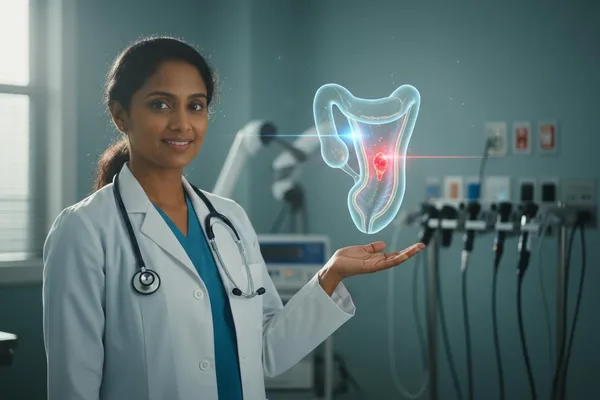
Transanal Endoscopic Microsurgery (TEMS)

Transanal Endoscopic Microsurgery (TEMS)

Did the doctor tell you that you have a small tumor, a polyp, in your rectum? When you hear that, many scary questions come to mind, like "Oh, will I have to cut my stomach, how long will I have to stay in the hospital, how much will it hurt?" But don't be afraid. Today, medicine is very advanced. There is a special method that can remove such tumors without making any incisions in the stomach, by inserting small instruments through the rectum. That's what we're talking about today.

What exactly is TEMS?

Simply put, Transanal Endoscopic Microsurgery (TEMS) is a surgery in which very small surgical instruments and a camera are inserted through your anus, that is, through the place where stool comes out, to remove tumors, polyps, etc. in the rectum, which is the lowest part of the large intestine.

Just imagine, in the past, to remove a tumor like this that was just inside the rectum, you would have to cut open the abdomen and do a major surgery. It would take a long time to heal, be very painful, and you would have to stay in the hospital for several days.

But with this TEMS method, the surgeon can go right through the anus, without making any incisions in the abdomen, reach the tumor and remove it neatly. This means you feel much less pain and your recovery time is much shorter.

What is the difference between TEMS and TAMIS?

You may have heard of TEMS as well as TAMIS. Both are types of surgery performed through the anus. But there are some slight differences. Let's see what they are.

Feature TEMS (Transanal Endoscopic Microsurgery) TAMIS (Transanal Minimally Invasive Surgery)
Device used A straight, rigid tube-like instrument (rectoscope) is used. A gel-like, flexible, circular port is used.
FlexibilityBecause the device is rigid, it may sometimes be difficult to reach the tumor. The instruments are more flexible, making it easier to reach different areas of the rectum.
Surgical instruments Special microsurgical instruments are used for this purpose. The same instruments used for laparoscopic surgeries can be used.

Your surgeon will decide which method is best for you. It depends on the location, size, and other factors of the tumor.

Who is suitable for this surgery?

TEMS surgery is not for everyone, but it can be a very good option in the following cases:

  • For those who have difficulty enduring major surgery that involves cutting open the stomach due to other health problems (for example, heart disease, diabetes).
  • For those in the early stages of rectal cancer.
  • For people with non-cancerous (benign) tumors or polyps, especially young people.
  • For those who want to avoid complications that may occur after major surgery.

What diseases are treated with TEMS surgery?

This surgery is often performed to remove tumors that develop in the rectum. Let's take a look at what they are.

Medical condition A simple explanation
Benign rectal tumors These are not cancerous, but if not removed, they can cause problems later.
Rectal cancer In the early stages of cancer, this surgery is very successful if the tumor is small and has not spread.
Rectal polyps Small fleshy growths that form inside the colon. It is important to remove some polyps because they can later turn into cancer.
Rectal prolapse This procedure is sometimes used to correct a condition where part of the rectum protrudes through the anus.
Strictures of the rectum Difficulty defecating due to a narrowing of the rectum.
Fistulas Infected small passages around the anus.

How do you prepare before surgery?

Preparing for this is similar to preparing for a colonoscopy. The main thing is to completely clean out your colon. This will allow the surgeon to see the inside of your rectum clearly.

Your doctor will often give you these instructions:

  • Avoid eating solid foods the day before surgery.
  • Drink only liquids (clear soup, tea, water) 12-24 hours before surgery.
  • Do not eat or drink anything after midnight on the day of surgery.
  • You will be given a special liquid (laxative) to drink to cleanse your bowels. You will need to go to the bathroom frequently after drinking it, so plan to stay home during that time.
  • Very important: Be sure to tell your doctor about any other medications you are taking, especially blood thinners . You may be asked to stop taking them a few days before surgery.

How is the surgery done?

There is nothing to be afraid of. Before the surgery begins, you will be given general anesthesia. This means that you will be completely asleep and will not feel anything. Here are some things that will happen during the surgery:

1. The surgeon inserts a special instrument (rectoscope) through your rectum.

2. Then, to be able to look inside the rectum, a little air is filled into it and inflated.

3. Now, a very small camera and surgical instruments are inserted through that device, and while watching on a monitor, the tumor or polyp is removed, along with a small amount of healthy tissue around it.

4. The area where the tumor was removed is closed with dissolvable stitches or small metal clips. These are then absorbed by the body or passed out in the stool.

What are the advantages of this surgery?

The biggest advantage of TEMS surgery is that it can reach even the upper parts of the rectum without an abdominal incision. In the past, to reach such areas, you had to undergo major surgery. Such major surgeries could lead to long-term side effects such as difficulty urinating, sexual dysfunction, and the need to wear a permanent stool bag (colostomy).

But with the TEMS method, the pain is minimal, the recovery is quick, and there are many other benefits.

  • Bleeding is very minimal.
  • The risk of complications such as infections and intestinal blockages is very low.
  • The hospital stay is short (usually a day or two).
  • You will soon recover and be able to return to normal activities.

Are there any risks or complications?

As with any surgery, there are some risks. However, compared to a tummy tuck, the risks are much lower. Minor complications that may occur include:

  • Bleeding
  • Having an infection
  • Rectal or abdominal pain
  • Difficulty urinating (Urinary retention)
  • Feeling a sudden need to defecate (Fecal urgency)

If something like this happens, your doctor will provide the necessary treatment.

How long does it take to heal?

This is another great thing about this surgery.

  • You can get up and walk the same day as your surgery.
  • After you go home, you can resume your normal activities in about a day or two .

Your stools may be slightly loose for a few weeks after surgery. This is normal. You may need to see a nutritionist or dietitian to make changes to your diet until your bowel function returns to normal.

Situations when you should see a doctor immediately

When you go home after surgery, it is important to recognize any complications quickly. If you experience any of the following symptoms, call your doctor immediately or go to the hospital's Emergency Department (ETU) for treatment.

Warning signs to look out for
🔴 Excessive rectal bleeding.
🔴 Severe abdominal pain or rectal pain.
🔴 Fever or chills.
🔴 Difficulty urinating or no urine output.

Is this the only surgery for rectal cancer?

This is a problem for many people.

If the cancer is in a very early stage , meaning the tumor is small and has not spread to other areas, no further treatment may be needed after the tumor is completely removed with TEMS surgery.

However, in some cases, in addition to surgery, other treatments such as chemotherapy or radiation therapy may be required. This is best decided by your treating doctor and oncologist together.

It's normal to feel scared when you find out you have a tumor. But remember that with today's advanced technology, there are surgeries that can be performed without cutting the abdomen, with less pain, and with a faster recovery. TEMS is one such very safe and effective treatment method.

Take-Home Message

  • TEMS is a highly advanced surgical procedure that removes tumors by passing instruments through the rectum, without making an incision in the abdomen.
  • This method is less painful, the hospital stay is shorter, and you can return to normal life sooner.
  • This is a very effective method for removing early stages of rectal cancer and non-cancerous tumors.
  • It is very important to follow your doctor's instructions exactly before and after surgery.
  • If you experience any problems after surgery, such as fever, excessive pain, or bleeding, seek medical advice immediately.

TEMS, Transanal Endoscopic Microsurgery, rectal surgery, rectal cancer, rectal cancer sinhala, rectal polyps sinhala, minimally invasive surgery, TAMIS, minimally invasive surgery

Frequently Asked Questions (FAQ)

Is this the only surgery for rectal cancer?

This is a problem for many people.

⚠️ Important: The medical articles and information on Nirogi Lanka are for general awareness only, and are by no means a substitute for professional medical advice, diagnosis, or treatment. For any medical problem you have, consult a qualified physician immediately.

💬 Comments (0)

No comments have been posted yet. Add your comment here for the first time.

Add your comment

Please calculate: 4 + 7 =
Transanal Endoscopic Microsurgery (TEMS)
SurgeriesJuly 7, 2026

Transanal Endoscopic Microsurgery (TEMS)

Did the doctor tell you that you have a small tumor, a polyp, in your rectum? When you hear that, many scary questions come to mind, like "Oh, will I have to cut my stomach, how long will I have to stay in the hospital, how much will it hurt?" But don't be afraid. Today, medicine is very advanced. There is a special method that can remove such tumors without making any incisions in the stomach, by inserting small instruments through the rectum. That's what we're talking about today.

What exactly is TEMS?

Simply put, Transanal Endoscopic Microsurgery (TEMS) is a surgery in which very small surgical instruments and a camera are inserted through your anus, that is, through the place where stool comes out, to remove tumors, polyps, etc. in the rectum, which is the lowest part of the large intestine.

Just imagine, in the past, to remove a tumor like this that was just inside the rectum, you would have to cut open the abdomen and do a major surgery. It would take a long time to heal, be very painful, and you would have to stay in the hospital for several days.

But with this TEMS method, the surgeon can go right through the anus, without making any incisions in the abdomen, reach the tumor and remove it neatly. This means you feel much less pain and your recovery time is much shorter.

What is the difference between TEMS and TAMIS?

You may have heard of TEMS as well as TAMIS. Both are types of surgery performed through the anus. But there are some slight differences. Let's see what they are.

Feature TEMS (Transanal Endoscopic Microsurgery) TAMIS (Transanal Minimally Invasive Surgery)
Device used A straight, rigid tube-like instrument (rectoscope) is used. A gel-like, flexible, circular port is used.
FlexibilityBecause the device is rigid, it may sometimes be difficult to reach the tumor. The instruments are more flexible, making it easier to reach different areas of the rectum.
Surgical instruments Special microsurgical instruments are used for this purpose. The same instruments used for laparoscopic surgeries can be used.

Your surgeon will decide which method is best for you. It depends on the location, size, and other factors of the tumor.

Who is suitable for this surgery?

TEMS surgery is not for everyone, but it can be a very good option in the following cases:

  • For those who have difficulty enduring major surgery that involves cutting open the stomach due to other health problems (for example, heart disease, diabetes).
  • For those in the early stages of rectal cancer.
  • For people with non-cancerous (benign) tumors or polyps, especially young people.
  • For those who want to avoid complications that may occur after major surgery.

What diseases are treated with TEMS surgery?

This surgery is often performed to remove tumors that develop in the rectum. Let's take a look at what they are.

Medical condition A simple explanation
Benign rectal tumors These are not cancerous, but if not removed, they can cause problems later.
Rectal cancer In the early stages of cancer, this surgery is very successful if the tumor is small and has not spread.
Rectal polyps Small fleshy growths that form inside the colon. It is important to remove some polyps because they can later turn into cancer.
Rectal prolapse This procedure is sometimes used to correct a condition where part of the rectum protrudes through the anus.
Strictures of the rectum Difficulty defecating due to a narrowing of the rectum.
Fistulas Infected small passages around the anus.

How do you prepare before surgery?

Preparing for this is similar to preparing for a colonoscopy. The main thing is to completely clean out your colon. This will allow the surgeon to see the inside of your rectum clearly.

Your doctor will often give you these instructions:

  • Avoid eating solid foods the day before surgery.
  • Drink only liquids (clear soup, tea, water) 12-24 hours before surgery.
  • Do not eat or drink anything after midnight on the day of surgery.
  • You will be given a special liquid (laxative) to drink to cleanse your bowels. You will need to go to the bathroom frequently after drinking it, so plan to stay home during that time.
  • Very important: Be sure to tell your doctor about any other medications you are taking, especially blood thinners . You may be asked to stop taking them a few days before surgery.

How is the surgery done?

There is nothing to be afraid of. Before the surgery begins, you will be given general anesthesia. This means that you will be completely asleep and will not feel anything. Here are some things that will happen during the surgery:

1. The surgeon inserts a special instrument (rectoscope) through your rectum.

2. Then, to be able to look inside the rectum, a little air is filled into it and inflated.

3. Now, a very small camera and surgical instruments are inserted through that device, and while watching on a monitor, the tumor or polyp is removed, along with a small amount of healthy tissue around it.

4. The area where the tumor was removed is closed with dissolvable stitches or small metal clips. These are then absorbed by the body or passed out in the stool.

What are the advantages of this surgery?

The biggest advantage of TEMS surgery is that it can reach even the upper parts of the rectum without an abdominal incision. In the past, to reach such areas, you had to undergo major surgery. Such major surgeries could lead to long-term side effects such as difficulty urinating, sexual dysfunction, and the need to wear a permanent stool bag (colostomy).

But with the TEMS method, the pain is minimal, the recovery is quick, and there are many other benefits.

  • Bleeding is very minimal.
  • The risk of complications such as infections and intestinal blockages is very low.
  • The hospital stay is short (usually a day or two).
  • You will soon recover and be able to return to normal activities.

Are there any risks or complications?

As with any surgery, there are some risks. However, compared to a tummy tuck, the risks are much lower. Minor complications that may occur include:

  • Bleeding
  • Having an infection
  • Rectal or abdominal pain
  • Difficulty urinating (Urinary retention)
  • Feeling a sudden need to defecate (Fecal urgency)

If something like this happens, your doctor will provide the necessary treatment.

How long does it take to heal?

This is another great thing about this surgery.

  • You can get up and walk the same day as your surgery.
  • After you go home, you can resume your normal activities in about a day or two .

Your stools may be slightly loose for a few weeks after surgery. This is normal. You may need to see a nutritionist or dietitian to make changes to your diet until your bowel function returns to normal.

Situations when you should see a doctor immediately

When you go home after surgery, it is important to recognize any complications quickly. If you experience any of the following symptoms, call your doctor immediately or go to the hospital's Emergency Department (ETU) for treatment.

Warning signs to look out for
🔴 Excessive rectal bleeding.
🔴 Severe abdominal pain or rectal pain.
🔴 Fever or chills.
🔴 Difficulty urinating or no urine output.

Is this the only surgery for rectal cancer?

This is a problem for many people.

If the cancer is in a very early stage , meaning the tumor is small and has not spread to other areas, no further treatment may be needed after the tumor is completely removed with TEMS surgery.

However, in some cases, in addition to surgery, other treatments such as chemotherapy or radiation therapy may be required. This is best decided by your treating doctor and oncologist together.

It's normal to feel scared when you find out you have a tumor. But remember that with today's advanced technology, there are surgeries that can be performed without cutting the abdomen, with less pain, and with a faster recovery. TEMS is one such very safe and effective treatment method.

Take-Home Message

  • TEMS is a highly advanced surgical procedure that removes tumors by passing instruments through the rectum, without making an incision in the abdomen.
  • This method is less painful, the hospital stay is shorter, and you can return to normal life sooner.
  • This is a very effective method for removing early stages of rectal cancer and non-cancerous tumors.
  • It is very important to follow your doctor's instructions exactly before and after surgery.
  • If you experience any problems after surgery, such as fever, excessive pain, or bleeding, seek medical advice immediately.

TEMS, Transanal Endoscopic Microsurgery, rectal surgery, rectal cancer, rectal cancer sinhala, rectal polyps sinhala, minimally invasive surgery, TAMIS, minimally invasive surgery

Frequently Asked Questions (FAQ)

Is this the only surgery for rectal cancer?

This is a problem for many people.

⚠️ Important: The medical articles and information on Nirogi Lanka are for general awareness only, and are by no means a substitute for professional medical advice, diagnosis, or treatment. For any medical problem you have, consult a qualified physician immediately.

💬 Comments (0)

No comments have been posted yet. Add your comment here for the first time.

Add your comment

Please calculate: 4 + 7 =