
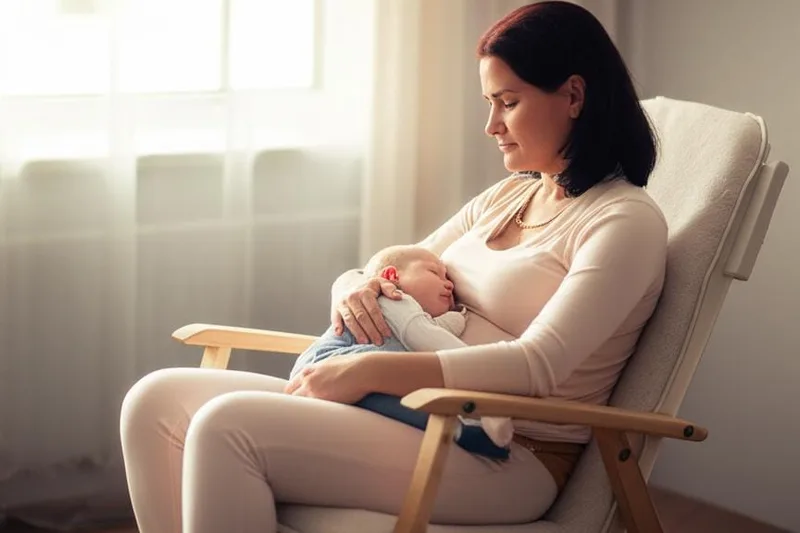
One of the biggest questions that comes to mind when you become a new mother or father is your baby's sleep . You may be wondering things like, 'Is my baby getting enough sleep?', 'Why is he sleeping so much?' or 'Why isn't he sleeping through the night?' So today, let's talk about how this sleep thing works in your baby's first year, and what we need to be aware of.
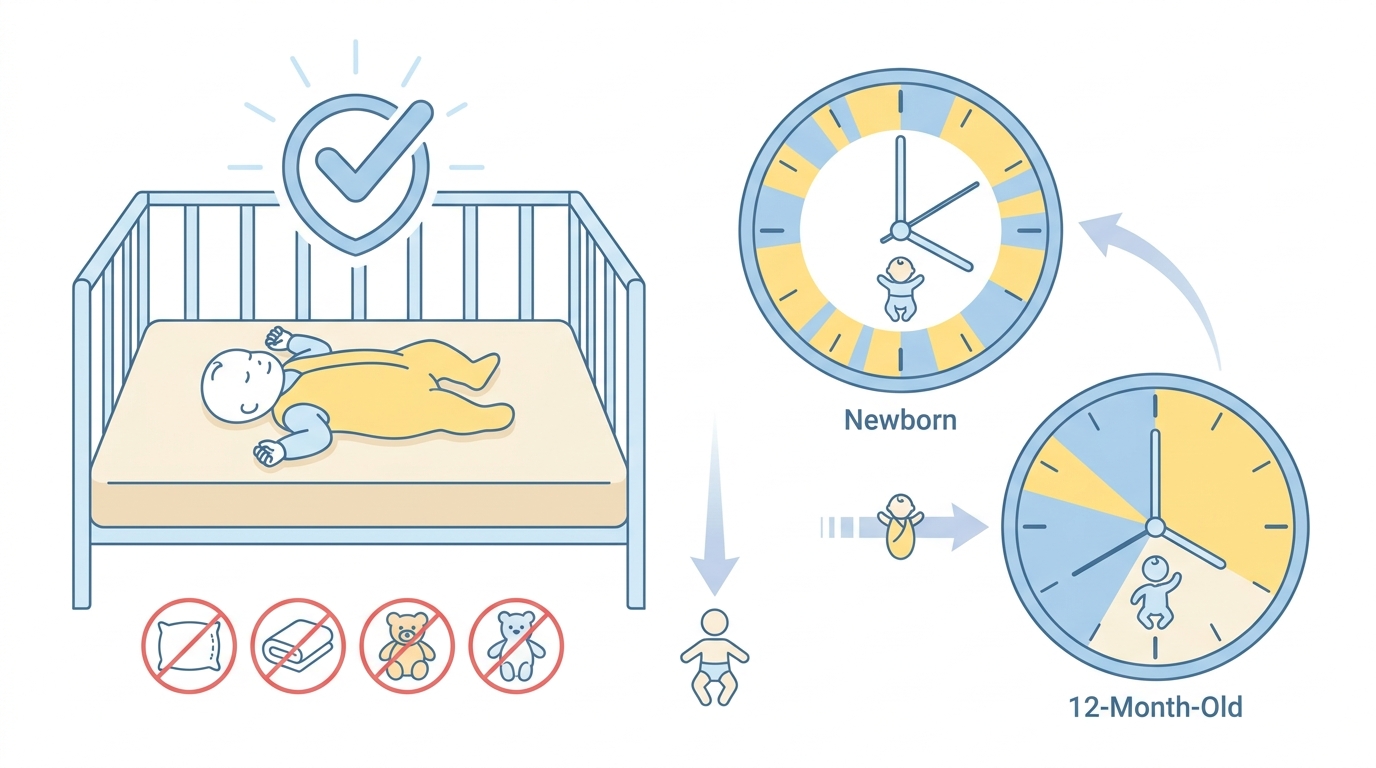
Why do babies sleep so long?
Simply put, babies grow up so fast. So much is happening inside their little bodies and brains! For all of this, that is, for healthy physical and mental development, a baby needs good sleep. Just like when we plant a tree, we water and fertilize it, sleep is essential for a baby's growth.
But sometimes you may wonder, 'Is my baby sleeping too much?' If you have such fears or doubts, the best thing to do is to see your pediatrician . Then the doctor/madam will tell you what is normal for your baby and whether there is a condition that needs attention. For example, if your baby is very sleepy, it could be something like a cold or fever. Very rarely, excessive sleepiness can be a symptom of a medical condition that requires treatment (e.g. congenital heart disease ). So the doctor will look into all of that and do the necessary things.
Babies' sleep patterns are not exactly set in stone. What works for one baby may not work for another. But in general, babies have a certain sleep pattern because they need to be fed frequently (yes, very often!).
Another thing is, newborn babies don't know the difference between day and night. Their internal 24-hour clock, which we adults call their 'circadian rhythm ' , takes a while to develop. It's what tells them when to be awake and when to sleep. So, you and your baby need to be very patient during this time.
So how long should babies sleep?
Babies between the ages of 4 and 12 months should sleep between 12 and 16 hours a day. This includes naps during the day. Sleeping this long is essential for a baby's health and development.
However, there is no specific recommendation for how much sleep babies under 4 months should get. The reason is that there are specific health benefits associated with a certain amount of sleep.Research has not yet found a link. Experts say that 'normal' sleep from birth to about 4 months varies from baby to baby. What works for your baby may not work for your friend's baby. That's why it's important to talk to your doctor during these first few months (and beyond).
What is a newborn baby's sleep schedule like?
In the first two months of your baby's life, sleep comes in small bursts between feedings. Your baby will sleep for about three hours at a time, lasting 30 minutes. Then he'll wake up for about two hours and then go back to sleep. Newborns wake up often because their little stomachs fill up quickly and they're hungry again soon after feeding. This short sleep and wake-up period is normal and very important for your baby's development.
How soon should a newborn baby be breastfed?
If you are breastfeeding your baby, you should feed them every two to three hours. If you are formula feeding , your baby can go a little longer between feedings, usually about three to four hours.
Do you have to wake the baby to feed him?
Some experts say that if your baby wants to gain some weight within the first two weeks of birth, you should wake him up to feed him. In that case, you should wake him up every three to four hours to feed him. Others say that if your baby sleeps for more than five hours at a time, you should wake him up to feed him within the first five to six weeks.
Babies under 6 months old usually wake up every three to four hours because they are hungry. So the question of whether you should wake them up (and lose your precious sleep) may not be a big deal. Talk to your doctor about what is best for your baby and whether you should wake them up to feed. Your doctor will then give you advice based on your baby's weight, growth, how often they are breastfeeding, urinating , and pooping .
When do babies start sleeping through the night?
Most babies start sleeping through the night around 6 months of age. This means they can sleep for five to six hours at a time without being breastfed. Some babies start sleeping through the night even earlier, around 4 months of age.
However, it's very common for babies to wake up more than once during the night. Your baby may wake up once, twice, or as many as six times. These patterns can change throughout your baby's first year. Experts call this a 'sleep regression.' You'll understand this when your baby, who slept soundly last week, cries every hour this week. That's it.
When your baby wakes up at night, you may need to rock or pick him up to get him back to sleep. Babies under 3 months old will rely on you for this because they can't control their emotions yet.
But after your baby is about 3 months old, you can start teaching them to self-soothe. A baby who can self-soothe can go back to sleep without your help, or with very little help. This will take some time, but in the long run, it will be very beneficial for both you and your baby. However, if your baby wakes up and starts crying, it is important to check to see if their basic needs (such as hunger, illness, or a wet nappy) have been met. This self-soothe method will not work for a hungry, sick, or dirty baby.
What can I do to help my baby sleep better?
Your baby needs good, quality sleep for his own good as well as yours . If your baby doesn't sleep, you won't sleep either (no need to remind him again!). So, baby... as the saying goes, 'sleep like a baby', here are a few tips to help you get that kind of sleep:
- Establish a 20-30 minute bedtime routine. This will help your baby calm down and help them understand that it's time for bed. You can do things like give your baby a bath, sing a lullaby, or read a book. It's a good idea to start this bedtime routine by breastfeeding your baby. That way, he won't have to wait until he's breastfed to go to sleep.
- Make naps part of your baby's routine. Don't keep your baby awake too long, hoping that he'll sleep well at night. You might think that if your baby is overtired, he'll fall asleep quickly and sleep through the night. In fact, the opposite is true. When your baby is overtired, it can be difficult for him to fall asleep and stay asleep.
- Help your baby establish his or her internal clock ('circadian rhythm'). You can do this by keeping him or her in a bright, sunny place during the day and by turning off bright lights at night. When your baby wakes up to feed at night, minimize talking and playing. Keep the environment calm and quiet so that your baby understands that night is a time for sleeping, not for working.
- Be mindful of the room temperature . Keep your baby's sleeping area at a comfortable temperature, usually between 20-22 degrees Celsius (68-72 degrees Fahrenheit).
- Try different methods of sleep training. This is the process of teaching your baby to fall asleep on their own. Sleep training methods that work for one baby may not work for another. Also, the method that worked for your baby a few months ago may not work for you now. It's okay to experiment, change methods, and use a combination of methods as needed to help your baby.
- Give your baby plenty of attention while he's awake. Especially in the first few months, holding your baby often can help him feel calm and secure (which can also help him sleep better). This is also a great opportunity for family and friends to come over and offer a little help.
Babies with certain medical conditions may need other ways to get enough rest. It's important to talk to your doctor about what they need in these special circumstances.
Where should my baby sleep?
Your baby should sleep in a bassinet or crib , either in your room or in a separate room. No matter how much you love to cuddle your baby, it is never safe to let him sleep in your bed. Bed-sharing increases the risk of suffocation, strangulation, and Sudden Infant Death Syndrome (SIDS) .
SIDS is the sudden and unexplained death of a healthy baby. You can help your baby sleep safely by always putting him or her to sleep on his or her back and taking other safety measures. If you have questions about safe sleep at different stages of your baby's development, don't hesitate to ask your doctor.
When should I seek medical advice?
Talk to your doctor if your baby has any of these symptoms :
- If your baby is constantly fussy and trying to soothe them doesn't work, they may have a condition like reflux or another problem that causes them to cry constantly (e.g. colic ).
- If it's very difficult to wake up.
- If it seems like it has no interest in drinking milk.
Especially if you're a first-time mom, you may be wondering what's normal and what needs attention. If you're in doubt, the best thing to do is call your doctor and talk about what's going on. There's no such thing as a small or 'stupid' question when it comes to your baby's care and well-being.
So, what are the things we need to remember from all of this?
When days and nights seem to be the same, it can be hard to remember exactly how many hours your baby sleeps and when. That's okay. Your baby's sleep in the first year doesn't have to follow a strict formula . Every baby is different. But in general, they sleep at least half of every day in their first year. Stay in touch with your doctor. He or she can tell you what's normal for your baby and how he or she is developing.
During this time, don't forget to take care of yourself. This can be done in many ways. Accept help from others. Put household chores on hold (don't apologize for it!). If you really need to sleep in, skip a night out with friends. This first year is a very important time for you and your family to establish a routine and get into a rhythm. Enjoy the little moments with your baby, do everything you can to meet his needs. Trust that all the other little things will be okay.
` Baby sleep, newborn baby, infant sleep, sleep patterns, nighttime sleeping, daytime sleeping, SIDS
ukat juk’ampinaka Doctoran qillqatapa
ukat juk’ampinaka Mä wawax nayrïr marapanx juk’at juk’atw ikiñax jilxati, ukat wali wakiskiriwa mä wawax p’iqipataki ukhamarak janchipan jilxatañapataki. Jichha yurita wawanakaxa niya 14-17 pachanakawa ikipxi, ukaxa mä mara phuqhasaxa 11-14 pacharuwa jisk’achasi. Síndrome de Muerte Infantil Repentina (SIDS) jan utjañapatakixa, awk taykanakax sapa kutiw wawarux qhipäxat ikiñar uchapxañapa, mä colchón ch’ullqhi apnaqapxañapawa ukat janiw juk’amp almohadas jan ukax mantas cuna ukar uchañapäkiti.
❓ ukat juk’ampinaka Mä qawqha juk’amp jiskt’äwinakampiw jikisipxasma (FAQ) .
ukat juk’ampinaka ¿Wawajj qhepäjjat ikiñapapuniti?▼
ukat juk’ampinaka jïsa Sapa kuti wawar nayrïr mara tukuykam ikiñar kuttʼayañax wali wakiskiriwa, ukhamatwa síndrome de muerte infantil (SIDS) sat usux jan utjañapataki.
ukat juk’ampinaka ¿Kunapachas wawax arum paqar jan jaytjasis ikiñ qallti?▼
ukat juk’ampinaka Jilapachax niya 6 phaxsi, wawax reloj biológico ukax regular ukhamaw tuku, ukatx arumax 5-6 horanak sapa kutiw ikiñar yatintaraki.
¿Kunas lurasispa wawar suma ikiñapataki?▼
ukat juk’ampinaka Janïr ikiñkamax jariqasiña, llamp’u musica jan ukax lullaby ist’aña ukat sapa uru pachpa pachan ikiñ (Rutina de sueño) ukax suma ikiñar yanapt’iristam.


💬 Comments (0)
No comments have been posted yet. Add your comment here for the first time.
Add your comment