
What do you know about this wonderful space in the chest (the mediastinum)? Let's talk in detail!

What do you know about this wonderful space in the chest (the mediastinum)? Let's talk in detail!
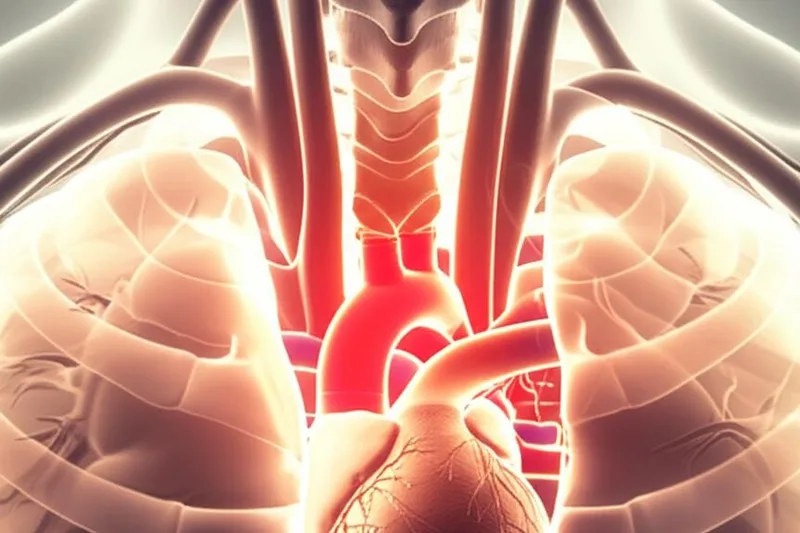
Have you ever wondered how your heart and major blood vessels are kept safe and sound inside your chest? The mediastinum is an important place that helps keep it safe, like a house. Simply put, it is a very important space in our chest cavity, between the two lungs. Let's talk about this in a little more detail today.

What is the Mediastinum?

Simply put, your mediastinum is the space inside your chest. It contains your heart and several other important structures. Your chest cavity, or thoracic cavity, is made up of three main parts. The other two parts are the left pleural cavity, which contains your left lung, and the right pleural cavity, which contains your right lung. The space between those two pleural cavities is what we call the mediastinum. It's a very important place, isn't it?

What are the structures in the mediastinum?

There are many different structures inside your mediastinum, including organs and blood vessels. Let's take a look at what they are.

Organs in the mediastinum:

  • Esophagus : When you eat, the food travels from your throat to your stomach through the esophagus, or food pipe as we call it. It also travels through this mediastinum.
  • Heart : The heart, which pumps blood throughout our body, is located in the middle of this mediastinum. Did you know that there is a protective sac-like covering around the heart, called the pericardium ?
  • Thymus: This is a gland that helps our immune system. It is most active when we are young, that is, before puberty. It is located in the upper, anterior part of the mediastinum.
  • Trachea : The windpipe, or bronchi, that helps us breathe is located just in front of the esophagus. It runs from the base of the neck into the chest, then divides into two and goes to each side of the lungs.

Blood vessels in the mediastinum:

  • Left brachiocephalic vein : This vein helps bring blood from the left side of our upper body back to the heart. It is directly connected to a large vein called the superior vena cava.
  • Superior vena cava:This is a major vein that carries blood from the upper body to the heart. It is directly connected to the right atrium, the upper right chamber of the heart.
  • Pulmonary trunk: This blood vessel connects to the right ventricle of the heart at a point called the pulmonary valve. After leaving the heart, it divides into the right and left pulmonary arteries, carrying blood to the lungs to receive oxygen.
  • Thoracic aorta : The largest artery in our body is the aorta . It is the one that carries oxygenated blood to all the organs and tissues of the body. It connects to the left ventricle of the heart at the aortic valve. From there, it travels through the chest and abdomen. The part that goes through the chest, the thoracic aorta, is located in the mediastinum. It also has parts, for example, the ascending aorta, the aortic arch, and the descending thoracic aorta.

Other structures in the mediastinum:

In addition to these main things, there are other things in this space:
  • Fatty and connective tissues
  • Lymph nodes
  • Nerves
  • Thoracic duct
  • Thoracic spine (part of the spine related to the chest)

What are the functions of the mediastinum?

Okay, so what happens to this mediastinum? What's the significance of this?
  • Like a home for the heart and great blood vessels: It acts as a safe, stable place for the great blood vessels that are directly connected to the heart and carry blood in and out, as well as for the heart.
  • Provides protection: The thymus protects vital organs such as the heart. The fatty tissue and connective tissue in the mediastinum act as a cushion around these organs. In addition, the sternum, or ' middle chest bone', at the front of our chest, provides further protection to this vital area.
  • Acts as a passageway: Think of it like an important railway station . The mediastinum acts as a passageway for things (like food and breath) to move back and forth between the neck and chest, and between the chest and stomach. For example, the esophagus carries food and drink from the throat to the stomach through this mediastinum.

Where is the mediastinum located?

Now you know exactly where the mediastinum is. It's in the middle of the chest, between the two lungs.The Latin word "mediastinum" means "midway". Its boundaries are as follows:
  • Superior border: Where the neck begins, that is, the base of the neck.
  • Inferior border: The diaphragm. This is the large muscle that separates the chest cavity from the abdominal cavity.
  • Anterior border: The sternum, or middle bone of the chest.
  • Posterior border: spine.
  • Lateral borders: The pleural sacs surrounding the left and right lungs.

What are the parts of the mediastinum?

Now let's look at what the parts of this mediastinum are. It's divided into several parts. Doctors call these 'compartments'. There are several ways to classify these. The main thing you need to remember is that the mediastinum can be divided into three or four compartments. And those names refer to where those parts of the chest are.

Traditional four-part classification

According to this old, traditional system, the mediastinum is divided into four parts:
  • Superior mediastinum: The uppermost part. Above the heart.
  • Anterior mediastinum: The area in front of the heart. Between the heart and the sternum.
  • Middle mediastinum: The part that contains the heart.
  • Posterior mediastinum: The part behind the heart.
This classification is based on X-ray images. Therefore, it looks at the heart in two dimensions (2D).

ITMIG three-part classification

The International Thymic Malignancy Interest Group (ITMIG) introduced this new three-part system. It is based on cross-sectional imaging (CT scans) and is a three-dimensional (3D) view of the heart. According to this system, the mediastinum is divided into three parts: 1. Prevascular compartment: This is located in front of the heart, between the heart and the breastbone. It contains:
  • Fat
  • Left brachiocephalic vein
  • Lymph nodes
  • Thymus
2. Visceral compartment: This is the middle part, where the heart is located. What is inside it:
  • Esophagus (part of it)
  • Heart
  • Lymph nodes
  • Pulmonary trunk
  • Superior vena cava
  • Thoracic aorta
  • Thoracic duct
  • Trachea (part of it)
3. Paravertebral compartment:This is located behind the heart, between the heart and the spine. It contains:
  • Paravertebral soft tissues
  • Thoracic spine
Remember, the mediastinum is not a flat space, it is a three-dimensional (3D) space. It's like a diorama you build inside a small box. The things inside are arranged in an orderly manner to help our bodies function properly. However, some diseases can affect the organs and tissues in the mediastinum, and this delicate balance can be disrupted.

What are the common conditions that affect the mediastinum?

A variety of conditions can affect the organs and tissues in the mediastinum. Some of them start in the mediastinum itself, such as primary tumors or fluid-filled cysts. Other times, a disease, such as cancer, can spread to the mediastinum from elsewhere in the body. Systemic infections that affect the entire body can also affect the mediastinum. Some of the conditions that can affect the mediastinum include:
  • Aortic dissection
  • Cardiac tamponade
  • Esophageal cancer
  • Goiter
  • Heart disease
  • Lymphoma ( cancer of the lymphatic system)
  • Mediastinal tumors
  • Mediastinitis ( swelling or infection of the mediastinum)
  • Myasthenia gravis (muscle weakness disease)
  • Thoracic aortic aneurysm (bulging of the thoracic portion of the aorta)
These conditions have different symptoms and treatments. If you are unsure about a condition, it is best to talk to your doctor to learn more about it.

What is a Widened Mediastinum?

You may have heard doctors sometimes say that the mediastinum is "widened" after an X-ray. This means that when viewed from the back to the front (anteroposterior view) on an X-ray, it is wider than normal, usually by more than 8 centimeters. This is a clinical sign that a doctor sees, not a disease . A wide mediastinum can indicate a variety of underlying medical conditions. For example:
  • Aortic dissection
  • Rib or vertebral (spine) fractures
  • Cardiac tamponade
  • Mediastinal tumor
  • Mediastinitis
  • Thoracic aortic aneurysm

What tests are performed to check the health of the mediastinum?

Your doctor may use tests like these to examine the mediastinum:
  • Chest X-ray
  • CT scan (Computed tomography (CT) scan)
  • MRI scan (Magnetic resonance imaging (MRI) scan)
  • Mediastinoscopy ( introduction of a small camera)
  • Ultrasound examination
Your doctor may recommend these tests to help you find the cause of your symptoms or to monitor a condition that has already been diagnosed. Be sure to talk to your doctor about what tests you want, why you want them, and how to prepare for them.

How can I keep my mediastinum healthy?

By following a healthy lifestyle, you can protect yourself from many conditions that affect the mediastinum. Here are some simple tips to help you:
  • Avoid smoking and all tobacco products. Seek advice and support from your doctor to help you quit smoking.
  • Eat a heart-healthy diet. Eat more vegetables, fruits, legumes, and whole grains. Reduce oil, salt, and sugar.
  • Exercise regularly. It's a good idea to talk to your doctor before starting a new exercise plan.
  • Limit or completely stop alcohol use .
  • Take the medications prescribed to you exactly and on time.
  • Go for annual medical checkups . That way, if there is any problem, it can be identified early.

Finally, what to remember (Take-Home Message)

So, I hope you now have a good idea of ​​what the mediastinum is, what it contains, and what its importance is.
The mediastinum is a very important space in our chest, between the lungs, that holds and protects the heart and many other important things. Often, we think about the major organs inside it, like the heart, but we can forget about this space called the mediastinum.
However, it can be very important to know the anatomy of the mediastinum and the terms used by doctors, especially if you or someone close to you has been diagnosed with this condition. If you have any further questions about the mediastinum or how it affects your health, don't hesitate to talk to your doctor. They will be happy to explain everything you need to know.

⚠️ Important: The medical articles and information on Nirogi Lanka are for general awareness only, and are by no means a substitute for professional medical advice, diagnosis, or treatment. For any medical problem you have, consult a qualified physician immediately.

💬 Comments (0)

No comments have been posted yet. Add your comment here for the first time.

Add your comment

Please calculate: 2 + 3 =
What do you know about this wonderful space in the chest (the mediastinum)? Let's talk in detail!
How the Body WorksSeptember 5, 2025

What do you know about this wonderful space in the chest (the mediastinum)? Let's talk in detail!

Have you ever wondered how your heart and major blood vessels are kept safe and sound inside your chest? The mediastinum is an important place that helps keep it safe, like a house. Simply put, it is a very important space in our chest cavity, between the two lungs. Let's talk about this in a little more detail today.

What is the Mediastinum?

Simply put, your mediastinum is the space inside your chest. It contains your heart and several other important structures. Your chest cavity, or thoracic cavity, is made up of three main parts. The other two parts are the left pleural cavity, which contains your left lung, and the right pleural cavity, which contains your right lung. The space between those two pleural cavities is what we call the mediastinum. It's a very important place, isn't it?

What are the structures in the mediastinum?

There are many different structures inside your mediastinum, including organs and blood vessels. Let's take a look at what they are.

Organs in the mediastinum:

  • Esophagus : When you eat, the food travels from your throat to your stomach through the esophagus, or food pipe as we call it. It also travels through this mediastinum.
  • Heart : The heart, which pumps blood throughout our body, is located in the middle of this mediastinum. Did you know that there is a protective sac-like covering around the heart, called the pericardium ?
  • Thymus: This is a gland that helps our immune system. It is most active when we are young, that is, before puberty. It is located in the upper, anterior part of the mediastinum.
  • Trachea : The windpipe, or bronchi, that helps us breathe is located just in front of the esophagus. It runs from the base of the neck into the chest, then divides into two and goes to each side of the lungs.

Blood vessels in the mediastinum:

  • Left brachiocephalic vein : This vein helps bring blood from the left side of our upper body back to the heart. It is directly connected to a large vein called the superior vena cava.
  • Superior vena cava:This is a major vein that carries blood from the upper body to the heart. It is directly connected to the right atrium, the upper right chamber of the heart.
  • Pulmonary trunk: This blood vessel connects to the right ventricle of the heart at a point called the pulmonary valve. After leaving the heart, it divides into the right and left pulmonary arteries, carrying blood to the lungs to receive oxygen.
  • Thoracic aorta : The largest artery in our body is the aorta . It is the one that carries oxygenated blood to all the organs and tissues of the body. It connects to the left ventricle of the heart at the aortic valve. From there, it travels through the chest and abdomen. The part that goes through the chest, the thoracic aorta, is located in the mediastinum. It also has parts, for example, the ascending aorta, the aortic arch, and the descending thoracic aorta.

Other structures in the mediastinum:

In addition to these main things, there are other things in this space:
  • Fatty and connective tissues
  • Lymph nodes
  • Nerves
  • Thoracic duct
  • Thoracic spine (part of the spine related to the chest)

What are the functions of the mediastinum?

Okay, so what happens to this mediastinum? What's the significance of this?
  • Like a home for the heart and great blood vessels: It acts as a safe, stable place for the great blood vessels that are directly connected to the heart and carry blood in and out, as well as for the heart.
  • Provides protection: The thymus protects vital organs such as the heart. The fatty tissue and connective tissue in the mediastinum act as a cushion around these organs. In addition, the sternum, or ' middle chest bone', at the front of our chest, provides further protection to this vital area.
  • Acts as a passageway: Think of it like an important railway station . The mediastinum acts as a passageway for things (like food and breath) to move back and forth between the neck and chest, and between the chest and stomach. For example, the esophagus carries food and drink from the throat to the stomach through this mediastinum.

Where is the mediastinum located?

Now you know exactly where the mediastinum is. It's in the middle of the chest, between the two lungs.The Latin word "mediastinum" means "midway". Its boundaries are as follows:
  • Superior border: Where the neck begins, that is, the base of the neck.
  • Inferior border: The diaphragm. This is the large muscle that separates the chest cavity from the abdominal cavity.
  • Anterior border: The sternum, or middle bone of the chest.
  • Posterior border: spine.
  • Lateral borders: The pleural sacs surrounding the left and right lungs.

What are the parts of the mediastinum?

Now let's look at what the parts of this mediastinum are. It's divided into several parts. Doctors call these 'compartments'. There are several ways to classify these. The main thing you need to remember is that the mediastinum can be divided into three or four compartments. And those names refer to where those parts of the chest are.

Traditional four-part classification

According to this old, traditional system, the mediastinum is divided into four parts:
  • Superior mediastinum: The uppermost part. Above the heart.
  • Anterior mediastinum: The area in front of the heart. Between the heart and the sternum.
  • Middle mediastinum: The part that contains the heart.
  • Posterior mediastinum: The part behind the heart.
This classification is based on X-ray images. Therefore, it looks at the heart in two dimensions (2D).

ITMIG three-part classification

The International Thymic Malignancy Interest Group (ITMIG) introduced this new three-part system. It is based on cross-sectional imaging (CT scans) and is a three-dimensional (3D) view of the heart. According to this system, the mediastinum is divided into three parts: 1. Prevascular compartment: This is located in front of the heart, between the heart and the breastbone. It contains:
  • Fat
  • Left brachiocephalic vein
  • Lymph nodes
  • Thymus
2. Visceral compartment: This is the middle part, where the heart is located. What is inside it:
  • Esophagus (part of it)
  • Heart
  • Lymph nodes
  • Pulmonary trunk
  • Superior vena cava
  • Thoracic aorta
  • Thoracic duct
  • Trachea (part of it)
3. Paravertebral compartment:This is located behind the heart, between the heart and the spine. It contains:
  • Paravertebral soft tissues
  • Thoracic spine
Remember, the mediastinum is not a flat space, it is a three-dimensional (3D) space. It's like a diorama you build inside a small box. The things inside are arranged in an orderly manner to help our bodies function properly. However, some diseases can affect the organs and tissues in the mediastinum, and this delicate balance can be disrupted.

What are the common conditions that affect the mediastinum?

A variety of conditions can affect the organs and tissues in the mediastinum. Some of them start in the mediastinum itself, such as primary tumors or fluid-filled cysts. Other times, a disease, such as cancer, can spread to the mediastinum from elsewhere in the body. Systemic infections that affect the entire body can also affect the mediastinum. Some of the conditions that can affect the mediastinum include:
  • Aortic dissection
  • Cardiac tamponade
  • Esophageal cancer
  • Goiter
  • Heart disease
  • Lymphoma ( cancer of the lymphatic system)
  • Mediastinal tumors
  • Mediastinitis ( swelling or infection of the mediastinum)
  • Myasthenia gravis (muscle weakness disease)
  • Thoracic aortic aneurysm (bulging of the thoracic portion of the aorta)
These conditions have different symptoms and treatments. If you are unsure about a condition, it is best to talk to your doctor to learn more about it.

What is a Widened Mediastinum?

You may have heard doctors sometimes say that the mediastinum is "widened" after an X-ray. This means that when viewed from the back to the front (anteroposterior view) on an X-ray, it is wider than normal, usually by more than 8 centimeters. This is a clinical sign that a doctor sees, not a disease . A wide mediastinum can indicate a variety of underlying medical conditions. For example:
  • Aortic dissection
  • Rib or vertebral (spine) fractures
  • Cardiac tamponade
  • Mediastinal tumor
  • Mediastinitis
  • Thoracic aortic aneurysm

What tests are performed to check the health of the mediastinum?

Your doctor may use tests like these to examine the mediastinum:
  • Chest X-ray
  • CT scan (Computed tomography (CT) scan)
  • MRI scan (Magnetic resonance imaging (MRI) scan)
  • Mediastinoscopy ( introduction of a small camera)
  • Ultrasound examination
Your doctor may recommend these tests to help you find the cause of your symptoms or to monitor a condition that has already been diagnosed. Be sure to talk to your doctor about what tests you want, why you want them, and how to prepare for them.

How can I keep my mediastinum healthy?

By following a healthy lifestyle, you can protect yourself from many conditions that affect the mediastinum. Here are some simple tips to help you:
  • Avoid smoking and all tobacco products. Seek advice and support from your doctor to help you quit smoking.
  • Eat a heart-healthy diet. Eat more vegetables, fruits, legumes, and whole grains. Reduce oil, salt, and sugar.
  • Exercise regularly. It's a good idea to talk to your doctor before starting a new exercise plan.
  • Limit or completely stop alcohol use .
  • Take the medications prescribed to you exactly and on time.
  • Go for annual medical checkups . That way, if there is any problem, it can be identified early.

Finally, what to remember (Take-Home Message)

So, I hope you now have a good idea of ​​what the mediastinum is, what it contains, and what its importance is.
The mediastinum is a very important space in our chest, between the lungs, that holds and protects the heart and many other important things. Often, we think about the major organs inside it, like the heart, but we can forget about this space called the mediastinum.
However, it can be very important to know the anatomy of the mediastinum and the terms used by doctors, especially if you or someone close to you has been diagnosed with this condition. If you have any further questions about the mediastinum or how it affects your health, don't hesitate to talk to your doctor. They will be happy to explain everything you need to know.
⚠️ Important: The medical articles and information on Nirogi Lanka are for general awareness only, and are by no means a substitute for professional medical advice, diagnosis, or treatment. For any medical problem you have, consult a qualified physician immediately.

💬 Comments (0)

No comments have been posted yet. Add your comment here for the first time.

Add your comment

Please calculate: 2 + 3 =