
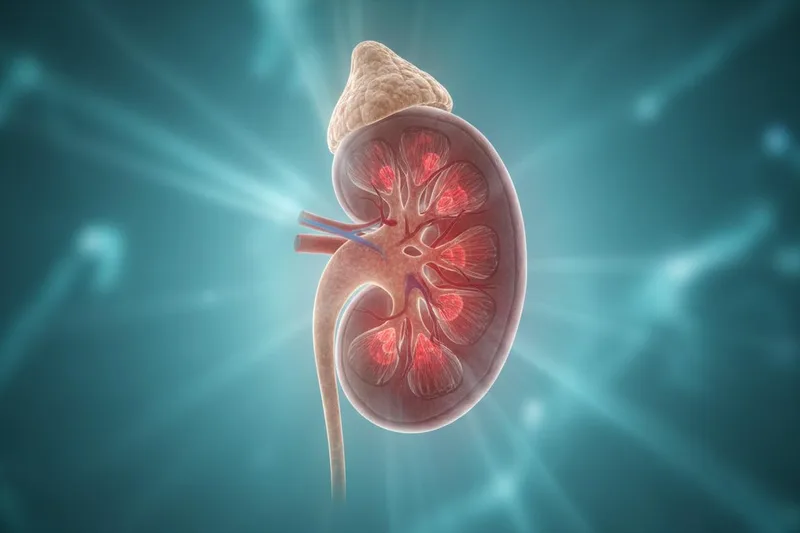
Have you ever noticed that the color of your urine has changed, becoming a slightly brownish-red color? Or have you ever felt like your face is a little swollen when you wake up in the morning, and your legs are swollen by the afternoon? Many people may not pay much attention to these things. But these can be a sign of some problem with the kidneys, which are one of the most important organs in our body. Today we are going to talk about a disease that affects the kidneys, which is a bit complicated but very important to understand. That is Glomerulonephritis .
Simply put, what is Glomerulonephritis?
To understand this, let's first look at how our kidneys work. Imagine that our kidneys are like a water filter at home. Inside this water filter, there is a very fine mesh that cleans the water, right? Similarly, inside our kidneys, there are about a million very small, fine filters that clean our blood. These small filters are what we call glomeruli in medical science.
Their main function is to filter out the waste products and excess water in our blood and excrete them as urine. So, if for some reason these little filters get damaged or swollen, they can't filter the blood properly. That's what we call Glomerulonephritis . When this happens, it becomes difficult for the kidneys to remove waste products and excess fluid.
The important thing is that if this condition is diagnosed early and treated properly, it can often be completely cured. However, if left untreated, the condition can become serious and even lead to kidney failure.
Are there different types of this?
Yes, there are mainly two types.
- Acute Glomerulonephritis: This is a condition that occurs suddenly.
- Chronic Glomerulonephritis: This is a condition that develops slowly over time. Sometimes, an `acute` condition occurs, resolves, and then recurs as a `chronic` condition years later.
What are the symptoms of this disease?
Most of the time, some people with this disease don't have any symptoms. It's often discovered incidentally during a blood or urine test for another condition. However, if symptoms do occur, they may include the following. If you have one or more of these, it's important to see your doctor right away.
| Symptom | Simply explained |
|---|---|
| Blood in the urine | The color of urine can be brown, pink, or red, like tea leaves. |
| Body swelling | Swelling may be seen, especially in the face, around the eyes, hands, and legs. |
| Foamy urine | As protein is released into the urine, it can become foamy, like soapy water. |
| High blood pressure | Excess fluid and salt in the body can increase blood pressure. |
| Other features | Difficulty breathing, nausea, skin rashes, joint or abdominal pain, loss of appetite, and weight loss. |
Why does this situation occur?
Most of the time, it's hard to pinpoint a specific cause. However, in some cases, there are several factors that contribute to this.
- Infections: This condition can occur as a complication of certain infections. For example, infections such as strep throat, HIV, hepatitis C, and bacterial endocarditis, which is a bacterial infection of the heart valves, can also cause this condition.
- Autoimmune diseases: Sometimes the immune system, which protects our body, mistakenly starts attacking our own kidneys. A disease called lupus is a good example of this .
- IgA Nephropathy: In this, an antibody called `(Immunoglobulin A)` is deposited in the kidneys and damages the filters.
- Inflammatory conditions in the blood vessels: Some rare conditions can cause swelling of the blood vessels, which can damage the kidneys.
- Hereditary causes:Very rarely, there is a genetic risk of developing this condition if someone in the family has it.
- Cancer: This disease can also be caused by certain types of cancer, for example, multiple myeloma.
How to diagnose this disease?
If you have the symptoms mentioned above, your doctor may refer you to a nephrologist, a doctor who specializes in kidney disease. These tests may be done to help diagnose the condition.
Urine Test
This checks your urine for blood or protein particles. These are signs that your kidney filters are damaged.
Blood Test
This mainly looks at the level of creatinine in your blood. Creatinine is a waste product produced in our body. It is filtered by healthy kidneys and excreted in the urine. When kidney function decreases, the level of creatinine in the blood increases.
Kidney Biopsy
This is the best way to diagnose the disease definitively. Here, under anesthesia, a small piece of tissue is taken from the kidney using a very small needle and examined under a microscope. This allows us to determine exactly what damage has occurred to the kidney filters and what caused it.
Imaging Tests
Your doctor may also recommend an ultrasound scan, X-ray , or CT scan to check the size and shape of your kidneys and to see if there are any other problems.
How is it treated?
Treatment depends on the cause of the disease and the extent of damage to the kidneys. The main goal of treatment is to stop further damage to the kidneys and preserve their function.
| Treatment method | Description |
|---|---|
| Treating the underlying cause | If the cause of the disease is high blood pressure, medication is given to control it. If it is an infection, antibiotics are given. |
| Changes in diet | To reduce the burden on the kidneys, you can be told to reduce the amount of salt and protein you consume. |
| Immunosuppressants | If the disease is caused by a problem with the immune system, medications are given that control the function of that system. |
| Blood pressure lowering medications | Medications like ACE inhibitors or ARBs control blood pressure and protect the kidneys. |
| Dialysis | If kidney function is severely impaired, the patient is referred to a machine that artificially purifies the blood. |
| Other treatments | Diuretics are given to reduce swelling in the body. There are also special treatments such as plasmapheresis to remove harmful proteins from the blood. |
Can this disease be prevented?
There is no proven way to prevent this disease. However, following a healthy lifestyle and adopting certain habits can help protect kidney health.
- Eat a balanced diet. Avoid foods high in salt, sugar, and fat as much as possible.
- If you have high blood pressure or diabetes , follow your doctor's instructions exactly. Take your medication on time.
- Protect yourself from infections. Stay clean. If you get something like a throat infection, don't ignore it and see a doctor for treatment.
- Do not continue to use medications such as painkillers without your doctor's advice.
- Avoid smoking and alcohol consumption. These directly damage the kidneys.
Remember, Glomerulonephritis is nothing to be afraid of, but it's also not something to ignore. If diagnosed at the right time and treated properly, you can live a healthy life.
Take-Home Message
- If your urine changes color, becomes red/brown, foamy, or you have swelling, don't ignore it. See your doctor immediately.
- Glomerulonephritis is a condition caused by damage to the delicate filters in the kidneys.
- This disease can be asymptomatic in some people, so it is important to have a medical check-up at least once a year.
- Treatment depends on the cause of the disease. If detected early, it can often be completely cured.
- Good control of high blood pressure and diabetes is essential to protect the kidneys.


💬 Comments (0)
No comments have been posted yet. Add your comment here for the first time.
Add your comment