
Are you experiencing small, shiny blisters on your skin? This could be Lichen Nitidus.

Are you experiencing small, shiny blisters on your skin? This could be Lichen Nitidus.

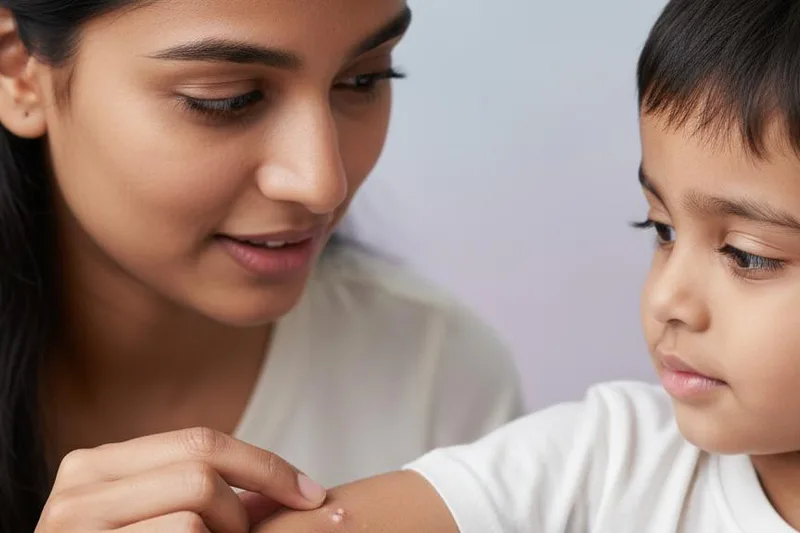
Have you ever noticed that you or your little one suddenly has small blisters on their skin? They are not red or itchy, but they have a slight sheen. It is normal to feel a little scared when you see them. But not all blisters that look like this are dangerous. Today we are going to talk about a skin condition that, although it may seem a little alarming at first glance, is actually not that dangerous. That is Lichen Nitidus.

Simply put, what is Lichen Nitidus?

Lichen nitidus is a very uncommon, or rather rare, skin condition. It causes small, shiny bumps (medically called papules) to form on the surface of your skin. These bumps are usually the same color as your skin, or they can sometimes be a little white.

Imagine a cluster of small blisters that look like tiny spikes on your skin, but have flat tops and no spikes. That's what it looks like. They can appear anywhere on the body.

This condition is most common in children and young adults . However, it can also occur in adults. The most important thing is that this is not a contagious disease . That means it is not spread from one person to another, either through touch or in any other way. So there is no need to worry about this.

In most cases, no treatment is needed for this condition. After a while, these blisters will disappear on their own.

How common is this condition?

Actually, lichen nitidus is a rather rare condition, so the data on it is a bit mixed.

  • Some medical reports say that this may develop slightly more in men than in women.
  • Also, when it comes to skin color, some studies show that people of African American descent are more likely to develop this condition than white people.
  • However, some other medical opinions say that neither gender nor race affects this.

However, one thing is clear: This condition is more common in children and young adults than in the elderly.

What causes lichen nitidus?

This is a question that many people have. But the truth is, doctors have not yet found a specific cause for lichen nitidus. This means that it is a condition that occurs spontaneously.

In the past, doctors thought it was Lichen Planus.Another type of skin disease called lichen planus is also a condition that causes purple, itchy blisters on the skin. But we now know that these two conditions are different.

Simply put, it is currently believed that this may be a change in skin cells caused by some minor activity in our immune system. But this is still at the research stage. So don't assume that this is caused by a mistake on your part.

What are the symptoms? Where do these blisters come from?

The main symptom of lichen nitidus is those small, shiny blisters we talked about earlier. These blisters can appear anywhere on the body. Sometimes they appear in clusters in one place. Other times they may be scattered throughout the body. If some people's skin is broken, these blisters can also appear along the line of the break.

Let us further explain these blisters and other symptoms in the table below.

The nature of the characteristic Description
Where blisters are most common

  • Abdominal area
  • Back of hands
  • Buttock area
  • Chest
  • Forehead (forehead)
  • Penis (male)

Other symptoms (not everyone gets them)

  • Intense itching : Most of the time, these blisters do not itch. However, some people may itch quite intensely.
  • Changes in nails: You may notice things like small pits forming on the nails and ridges appearing.
  • Blisters inside the mouth: Very rarely, gray or white blisters may appear on the mucous membrane inside the mouth.

How does a doctor recognize this?

If you or your child develops blisters like this, the best thing to do is see a doctor. Doctors usually diagnose the condition by carefully examining the appearance of the blisters and how they have spread throughout the body.

Most of the time, this test can confirm the disease. However, sometimes, if it is necessary to distinguish it from another skin disease, the doctor may recommend a biopsy .

A biopsy is nothing to be afraid of. It involves taking a very small piece of skin from a skin lesion under anesthesia and examining it under a microscope. This allows us to identify exactly what changes are in these cells.

Is treatment necessary? What are the available treatments?

This may be the most comforting news we'll share in this article. Most cases of lichen nitidus don't require any treatment. Yes, that's true. These blisters will go away on their own over time.

However, if some people experience symptoms such as severe itching, the doctor may prescribe treatment to control those symptoms.

  • Corticosteroid creams : These are topical medications that help reduce swelling and itching of the skin. They should be used only for the prescribed period of time, as prescribed by your doctor.
  • Phototherapy: This is a more advanced treatment. It involves the application of controlled doses of special light, such as ultraviolet light, to the skin. This is usually done for difficult-to-control conditions such as itching.

The most important thing is, don't just apply whatever you feel like , because sometimes it can make the condition worse. Always follow the advice of a doctor.

Can this cause other complications?

No. Lichen nitidus is a condition that is limited to the skin and does not cause any serious medical complications . It does not affect internal organs or your overall health.

The only thing is, some people may feel a little anxious or embarrassed about their appearance because of these blisters, especially if they appear on areas that look like the face. But remember, this is only temporary.

How long will these blisters last? Will the scars heal?

Lichen nitidus usually lasts from a few months to about a year , after which the blisters gradually diminish and disappear completely.

Another good news is that after these blisters disappear , there is no scarring or permanent change in skin color . The skin returns to its normal state.

Do you need to see a doctor?

Yes. If you develop a rash or blisters on your child's skin, or your own skin, for no known reason (such as an allergy or insect bite), it's best to see a doctor right away .

Because skin conditions can often look similar, it's important to be sure whether it's lichen nitidus or something else that needs treatment. It also helps to alleviate any fears and doubts you may have.

When you go to see the doctor, you can ask questions like these:

  • Is this a serious situation?
  • Does this need treatment? What should I do?
  • How long will these blisters last?

The answers to these questions can help you gain a better understanding of this situation.

Take-Home Message

  • Lichen Nitidus is a non-dangerous, harmless skin condition.
  • This is not a contagious disease at all, so there is no need to worry about spreading it to family or others.
  • In most cases, no treatment is required and it heals on its own over time.
  • This condition does not cause permanent scars or changes in skin color.
  • If you or your child develops an unidentified rash or blister on their skin, always seek the advice of a qualified medical professional before self-treating.

Lichen Nitidus, skin diseases, skin blisters, skin diseases in children, skin rash, skin bumps, skin diseases

Frequently Asked Questions (FAQ)

How does a doctor recognize this?

If you or your child develops blisters like this, the best thing to do is see a doctor. Doctors usually diagnose the condition by carefully examining the appearance of the blisters and how they have spread throughout the body.

⚠️ Important: The medical articles and information on Nirogi Lanka are for general awareness only, and are by no means a substitute for professional medical advice, diagnosis, or treatment. For any medical problem you have, consult a qualified physician immediately.

💬 Comments (0)

No comments have been posted yet. Add your comment here for the first time.

Add your comment

Please calculate: 9 + 8 =
Are you experiencing small, shiny blisters on your skin? This could be Lichen Nitidus.
Skin DiseasesNovember 29, 2025

Are you experiencing small, shiny blisters on your skin? This could be Lichen Nitidus.

Have you ever noticed that you or your little one suddenly has small blisters on their skin? They are not red or itchy, but they have a slight sheen. It is normal to feel a little scared when you see them. But not all blisters that look like this are dangerous. Today we are going to talk about a skin condition that, although it may seem a little alarming at first glance, is actually not that dangerous. That is Lichen Nitidus.

Simply put, what is Lichen Nitidus?

Lichen nitidus is a very uncommon, or rather rare, skin condition. It causes small, shiny bumps (medically called papules) to form on the surface of your skin. These bumps are usually the same color as your skin, or they can sometimes be a little white.

Imagine a cluster of small blisters that look like tiny spikes on your skin, but have flat tops and no spikes. That's what it looks like. They can appear anywhere on the body.

This condition is most common in children and young adults . However, it can also occur in adults. The most important thing is that this is not a contagious disease . That means it is not spread from one person to another, either through touch or in any other way. So there is no need to worry about this.

In most cases, no treatment is needed for this condition. After a while, these blisters will disappear on their own.

How common is this condition?

Actually, lichen nitidus is a rather rare condition, so the data on it is a bit mixed.

  • Some medical reports say that this may develop slightly more in men than in women.
  • Also, when it comes to skin color, some studies show that people of African American descent are more likely to develop this condition than white people.
  • However, some other medical opinions say that neither gender nor race affects this.

However, one thing is clear: This condition is more common in children and young adults than in the elderly.

What causes lichen nitidus?

This is a question that many people have. But the truth is, doctors have not yet found a specific cause for lichen nitidus. This means that it is a condition that occurs spontaneously.

In the past, doctors thought it was Lichen Planus.Another type of skin disease called lichen planus is also a condition that causes purple, itchy blisters on the skin. But we now know that these two conditions are different.

Simply put, it is currently believed that this may be a change in skin cells caused by some minor activity in our immune system. But this is still at the research stage. So don't assume that this is caused by a mistake on your part.

What are the symptoms? Where do these blisters come from?

The main symptom of lichen nitidus is those small, shiny blisters we talked about earlier. These blisters can appear anywhere on the body. Sometimes they appear in clusters in one place. Other times they may be scattered throughout the body. If some people's skin is broken, these blisters can also appear along the line of the break.

Let us further explain these blisters and other symptoms in the table below.

The nature of the characteristic Description
Where blisters are most common

  • Abdominal area
  • Back of hands
  • Buttock area
  • Chest
  • Forehead (forehead)
  • Penis (male)

Other symptoms (not everyone gets them)

  • Intense itching : Most of the time, these blisters do not itch. However, some people may itch quite intensely.
  • Changes in nails: You may notice things like small pits forming on the nails and ridges appearing.
  • Blisters inside the mouth: Very rarely, gray or white blisters may appear on the mucous membrane inside the mouth.

How does a doctor recognize this?

If you or your child develops blisters like this, the best thing to do is see a doctor. Doctors usually diagnose the condition by carefully examining the appearance of the blisters and how they have spread throughout the body.

Most of the time, this test can confirm the disease. However, sometimes, if it is necessary to distinguish it from another skin disease, the doctor may recommend a biopsy .

A biopsy is nothing to be afraid of. It involves taking a very small piece of skin from a skin lesion under anesthesia and examining it under a microscope. This allows us to identify exactly what changes are in these cells.

Is treatment necessary? What are the available treatments?

This may be the most comforting news we'll share in this article. Most cases of lichen nitidus don't require any treatment. Yes, that's true. These blisters will go away on their own over time.

However, if some people experience symptoms such as severe itching, the doctor may prescribe treatment to control those symptoms.

  • Corticosteroid creams : These are topical medications that help reduce swelling and itching of the skin. They should be used only for the prescribed period of time, as prescribed by your doctor.
  • Phototherapy: This is a more advanced treatment. It involves the application of controlled doses of special light, such as ultraviolet light, to the skin. This is usually done for difficult-to-control conditions such as itching.

The most important thing is, don't just apply whatever you feel like , because sometimes it can make the condition worse. Always follow the advice of a doctor.

Can this cause other complications?

No. Lichen nitidus is a condition that is limited to the skin and does not cause any serious medical complications . It does not affect internal organs or your overall health.

The only thing is, some people may feel a little anxious or embarrassed about their appearance because of these blisters, especially if they appear on areas that look like the face. But remember, this is only temporary.

How long will these blisters last? Will the scars heal?

Lichen nitidus usually lasts from a few months to about a year , after which the blisters gradually diminish and disappear completely.

Another good news is that after these blisters disappear , there is no scarring or permanent change in skin color . The skin returns to its normal state.

Do you need to see a doctor?

Yes. If you develop a rash or blisters on your child's skin, or your own skin, for no known reason (such as an allergy or insect bite), it's best to see a doctor right away .

Because skin conditions can often look similar, it's important to be sure whether it's lichen nitidus or something else that needs treatment. It also helps to alleviate any fears and doubts you may have.

When you go to see the doctor, you can ask questions like these:

  • Is this a serious situation?
  • Does this need treatment? What should I do?
  • How long will these blisters last?

The answers to these questions can help you gain a better understanding of this situation.

Take-Home Message

  • Lichen Nitidus is a non-dangerous, harmless skin condition.
  • This is not a contagious disease at all, so there is no need to worry about spreading it to family or others.
  • In most cases, no treatment is required and it heals on its own over time.
  • This condition does not cause permanent scars or changes in skin color.
  • If you or your child develops an unidentified rash or blister on their skin, always seek the advice of a qualified medical professional before self-treating.

Lichen Nitidus, skin diseases, skin blisters, skin diseases in children, skin rash, skin bumps, skin diseases

Frequently Asked Questions (FAQ)

How does a doctor recognize this?

If you or your child develops blisters like this, the best thing to do is see a doctor. Doctors usually diagnose the condition by carefully examining the appearance of the blisters and how they have spread throughout the body.

⚠️ Important: The medical articles and information on Nirogi Lanka are for general awareness only, and are by no means a substitute for professional medical advice, diagnosis, or treatment. For any medical problem you have, consult a qualified physician immediately.

💬 Comments (0)

No comments have been posted yet. Add your comment here for the first time.

Add your comment

Please calculate: 9 + 8 =