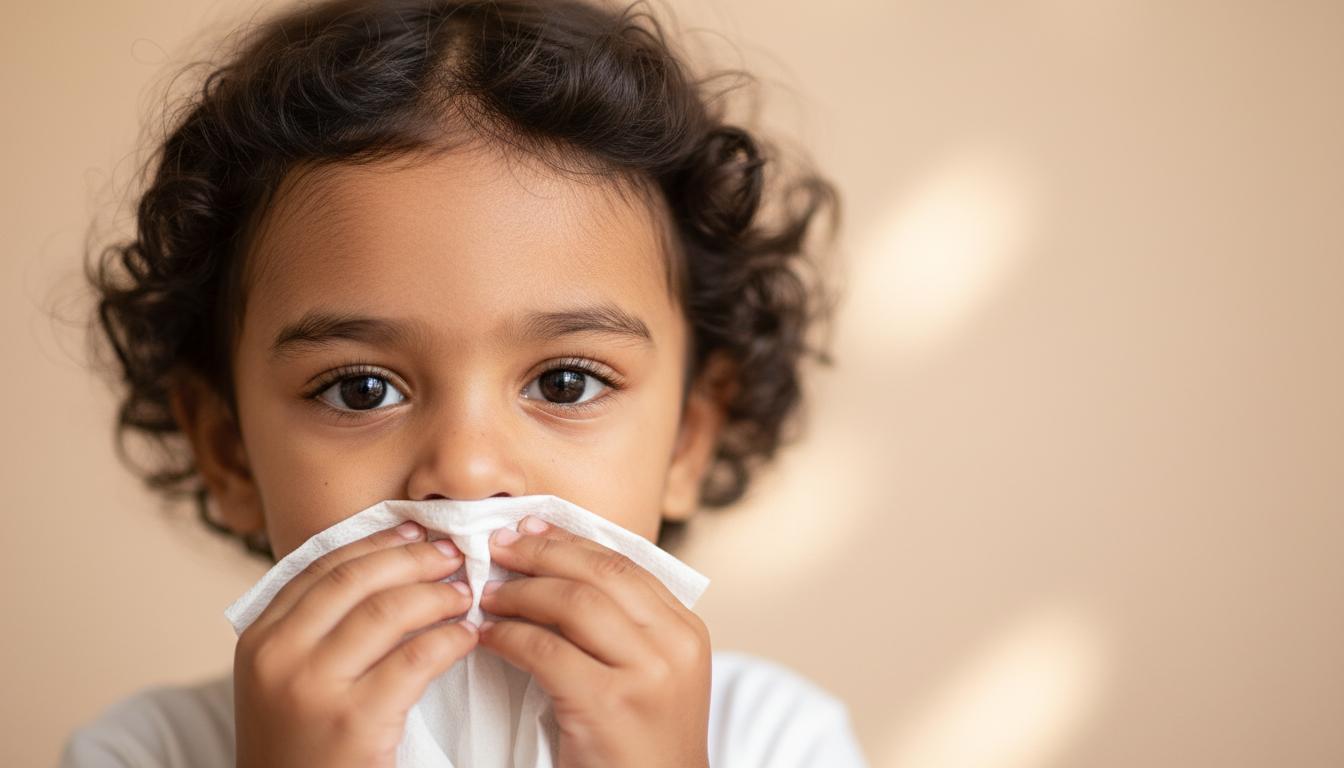
Does your little one frequently catch a cold? Oh yes, it is quite normal for young children to catch a cold about eight times a year, sometimes even more. In fact, this is the most common reason why young children are taken to the doctor. While you can reassure yourself that it is not a major issue, it is still heartbreaking to see your little one struggling, isn't it? Let’s look at what a cold is, what you can do at home, and when you should see a doctor.
A cold is caused by tiny germs called viruses. These travel through the air and are present on surfaces we touch, making them very easy to spread. The most important thing to note is that antibiotics do not work on these viruses. Many mothers think that giving an antibiotic as soon as a child gets a cold will fix it, but that is not the case. Antibiotics are for bacterial infections. Since a cold is caused by a virus, antibiotics are ineffective, and giving unnecessary medication to a child is not advisable. However, while the illness runs its course, you can certainly help your baby feel a little more comfortable.
What are the symptoms of a cold? Check if your baby has these...
Let’s look at the symptoms children show when they have a cold. They may have one or several of these:
- Is their nose blocked? Or is there a runny nose? Initially, the discharge may be watery, but after a day or two, it may thicken and turn yellow or green. This is normal; do not be alarmed by the change in color, as it does not necessarily mean a bacterial infection.
- Do they complain of a scratchy or sore throat? They may feel a tickle in their throat or some discomfort when talking or swallowing.
- Are they sneezing frequently? Sneezing repeatedly is also a symptom of a cold.
- Do they have a cough? It may start as a dry cough and later become a productive cough with phlegm.
- Do they say, "Mommy, my head hurts"? They may experience a mild headache.
- Do they feel warm or have a slight fever? They might have a mild fever without a high temperature.
- Are they very tired or lethargic? Your usually active little one might seem listless and uninterested in playing.
- Is their appetite reduced? They may experience a loss of appetite due to a sore throat or general discomfort.
What home care can you provide when a cold strikes?
When your baby is struggling with a cold, there are several things you can do at home to provide some relief.
- Medication for fever and body aches: If there is a mild fever or body aches, you can give Paracetamol or Ibuprofen as prescribed by your doctor. However, it is very important to follow the dosage instructions on the package carefully, based on your baby's age and weight, and strictly adhere to the recommended frequency. Do not adjust the dosage on your own.
- Steam inhalation: Creating a steamy environment can help relieve nasal congestion and phlegm. If you have a cool-mist humidifier, use it. Otherwise, close the bathroom door, run the hot water tap for a while, and sit with your baby in the room with the steam. However, do not bring the baby too close to the hot water to avoid burns. Keep a safe distance.
- Saline for nasal congestion: If the nose is blocked and breathing is difficult, you can use saline nasal drops or a saline nasal spray available at pharmacies. Putting a few drops in each nostril helps thin the mucus and clear the nose.
- Clearing a baby's nose: Very young babies cannot blow their noses. In such cases, you can use a bulb syringe to gently remove the mucus. Ask your doctor or public health nurse how to use this correctly.
- Teaching older children to blow their nose: If your child is old enough to understand, teach them to blow their nose properly and wipe it with a tissue.
- Encourage plenty of fluids: This is very important. Drinking plenty of fluids helps prevent dehydration and thins the mucus.
- If you are breastfeeding, offer breast milk frequently, or formula if you are using it.
- For older children, water is the best choice. Additionally, you can provide Oral Rehydration Salts (ORS). If you give fruit juice, dilute it with water.
- However, avoid caffeinated drinks like tea, coffee, or chocolate drinks during this time. Also, avoid giving too many sugary drinks.
- Be cautious with over-the-counter cough and cold medicines: Never give over-the-counter cough and cold medicines to children under 6 years old without medical advice. These can cause side effects in young children. Even for children over 6, always consult a doctor before giving such medications.
- Never use Aspirin!: Do not give Aspirin to children (under 18 years old) for fever or any other reason. It can cause Reye syndrome, a very rare but dangerous condition that affects the brain and liver. Paracetamol or Ibuprofen are the appropriate choices for fever and pain.
- Honey for cough: For children over one year old, you can give a teaspoon of honey for a cough or sore throat. However, do not give honey to babies under one year old due to the risk of infant botulism.
When you must see a doctor!
In most cases, a cold clears up within a few days to a week. However, sometimes complications can arise. If your baby shows any of the following symptoms, do not wait at home; see a doctor immediately.
- If the cold symptoms worsen day by day, or if they persist for more than a week without improvement.
- If there is a distinctive cough (often called "croup") that sounds like a barking seal, or if the cough is severe, causes breathing difficulties, or is persistent and uncontrollable.
- If the child appears to have difficulty breathing, is wheezing, if their chest seems to pull inward while breathing, or if their lips or tongue turn blue (this is an emergency; go to a hospital immediately).
- If there is a high fever (e.g., above 102°F or 38.9°C) and the baby seems very distressed or unwell. Especially...
If your baby is under 3 months old and you feel they have even a slight fever (100.4°F or 38°C or higher), it could be serious, so consult a doctor immediately.
If you notice any of these signs, the best course of action is to seek medical advice rather than waiting to see how they feel tomorrow.
How can you reduce the chances of catching a cold? "Prevention is better than cure!"
It is better to reduce the chances of catching a cold than to suffer through one, isn't it? There are several things we can do to protect our little ones from this illness. It is very important to teach these habits to children as well.
- Teach them to stay away from people who are sick. If they see someone coughing or sneezing, teach them to avoid that area and keep a safe distance.
- Keep them away from areas where people smoke, i.e., places with `(Secondhand smoke)`. Cigarette smoke weakens a young child's respiratory system and significantly increases the risk of illness.
- Teach them to wash their hands thoroughly with soap frequently. This is very important! They should wash their hands with soap for at least 20 seconds (the time it takes to sing "Happy Birthday" twice), ensuring every part of the hands is covered. Especially:
- Before eating.
- After using the toilet.
- After blowing their nose.
- After playing with other children.
- After coming home from outside.
If soap and water are not available, you can use an alcohol-based `(Hand sanitizer)`.
- When sneezing or coughing, teach them to cover their mouth with their elbow or a tissue instead of their hands. If they cover their mouth with their hands, the germs will spread to their hands and then to everything they touch. If a tissue is used, teach them to dispose of it in the trash immediately.
- Provide a nutritious diet and ensure they get enough sleep. A balanced diet (with plenty of vegetables, fruits, and greens) and adequate sleep will boost the child's immunity to fight off illnesses.
- Clean the baby's toys and items they touch frequently (door handles, tables, etc.) regularly.
- As much as possible, avoid taking the child to crowded places, especially during seasons when colds are common.
Finally, here are the most important points to remember…
So, you now know that it is quite normal for little ones to catch a cold. Therefore, do not panic unnecessarily.
In most cases, a cold is not a dangerous illness and will recover with home care within a few days.
The most important thing is to care for your baby with love, ensure they get the necessary rest, and encourage them to drink plenty of fluids. If they have a fever or body aches, you can give them something like Paracetamol. However, if any of the warning signs we discussed earlier are present, do not waste time and see a doctor.
Remember, antibiotics `(Antibiotics)` do not cure a cold. Also, do not give honey to babies under one year old.
Think about prevention methods as well. Never neglect hand washing.
If you stay informed and act correctly, even if your little one catches a cold, they will recover quickly and start running and playing again. Wishing you and your entire family good health and well-being from Nirogi Lanka!
` Cold, young children, common cold, fever, cough, treatment, medical advice