

Today we are going to talk about something that many people can develop, but sometimes it is not a problem, but sometimes it can be a little painful. That is bone spurs, or as we say in English , bone spurs (`(Osteophytes)`) or `(Bone Spurs)` . If you also have questions about this, I think this article will be very important for you.
Why do these bone spurs form?
Simply put, these bone spurs are extra bone that grow on the outside of your bones, like small, smooth bumps. Think of them as a little 'scar' on your bones. Most of the time, they form when your body is trying to repair damage to the tissues around your bones, or in response to some kind of stress. Sometimes, the body will build new bone tissue to replace this damaged tissue. This process is what we medically call ``osteophytosis'' .
Now let's see why this damage occurs. In most cases, the main reason is the natural wear and tear that comes with age . Apart from that, various injuries and various diseases can also cause this.
The following conditions increase the risk of developing bone spurs:
- Osteoporosis is a disease of bone loss.
- Osteoarthritis , the inflammation of the joints, is what we all know.
- Autoimmune diseases such as rheumatoid arthritis .
- A condition called lupus .
- Ankylosing spondylitis - This mainly involves stiffening of the joints in the spine.
- Degenerative disk disease (DDD) is a degenerative disease of the spinal discs.
- DISH disease (DISH disease) - This is a condition where bone grows where tendons and ligaments attach to bones.
- Shoulder problems, for example, rotator cuff tendinitis .
- Foot tendonitis.
- Narrowing of the spinal nerve pathway, that is `(Spinal stenosis)` .
- We call injuries caused by repeatedly performing the same movements ``(Repetitive strain injuries)`` .
- Accidents or injuries while playing sports.
Things like this are often the cause of bone spurs.
What are the symptoms of this?
The amazing thing is that most of the time, these bone spurs don't show any symptoms . You may have a bone spur and not even know it. However, sometimes, when you move certain bones, you may feel a strange pain or stiffness. This could be due to these bone spurs.
Imagine that a nerve that runs near that bony prominence is pinched. Then you might experience pain, numbness, tingling, loss of sensation, or weakness . Sometimes this numbness and tingling sensation is called ``Paresthesia'' in medical terms.
These bone spurs can develop in these places on your body:
- On the feet , especially the heels.
- In the hands , especially the knuckles.
- In the shoulder joints .
- In the hip joints .
- In the knee joints .
- In the neck and spine .
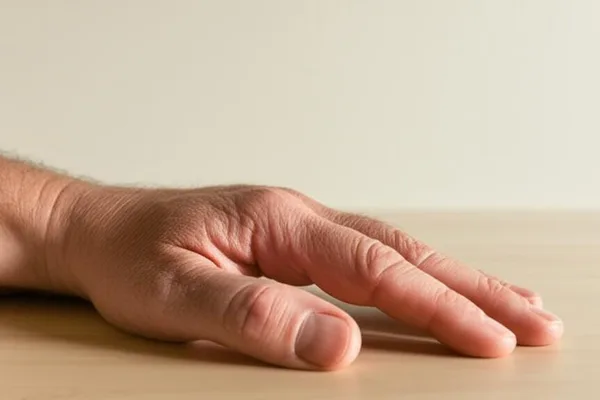
Sometimes, if this bone spur is close to your skin, you can see it. It looks like a small bump on your knuckle or kneecap. You can feel it when you bend, stretch, or walk. It can limit the movement of your joint and cause pain when you move it. Sometimes, the area can also swell.
What serious problems can occur from bone spurs in the spine?
Bone spurs in your spine can sometimes cause more serious complications than bone spurs in other places. But that's not always the case. One way is if they press on the nerves in your spine. Even more rarely, bone spurs in your neck (in what we medically call the ``cervical spine'') can become large and make it difficult for you to swallow.
Bone spurs that form in the spine can pinch the nerves in the holes (called foramina ) where they come out of the spine. Sometimes these can grow inward and even pinch the spinal cord. This pinching of a nerve (pinched nerve) can cause severe pain and other complications . We call this condition radiculopathy . Here are some things that can happen:
- Numbness, tingling, and loss of sensation (called ``Paresthesia'' ).
- Muscle weakness and loss of control (often in the lower body).
- Incontinence is the inability to control urine or stool.
Very rarely, bony protrusions in the neck can become large or swollen, causing your esophagus to become narrowed or compressed. This can also interfere with the muscles that help you swallow. Sometimes this can be the cause of a persistent cough, choking, or difficulty swallowing.
How do you know for sure that this is there?
If you have a bone spur, it will be clearly visible on an X-ray . Most often, these are discovered incidentally when an X-ray is taken for another reason. If you have symptoms related to a bone spur, your doctor will first examine you physically and then order imaging tests such as these. These may include an X-ray, a CT scan (computed tomography) , or an MRI (magnetic resonance imaging) .
If you have nerve symptoms, further tests may be done to determine if there is nerve damage or if the cause is a bone spur. For example, tests such as an EMG (electromyography) or a nerve conduction study (NCS) send electrical impulses through the nerves to see which nerves are affected.
What are the treatments for this?
In fact, most bone spurs don't require any treatment . However, if a bone spur causes pain or difficulty moving, your doctor may suggest ways to reduce it. If a bone spur causes serious complications or severe symptoms that affect your daily life, your doctor may recommend surgical removal.
Things you can do at home
There are a few things you can try at home to reduce swelling and pain around a bone spur:
- Apply ice to reduce swelling (occasionally).
- Over-the-counter (OTC) pain relievers, such as nonsteroidal anti-inflammatory drugs ( NSAIDs) such as paracetamol and ibuprofen, can be used without a doctor's prescription.
- Taking short breaks while doing activities that cause symptoms.
- Using things like chair pads or shoe inserts to reduce pressure on your bony prominences.
Treatment according to medical advice
If home treatments don't help much, your doctor may suggest things like:
- Treatments such as physical therapy or osteopathic manipulation can help improve your posture and reduce pressure on bone spurs.
- In some cases, muscle relaxants are given.
- Giving an anesthetic injection or a cortisone injection to reduce pain and swelling right away.
- Surgery to remove the bone spur or create more space around the affected nerve. This may be minimally invasive surgery .
Can bone spurs be dissolved naturally?
This is a question that many people ask. You can't naturally dissolve a bone spur . It's an extra bone growth that forms on top of your bone. There is no natural treatment or supplement that will dissolve the bone tissue. If there is, it's not a good thing, because the tissue in a bone spur is not much different from the tissue in your other bones. The only way to remove a bone spur is to have surgery.
You may have seen stories online about bone spurs dissolving. Most of the time, they are about the swelling around the bone spur. You can reduce the swelling and pain in the tissues around the bone spur. Applying ice and taking anti-inflammatory medications are the most direct treatments for these symptoms.
Is there anything we can do to prevent these from happening?
It's impossible to completely prevent bone spurs. In most cases, they're a natural result of aging and the wear and tear of tissues that come with age. And, in many cases, you won't even notice them. However, taking care of your overall health as you age can help reduce or delay the wear and tear to some extent. For example, these things can help:
- Be mindful of your diet and make sure you are getting the nutrients you need. If you are unsure, consult a specialist. Your nutritional needs will change over time depending on your age, activity level, and other factors. Not getting enough nutrition can lead to weakened tissues and bone loss (osteoporosis).
- Try to start or maintain a regular, low-impact exercise routine . Be sure to do exercises that stretch your body. Low-impact exercises that use a lot of muscle, such as swimming, cycling, or using an elliptical machine, can help keep your bones and musculoskeletal system strong. When your muscles help support your weight, they reduce the stress on your bones and joints.
- If you are overweight, try to lose some weight. As your body weight increases, it can put more pressure on your joints and increase wear and tear. One way to find out if you are overweight is to check your Body Mass Index (BMI) . It tells you whether you are at a healthy weight for your height.
- Pay attention to your posture and work environment (ergonomics). If you stand a lot, perform repetitive movements, or work at a desk, all of these things put extra stress on certain parts of your body. Maintaining good posture and a work environment can help prevent repetitive strain injuries (RSIs).
How long do bone spurs last?
Bone spurs do not go away unless they are removed by a surgeon. But most people do not need surgery for bone spurs. Your doctor can talk to you about nonsurgical ways to reduce the discomfort caused by the bone spur. If those methods don't work, talk to your doctor about minimally invasive surgery (`(minimally invasive surgery)`) for your bone spur.
What to do for pain and stiffness?
Pain and stiffness caused by a bone spur can be reduced by rest, ice, and over-the-counter medications . Wearing well-fitting shoes and losing weight can also help reduce the pressure on the joint. If your symptoms become severe or unmanageable, see your doctor.
Should you avoid activities?
Even if you have a bone spur, try to stay as active and healthy as possible . Avoid activities and movements that cause pain. Choose activities that are less strenuous on the body, such as walking instead of running.
When you exercise, do these things to minimize damage to your joints:
- Make sure you have a good pair of shoes .
- Pay attention to the correct methodology .
- Always warm up and stretch before starting a workout.
Finally, things to remember
Bone spurs are very common, especially as you get older. Most of them don't cause you any problems . However, if you have one that bothers you, don't hesitate to seek medical advice. They can help you understand how and why your bone spurs are causing you discomfort. They can also suggest ways to reduce their effects.
Remember, not every bone pain or lump is a bone spur. So, if you have any doubts, it's best to see a doctor and get a proper diagnosis. Then you can get the right treatment.
` Bone spurs, Osteophytes, Bone Spurs, Bone pain, Joint pain, Back pain, Arthritis




💬 Comments (0)
No comments yet. Be the first to share your thoughts here.
Add Your Comment