
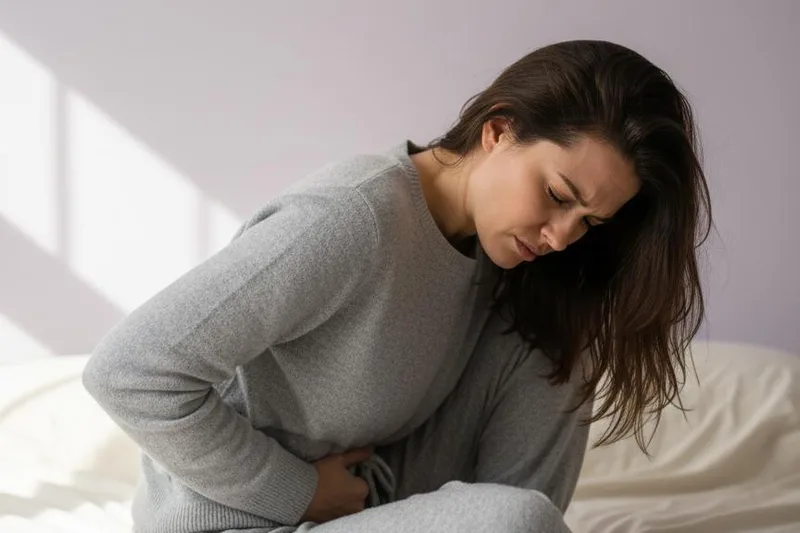
It is normal for most women to experience some degree of pain during their periods. But for some, this pain becomes unbearable. The pain is so severe that they cannot even do their daily activities and even have to stay in bed. If this is the case for you, don't just dismiss it as "normal menstrual pain." Because there may be a condition called endometriosis behind it. Let's talk about everything in simple terms today.
What exactly is Endometriosis?
Simply put, endometriosis is the growth of tissue that is very similar to the lining of your uterus, outside of the uterus, in other parts of your body. Normally, this lining thickens during your menstrual cycle and is then shed as menstrual blood. But this extra tissue that grows outside the uterus has nowhere to go. So it sticks together and causes inflammation, scar tissue, and pain.
This is a very common condition, affecting about one in 10 women worldwide. It is usually diagnosed among women in their 20s and 30s.
Where can this tissue develop?
Although endometriosis tissue can develop anywhere in the body, there are some areas where it is most common and some where it is least common.
| Most frequently seen places | Not so common places |
|---|---|
| Ovaries | Rectum |
| Fallopian tubes | Bladder |
| The space behind the uterus | Intestines |
| The muscular layer of the uterine wall (Myometrium) | Diaphragm |
| Peritoneum (inner lining of the abdomen) | Vagina or Lung |
What are the symptoms of this condition?
The main and most common symptom of endometriosis is pelvic pain . This pain can be mild for some, but can be unbearable for others. This pain can be especially severe a few days before and during menstruation. This is because the tissue in those abnormal places reacts to the hormonal changes that occur during that time and causes inflammation.
Here are some of the main symptoms:
- Severe menstrual pain: Pain that is so severe that it cannot be controlled with ordinary painkillers.
- Lower abdominal or back pain: This pain can occur during menstruation or between menstrual periods.
- Heavy bleeding: Heavy bleeding during menstruation or light bleeding (spotting) between periods.
- Pain during sexual intercourse: This is medically called ``Dyspareunia''.
- Infertility: Some women only discover they have endometriosis when they are trying to have a baby.
- Pain during bowel movements or urination.
- Stomach discomfort: Things like bloating, diarrhea, or constipation.
What's amazing is that sometimes endometriosis can be present without any symptoms . And there's no correlation between the severity of symptoms and the severity of the disease. That is, someone may have very little endometriosis tissue and experience severe pain. Another person may have a lot of tissue and have no pain at all.
Does endometriosis cause weight gain?
No, endometriosis does not directly cause weight gain. However, the bloating and water retention that accompany the condition can make you feel bloated.
Why does endometriosis develop? What are the risk factors?
Doctors still don't know exactly what causes it. But there are several things that they think may contribute to it. For example, researchers believe that menstrual blood flows through the vagina and a small amount flows back into the abdominal cavity through the fallopian tubes (`retrograde menstruation`), immune system problems, and hormonal imbalances may all contribute to it.
Is this something that comes from generations?
Yes. Although the exact cause is not known, it has been found to be linked to family history. If your mother, grandmother, or sister has endometriosis, you are at higher risk of developing the condition. So if anyone in your family has the condition, it is very important to talk to your doctor about it.
What are the risk factors?
There are several factors that increase the risk of developing endometriosis.
- Having a family history of endometriosis.
- Short menstrual cycle (less than 27 days).
- Prolonged menstrual periods and heavy bleeding (lasting more than 8 days).
- Never having children.
What are the possible complications of endometriosis?
If this condition is not treated properly, several complications can occur. The main ones are chronic pain and infertility .
In addition, if the disease becomes severe, the following may occur:
- Bowel or bladder problems: If the tissue grows in the intestines, rectum, or bladder, it can cause blood in the stool or urine, and severe pain when passing them.
- Difficulty breathing or chest pain: Very rarely, this tissue can spread to the lungs or diaphragm, causing difficulty breathing.
If you have these kinds of problems, you can talk to your doctor and manage them.
How does endometriosis cause difficulty in having children?
Endometriosis is a major cause of infertility. Imagine, if this tissue blocks the fallopian tubes, damages the ovaries, or creates scar tissue inside the abdominal cavity, it can interfere with a sperm meeting an egg and fertilizing it. That's why having children can be delayed or difficult.
How to accurately diagnose this disease?
Diagnosis often starts with your symptoms. When you tell your doctor about your severe pain, he or she will ask about your medical history and whether anyone in your family has had the condition. Then, they will perform a pelvic exam. If necessary, they may refer you for tests such as an ultrasound or MRI scan.
However, the only way to 100% confirm the presence of endometriosis is through laparoscopy .
Laparoscopy is a procedure in which a thin, camera-equipped instrument is inserted into the abdominal cavity through a small incision to examine the inside of the body. This allows the doctor to see exactly where the endometriosis tissue is located. At the same time, a small piece of suspicious tissue can be taken and sent to the lab for testing (a `biopsy`).
Often, when performing this surgery, the doctor also tries to remove any endometriosis tissue that is present. Therefore, this is both a diagnostic and a treatment method.
What are the treatments?
The best treatment option for you will be determined by considering several factors.
- Severity of the disease
- Whether you are expecting children in the future.
- your age
- Severity of symptoms (especially pain)
Treatment has two main goals. One is to control pain . The other is to help you conceive if you are trying to conceive. This can be done through medication, surgery, or a combination of both.
Treatment with medication
Painkillers such as NSAIDs (such as ibuprofen) can help control pain. In addition, hormone therapy is the most commonly used treatment. These help regulate the menstrual cycle and reduce pain.
- Birth control methods: Birth control pills, patches, injections, or IUDs can help lighten your period and reduce pain.
- GnRH agonists/antagonists: These drugs block the hormones that cause the menstrual cycle. Simply put, they act as if your reproductive system is temporarily "on vacation" and relieve pain. Lupron® is one such injection.
- Danazol: This is also a drug that stops the production of hormones that cause menstruation.
The most important thing is that symptoms can return once these medications are stopped. Also, these hormone treatments are not suitable for someone who is expecting a child.
Treatment by surgery
In some cases, surgery may be recommended. The goal of surgery is to remove as much of the abnormal endometriosis tissue as possible.
- Laparoscopic surgery: As mentioned earlier, this tissue is most commonly removed through small incisions using a camera.
- Hysterectomy: In very severe cases, if the disease cannot be controlled with other treatments, your doctor may recommend removing the uterus and/or ovaries.
Endometriosis is a chronic condition. Although many people experience relief from pain after surgery, symptoms may return after a few years.
Other questions you may have
What happens if left untreated?
Over time, this tissue growing outside the uterus can form cysts, adhesions, and scar tissue. This can cause long-term, severe pain. It can also make it more difficult to have children.
Is it possible to get pregnant with this condition?
Yes, it is possible to get pregnant. But it may be more challenging than for someone without endometriosis. If you are trying to have a baby, talk to your doctor to develop a treatment plan that works best for you. You may be able to get pregnant after surgical removal of the tissue.
Can this still occur after menopause?
Endometriosis usually does not recur after menopause, as estrogen levels in the body decrease. However, if a person who has had the condition before menopause takes hormone replacement therapy (HRT), symptoms may recur.
When do you need to see a doctor?
If you have any of the symptoms mentioned above, especially severe menstrual cramps, heavy bleeding, or pain during sex , you should definitely see a doctor, especially a gynecologist. Don't just assume that this is normal and put up with the pain.
When you go to see the doctor, you can ask questions like these:
- What is the best treatment recommended for me?
- Can this condition recur after treatment?
- Will this affect my ability to have children?
- Am I at risk of developing other diseases because of endometriosis?
When you're diagnosed with endometriosis, you may feel a variety of emotions. While you may feel relieved, "Oh, great, I finally know the cause of my pain," you may also feel anxious about treatment and your ability to have children. All of these feelings are normal. The important thing is to know that you're not alone. Talk openly with your doctor and develop the best treatment plan for your situation.
Take-Home Message
- Endometriosis is a very common condition in which tissue that should be inside the uterus grows outside the uterus.
- The main symptom is unbearable menstrual pain. However, it can also cause heavy bleeding and difficulty conceiving.
- There is not always a correlation between the severity of symptoms and the severity of the disease. Some people can have it without any symptoms.
- The only way to confirm this 100% is through laparoscopy surgery.
- Medication and surgery can help control pain and make life easier. If you have severe pain, don't just assume, "This is normal," but see a doctor.


💬 Comments (0)
No comments yet. Be the first to share your thoughts here.
Add Your Comment