
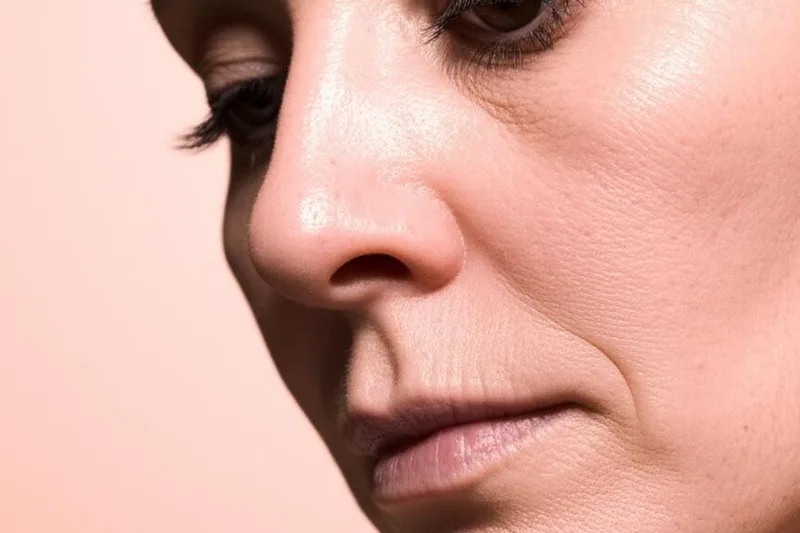
Do you have small lines on your skin that look like they're sagging? We call these wrinkles . They're actually something that happens naturally to our bodies as we age. Just like an unwashed garment, our skin also develops these wrinkles, or fine lines, or deep grooves. They're most often seen on areas like the face, neck, and hands. But wrinkles can actually appear anywhere on the body.
Who is coming for these rallies? When do they start?
To be honest, everyone gets wrinkles at some point as they age. It's normal. But some people may get wrinkles a little earlier. See if these things affect you too:
- If your skin is exposed to a lot of sunlight or has sunburned skin.
- If you are a user of tobacco products .
- If your body is lacking in a protein called collagen , this collagen is what gives our skin its elasticity, that is, its elasticity , and strength.
Typically, you can start to see fine lines and wrinkles on your skin around the age of 25. Most people start seeking treatment for wrinkles between the ages of 40 and 55. After the age of 65, wrinkles become more noticeable.
What do these wrinkles look like? Where on the body do they form?
If you look at your palm, you'll see that there are lines on your skin, right? That's how lines start to form on other parts of your body as you age.
The characteristics of wrinkles are:
- What looks like lines, folds, or deep grooves in the skin.
- The skin looks loose and sagging .
These wrinkles are visible even when you're just standing still, but they can become more visible when you smile or frown.
Although wrinkles can appear anywhere on the body, they are most commonly seen in these areas:
- Face
- Hands
- Neck
- Arm (upper part of the arm)
- Legs
Why do our skin get wrinkles like this?
Simply put, wrinkles form when the rate at which our skin cells regenerate slows down, the layers of our skin become thinner, and the protein called collagen mentioned earlier becomes insufficient.
Think of our skin as a rubber band. If we keep stretching and bending that rubber band, after a while it will loosen and not be able to contract again. That's how it is with us. As we age, the cells in our body lose their ability to produce proteins like ``Collagen''. Then, like that rubber band, it becomes difficult for the skin to return to its original state. That's when wrinkles form.
There are several main reasons for this:
Aging
Wrinkles are a result of aging. As we age, the rate at which skin cells divide slows down. The middle layer of our skin, the dermis, begins to thin . This dermis is made up of a network of elastin and collagen fibers . This network gives the skin its strength and elasticity. Over time, this network becomes loose and breaks down, creating dimples on the surface of the skin. As skin ages, it loses its ability to retain moisture, produces less oil, and takes longer to heal. All of these factors contribute to the formation of wrinkles.
Facial muscle contraction
The lines on our forehead, between our eyebrows (frown lines), and the lines that extend out from the corners of our eyes (crow's feet) are caused by the constant contraction of small muscles in our face. These lines become more pronounced when we do things like smile, frown, or squint. Over time, these facial expressions and gravity contribute to the formation of wrinkles.
Sun damage
Excessive exposure to UV radiation from the sun can cause our skin to age prematurely. This is also called photoaging . When exposed to UV rays, the collagen fibers in our skin break down and abnormal elastin begins to be produced. When UV rays damage skin tissue, our body produces an enzyme called metalloproteinase . This enzyme builds and repairs collagen. However, in this process, some healthy collagen fibers are also damaged. This causes a condition called solar elastosis , which is the irregular formation of fibers. As the skin repairs itself over and over again, it becomes less efficient and wrinkles form.
Smoking
Healthy skin is constantly renewing itself. Old collagen breaks down and is shed from the body, making way for new collagen. Researchers have found that smoking reduces the production of new collagen . When collagen is reduced, wrinkles are more likely to form.
Environmental factors
Air pollutants in our environment can enter through our skin pores and break down the collagen in our body. The main environmental pollutants that contribute to the formation of wrinkles are:
- Particulate matter: These are very fine solid and liquid particles in the air. These include things like dust, dirt, and smoke.
- Soot: These are very small, solid particles containing carbon. They are formed when something burns. They are found in things like vehicle exhaust and smoke from factories.
- Nitrogen dioxide: This is a gas found in the environment. It is abundant near vehicles, factories, construction sites, and some farm equipment.
Do you get wrinkles when you wear makeup? When you drink coffee?
If you sleep without removing your makeup , it can clog your pores. This limits your body's ability to produce collagen. If you never remove your makeup, it can cause your skin to age prematurely and cause wrinkles. Therefore, it is very important to remove your makeup with a cleanser at the end of the day and keep your pores clean to prevent wrinkles. It is okay to sleep without removing your makeup for a day or two, but sleeping with makeup on as a habit can clog your pores and damage your skin.
Research is still being done on how caffeine, like coffee, affects your skin. But caffeine does have some short-term benefits for your skin. That said, caffeine can temporarily change the appearance of wrinkles, but long-term use of caffeinated products will not improve wrinkles. Caffeine is an antioxidant . These can protect your skin from things that damage collagen and cause wrinkles.
How do you know if you have wrinkles? What treatments are available?
You can tell if you have wrinkles by looking at your skin. You don't need to see a doctor for that. But if you don't like the way these wrinkles look, or if you want treatment to reduce them, you can talk to your doctor or a dermatologist .
Wrinkles are actually a natural part of our body's aging process, so they don't necessarily need to be treated. But if you're interested, there are treatments like these:
- Retinoids are available in wrinkle creams or over-the-counter skin care products. They improve skin moisture, texture, and help the body produce collagen.
- Skin resurfacing procedures, such as microdermabrasion (the gentle removal of the top layers of skin), dermabrasion (the removal of layers of skin by scraping them off), and chemical peels ( the use of chemicals to dissolve the skin), repair prematurely aged skin.
- Laser skin resurfacing is a treatment that reduces facial wrinkles and skin irregularities caused by sun damage or acne.
- Botulinum toxin type A (Botox®) injection treatment . This is a medication. It blocks the chemical signals that cause muscles to contract and form wrinkles.
- Fillers made from hyaluronic acid are used to fill in or lift deep wrinkles or folds in the skin.
- Facelift surgery : This removes excess skin and fat from the face, tightens tissue layers, and gives the skin a younger appearance.
Are there any side effects to these treatments?
Of course, any treatment for wrinkles can have side effects or complications. So talk to your doctor about these side effects before starting treatment . Also, tell your doctor about any skin care products, medications, and supplements you are currently using. This will help ensure that the treatment doesn't conflict with them.
Some of the most common side effects of wrinkle treatments are:
- An allergic reaction to the drug.
- Swelling.
- Scarring.
- Pain.
- Bruises.
The most important thing is to choose the treatment that suits you best and to be well informed about it.
Some wrinkle treatments are permanent, but some require multiple treatments to maintain results. Your doctor can discuss options that will help you achieve your goals and help you choose the treatment that best suits your skin.
What foods and drinks help reduce wrinkles?
The nutrients in the foods we eat help keep our skin healthy. Keeping your skin healthy also reduces the appearance of wrinkles. Include these things in your balanced diet:
- Water (drink plenty of water)
- Vitamins A and C (found in fruits and vegetables)
- Protein (chicken, fish, eggs, and lean meats)
Even if you feel like eating it and it tastes good, stay away from foods that are high in fat and sugar , as they can damage the collagen in your skin.
Can wrinkles be completely prevented?
In fact, wrinkles naturally develop as we age. It's impossible to completely prevent them. But there are things we can do to reduce the appearance of wrinkles early :
- Use sunglasses and sunscreen every day to prevent sun damage.
- Do not use tanning beds .
- Apply moisturizer to your skin every day.
- Wash your face or use a cleanser to remove makeup.
- Don't smoke .
- Drink plenty of water (to keep your skin from getting dehydrated).
- Eat a healthy, balanced diet .
What else do you want to know about rallies?
Wrinkles are a sign of normal aging. They don't necessarily need to be treated. But if you don't like the way they look or want to reduce the appearance of wrinkles, you can get treatment. While treatments can temporarily stop the appearance of wrinkles, there's no way to completely prevent your skin from getting wrinkles.
If you want to start a treatment plan for wrinkles, see your doctor. He or she can help you reach your goals and find a treatment that suits you and your skin's needs. If you're using a treatment for wrinkles and your skin doesn't heal, if you develop an infection, or if you have severe pain, swelling, bruising, or discomfort, see your doctor right away.
Questions to ask your doctor
- Can wrinkle treatments conflict with the medications I am currently taking?
- Can I get treatment for wrinkles if I have acne?
- How long will it take to heal after my wrinkle treatment?
- How often can I get wrinkle treatment?
- How can I increase the amount of ``Collagen`` in my body?
What is the difference between fine lines and wrinkles?
Fine lines are the first lines to appear when wrinkles start to form, like small folds in the skin. These are close to the surface of the skin. Wrinkles are folds that go deeper into the skin. You can see fine lines around the eyes and mouth where you make the same facial expressions, for example, when you smile or squint. These fine lines, over time, combine with gravity to become deep wrinkles. Wrinkles are deep folds or grooves in the skin, and they can form anywhere on the body.
As a summary, remember this (Take-Home Message)
Wrinkles are a sign that your body is aging. If you develop wrinkles early in your life, talk to your doctor about ways to improve the way your cells produce collagen and keep your skin looking young and healthy. It can be a little disconcerting to see wrinkles on your skin, but if you don't want to change your appearance, you don't need to treat them. The most important thing is to follow a healthy lifestyle and take care of your skin. Then you can help yourself keep your skin looking beautiful for as long as possible.
` Wrinkles, skin wrinkling, aging, collagen, sunlight, skin diseases, skin protection




💬 Comments (0)
No comments yet. Be the first to share your thoughts here.
Add Your Comment