
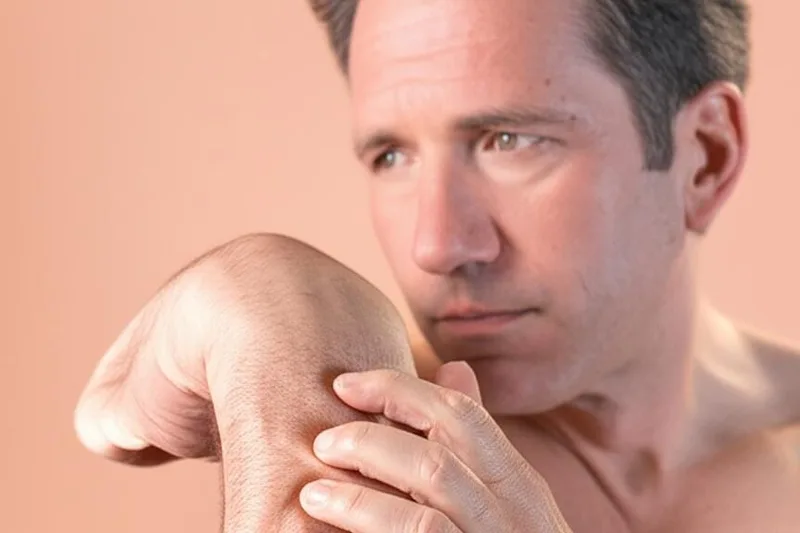
Do you sometimes feel like your skin is itching in places? Or is it itching all over your body? This is really annoying, isn't it? Today we are going to talk about this itching of the skin, or in medical terms, a condition called pruritus.
What is pruritus? Or what does this itching mean?
Simply put, pruritus is the medical term for itching. It refers to that uncomfortable feeling you get on your skin that makes you want to scratch. This itching can sometimes be a little painful, or it can just feel like a tingling sensation. Some people may only itch in one area of their body, while others may itch all over their body.
Often, this itching can be a symptom of another underlying medical condition . There can be many reasons for this. Mainly,
- Exposure to an allergen
- Dry skin
- Pregnancy
- A reaction to certain medications
Things like this are common. If you continue to scratch your skin for more than six weeks , it can be considered a chronic pruritus condition.
Are there different types of this skin peeling?
Yes, pruritus can be divided into several types depending on the cause of the itching and the location of the itching. Let's look at a few of them.
- Brachioradial pruritus: This is caused by scratching the upper part of your arm, or forearm. It is often caused by damage to a nerve.
- Nocturnal pruritus: This refers to itching of the skin at night. This can have several causes. For example, it can be a response to a natural process that occurs in our body, a reaction to a medication we are taking, or it can be caused by contact with something unpleasant on the skin.
- Pruritus ani: This is when the skin around your anus itches. It can be caused by things like hemorrhoids, an infection, or something that irritates the skin.
- Senile pruritus: This is a condition that occurs especially in people over the age of 65. This itching is caused by changes in the skin that occur with age.
- Uremic pruritus: This type of rash can occur in people with kidney disease, especially those undergoing dialysis.
Who can develop this itch more?
Actually, itching is a very common thing. Almost everyone experiences it at some point in their life. However, the intensity and frequency of it varies from person to person.
However, you may be at slightly higher risk of developing this condition if:
- If you are 65 years of age or older .
- If you have allergies .
- If you have an underlying medical condition such as eczema, psoriasis, or diabetes mellitus.
- If you are pregnant .
- If you are undergoing dialysis .
What does it feel like when you scratch your skin?
Itching is a very uncomfortable and annoying feeling . You feel like you have to scratch your skin to get rid of it. Sometimes it can be painful, and other times it just feels like someone is tickling you.
But remember, scratching doesn't always provide relief. Sometimes scratching can make the pain and skin lesions worse. If you're constantly scratching your skin, be sure to see a doctor.
What are the symptoms of pruritus?
The main symptom is itching. That is, an uncomfortable feeling that makes you want to scratch your skin to get relief.
If you continue to scratch your skin, you may experience additional symptoms such as:
- Dry or cracked skin.
- Excoriations are scratches caused by itching.
- Lichenification is when the skin becomes thick and takes on a leathery appearance.
- Pain at the site of the bite.
- The skin breaks and bleeds.
- Yellow or white fluid oozing from a broken skin, the wound not healing, or taking on a crusty appearance (this could be a sign of an infection ).
In addition, you may also see symptoms like:
- Skin discoloration (lighter or darker than the surrounding skin).
- A skin rash (such as blisters) appears, swelling of the skin (Inflammation).
- The appearance of small pimple-like blisters (papules).
- The appearance of large lumps in the groin area.
- The appearance of water-filled blisters.
Sometimes you may have additional symptoms like these along with itching. Other times, you may just be itching without any other symptoms. Your doctor will determine the cause and prescribe the right treatment for you.
Why do we need to scratch this skin?
Pruritus is a symptom that makes you want to scratch your skin. Your immediate response is to scratch your skin. Most of the time, this itching sensation is triggered by an external stimulus . That is, something rubbing against your skin, the fibers of your clothing, or your normal body movements. Peripheral sensory neurons in our nervous system carry this message from the skin to the brain. The brain then sends a message back telling you to "scratch your skin."
What are the causes of itching?
There can be several reasons for itching. Let's break them down:
- Dermatologic causes: This is when the skin itches due to swelling or inflammation inside the body.
- Systemic causes: This means that you are scratching your skin because of an underlying condition that affects your skin or internal organs. This can include things like natural changes in your body with age and hormonal changes.
- Neuropathic causes: Itching can also be caused by diseases of the nervous system or damage to the nerves.
- Psychogenic causes: Some mental illnesses or conditions that affect the brain can also cause itching.
- Environmental: Your skin can also be itchy because of something in your environment. For example, the type of fabric in your clothes, an insect bite, an adverse reaction to a medication, changes in temperature, or touching something that irritates your skin.
Think about it, out of all these reasons , the main reason why most people itch is dry skin.
Can itching be a symptom of another disease?
Yes, absolutely. There are several medical conditions that can cause itching as a symptom. Some of the most common ones include:
- Diabetes `(Diabetes Mellitus)`
- Liver or kidney disease
- Pregnancy
- Eczema
- Psoriasis
- Cholestasis (Bile Blockage)
- Obsessive-compulsive disorder (OCD) is a mental illness that causes unwanted thoughts and actions.
- Allergies
- Dermatitis (skin inflammation)
- Thyroid disease
How do you know exactly if you have pruritus?
To find out for sure, you need to see a doctor. The doctor will examine your skin, ask about your symptoms, and ask about your medical history. The doctor may ask questions like:
- When did the scratching start?
- Did you make any changes to the soaps and lotions you used before you started shaving?
- Do you have other symptoms such as weight loss, extreme fatigue, night sweats, or excessive thirst ?
- Have you started any new medications?
- Did you touch anything in particular? (e.g. a plant, a new pet)
What tests detect this?
If your doctor wants to, they may also do some tests to confirm the diagnosis. These tests can help find the cause of your symptoms. Itching may be the only major problem, or it may be a symptom of another condition. Tests like these may be done:
- Allergy tests: See if you are allergic to something in your environment.
- Blood tests: Check for vitamin and mineral deficiencies, or problems with internal organs like the liver, kidneys, and thyroid gland.
- Imaging tests (e.g., chest X-ray): Check for underlying conditions, such as cancer.
- Skin biopsy: To diagnose skin conditions that are causing the itching. This involves taking a small sample of skin and examining it under a microscope.
How do I get rid of this itchy skin?
Treatment for pruritus varies from person to person. This is because the treatment depends on the underlying cause of your symptoms. Treatment options include:
- Using creams, lotions, or ointments on the skin.
- Taking medicine to stop itching.
- If you are taking a medication that is causing your symptoms, stop or change it. (However, never stop taking medication without medical advice!)
- Treating or controlling underlying medical conditions that cause itching.
- Using non-medical treatments such as acupuncture, light therapy, or transcutaneous electrical nerve stimulation therapy.
What remedies can be done at home?
Yes, there are some simple home remedies for pruritus:
- Keep your skin moisturized by using creams and lotions regularly. This can help prevent skin dryness.
- Apply sunscreen when you go out in the sun. This can help prevent damage from the sun's rays.
- When choosing products like soap and washing powder, choose products that are fragrance-free or suitable for sensitive skin .
- To reduce itching , bathe or wash your body with lukewarm (not very hot) water .
- Avoid wearing fabrics that are harsh on the skin, such as wool and synthetic fabrics. Cotton clothing is generally good for the skin.
- Wrap a cool cloth or ice cube in a towel and apply it to the itchy area. This will soothe the skin.
What are the medications for pruritus?
Your doctor may prescribe the following medications to treat pruritus:
- Types of antihistamines.
- Topical steroids or oral steroids.
- Immunosuppressant medications, for example, cyclosporine A.
Some studies suggest that antidepressant medications can sometimes help reduce itching. They work by calming the receptors in the body that trigger the itch sensation.
What types of cream are good for whipping?
To treat pruritus, your doctor may recommend an anti-itch cream. Some of these creams are available over-the-counter (OTC). When choosing a cream, lotion, or ointment, look for ones that are fragrance-free and contain at least one of the following ingredients . These may help relieve your itchy skin:
- Hydrocortisone: This is a medication that reduces swelling and inflammation.
- Antihistamines: A medicine that relieves the symptoms of an allergic reaction.
- Capsaicin: A drug that treats minor aches and pains.
- Aloe vera: An extract from a plant that soothes skin discomfort.
- Menthol: A substance derived from plants that provides a cooling sensation when applied to the skin.
- Petroleum jelly: A mixture of petroleum and waxes, it moisturizes the skin.
Important: If your skin continues to itch or gets worse after using a cream like this, be sure to see a doctor.
How soon will I feel better after treatment?
How long you have pruritus depends on the cause of your itching. Some diagnoses are long-term, and symptoms may recur throughout your life. For others, it may be temporary and go away in a few days. Talk to your doctor about your diagnosis, the cause, and how to treat your symptoms to get better quickly.
Can this itching be prevented?
Although not all types of pruritus can be prevented, you can do the following to reduce your risk of scratching:
- When going outside, apply sunscreen or wear clothing and accessories that protect against UV rays.
- Drink plenty of water.
- Moisturize your skin daily or several times a day .
- Use lukewarm (not too hot) water when bathing and washing your hands.
- Manage your long-term medical conditions well.
- Use a humidifier at home.
- Avoid allergens.
What can you expect if you have pruritus?
Pruritus causes discomfort and irritation to your skin. It can also make it difficult for you to sleep. In some severe cases, scratching can even interfere with your daily activities.
You can try home remedies, such as applying moisturizing creams or lotions throughout the day. The best time to apply these is after a shower, when your skin is still slightly damp. This will help lock in moisture.
Sometimes pruritus can be long-term (more than six weeks) or may be a symptom of another underlying condition. Therefore, talk to your doctor about treatments to reduce your symptoms.
How long does pruritus last?
Everyone's body is different. You may feel relief from itching within a few hours after treatment, or it may take several weeks. The time it takes for your body to heal depends on the cause of your symptoms. It's best to talk to a doctor to find out exactly how long it will take for your symptoms to go away.
When should you see a doctor?
In such cases, you should definitely see a doctor:
- If you have been itching for more than two weeks.
- If scratching disturbs your sleep.
- If your symptoms worsen with the treatment recommended by your doctor.
- If your skin is swollen, oozing pus, crusting, and you have symptoms (signs of infection) such as nausea, vomiting, and fever.
- If you develop new symptoms such as weight loss or gain, changes in bowel habits, extreme fatigue, or mood changes .
What questions should I ask the doctor?
When you go to see the doctor, you can ask questions like:
- What kind of lotion or cream should I apply to my skin?
- Can I use an over-the-counter anti-itch cream for pruritus?
- What is causing my skin to itch?
- How often should I use the treatment or cream you recommend?
What is the difference between "itching" and "pruritus"?
Pruritus is the medical term for itching. So there is no big difference between the two, both refer to the same symptom.
What is the difference between Pruritus and Urticaria?
Pruritus is the feeling of itching, which can have a variety of causes. Urticaria (also known as hives ) is a skin condition that causes red, raised, itchy welts (hives) on the skin, accompanied by a burning, stinging, or stinging sensation. Pruritus is one of the symptoms of urticaria.
Finally, things to remember
Even if your brain tells you to "scratch," try to avoid scratching as much as possible. When you scratch, your skin can become damaged and easily become infected. Treat your itchy skin at home, which means applying moisturizers, anti-itch creams, cool compresses, and lukewarm baths. If your itching doesn't subside after a few weeks, or if it gets worse with treatment, be sure to see a doctor.
` Itching, Pruritus, Pruritus, Skin Diseases, Dermatology, Allergies, Medicine for Itching


💬 Comments (0)
No comments yet. Be the first to share your thoughts here.
Add Your Comment