

Have you ever wondered what it would be like to experience severe, persistent pain in an arm or leg after a minor injury, or perhaps for no apparent reason? Some people have experienced this. Today we are going to talk about one such condition, `Complex Regional Pain Syndrome (CRPS). Don't be afraid, it is very important to be aware of this.
What is CRPS? Simply put...
`Complex Regional Pain Syndrome`, or `(CRPS)` for short, is a condition that causes severe pain in a specific part of your body, often an arm, leg, palm, or sole , along with a number of other symptoms, such as changes in skin color and swelling in that area. Imagine, a problem with your arm or leg makes it impossible to function in your daily life, you can't sleep well at night, and it also has a big impact on your mental health.
Doctors believe that CRPS is caused by a malfunction in either our central nervous system ( the brain and spinal cord) or our peripheral nervous system ( the system that carries messages from the brain and spinal cord to other organs, limbs, and fingers). In this case, our nervous system overreacts to pain signals and becomes unable to stop that response.
There are two main types of CRPS:
1. Type I: In this , there is no damage to the nerves. This usually happens after some illness or accident. However, the accident did not directly damage a nerve. This was previously called ``Reflex Sympathetic Dystrophy``.
2. Type II: This is a clear indication of nerve damage. This was previously called `Causalgia`.
CRPS can be short-term (acute) or chronic (lasting more than six months) . Fortunately, it can often be treated and cured.
Who is most likely to develop CRPS?
CRPS is more common in adults than in children. It usually peaks around the age of 40. Women are more likely to develop CRPS than men.
Studies have shown that this condition is seen in people of European descent, with a prevalence of between 66% and 80%. However, it is a relatively rare condition. For example, in the United States, only about 200,000 cases are reported each year.
What are the symptoms of CRPS? How to identify it?
The severity and duration of CRPS symptoms vary from person to person.
CRPS symptoms usually begin four to six weeks after an injury, fracture, or surgery . However, sometimes these symptoms can appear for no apparent reason.
The main and most prominent symptom of CRPS is pain. This pain can be constant or come and go. It usually feels like a burning, aching, or tearing pain . This pain is often felt deep in the affected arm or leg.
In addition, changes in sensitivity may be observed in the affected area:
- Increased sensitivity to painful stimuli: For example, even a slight pinch may feel more painful than usual.
- Feeling pain from something that normally doesn't cause pain: Pain can occur even when the skin is just touched.
- You may feel numbness .
Here are some other symptoms:
- Skin swelling: Swelling may come and go, or it may be persistent.
- Decreased function of the affected arm or leg: It may be difficult to move the affected arm or leg, or it may feel stiff. It may also be difficult to put weight on the affected arm/leg or put weight on a joint.
- Changes in skin temperature: The affected hand/foot may feel hotter or colder than the other.
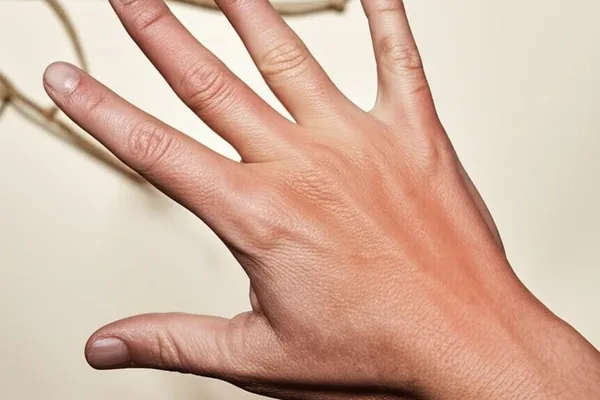
- Skin discoloration: The skin may appear patchy, pale, purple/bruised, or red in places.
- Changes in skin texture: The skin may become shiny, thin, or sweat excessively.
- Changes in nail and hair growth: Nails and hair in that area may grow faster, or may not grow at all.
Because the symptoms of `CRPS` often improve over time, it is easier for doctors to diagnose it in the early stages. Therefore, if you have these symptoms, it is very important to see a doctor as soon as possible.
Why does CRPS develop? What are the causes?
Researchers still don't know exactly why some people with the same injury develop CRPS and others don't. They think it may be due to an inflammatory or immune reaction in the peripheral nervous system and central nervous system .
In most cases, more than 90% of cases, CRPS is caused by trauma or injury to the nerves in the affected arm or leg . These injuries damage the very fine sensory and autonomic nerve fibers in our body. These tiny nerve fibers are what carry sensations like pain, itching, and temperature to our brain. They also control the overall health of the tiny blood vessels and surrounding cells.
The most common injury associated with CRPS is a bone fracture , especially a fracture in the wrist. Nerves can be damaged if a bone is dislocated or crushed, or if a tight cast causes pressure.
Other common types of injuries that can lead to CRPS include:
- Surgery: Nerves can be damaged by an incision, stitches, or scarring during surgery.
- Sprains or strains: When connective tissue is damaged, a joint can move too much, which can cause excessive strain on nearby nerves.
- Burns, bruises, or cuts: These are all visible injuries, but they can also damage the nerves underneath.
Sometimes CRPS can develop without an obvious injury. Or prolonged immobilization can also be a cause.
There are some factors that increase the risk of developing CRPS:
- Poor nerve health: People with conditions like diabetes mellitus have less nerve resilience and recovery. People with peripheral neuropathy may also have difficulty regenerating nerve cells, even from injuries that would normally not cause a problem. People who smoke and those who have previously received chemotherapy for cancer may also have difficulty regenerating nerves.
- Immune system problems: The immune system plays a major role in causing inflammation in our bodies. Some people with CRPS have elevated levels of inflammatory chemicals called cytokines . These contribute to some of the symptoms of CRPS. CRPS is also common in people with other inflammatory and autoimmune diseases, such as asthma .
- Genetic factors: Your genes can also affect how you heal from an injury. Researchers have found that CRPS tends to run in families (`family clusters`). Although this is rare, it suggests that CRPS may have a genetic link.
How do you know for sure if you have CRPS? (Diagnosis)
Because CRPS is a rare condition and doctors don't fully understand it, it is sometimes misdiagnosed.
There is no specific test to diagnose CRPS. Doctors usually diagnose it by taking a careful medical history, doing a physical exam, and reviewing your symptoms. The doctor will also ask if you have had any recent injuries or surgeries.
The doctor will specifically look for these things:
- A change in the appearance, temperature, and texture of the skin in the affected area.
- Having more pain than expected for an injury.
- Whether there is another disease or condition that could be causing your pain, skin changes, or other symptoms.
Imaging tests such as ultrasound or magnetic resonance imaging (MRI) may be done to look for underlying nerve damage. However, nerve damage may not always be found.
Your doctor may also order other tests to rule out other conditions that can cause similar symptoms. For example, an electromyography (EMG) test can reveal other causes of neuropathy, which can sometimes cause similar pain.
What are the treatments for CRPS?
The main goals of treatment are to reduce your pain and other symptoms, restore function in the affected arm/leg, and maintain your quality of life.
It is very important to start treatment early in the course of CRPS. This is because over time, the affected limb can become stiff (`stiffen`). If left untreated, the pain usually increases, and it becomes increasingly difficult to move the affected limb.
If possible, it is best to see a doctor who has experience treating CRPS. Treatment involves a combination of several different approaches, carefully managed together. These include:
- Physical therapy and occupational therapy.
- Lifestyle changes.
- Psychosocial and behavioral therapy.
- Medicines.
- Alternative treatments for pain management.
For young children with CRPS, psychological and rehabilitation therapies are the main treatments . Pain-relieving medications are usually only recommended for older children with symptoms that do not respond to other treatments.
Physical therapy and occupational therapy
One of the most important treatments for CRPS is physical therapy. A physical therapist can improve blood circulation in your affected arm/leg, and use specific exercises to improve your flexibility, strength, muscle tone, and function. An occupational therapist can teach you new ways to do everyday activities.
Some other aspects of physical therapy for CRPS include:
- `Graded Motor Imagery`: This is a series of treatments that reduce pain and improve the ability to move the affected body part. When your arm or leg is painful, it becomes difficult to touch, move, or use it. Also, our brain has a memory, or ``map``, of different body parts. How they feel, how they move, and how they are used for everyday tasks. If you do not touch, move, or use the affected arm/leg, this map begins to change and may even disappear. But with this ``Graded Motor Imagery`` method, you can change or re-establish this map.
- Mirror therapy: This is a form of Graded Motor Imagery. You look at your unaffected arm/leg in a mirror. The mirror image will then look exactly like the affected arm/leg. This can "trick" your brain into thinking that the painful arm/leg is now feeling and moving normally.
- `Desensitization`: This method involves touching the affected area with objects of different textures and weights, and placing the affected hand/foot in hot and cold water. Over time, as you expose the affected area to different sensations, your brain adjusts to those sensations and the pain begins to decrease.
Lifestyle changes
You can increase the chances and speed of your recovery by eliminating some of the things that are interfering with your nerve's healing process. These include:
- Quitting smoking: Smoking is a major obstacle to nerve recovery.
- Managing existing health conditions: If diseases that affect blood circulation and nerves, such as diabetes mellitus, are not properly managed, it can be difficult for the nerves to heal.
Here are some other simple steps you can take at home to help with your symptoms:
- Keeping the affected arm/leg slightly elevated while resting or sleeping helps the extra fluid return to the heart.
- Regular exercise is essential to improve blood circulation to damaged nerves. Talk to your doctor or physical therapist about an exercise plan that's right for you.
- Wearing compression stockings or sleeves, especially when standing, can help limit swelling. Ask your doctor if this is an option for you.
Psychosocial and behavioral therapy
Having CRPS is associated with increased anxiety, depression, and stress . These can also make pain worse. Psychotherapy can help. Psychotherapy (also called talk therapy) is a general term for a variety of treatments that help a person identify and change unhealthy feelings, thoughts, and behaviors.
If possible, it's best to see a pain management clinical psychologist who is trained to treat CRPS. In psychotherapy, you talk to the psychologist and learn how to better deal with the factors that contribute to your pain and other symptoms.
Medications
There are no medications specifically approved for CRPS in the United States. However, your doctor may prescribe certain medications to help manage your symptoms.
Several types of medications that have a pain-relieving effect:
- Nonsteroidal anti-inflammatory drugs (NSAIDs): Examples include acetaminophen, ibuprofen, and naproxen.
- Topical painkiller creams and patches: For example, Lidocaine.
- Some antidepressants: Examples include Amitriptyline and Duloxetine.
- Anti-seizure drugs: Examples include Gabapentin, Pregabalin, and Topiramate.
- Bisphosphonates: For example, Alendronate.
- Botulinum toxin (Botox) injections.
The choice of starting medication varies from person to person. Your doctor will consider several factors, including:
- your age.
- Other existing health conditions.
- Any medications you are currently taking.
- The possibility of side effects of the medication or interactions with medications you are currently taking.
Alternative therapies for pain management
Alternative treatments for pain management may include:
- `Biofeedback`
- `Acupuncture`
- `Hypnosis`
- `Reiki`
- `Chiropractic`
More invasive treatments
If your CRPS condition has not responded well to the treatments mentioned above, or if you have severe pain or persistent CRPS, your doctor may recommend these less invasive treatments:
- Trigger point/tender point injections: When CRPS is limited to your upper arms, you may have trigger points in the muscles of your shoulder girdle. In the early stages of CRPS, injections of glucocorticoids, with or without local anesthetics, into each trigger point may help.
- Sympathetic nerve blocks: These blocks provide significant pain relief for some people. A lumbar sympathetic block involves injecting an anesthetic into your lower back, near your spinal cord. This directly blocks the sympathetic chain that carries pain signals from your lower extremities to your spinal cord and brain. A block for CRPS pain in the upper arm is called a stellate ganglion block . This involves injecting an anesthetic into the side of your neck.
- Spinal cord stimulation: This treatment involves surgically implanting a pulse generator device under the skin of your abdomen or buttocks and wires (electrodes) near your spinal cord. This device, similar to a pacemaker, sends low-level electrical currents to your spinal cord. These electrical pulses interrupt the pain signals going to your brain, reducing them.
- Dorsal root ganglia stimulation: This treatment is similar to spinal cord stimulation. However, small wires are placed directly over the dorsal root ganglion. The dorsal root ganglion is a cluster of sensory neurons located at the junction where all the nerves in your body exit your spinal cord. It is a relay station for pain signals from the peripheral nervous system (your limbs) to the central nervous system (your spinal cord and brain). This stimulation can be a more targeted and effective treatment (requiring less stimulation) because it focuses on these small intermediate points.
- Peripheral nerve stimulation: This treatment involves placing a stimulation wire near a major nerve in your arm/leg that covers the painful area. It works by interrupting the pain signal traveling through the targeted nerve.
- IV ketamine infusion: This treatment involves giving a low dose of ketamine intravenously (IV infusion) for 3 to 5 days. Ketamine works by blocking a specific molecule in your nervous system (the NMDA receptor) that can make your pain worse.
- Intrathecal drug pumps: This treatment uses an implanted catheter to deliver pain-relieving drugs, such as Ziconotide (Prialt®), directly into your spinal fluid.
Can CRPS be prevented?
Because researchers don't know the exact cause of CRPS, there is no specific way to prevent it. Some studies have shown that taking vitamin C before future surgery may help prevent CRPS.
What kind of future does someone with CRPS have?
Everyone's experience with CRPS is different. For many people, CRPS improves over time and eventually goes into remission.
However, severe or long-term cases (which are rare) can have a significant impact on your life. For some people, CRPS can become worse and spread to other parts of the body. Experiencing excessive psychological distress at the time of the injury that led to CRPS can affect the severity of the condition and your ability to recover.
Between 10% and 30% of people with CRPS may have a relapse. The exact cause of most relapses is unknown.
The most important goals are to relieve pain and regain movement and strength in the affected arm/leg. Relief from pain increases the likelihood of improving function in that area and your quality of life. With carefully selected treatment plans, some people with CRPS are able to successfully manage their pain and lead active lives.
What are the best times to see a doctor?
Because this condition is complex and sometimes misdiagnosed, you should find a pain management specialist or specialty pain center who is knowledgeable about CRPS if you have:
- If you think you have symptoms of `CRPS`.
- If your symptoms are getting worse.
- If your condition has not responded to other treatments.
Is CRPS a disability or a mental illness?
No, CRPS is not a mental health condition. It is a neurological condition. However, CRPS can cause or worsen anxiety, depression, and stress. In some cases, it can even lead to Post-Traumatic Stress Disorder (PTSD) .
In the United States, the Social Security Administration recognizes CRPS as a disability, depending on its severity and impact on life. You can contact government officials for more information about the eligibility criteria.
Take-Home Message
Complex Regional Pain Syndrome (CRPS) can have a huge impact on your life. But the good news is that there are many treatment options, and you can try a combination of them. The sooner you are diagnosed with CRPS and begin treatment, the more likely your symptoms will respond to treatment. If you think you may have CRPS, talk to your doctor. They are there to help you. Don't panic, and don't suffer alone. The most important thing is to get the right medical advice and support.
` CRPS, complex regional pain syndrome, nerve pain, arm and leg pain, chronic pain, CRPS treatment, CRPS symptoms




💬 Comments (0)
No comments yet. Be the first to share your thoughts here.
Add Your Comment