
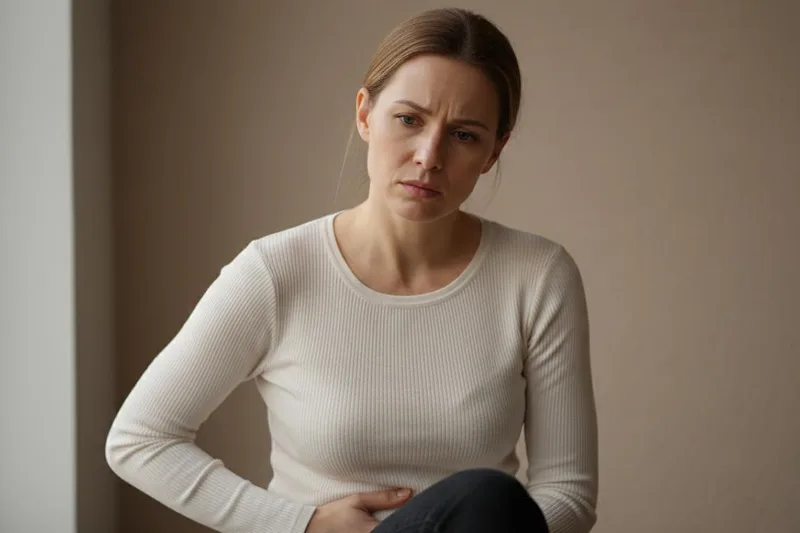
You're getting ready to go somewhere... or you're on an important task... and suddenly you feel the need to urinate. You don't even have time to run to the bathroom. Sometimes you can even slip your clothes without even realizing it. Do these things make you feel very uncomfortable and embarrassed? So today we're going to talk about a topic that is very important to you. That is Overactive Bladder, or OAB for short. Although this is something that many people don't like to talk about and feel embarrassed about, it is a very common condition. Also, there are good treatments for it.
What exactly is Overactive Bladder (OAB)?
Simply put, Overactive Bladder is not a disease, but a collection of symptoms. What happens here is that your bladder becomes overactive. Normally, when the bladder is full, the brain sends a signal, telling us that we need to urinate. However, in someone with OAB, the bladder muscles suddenly start to contract even when the bladder is not completely full. That's when the uncontrollable, urgent need to urinate occurs.
These are the main symptoms seen with OAB.
| Symptom | Simply explained |
|---|---|
| Urinary Urgency | This is the main symptom. You have a sudden, uncontrollable urge to urinate. After that urge, you have very little time to get to the bathroom. |
| Frequent urination (Frequent Peeing) | You need to go to the bathroom more often than normal. If you have to go more than 8 times a day, it could be a symptom of this. |
| Urge incontinence | Along with the urgent need to urinate, you may also accidentally leak a little urine before you even know you need to go to the bathroom. |
| Getting up to urinate at night (Nocturia) | Having to get up twice or more at night to urinate, even when you are sleeping soundly. |
Who is more likely to experience this condition?
Although OAB can affect people of any age, it is most common in people over the age of 65. Women can also develop the condition a little earlier than men, perhaps starting around the age of 45.
This is so common that millions of people around the world suffer from this condition. But many people are too embarrassed to talk about it, so they don't seek treatment. That's a real shame. Because this is something that can be largely controlled with treatment.
The important thing is that OAB does not get better on its own. If you don't treat it, your symptoms can get worse over time.
Why does this happen? What are the causes of OAB?
The detrusor muscle is a muscle in the wall of your bladder. OAB is caused by certain conditions or injuries that affect this muscle. Let's look at the main causes.
- Abdominal trauma: During pregnancy and childbirth, especially in women, the muscles in the pelvic area can become stretched and weakened. These muscles are what hold the bladder and other organs in place. When they become weak, the bladder can drop slightly, affecting its function.
- Nerve damage: Think about it, our bladder and brain communicate through nerves. What happens if the brain gets the wrong signal to empty its bladder at the wrong time? That's what's happening here. These nerves can be damaged by certain medical conditions and accidents. For example:
- Pelvic or back surgery
- Spinal cord disorders (herniated discs)
- Radiation therapy
- Parkinson's disease
- Multiple sclerosis
- Stroke
- Certain medications, alcohol, and caffeine: These can slow down your nervous system and affect the signals that go to your brain. Diuretics (medicines that increase urination) and caffeine (tea, coffee) can also cause your bladder to fill up quickly, which can lead to uncontrollable urination.
- Infections: When something like a urinary tract infection (UTI) occurs, it can stimulate the nerves in the bladder and cause the bladder to contract unnecessarily.
- Extra weight: As your body weight increases, it puts extra pressure on your bladder. This pressure can also make it harder to control your urine.
- Estrogen deficiency after menopause: OAB can also occur due to hormonal changes that occur in women's bodies after menopause.
How do you find this, Doctor?
When you go to see a doctor about these symptoms, the first thing he or she will do is listen carefully to what you have to say. Then, he or she will gently examine your pelvic area and the area around your anus. He or she may ask you questions like:
- What are your symptoms?
- How long have these symptoms been going on?
- Does anyone in your family have this condition?
- What medications do you use? (including over-the-counter medications)
- What do you drink in a day? When do you drink it?
- How is your diet?
Sometimes your doctor may refer you to a urologist.
Diagnostic tests
Your doctor may recommend several tests like these to confirm the diagnosis.
- Urinalysis: This test checks your urine for infections, blood cells, etc. If something like a UTI is causing your OAB, this test can detect it.
- Urodynamic testing: These tests can measure many things, such as how much urine is left in the bladder after you urinate, the speed at which urine flows out, and the pressure on the bladder when it fills.
- Ultrasound scan: This is a painless scan that can produce detailed images of your bladder and surrounding organs.
- CT scan: This can also produce three-dimensional (3D) images of the bladder.
- Cystoscopy: This involves inserting a thin, camera-equipped instrument called a cystoscope through your urethra to examine the inside of your bladder. You will be given a numbing gel before the procedure, so there is no need to worry. Very rarely, you may be given full anesthesia for this procedure.
What are the treatments for this?
The good news is that there are a variety of treatments available to help manage OAB, including lifestyle and behavioral changes, medications, and nerve stimulation treatments.
1. Changes in lifestyle and behavior
Before taking medication, there are many things you can do yourself. These are the first steps in treatment.
Keep a bladder diary.
Your doctor may ask you to keep a diary of your urination patterns for a few days. This will help you understand when your condition worsens and what you eat or drink. Make a note of the following:
- What are you drinking?
- How much do you drink?
- What are the things to eat?
- How often do you urinate?
- If urine is released, when and how much?
- How often do you feel the need for urgency?
- Did you leak urine due to coughing, sneezing, or laughing?
Taking care of what you eat and drink
Some foods and drinks can stimulate the bladder and increase OAB symptoms. Try to reduce or completely eliminate these foods:
- Tea
- Coffee
- Alcohol
- Caffeinated soft drinks
- Citrus fruits and fruit drinks (oranges, tangerines)
- Chocolate
- Tomatoes and tomato-containing foods
- Spicy and acidic foods
- Things that contain artificial sweeteners (diet drinks, some chewing gums)
Keeping the intestines functioning well
Constipation can put extra pressure on your bladder and increase OAB symptoms. So try these things to keep your bowels healthy:
- Eat foods rich in fiber (brown rice, beans, oats, legumes, vegetables, fruits).
- Drink 2-4 more glasses of water a day.
- Exercise regularly.
Weight control and smoking cessation
Losing excess weight can reduce the pressure on the bladder. Also, if you smoke, it can affect the bladder muscles. Therefore, quitting smoking is also very important.
How to retrain the bladder? (Bladder Retraining)
This is a very important and effective method. When you have OAB, your bladder is used to emptying itself when it is a little full. What we are doing with this training is teaching the bladder to hold a little more urine. Simply put, it is like 'resetting' the bladder.
How to do this?
1. Find your current pattern: First, look at your urine diary and find out how often you usually urinate. Let's say you go to the bathroom every hour.
2. Gradually increase the time: Next, try to hold off for a few minutes even if you feel the need to urinate. If you initially go in an hour, aim for an hour and 15 minutes.
3. Control the urge: When that occasional urge comes, take a deep breath and exhale slowly. Think of a place that calms you down. Wait until the urge passes. Then go to the bathroom as usual.
4. Work on a schedule: After you can comfortably hold onto your new schedule (e.g., 1 hour and 15 minutes) for about a week, increase the time by another 15 minutes. Gradually increase the time until you can hold your urine for 2 to 4 hours .
Patience is very important with this training. It can take about 6-8 weeks to see results. So don't give up.
Strategies for controlling urges
- Stop what you're doing and sit down if you can. Stay still.
- Tighten and relax your pelvic muscles (like in Kegel exercises) several times rapidly.
- Relax the rest of your body. Take a deep breath.
- Just think about suppressing the urge to urinate.
- Once the urge has passed, slowly go to the bathroom as normal. Don't panic.
Medical treatment and other methods
If lifestyle changes alone are not enough to control the condition, your doctor may recommend other treatments.
Medications
There are medications that help relax the muscles of the bladder and control unwanted contractions. These allow the bladder to hold more urine.
- Anticholinergic drugs: Drugs like Oxybutynin (Ditropan®), Tolterodine (Detrol®), Solifenacin (VESIcare®).
- Beta-3 adrenergic drugs: Drugs like Mirabegron (Myrbetriq®), Vibegron (Gemtesa®).
These medicines should only be used on medical advice .
Nerve Stimulation
If other treatments are unsuccessful, there are treatments that send gentle electrical signals to the nerves that control the bladder, restoring their function.
- Sacral nerve stimulation: A method of stimulating nerves by implanting a small device under the skin.
- Percutaneous tibial nerve stimulation: A method that provides stimulation through a nerve near the ankle.
Botulinum Toxin Injections
Botox® is the most popular type. Botox is injected into the bladder wall through a cystoscope. This relaxes the bladder muscles. The effects of this treatment last for about 6 months, so repeated injections are required.
How to manage discomfort during treatment?
While you wait for your treatment to take effect, or if you can't control the occasional leak, you may feel uncomfortable and embarrassed. But there are solutions. Using special pads or diapers for adults (incontinence products) will help you get back to your daily routine with confidence.
- Change regularly: Changing the pad after urination can help prevent odor and skin infections.
- Apply skin protection: Applying a barrier cream to the skin before inserting the pad can help prevent skin damage caused by urine.
- Wear loose, dark-colored clothing: This will make the pad less visible. Also, even if it gets wet in some way, it will be less visible in dark-colored clothing.
Take-Home Message
- Overactive Bladder (OAB) is a very common condition. Don't be ashamed or hide it.
- This won't get better on its own. So if you have symptoms, definitely see a doctor.
- This condition can be largely controlled with simple lifestyle changes (diet, exercise, weight control) and bladder retraining.
- There are various methods of treatment, including medications and nerve stimulation. Your doctor will determine the treatment that is best for you.
- With patience and dedication, you can definitely overcome this discomfort and live a normal life.


💬 Comments (0)
No comments yet. Be the first to share your thoughts here.
Add Your Comment