
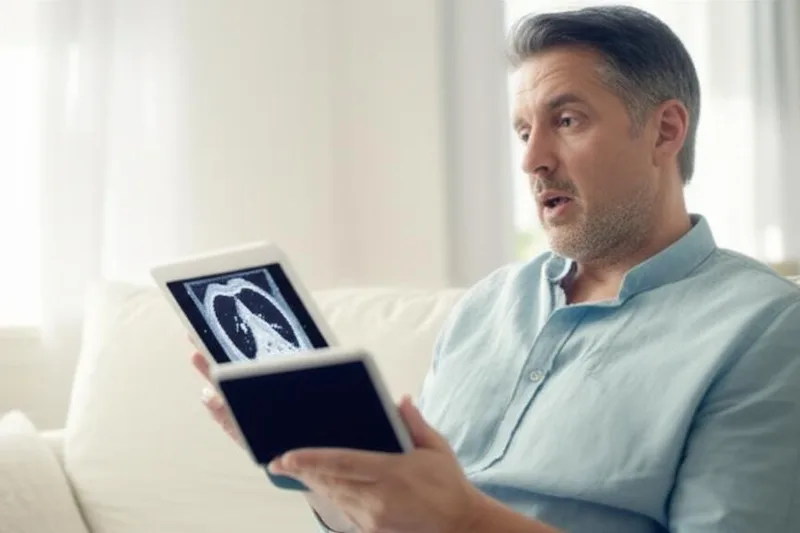
Have you ever wondered if we can have cancer inside our bodies without any symptoms? Actually, lung cancer is a silent disease. Most of the time, it can be too late when symptoms appear. But, don't worry! There is a good solution to this. That is lung cancer screening .
Simply put, Lung Cancer Screening is a low-dose CT scan (LDCT) that is done once a year. It can detect even the smallest lumps inside your lungs that could become cancerous, even when they are still small. The LDCT scan takes clear pictures of the inside of your lungs. Screening is a routine test or imaging test that is done to find out if you have a disease before you have any symptoms.
You may be thinking, "Why should I get tested for cancer if I'm not having any problems?" But lung cancer often has few symptoms in its early stages, when it's most easily treatable. Lung cancer is often diagnosed when the disease is more advanced. By then, the chances of survival are low.
If you are a current smoker or have quit within 15 years, it is a good idea to start getting screened when you are 50. Although anyone can develop lung cancer, current smokers and former smokers are at the highest risk.
Who should seriously consider getting lung cancer screening?
Doctors recommend that you have a low-dose CT scan every year if you meet all of the following criteria:
- If you are between 50 and 80 years old.
- If you are a current smoker, or if it has been more than 15 years since you quit smoking.
- If you have a smoking history of at least ``20-pack years''.
Now you might be wondering, "What is a `pack-year`?" Okay, let me explain it simply. It is calculated by multiplying the number of packs of cigarettes you smoke per day (there are 20 cigarettes in a pack) by the number of years you have smoked. For example, if you smoked one pack a day for 20 years, that is a `20-pack year` history. Or, if you smoked two packs a day for 10 years, that is a `20-pack year` history. If you have trouble calculating this exactly, don't worry. Ask your doctor, he/she can help you.
These guidelines were developed by a group of health experts called the United States Preventive Services Task Force (USPSTF) . They are based on the latest lung cancer screening studies.
How does this lung cancer screening work?
This is very simple. A lung cancer screening involves taking pictures of the inside of your chest. These pictures alone cannot tell you "this is cancer." However, these pictures can show small lumps (`masses`). Then they are further examined to see if they are cancerous or not.
How should you prepare before the test?
There is usually no special preparation required for this (Lung Cancer Screening CT scan). However, it is best to ask your doctor if he/she has any special instructions for you. It is best to wear loose-fitting clothing and minimal jewelry. If you have any medical conditions, especially respiratory conditions, tell the staff at the test site or your doctor in advance. They may be able to reschedule the scan for another day to ensure the results are as accurate as possible.
What happens during the test?
Here's what happens during a lung cancer scan:
- The technician performing the scan will ask you to remove any jewelry, watches, or other metal objects. You may also be asked to wear a gown that extends from the waist up.
- You will be made to lie down on a bed that will go into the scanner.
- Then the bed slowly goes into the scanning machine, which looks like a tube or a donut.
- As the scanner rotates around you, the bed can move back and forth while the machine takes pictures.
- During the scan, the technician will sometimes tell you to breathe in, or breathe out, and then hold your breath for a while. You should try to do those things as best you can.
- The technician will not be inside the scanning room with you. Instead, he will sit outside and talk to you through a microphone. So there is nothing to be afraid of.
- After the doctor has taken all the pictures he needs, the bed will come out of the scanner. Then you can get up.
What happens after the test?
There are no special instructions for you to follow after having this (LDCT) scan. You can go about your daily activities as usual.
Are there any risks with this test?
Yes, like everything else, there are some small risks involved. Let's see what they are:
- False positives. This means that a scan might find something in your lungs that looks like cancer, but it's not actually cancer. For example, many small lumps in your lungs (pulmonary nodules) are actually harmless. But having to do more tests, maybe even surgery, before you know for sure if something is cancer or not, can be a bit stressful, right?
- It's possible that a tumor found through screening will never cause you symptoms and will never spread. But it may still need to be treated.
- Radiation exposure. The amount of radiation you receive from a low-dose computed tomography (LDCT) scan is very small. But it's not zero. Continued exposure to radiation may slightly increase your risk of cancer. But it's important to remember that the dose of radiation given is very low.
Sometimes, when doctors do these scans to look for lung cancer, they find other conditions (incidental findings) that they weren't expecting. For example , a condition like COPD (Chronic Obstructive Pulmonary Disease) or something like a breast lump. Some of these incidental findings may require treatment. But not all of them require treatment. They can also lead to unnecessary tests and stress.
So what are the benefits of taking this test?
There are several advantages to screening for lung cancer with a low-dose CT scan, or LDCT:
- Doctors can see even very small tumors with a CT scan, compared to a regular chest X-ray. Studies using regular X-rays to look for lung cancer show that it is not as effective at detecting cancer earlier or increasing survival as LDCT.
- The radiation dose used in a low-dose computed tomography (LDCT) scan is significantly lower than a standard computed tomography (CT) scan.
How do we get the results of the test report?
A radiologist and your doctor will review your scans and give you a report with the results. Your lung cancer test report may include details such as:
- Negative. That means they didn't see anything on your scan that looked like it might be cancer.
- Benign. This refers to nodules that do not look like cancer. This means there is nothing to worry about.
- ``Probably benign`` refers to tumors that do not appear to be cancerous, but follow-up imaging is recommended to confirm.
- Suspicious. These are lumps that look like they could be cancerous. You will need to have further imaging and possibly a biopsy.
- Very suspicious. These are lumps that look like cancer. You will definitely need to have further imaging and a biopsy. Your doctor will refer you to a lung cancer specialist (an oncologist).
- ``Significant or potentially significant``. The radiologist may say ``significant`` or ``potentially significant`` about something they see that is not cancer but may require further imaging or testing.
- Incomplete. This means they were unable to properly assess your scan. This could be because you have a lung infection, or they want to compare it to a previous scan. You will need to have another scan in a few months to get an accurate diagnosis.
How long does it usually take to get the results?
The time it takes to get lung cancer test results can vary from person to person. If you need some follow-up, your doctor will usually call you soon. Otherwise, it can take anywhere from a day to a few days. It's best to ask your doctor when you can expect the results.
If the results are abnormal, what do you do next?
Your doctor will discuss the results of your lung cancer test with you. If necessary, the next steps you can take may include:
- Another (LDCT) scan in three to six months.
- A diagnostic CT scan is performed as a follow-up.
- Doing a PET/CT scan.
- Meeting with a cancer specialist (`oncologist`).
- See a pulmonologist (for non-cancerous respiratory conditions) or another specialist.
What time should I see my doctor?
If you think you are at high risk for lung cancer and may be eligible for this test, be sure to talk to your doctor. If you have any questions about the low-dose CT scan or your test results, don't hesitate to ask.
When can I stop taking this test?
If any of these apply to you, you may be able to skip your annual lung cancer screening:
- If you are 81 years old or older.
- If you have been smoking for 15 years or more, your risk of developing lung cancer decreases as time passes since you last smoked a cigarette.
- If you cannot have surgery for early-stage lung cancer due to a health condition, or if you are unwilling to do so.
Is it really worth getting this lung cancer screening?
Yes, absolutely! By getting screened for lung cancer, you can be much more likely to find it early, when it is most treatable. Studies show that more than 50% of people who are screened each year (that's about one in two) have their lung cancer diagnosed at an early stage. However, only about 28% of people with lung cancer are actually diagnosed at an early stage.
That means you can imagine the potential for saving a life with this screening!
Are there tests that can detect lung cancer from blood?
No, there is currently no blood test that can detect or diagnose lung cancer.
Finally, some important things you need to remember
Lung cancer is a serious diagnosis. However, getting a lung cancer screening every year is a powerful tool for early detection and the most effective treatment options. Talk to your doctor about whether you are at high risk for lung cancer and whether you should get this test. It could help save your life.
Remember, if you smoke, it's never too late to quit. Quitting smoking is the best way to reduce your risk of lung cancer. It's worth trying to quit smoking as soon as you're aware of this test.
` Lung cancer, cancer screening, CT scan, smoking, health, prevention, LDCT, screening, cancer, lungs


💬 Comments (0)
No comments yet. Be the first to share your thoughts here.
Add Your Comment