

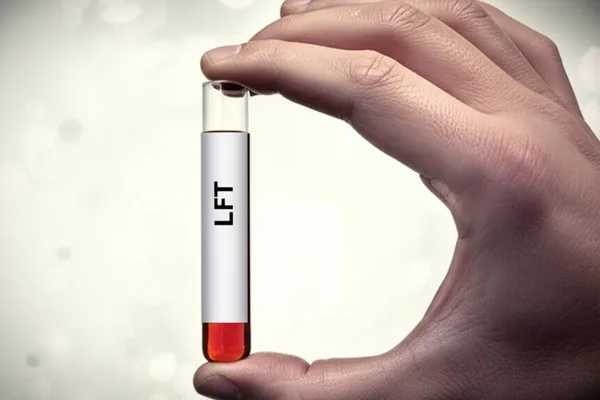
The liver is a very important organ in our body, isn't it? It's like a little factory in our body. So there are special blood tests that are done to check whether this factory is working well or not. That's what we call 'liver function tests' or Liver Function Tests (LFTs) . This can give our doctors a lot of important information about the health of your liver.
Why are these liver function tests (LFTs) performed?
Okay, now you're probably wondering, 'Why do this LFT?' There could be several reasons.
Your doctor may want to check if you have a liver disease, such as hepatitis, that you suspect. Or, if you already have a liver condition, this test can help to see how well it has progressed, or if the treatment is working. Another thing is that some medications can affect the liver. If you are taking such medications, these LFTs are also used to monitor whether they are affecting your liver.
What are the main types of liver function tests?
Simply put, this LFT test measures several things from a sample of your blood. Even with a single blood sample, it can provide information about various enzymes and proteins produced by the liver. Let's see what the main things are measured?
Liver enzymes test
This test looks at several types of enzymes in your liver. For example, enzymes like alkaline phosphatase (ALP) , alanine transaminase (ALT) , aspartate aminotransferase (AST) , and gamma-glutamyl transferase (GGT) are the main ones. If there is any damage or injury to the liver, the levels of these enzymes in the blood will increase.
Total protein test
This measures the level of protein in your blood. Did you know? The proteins our bodies need are produced by the liver. So, if the protein level is low, it could mean that the liver is not working properly.
Bilirubin test
Bilirubin is a waste product. The liver sends it to the gallbladder. An increase in its amount means that there may be something wrong with the liver.
LDH test
Lactate Dehydrogenase (LDH) is also an enzyme. It is found in many tissues in our body, including the liver. Its level also says something about the health of the liver.
Prothrombin Time (PT) test
This test measures how long it takes for a sample of your blood to clot. The liver also makes the proteins needed for blood clotting. So if it takes longer, that could also indicate some weakness in liver function.
Like all of these tests, they are sometimes included as part of a blood test package called a Comprehensive Metabolic Panel, which is usually done.
What can we learn from these tests?
Think of this LFT report as a detective story. Your doctor can tell you a lot by looking at the different values and ratios in it. For example:
- Do you have hepatitis, an inflammation of the liver?
- If there is such inflammation, is it caused by alcohol use, or is it due to another metabolic cause?
- Is the problem in the liver itself, or in the bile ducts?
- Is liver function impaired? If so, to what extent?
- Is there an obstruction to the flow of bile? If so, what does it look like?
- Have any of the medications you take affected your liver? If so, to what extent?
These LFTs provide clues about many things.
How are these liver tests (LFTs) performed?
It's very simple. A small sample of blood is taken from a vein in your arm. Then it's sent to a lab and tested. There, they look to see if the levels of various substances are abnormally high or low. Often, they also compare the levels of various enzymes or proteins. Because if that balance is changed, it's easy to understand that there's something wrong with the liver.
What happens during the test?
You can have this test done at a hospital or a specialized lab. The technician will first select a suitable vein in your arm and clean the area. They may also apply a compression band to the upper arm to help the vein stand out better. Then, a small needle is inserted into the vein and the required amount of blood is collected in a small vial. This only takes a few minutes, not a long time. Don't worry, it will feel like a small ant is biting you, that's all.
After the test?
After the blood is drawn, the sample is sent to a lab for analysis. If the lab is located in the same hospital or institution, the results may be available quickly. They may be available within a few hours or even a few days. If you do not feel faint after donating blood, you can go home, take your usual medications, and have a snack or drink.
How do I understand what is in my LFT report?
When you get your LFT report, you can see that it has values for various things. You can compare it with the normal values and see if your values are high or low. But, what do these numbers really mean? It takes a little experience to understand it. So, your doctor will explain the results to you and teach you how to read them. Never make big decisions based on these results alone, okay? It's best to talk to a doctor.
"The important thing is, an LFT report is just one piece of the puzzle. The doctor may need more information to see the full picture."
What are the normal ranges for liver tests? (What are the normal ranges for LFTs?)
This is also important. Normal ranges can vary from person to person. This means that these values can vary slightly depending on factors such as gender, body size, and even from lab to lab. Therefore, you should compare your values to the 'normal range' listed on your report.
However, here are some general values (these are for general information only , please refer to the specific 'Normal Range' on your report):
- Alanine Transaminase (ALT): 0 to 45 IU/L (International Units per Liter)
- Aspartate aminotransferase (AST): 0 to 35 IU/L
- Alkaline phosphatase (ALP): 30 to 120 IU/L
- Gamma-glutamyl transferase (GGT): 0 to 30 IU/L
- Bilirubin: 2 to 17 micromoles/L (micromoles per liter)
- Prothrombin time (PT): 10.9 to 12.5 seconds
- Albumin: 40 to 60 g/L (grams per liter)
- Total proteins: 6.3 to 8.0 g/dL (grams per deciliter)
What does high AST and ALT mean?
If the levels of the enzymes AST and ALT are elevated, it is likely that there is some damage to the liver. When the liver is under stress, these enzymes are the ones that are most likely to be released into the blood. If both are elevated equally, it is likely that the liver has been damaged by a cause other than alcohol (e.g., an infection, another toxin). However, if the AST level is about twice as high as the ALT level, it often indicates liver damage caused by alcohol. However, these are just hints, and a doctor should be the one to tell for sure.
What types of conditions can liver function tests (LFTs) help diagnose?
These blood tests alone may not be able to tell for sure what kind of liver disease you have. However, they can guide your doctor and help rule out other conditions. You may need further tests to make a final diagnosis. For example, imaging tests, a liver biopsy , or blood tests to look for specific viruses.
Here are some of the conditions that these LFTs can indicate:
- Fatty liver disease
- Toxic hepatitis
- Autoimmune hepatitis
- Viral hepatitis (A, B or C)
- Hemochromatosis - excess iron accumulation in the body
- Wilson's disease - excess copper accumulation in the body
- Alpha-1 antitrypsin deficiency
- Primary biliary cholangitis (PBC)
- Cirrhosis - hardening and scarring of the liver
- Liver cancer
Finally, things to remember (Take-Home Message)
So, a liver function test, or LFT, is a very simple way for you and your doctor to learn about the health of your liver. Whether it's looking for liver disease or seeing if a medication you're taking is having an effect, this small blood sample can provide a lot of information.
Remember, an LFT alone may not be enough to make a complete diagnosis. However, the information you get from this test can be a great help in deciding what steps to take next. So, if your doctor recommends an LFT, it is wise to do it without fear. Your liver is like your best friend, and it is your responsibility to take good care of it!
` Liver, Liver tests, Liver Function Test, LFT, Blood tests, Liver disease, Hepatitis




💬 Comments (0)
No comments yet. Be the first to share your thoughts here.
Add Your Comment