

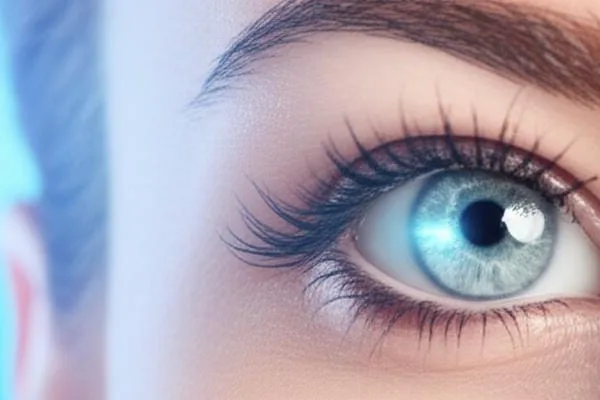
Have you ever wondered what that round, shiny, glass-like part of your eye is? That's what we call the cornea. It's like a little protective shield for your eye. Let's talk a little more about this amazing part today, shall we?
What is this cornea? Simply put...
Simply put, your cornea is a clear, dome-shaped covering in front of your eye. Think of it like the windshield of a car. It's what stops things like dust and germs from getting into your eye. It's also important for your vision. It also filters out some harmful UV rays. Isn't it amazing?
Your iris is located just in front of a fluid-filled chamber inside your eye (called the ``Anterior Chamber``, which contains a fluid called ``Aqueous Humor``). Then there is the ``Iris`` that gives your eye its color, the ``Pupil``, and then there is the lens inside your eye. Surrounding your iris is the white part of your eye, the ``Sclera``.
In fact, the skin is the first defense that comes to mind. That's why it's more prone to minor accidents and damage. But there's good news! Your skin has the amazing ability to self-repair.
What are the layers of the cornea?
Imagine, inside this little organ, there are six more layers. Each layer has a special function. Let's see what they are?
- Epithelium: This is the outermost layer of the eye. It acts as a barrier between the inside of the eye and the outside world. It is also very sensitive to pain. Researchers say that it has 300 to 600 times more pain receptors than your skin! This sensitivity is really protective. Because you can feel when something is wrong with your eye, you can quickly stop it or remove it.
- Bowman's layer: This is a strong layer made up mostly of collagen. It gives the cornea its structure and helps it maintain its shape.
- Stroma: This is the thickest layer of the cornea. It also strengthens the structure of the cornea. It also helps to bend (refract) light and focus it onto your retina.
- Pre-Descemet's layer (PDL): This is also called "Dua's layer". Research has shown that this is an airtight layer. That is, it is a very strong barrier between the fluid inside the eye and the air in the outside world.
- Descemet's layer: This layer is thin and flexible, but incredibly strong. It is very important for the structure of the eye. It also helps protect the eye from injury and infection.
- Endothelium: This layer is primarily responsible for maintaining the balance of fluid in the vitreous and intraocular space. It also ensures that the stroma has the right amount of water and fluid needed to function properly.
Although each layer has its own function, the real strength of the glass comes from the way all of these layers work together. It's like the "laminate glass" or "safety glass" in a car windshield. That's where there's a thin layer of plastic between two layers of glass, right? That's how it is.
Since when does this world have six layers?
Actually, this `(Pre-Descemet's layer)` was discovered not long ago. The first research paper on it was published in 2013. There is still a bit of controversy among some experts as to whether this is a separate layer, or part of the `(Stroma)`. (That was previously thought, but new research has shown that this may be different).
However, current research shows that there are several important differences between the PDL and the rest of the stroma. Eye surgeons now consider the PDL (whether they think of it as a separate layer or not) when planning corneal surgeries.
What are the common diseases that can affect the cornea?
Because your vagina is a very sensitive area, it is more susceptible to injuries, infections, and other illnesses. Here are a few examples:
- Dry eye: Tears are essential for the epithelium to function properly. Tears provide the eye with moisture and help it absorb oxygen from the air. Dry eyes are painful and can interfere with vision.
- Infections: If the surface of the cornea is damaged, germs – viruses, bacteria, fungi and parasites – can easily cause infections. An example is the parasitic infection Acanthamoeba keratitis.
- Keratitis: Keratitis, or inflammation of the cornea, can be caused by infections, injuries, and various diseases.
- Injuries: Just like a car windshield, your eyes can be damaged by external objects and events. This can lead to abrasions, lacerations, ulcers, and erosions. Imagine how painful it would be if a tiny speck of dust got into your eyes!
- Environmental damage: Your skin is very sensitive to extremes of heat and cold. Skin burns (from heat or ultraviolet radiation) are common. Chemicals (liquid or gaseous) can also cause damage.
- Structural Dystrophies: Some diseases affect the structure of the cornea, the way it is connected to the cornea, or both. These conditions are commonly called corneal dystrophies. There are more than twenty such diseases, examples of which include Keratoconus and Fuchs' dystrophy.
What are the treatments for corneal conditions?
There are several treatments available for urinary tract conditions. Some of them are:
- Over-the-counter remedies: Simple problems like minor eye irritation and dry eyes can be relieved with simple remedies that can be purchased at a pharmacy or supermarket.
- Medications: Many skin conditions, especially infections, can be treated with medications. Many of these come in the form of creams or eye drops. Some are also available as pills to take by mouth.
- Coverings or wearable treatments: The simplest example is the use of an eye patch to protect the eye and keep it closed until the wound heals. More complex treatments include scleral lenses, bandage contact lenses, and amniotic membrane grafts.
- Laser surgeries: These are vision correction surgeries. A laser beam is used to change the shape of the cornea and focus light differently. LASIK is a common type of laser surgery.
- Eye surgeries: These surgeries can help in many ways, especially to repair damage and correct certain eye conditions.
- Cornea transplant or artificial cornea placement: Over time, your cornea may become cloudy or not focus light properly. When these problems become severe, you may need surgery to replace your cornea.
Important: The treatment options that can help with eye conditions depend on many factors. Your specific condition, medical history, and personal circumstances can all play a role. Therefore, your ophthalmologist or healthcare provider is the best person to learn more about the treatment options that are right for you.
How can I protect my cornea from harm?
The most important way to protect your eyes from accidents is to wear safety glasses or goggles . Even if it's just for a moment or two, it only takes a few seconds for an eye injury to occur.
You should definitely wear eye protection during these times:
- When working with tools and machines: This is common to both simple hand tools and power tools. Even something as simple as sanding wood with sandpaper without protection can cause unnecessary eye strain or injury.
- Gardening and gardening: Leaf litter, grass clippings, rocks, and soil can all be hazardous to your eyes when working in the garden or yard. This is also common with tools and machines that help with gardening, such as lawn mowers, string trimmers (or weed-eaters), chainsaws, and leaf blowers.
- When using compressed air or water: Two examples are pressure-washing a sidewalk or using compressed air to remove dust from inside a computer or other electronic device. The pressure in both cases can easily cause small stones, debris, or dust to become a hazard.
- When using chemicals at home or at work: Even common chemicals like bleach and drain cleaner can easily splash into your eyes, even if you're careful.
- When working near heat sources and open flames: The pain receptors in your eyes are more sensitive to heat than the receptors in your skin. Eye protection can help protect you from discomfort caused by fumes or damage from smoke from a fire.
- Exposure to UV radiation: UV rays reflected from water and snow-covered surfaces can burn your cornea. This can cause corneal flash burns or photokeratitis.
- When playing sports: Protective eyewear can protect you from flying objects. This applies to sports such as baseball, tennis, hockey, pickleball, and racquetball. Also, eyewear should always be worn when playing target sports (archery, trap shooting, skeet shooting).
Some other important accident prevention tips:
- Read the instructions: This applies to both machines and chemicals. Chemical labels will tell you what to do if they get in your eyes (and if nothing gets in your eyes, the labels are easy to read). It's normal to want to get straight to work, but pausing to read the label can make a big difference.
- Use the right type of eye protection: Safety glasses with side panels or shields can protect you from flying debris from people working nearby. Goggles with soft plastic edges that fit snugly against your face are best for preventing chemicals and fumes from getting into your eyes.
- Make sure your eyewear is working properly: Protective eyewear is useless if it doesn't protect you well. So make sure your eyewear is suitable for what you're doing. In environments where there's a lot of reflected sunlight, make sure your sunglasses have polarized lenses. They're better at blocking UV rays than just tinted lenses.
- Always wash your hands when cooking, using tools or chemicals: Whether you're working with harsh ingredients in the kitchen or doing household chores, unwashed hands can easily transfer chemicals, small particles, and debris into your eyes.
- You should always seek medical advice for burns in or around your eyes: Even a minor burn, if it occurs near or on your eyes, should be treated properly. Always err on the side of caution when seeking medical advice.
- Don't risk driving with an eye injury: If you have any changes in your vision or any eye symptoms that you think could be due to an injury, don't drive. You don't want to put yourself or others at risk.
How can I keep my cornea healthy?
You can do these things to protect yourself from diseases and certain conditions:
- Get regular eye exams: These can help you identify problems that affect your vision (and your eyes in general) before symptoms appear.
- Wash your hands often (even when you're not touching things that could irritate your eyes): This can help prevent unwanted germs from entering your eyes.
- Don't share things like makeup with others: Sharing these things can spread eye infections.
- Wear, store, and maintain contact lenses properly: This is very important because it protects your eyes from serious infections. Some infections can cause serious eye damage and even permanent vision loss.
- Avoid touching or rubbing your eyes: This includes rubbing your eyes over your eyelids. These can inadvertently damage or weaken the surface of the cornea.
What eye symptoms indicate that you need to seek medical advice?
There are several symptoms or changes that may indicate that you should seek medical attention. These include:
- Vision changes, including double vision, blurring, and distortion.
- Sudden loss of vision.
- A feeling like there is something in the eye (whether you can see the object or not – it can range from a mild discomfort to severe, unbearable pain).
- A foreign object that you can see, but cannot remove using proper methods.
- Eye pain.
- Watery eyes (Epiphora).
- Sensitivity to light (Photophobia).
- Redness or inflammation of the eyes.
- If you see blood or fluid behind or inside your eye, but in front of or outside the `(Iris)` or `(Pupil)`.
- If you get hit directly in the eye or around the eye.
- A visible hole, tear, or wound in your eye or on the surface of your eye.
But this list is not complete. When in doubt, always err on the side of caution. Doing so can make a big difference in protecting your eyesight.
What do you do if something gets in your eye?
If you feel like something is wrong with your eye, don't panic and take a deep breath. Here are some good things to do and some things not to do:
Good things to do:
- First, wash your hands thoroughly with soap.
- Try to rinse your eye gently with clean water. Allow some water to flow into the eye.
- If possible, look in a mirror and see if you can see anything inside your eye.
- Ask someone else to look at it for you.
- If it's something small, move your eyes around and blink to see if it goes away on its own.
- If you can't remove it in any way, if your eye hurts, or if your vision becomes blurry, see a doctor immediately .
Things not to do:
- Never rub your eye! Doing so can push the object deeper into your eye or scratch your cornea.
- Do not try to pick your eyes with sharp objects (like sticks or scissors).
- Do not touch your eyes with dirty hands or cloths.
- If you can't remove it yourself, don't try to force it.
Can you see without a cornea?
No. Your cornea is what bends light and focuses it onto the retina at the back of your eye. It also protects other sensitive parts of your eye. So, without it, your eyes wouldn't be able to see properly.
How long does it take for a damaged cornea to heal?
Your eye has an amazing ability to heal itself. Small eye injuries heal in a few hours. Some injuries can take a few days to heal. In unusual or special cases, it can take longer. Your eye doctor is the best person to talk to about the right recovery time for you, and what you can do to make your recovery as smooth as possible.
Your cornea protects the inside of your eye, and it's full of nerve endings. When they're working properly, you probably don't even think about them. But if something goes wrong with one or both of them, it can be so difficult that you can't think about anything else.
Fortunately, your eyes have an amazing ability to heal, and most wounds can heal in a matter of days, sometimes even hours. But that won't happen if you don't do what you need to do to take care of them. If you have a problem that affects your eyes, talk to an eye specialist. Also, get regular eye exams. Taking care of your eyes can help protect the inside of your eyes and help you see.
What we need to learn from this (Take-Home Message)
Okay, so here are some of the most important things you need to remember from what we've talked about today:
- Your cornea is a very valuable, sensitive protector for your eye. It's like the windshield of a car.
- It is made up of several layers, each with a specific function. Together, they protect the eye and help you see clearly.
- The skin can easily become damaged, infected, and prone to various diseases, so it is very important to take care of it.
- You can protect yourself by doing simple things like wearing safety glasses, washing your hands, and using contact lenses properly.
- If you notice anything unusual in your eyes (pain, blurred vision, redness), seek medical advice immediately. Early detection is easier to treat.
- Don't forget to get regular eye exams.
Your eyes are one of the most valuable assets you have, so it is your responsibility to take good care of them.
` Sclera, cornea, eye health, eye diseases, eye protection, eye layers, eye treatments




💬 Comments (0)
No comments yet. Be the first to share your thoughts here.
Add Your Comment