
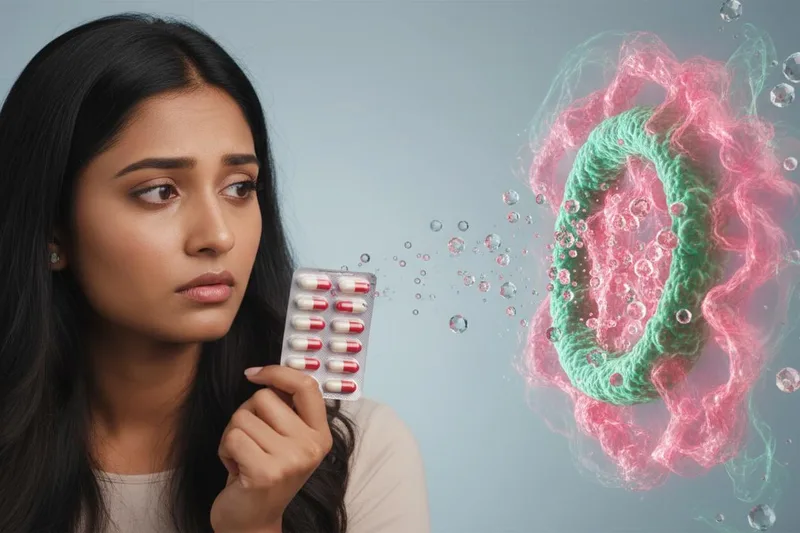
When you go to the doctor for a cold, a fever, or an infection, they sometimes give you an antibiotic, right? So, do you think that every antibiotic you give will always work the same way? That's not true. Sometimes, little organisms called bacteria get used to these antibiotics and start to resist them. That's what we call antibiotic resistance . This is a bit of a serious story, but let's keep it simple.
What is this antibiotic resistance?
Simply put, antibiotic resistance is the ability of bacteria to resist antibiotics that are designed to kill them or stop their growth. This means that bacterial infections that were previously easily treatable are now becoming very difficult to treat.
This is actually part of a larger category called antimicrobial resistance . Fungi, parasites, and viruses can also become resistant to drugs.
The important thing is, it's not your body that's developing antibiotic resistance, it's the bacteria! When this happens, the number of antibiotics that work against a particular bacteria decreases. Other antibiotics can help, but it's important to have as many treatment options as possible. Especially for serious infections, starting the right medication as soon as possible can be life-saving. Just think, if it takes the doctor too long to find the right medication for you, the illness could get worse, right?
Why is this so dangerous?
Antibiotic resistance is dangerous because it reduces your treatment options when you get sick. It can also delay the right treatment. This can leave you with:
- Increased risk of severe, long-term illness or death.
- Severe side effects of medications.
- Prolonged hospital stay.
- Having to see doctors frequently.
- Increase in the cost of medical treatment.
Public health experts and policymakers around the world are working hard to find solutions to this. But there is no easy solution. To change this, we need the unity and support of all of us. By being aware of this, you can take steps to protect yourself, your loved ones, and many others you have never met.
How does this antibiotic resistance arise?
Bacteria are naturally resistant to drugs over time. But some factors can speed up this process. Here are some of them:
Overuse of antibiotics
A big reason for this is that you use antibiotics when you don't really need them. Think about it, most sore throats are caused by viruses. So antibiotics are useless. The most important thing is to only take antibiotics if a doctor prescribes them.
Misuse of antibiotics
Bacteria are always looking for any opportunity to multiply. If you forget to take an antibiotic on time, stop taking it before the doctor tells you to, or use someone else's medicine, the bacteria can start multiplying again. When they multiply like this, their genetic makeup, or DNA, can change. This is called a mutation . Bacteria that have changed in this way become more resistant to the drug. Antibiotics can only kill the bacteria that have not changed, leaving the resistant bacteria behind.
Spontaneous changes in bacteria (Spontaneous resistance)
Sometimes, the genetic makeup of a bacterium changes spontaneously, that is, it mutates . Then the antibiotic cannot recognize this newly changed bacterium and cannot target it properly. Or, because of that change, the bacteria can fight against the effects of the drug.
Transmitted resistance
You can pass a drug-resistant bacterial infection to someone else. Then that other person will get an infection that no antibiotic will work on. Often, you can find another treatment. But over time, these resistant bacteria can become harder to treat.
Who is most at risk from this?
Anyone can develop antibiotic-resistant infections. However, some groups are at higher risk because of their health conditions or the environment they live in. People who are more likely to develop these dangerous infections include:
- Infants, especially those born prematurely.
- Adults over 65 years of age.
- People who are homeless or living in crowded places.
- People with compromised immune systems.
- People taking antibiotics for a long time.
Why is this a big problem?
Antibiotic resistance is something we should all be concerned about. It's like taking away from the arsenal of drugs that doctors use to treat you when you're sick. If some bacteria become resistant to certain drugs, doctors have to find other drugs to treat you. This isn't always easy. To understand why this is so important, we need to understand how it affects us all on a global scale.
Antibiotic resistance is a global public health problem. That means it can affect everyone, so it can affect you too. However, it's not people who become resistant to antibiotics. It's specific types of bacteria that do.
The reason is that when we all use antibiotics to treat bacterial infections, the bacteria start to adapt to them. Think about it this way. You have a friend who loves to throw surprise parties. The first time, he surprises you or someone else in your group with ease. But after a while, you catch on to his plan and you instinctively know that a surprise is coming. Then it takes a lot of effort - maybe even impossible - to surprise your friend.
Bacteria are like that. Every time we "surprise" them with an antibiotic, they get used to it. They see it coming, and they don't like surprises. So, they find ways to escape it (i.e., become resistant to the effects of the antibiotic).
This doesn't mean your body is becoming resistant to antibiotics. It just means that the bacteria in the world (that could one day affect you) aren't as susceptible to antibiotics as they used to be. So, doctors are having to work harder to find new antibiotics to treat some infections.
What are the deadliest antibiotic-resistant bacteria?
These types of bacteria are responsible for the highest number of deaths from antibiotic-resistant infections worldwide:
- Escherichia coli (E. coli)
- Staphylococcus aureus (Staphylococcus aureus - S. aureus)
- Klebsiella pneumoniae (K. pneumoniae)
- Streptococcus pneumoniae (S. pneumoniae)
- Acinetobacter baumannii (A. baumannii)
- Pseudomonas aeruginosa (Pseudomonas aeruginosa - P. aeruginosa)
What are these "superbugs"?
Superbugs are bacteria, viruses, or other germs that have adapted to the drugs that would normally kill them. They become resistant to the drugs. They don't go away even with treatment, but continue to multiply and cause infections. Sometimes, no antibiotics will work.
Some bacterial infections that fall into the category of superbugs are:
- C. diff (Clostridioides difficile - C. diff)
- Drug-resistant gonorrhea
- Methicillin-resistant Staphylococcus aureus (MRSA)
- Multi-drug-resistant Mycobacterium tuberculosis (MDR-TB)
- Vancomycin-resistant Enterococci
How do we deal with this?
To change this situation on a global scale, healthcare providers and policymakers have a major role to play. But that doesn't mean you can't do anything. There are many things you can do. Here are some tips:
- Practice good hygiene. By protecting yourself from infections, you can avoid bacterial infections that require antibiotics. The more antibiotics we use as a society, the more antibiotic resistance we can cause. Hand washing is one important step you can take. Your doctor can give you more advice.
- Only take antibiotics if you really need them. Antibiotics don't work for viral infections. But sometimes the symptoms of bacterial and viral infections can be similar. So, even if you don't need antibiotics, you may feel like you do. If you're sick, talk to your doctor about what kind of medicine you need and why.
- Get the vaccines your doctor recommends. Currently, there are no vaccines for many bacteria that cause antibiotic-resistant infections. One exception is the pneumococcal vaccine. This protects you against pneumococcal disease caused by S. pneumoniae. This vaccine is very important for many people, especially children under 2 years of age and adults over 65 years of age. Other vaccines that protect against viral infections, such as the influenza vaccine (flu shot), are also important. Avoiding viral infections can help prevent symptoms that lead to unnecessary antibiotic use.
How do doctors treat this?
Treatment options are often limited. Your doctor will try to find the right antibiotic or combination of antibiotics for your infection. For example, carbapenems are a type of antibiotic that works well against antibiotic-resistant bacteria. Your doctor will give you a carbapenem, such as meropenem, as an injection.
Your doctor will explain the treatment options to you, along with their pros and cons. Researchers are constantly trying to find new and better options to treat antibiotic-resistant bacteria. In the meantime, following the guidelines for proper antibiotic use can help keep the few medications we have in our arsenal.
Let's also learn about antibiotic-resistant urinary tract infections (UTIs).
Most urinary tract infections (UTIs) can be treated with antibiotics. However, an antibiotic-resistant UTI is an infection in your urinary tract, bladder, or kidneys that does not respond to commonly used antibiotics.
Most urinary tract infections are caused by E. coli bacteria. These infections are usually treated with antibiotics. But bacteria are now becoming more resistant to these drugs. For example, some strains of E. coli produce enzymes called extended-spectrum beta-lactamases (ESBLs) . These enzymes break down and destroy antibiotics. This can make your infection worse and harder to treat without the antibiotics working.
A doctor might prescribe a regular antibiotic for a urinary tract infection, not knowing that the bacteria causing it are resistant strains. You may feel a little better after taking the antibiotic for a day or two. This is because the antibiotic kills some of the bacteria, but the resistant bacteria are still there. So, the medicine won't completely cure you. If it turns out that you have antibiotic-resistant bacteria, your doctor will have to change your antibiotic.
The good news is that there are several types of antibiotics that work even for antibiotic-resistant UTIs. Your doctor will tell you which medication is best for you. Follow the dosage and duration they give you. It is important to take the full course of medication, even if you feel better.
Finally, remember this.
When you get sick, the first thing you think about is which medicine to take to get better quickly. Fortunately, antibiotics are still a powerful weapon against many bacterial infections. They can reduce your symptoms and reduce your risk of serious complications. But over time, more bacteria have developed resistance to drugs that have worked for years. This can be a scary situation, but learning more about antibiotic resistance can help you protect yourself and your loved ones. Talk to your doctor about ways to stay healthy. He or she can give you advice tailored to your health needs.
` Antibiotic Resistance, Antibiotic Resistance, Bacteria, Antibiotics, Infections, Health, Superbugs




💬 Comments (0)
No comments yet. Be the first to share your thoughts here.
Add Your Comment