
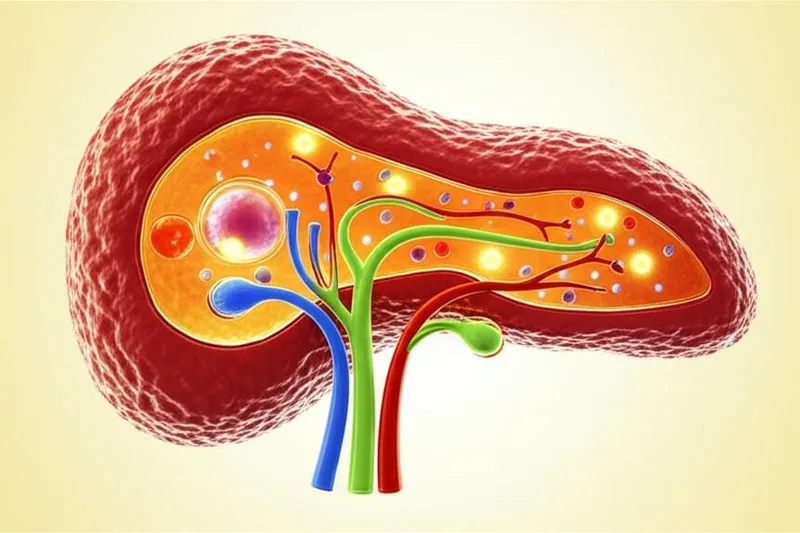
Have you ever wondered how we digest the food we eat and how our body controls our blood sugar levels? The pancreas is an amazing organ hidden inside our stomach that helps with all of this. It's like a little factory, doing two important jobs at once! Simply put, it's part of our digestive system and part of our endocrine system (that is, the hormone-producing system).
What actually happens to the pancreas?
The pancreas helps us in two main ways. One is by helping us digest food, and the other is by making hormones that control the amount of sugar in our blood. If these two don't work properly, it can affect other important organs like our heart, liver, and kidneys.
How to help with digestion
Imagine you've eaten a delicious meal. We don't think much about what happens next, do we, unless we get a stomachache? But there's a lot of work going on inside our bodies. This is what the pancreas helps with first.
The pancreas produces about 1 to 4 liters of a fluid filled with enzymes each day. This amount varies with the amount of food we eat. These enzymes break down the proteins, fats, and carbohydrates in the food we eat into small pieces that the body can absorb.
Here's how it happens:
- After you eat, the pancreas sends this enzyme fluid through small channels (ducts) into the main pancreatic duct.
- This main pancreatic duct connects to our bile duct . The bile duct carries a fluid called bile, which is produced in the liver and stored in the gallbladder. This bile also helps in digesting food.
- Bile from the gallbladder and the enzyme fluid from the pancreas both combine and enter the duodenum , the first part of our small intestine (the first place where food comes out of the stomach).
- That's where these two fluids come together and begin to break down and digest food properly.
Isn't it amazing? How many complex things like this happen inside our bodies without us even realizing it!
Making hormones
Another very important function of the pancreas is to produce hormones. In particular, two of the most important hormones that control our blood sugar levels are produced here. They are insulin and glucagon .
- If your blood sugar level increases, the pancreas releases insulin . Insulin moves the excess sugar into the cells, lowering the blood sugar level.
- Also, if your blood sugar level drops (for example, if you haven't eaten for a long time), the pancreas releases glucagon . Glucagon goes and releases sugar stored in our liver (as glycogen) back into the blood, raising the blood sugar level.
Keeping blood sugar levels balanced in this way is essential for the healthy functioning of every organ in the body.
Where is the pancreas located?
Now let's see where this amazing organ is hidden in our body. The pancreas is located behind our stomach and in front of our spine. It's like a safe place. Around it are other important organs like our gallbladder, liver, and spleen.
On which side of the body is the pancreas located?
The 'head' of the pancreas is on the right side of our body. It curves around the duodenum, the first part of our small intestine. The 'tail' of the pancreas extends to the left side of the body, near the spleen .
What are the parts of the pancreas?
Simply put, the pancreas can be divided into four parts:
- Head: The widest part of the pancreas, located inwardly of the duodenum.
- Neck: The short part starting from the head.
- Body: The middle part between the head and neck, which is slightly upward.
- Tail: The thinnest part of the pancreas, ending near the spleen.
What does the pancreas look like?
The pancreas looks like a pear . It is thick at one end and tapers to a thin end. If you touch it from the outside , it is rough and lumpy, like a corncob. It is about 6 inches long – about the length of your hand. It weighs about 90 grams (about 0.20 pounds), which is about the weight of a standard deck of cards.
What diseases can affect the pancreas?
Unfortunately, the pancreas, which performs such important functions, can also develop certain diseases. Let's take a look at what they are:
- Type 1 diabetes: This is caused by the pancreas not producing enough insulin. This is often caused by a problem with the immune system.
- Type 2 diabetes: In this type of diabetes, the pancreas produces insulin, but the body cannot use it properly (this is called insulin resistance). Or, the body may not produce enough insulin.
- Hyperglycemia (high blood sugar): When the pancreas produces too much glucagon, or when there is not enough insulin, the blood sugar level simply goes up.
- Hypoglycemia (low blood sugar): This occurs when too much insulin is produced (perhaps if the dosage of medication for diabetes is increased), causing the blood sugar level to drop too low.
- Pancreatitis: This is a dangerous condition. It occurs when enzymes produced in the pancreas start working inside the pancreas before they reach the small intestine (duodenum). This can damage the pancreas itself. Gallstones or alcohol use disorder are the main causes. It can occur suddenly (acute pancreatitis) or it can be a chronic condition.
- Pancreatic cancer: A condition that occurs when cells in the pancreas become cancerous. This is considered a type of cancer that is difficult to detect and treat because symptoms are rarely present in the early stages.
Common symptoms of pancreatic disease
Well, how do you know if there's something wrong with your pancreas? Not every disease has all of these symptoms, but see if you have one or more of these symptoms:
- Abdominal pain , especially in the upper abdomen, sometimes accompanied by back pain. This pain may worsen after eating.
- Back pain.
- Blurred vision (this can be a symptom of diabetes).
- Dark urine, or light-colored, oily, floating stools.
- Constant fatigue.
- Constant thirst and the need to urinate frequently (these are also symptoms of diabetes).
- Nausea or vomiting.
- Feeling like your limbs are going numb.
- Becoming thin for no reason.
- Jaundice (yellowing of the eyes and skin). This occurs if the bile duct is blocked.
If you have symptoms like these, it is best to definitely see a doctor and seek advice.
Tests to check the health of the pancreas
Because the pancreas is so hidden inside our bodies, it's difficult for doctors to tell its condition just by looking at it. That's why they use special tests like these:
- Abdominal ultrasound or endoscopic ultrasound: These can see images of the pancreas.
- Angiography test: Check the condition of the blood vessels.
- Blood tests: Check things like pancreatic enzyme levels (amylase, lipase), sugar levels, and liver function.
- CAT scan / CT scan: This allows you to take cross-sectional images of the pancreas.
- ERCP (endoscopic retrograde cholangiopancreatography) or MRCP (magnetic resonance cholangiopancreatography) tests: These can look at the pancreatic ducts and bile ducts.
- Fecal elastase test: Checks whether the pancreas is producing enough enzymes to digest food.
- MRI (Magnetic Resonance Imaging) scan: This can also take detailed images of the pancreas.
- Secretin pancreatic function test: Measures how the pancreas responds to the hormone secretin.
Sometimes, doctors may need to do surgery (such as taking a biopsy) to look for problems with the pancreas.
Treatments for Pancreas Diseases
Doctors decide on treatment based on the disease that develops in the pancreas.
- For Diabetes: Insulin is mainly given externally (especially for type 1 diabetes), or medications are given to control blood sugar. Lifestyle changes (diet, exercise) are very important.
- For pancreatic cancer: Chemotherapy, radiation, and surgery are the main treatments. Sometimes one or more of these treatments may be used together.
- For pancreatitis: Treatment includes temporarily stopping eating, giving fluids through a vein, and giving painkillers. Treatment varies depending on the cause (for example, gallstones are removed). Dietary changes and stopping alcohol are important for chronic pancreatitis.
Some people may need a pancreas transplant or a pancreatectomy, which involves removing part or all of the pancreas. Very rarely, insulin-producing pancreatic cells (called islets of Langerhans cells ) are transplanted into the liver to continue producing insulin.
How do I keep my pancreas healthy?
We all want to be healthy. So there are a few things we can do to take care of this small but very important pancreas:
- Maintain a healthy weight for you. Regular exercise and losing excess weight can help prevent the development of gallstones, which can lead to type 2 diabetes and pancreatitis.
- Eat a diet low in fat and high in fiber. High-fat, processed foods can lead to gallstones, which can lead to pancreatitis. Also, being obese ( a body mass index (BMI)) over 30 is a risk factor for pancreatic cancer.
- Be careful with your alcohol consumption. Reduce it as much as possible, or stop it completely. Drinking alcohol clearly increases the risk of developing pancreatitis and pancreatic cancer.
- Quit smoking. Tobacco use, cigar smoking, and smokeless tobacco products (e.g., chewing gum) all increase the risk of developing pancreatic cancer and chronic pancreatitis.
- Get regular medical checkups. Seeing a doctor for regular checkups can help detect conditions like pancreatic cancer and pancreatitis early.
Is it possible to live without a pancreas?
This may be a question you're wondering about. Yes, it's possible to live without a pancreas. But if you do, you'll have to take enzyme pills to digest food and insulin to control your blood sugar for the rest of your life. It's rare to have to remove the entire pancreas. But if you have pancreatic cancer, severe damage to the pancreas, or severe pancreatitis, your doctor may have to make that decision.
Finally, what to remember
Most of the time, we don't think much about our pancreas until something goes wrong, right? This organ, hidden behind our stomachs, is like a factory with two parts. On one hand, it helps digest food, and on the other, it controls blood sugar. By eating a nutritious diet and avoiding things like smoking and excessive alcohol consumption , you can help keep your precious pancreas healthy for a long time. So, take care of your body, because health is the greatest asset! Got it?
` Pancreas, pancreas, digestion, hormones, insulin, glucagon, diabetes, pancreatitis, pancreatic cancer, blood sugar


💬 Comments (0)
No comments yet. Be the first to share your thoughts here.
Add Your Comment