

Have you ever thought about the tiny blood vessels inside our bodies? Like a network of small roads spread across a country, these are the ones that carry nutrients and oxygen to our cells. Capillaries are one of those very important, tiny blood vessels. Among these capillaries, today we are going to talk about the most common and specialized type of capillaries, the "Continuous Capillaries". Let's talk about this very simply, in a way that you can understand.
What are these `Continuous Capillaries`?
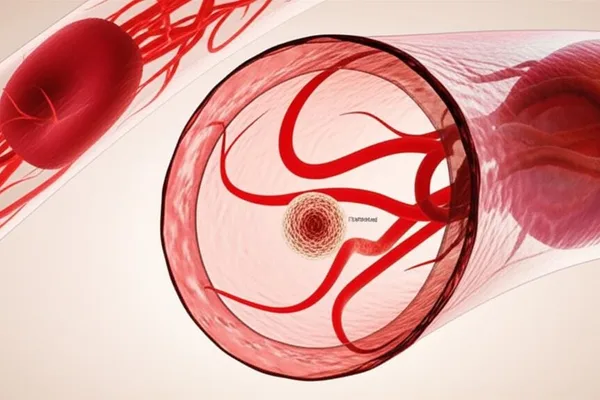
Simply put, continuous capillaries are the most common type of capillary in our body. Like other blood vessels, they are lined with a special type of cell called endothelial cells. They are called "continuous" because the cells are very close to each other, almost in a row, without gaps. This means that there are no large gaps in the wall, and the cells are connected to each other continuously.
Think of it this way, these are the smallest blood vessels in our body. These are the ones that carry blood, nutrients, and oxygen to our cells. These are the smallest units in our vascular system.
Are there types of continuous capillaries?
Yes, there are two main types of these continuous capillaries. Let's see what they are.
1. Continuous nonfenestrated capillaries:
These types of capillaries have tiny holes, or intracellular clefts, between the endothelial cells that make up the walls. These holes are so small that only very small particles like water, glucose, hormones, and gases can pass through. They act like gatekeepers that only let in selected things. We see these types of capillaries in our nervous system, skin, and lungs .
2. Continuous fenestrated capillaries:
These types of capillaries have large openings, like little windows (`fenestrations`), between the cells. Because of these ``windows,'' nutrients and other substances in the blood can move back and forth very quickly . They are like busy exchange centers. They are especially located in our kidneys, small intestine, and endocrine glands. Because these organs need a quick exchange of substances.
In addition to these two types, there is another type called ``Sinusoidal capillaries``. But they are not continuous, they have even larger gaps and holes. These can be seen in places like the liver, spleen, lymph nodes, and bone marrow. But today we are focusing more on continuous capillaries.
What is the role of continuous capillaries?
These tiny, continuous capillaries are what connect the arteries (`Arteries`) and veins (`Veins`) of our circulatory system. Think of it this way, arteries are like big roads that carry clean, oxygen-rich blood from the heart to the rest of the body. Veins are the roads that carry used, deoxygenated, waste-laden blood back to the heart. Capillaries are the little side roads between those two big roads, where things are exchanged at the cellular level.
Their main function is to help collect various substances in the body into the blood and remove them from the blood and deliver them to the organs . It's like a delivery service.
How do these help other organs?
Continuous capillaries support many important organs and systems in our body. Let's see how:
- Brain: In the brain, these capillaries come together to form a special protective barrier, called the ``blood-brain barrier.'' This prevents harmful substances from entering the brain.
- Endocrine system: Hormones are chemical messengers that control various functions in our body. These hormones are delivered to the relevant organs through these capillaries.
- Kidneys: Special capillaries in the kidneys (peritubular capillaries) help filter blood, make urine, and reabsorb things like sodium and water back into the body.
- Lungs: When we breathe, the oxygen we inhale is added to the blood and the carbon dioxide in the blood is removed through these capillaries in the lungs.
- Small intestine: After we digest the food we eat, these capillaries help our cells absorb the nutrients from it.
What is the relationship between capillaries and the blood-brain barrier?
This is something very special. The blood-brain barrier that protects our brain is made up of those continuous nonfenestrated capillaries that we talked about earlier. These capillaries are very selective in allowing things to enter the brain. They only allow essential things like water and oxygen to pass from the blood to the brain, while preventing toxins and disease-causing substances from entering the brain . It's like a safe door for the brain. This protects the brain from accidents and diseases.
What is the shape of continuous capillaries?
Think about how small these capillaries are! They are usually only 8 to 10 micrometers in diameter. A micrometer is one thousandth of a millimeter (0.001 mm). About the width of a cotton swab! Our red blood cells have to move through these capillaries in single file , that's how delicate they are.
These continuous capillaries are mainly composed of three parts:
1. Endothelial cells: These are the main cells that make up the walls of capillaries. It's like a layer of cells that lines the inside of a tube.
2. Basement membrane: This is a continuous layer of cell tissue that supports the endothelial cells.
3. Pericytes: These are cells that are dotted around the outside of the capillary walls. These cells can contract, meaning they can shrink. This allows them to control blood flow.
What diseases can occur related to these capillaries?
Unfortunately, these tiny but very important capillaries can be the source of various health problems. Some of them may be genetic, meaning they are passed down from generation to generation.
Conditions that are caused by genetic causes:
- Arteriovenous malformation (AVM): In this, arteries and veins in the brain or spinal cord become tangled together, allowing blood to flow through the capillaries.
- Capillary angiosarcoma: A type of cancer that develops in endothelial cells.
- Hereditary hemorrhagic telangiectasia (Osler-Weber-Rendu syndrome): This is an inherited blood vessel disorder in which abnormal blood vessel growths (telangiectases) develop and can burst.
- Macular degeneration: Damage to part of the retina inside the eye. This can also be caused by blood leaking from capillaries.
- Microcephaly-capillary malformation syndrome: In this condition, babies born with an abnormally small head may have enlarged capillaries.
Conditions that are caused by non-genetic causes:
These are not hereditary, but can occur for other reasons.
- Broken capillaries: Damage to the small blood vessels under the skin. This can sometimes happen when you cough hard or vomit.
- Capillary leak syndrome: This can cause a sudden drop in blood pressure. Sometimes, emergency treatment may be needed.
- Spider nevus (`Spider nevus` / `spider angioma` / `spider telangiectasia`): Small blood vessels that branch out from one point, resembling the legs of a spider. These are most often seen on the face, neck, and chest.
- Strawberry hemangiomas: Bright red, clustered blood vessels visible on the skin's surface.
- Vasculitis: Inflammation of the blood vessels. This can also affect the capillaries. If this happens, complications such as bursting or blockage can occur.
Can problems with continuous capillaries lead to other serious illnesses?
Scientists are still researching this, but it is suspected that some impairment in the functioning of the continuous capillaries may be linked to conditions such as:
- Alzheimer's disease
- Stroke
- Vascular dementia
Further research is needed to find out more about these.
How do we take care of these tiny blood vessels?
It is our responsibility to take care of our capillaries, which perform such an important function in our body. Here are some simple things you can do:
- If you smoke, consider quitting . The same goes for using tobacco products.
- Get used to an active lifestyle . That means things like exercising and walking.
- Try to maintain a healthy weight .
- Be careful about the amount of alcohol you drink.
Additionally, it's important to talk to your doctor about any conditions that may affect the health of your blood vessels and get them under control. These include:
- Diabetes
- High blood pressure
- High cholesterol
- Stress
When these are controlled, it also benefits the capillaries.
How to avoid broken capillaries on the face?
A problem that many people have is the tiny red thread-like capillaries that appear under the skin on their face. Here are some things that can help prevent these from breaking:
- Reduce alcohol consumption.
- Quit smoking.
- If you have a skin condition like rosacea, get it treated properly.
- When going out in the sun, use a broad-spectrum sunscreen that protects against both UVA and UVB rays .
- When washing your face, wash slowly and gently, without rubbing vigorously.
Finally, things to remember
So, continuous capillaries are a network of very small, but very important blood vessels that carry blood, nutrients, and oxygen to our cells. As we have seen, there are two types of these (continuous fenestrated and continuous nonfenestrated) with specific functions.
Remember, these tiny capillaries affect our overall health. Therefore, by following a healthy lifestyle, you can take good care of these little friends. If you have any questions or doubts about this, never hesitate to talk to a doctor.
` Capillaries, continuous capillaries, blood vessels, blood circulation, health, endothelial cells, blood-brain barrier




💬 Comments (0)
No comments yet. Be the first to share your thoughts here.
Add Your Comment