
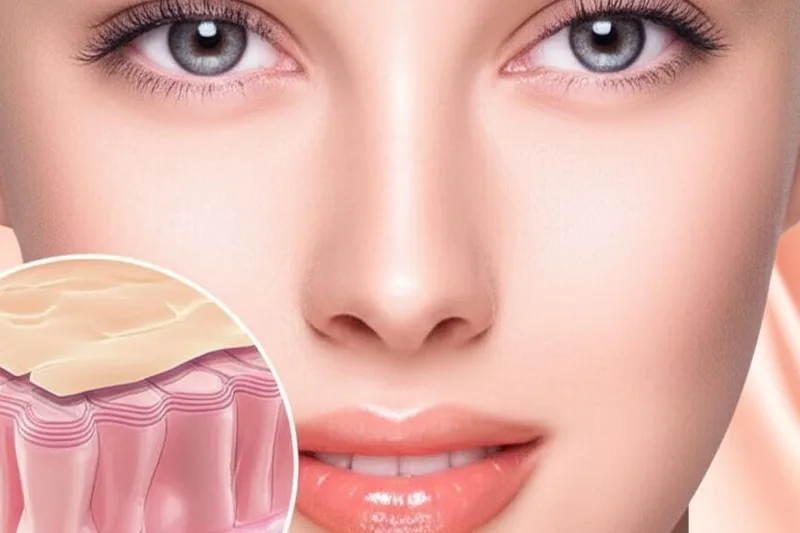
Hello! How are you? Today we are going to talk about something very important about our skin. We all have skin. This skin is actually the largest organ in our body. Did you know that there are three main layers of this skin? The topmost layer, the one we see and feel when we touch it, is called the 'epidermis' . Today we are going to talk about the hero of our skin, the epidermis.
What is the epidermis? Simply put...
Okay, so first let's look at what this epidermis is. It's said that your skin has three main layers. They are the epidermis (the top layer) , the dermis (the middle layer) , and the hypodermis (the bottom layer) . Of these, the epidermis is the thinnest layer , but it's the one that does the main job of protecting us from the outside world. Isn't it amazing? Inside this thin layer are five other tiny layers!
What are those five tiny layers in the epidermis?
Now let's look at the five little layers inside the epidermis. These are arranged in order from bottom to top:
1. Stratum basale (also called stratum germinativum):
- This is the deepest layer, right under the epidermis. It's like the foundation of a building.
- New skin cells are formed in this layer.
- Here are the stem cells called 'Keratinocytes' . These are the ones that make the protein 'Keratin' . Keratin is what helps build our hair, nails, and the outer layer of our skin, and protects us from harsh environmental factors.
- Also, there are cells called 'melanocytes' in this layer. They are the ones who make 'melanin' . Melanin is the pigment that gives our skin its color.
2. Stratum spinosum:
- This layer is located between the previously mentioned stratum basale and the stratum granulosum that comes next.
- It is made up mostly of keratinocyte cells. These cells are held together by sticky proteins called desmosomes .
- This stratum spinosum layer is what makes your skin flexible and strong .
3. Stratum granulosum `(Stratum granulosum)`:
- This is between the stratum spinosum and the stratum lucidum.
- Inside the keratinocyte cells here are tiny granules . These can be seen under a microscope.
4. Stratum lucidum:
- This is a very thin, transparent layer between the stratum granulosum and the stratum corneum.
- Here, the keratinocyte cells gradually lose their round shape and become flattened . This layer is especially visible in areas with thick skin, such as the palms of our hands and soles of our feet.
5. Stratum corneum:
- This is the top layer of the epidermis. You see, this is the layer you're touching.
- Here, those keratinocyte cells become 'corneocytes' . Corneocytes are dead, but very strong keratinocyte cells .
- These are what protect us from things like scratches, sunlight, heat, and pathogens.
- Also, this layer contains fats. They control how easily water enters and evaporates from our bodies.
- As new keratinocytes form in the lower layer (stratum basale), these corneocytes gradually fall off . Just like old leaves fall off and new ones grow. This is a constant process.
Think of it this way, the epidermis is like the roof of our house. Just as it protects us from the sun and rain, the epidermis also protects us from the outside world.
Do you know what the word "epidermis" means?
This is also good to know. The word "epidermis" is made up of two ancient Greek words. 'epi' means "above" or "outside". 'derma' means "skin". So simply put, "epidermis" means "surface" or "outer skin" .
So what is the difference between the epidermis and the dermis?
You may remember that the epidermis is the top layer. The dermis is the layer underneath, in the middle. Think of it like a sandwich. If the epidermis is the top slice of bread, the dermis is the delicious filling in the middle.
- Thickness: While the epidermis is the thinnest layer of the skin, the dermis is the thickest layer of the skin.
- What's inside: The dermis contains proteins called 'Collagen' and 'Elastin' . These are what make the dermis thick and give the skin good elasticity. These help a lot in keeping our skin looking youthful without sagging.
- Not only that, but your connective tissue, nerve endings, sweat glands, sebaceous glands, and hair follicles are all in the dermis, and even below that, in the hypodermis.
What does the epidermis do to our body? What is its importance?
All layers of our skin work together to protect our skeleton, organs, muscles, and tissues inside our bodies. The epidermis also has a special job:
- Hydration: The top layer of the epidermis (stratum corneum) helps retain water , keeping your skin hydrated and healthy, preventing it from drying out .
- New skin cell production: New skin cells are produced in the bottom layer of the epidermis (stratum basale). As these cells age, they gradually move up the layers. After about a month , they reach the top layer and are shed. At the same time, new cells are continuously produced underneath. It's like a factory that is constantly renewing itself .
- Protection: The epidermis acts like a shield . It protects us from the sun's harmful ultraviolet (UV) radiation, pathogens (bacteria, viruses, fungi, parasites, etc.), and harmful chemicals.
- Skin color: The epidermis contains a type of cell called 'melanocytes'. These cells produce a pigment called 'melanin'. The color of your skin is determined by the amount of melanin.
How does the epidermis help other organs?
Simply put, the epidermis, together with the other layers of the skin, acts as the first shield that protects the delicate organs, bones, muscles, and tissues inside our bodies from dangers, injuries, and infections from the outside world.
Where is the epidermis located?
This shouldn't be surprising to you, right? The epidermis is the top layer of skin that we see and feel when we look at someone or touch them.
How is the color of the epidermis formed?
As we mentioned earlier, the natural pigment called melanin, produced by melanocytes, determines our skin color. These melanocytes produce two main types of melanin:
- Eumelanin: This type of melanin is mainly responsible for the dark colors in your hair, skin, and eyes . If someone has dark brown skin and black hair, it's because they have more eumelanin.
- Pheomelanin: This type of melanin is what gives your skin its pink or red hues . For example, it's what causes the lips, nipples, vagina, and glans of the penis, and it's what causes some people to have red hair.
Everyone has these two types of melanin in their skin in different proportions. It is the ratio that determines the color of each person's skin.
How thick is the epidermis?
The thickness of the epidermis varies from place to place on your body. For example, the epidermis is thicker in the areas that are used most often, such as the soles of your feet and the backs of your hands , where you encounter a lot of surprises. The thickness in these areas can be about 1.5 millimeters. That's about the thickness of two credit cards stacked on top of each other .
But in delicate areas like your eyelids, the epidermis is very thin . It's only about 0.05 millimeters thick. That's about the same thickness as a regular copy paper ! Isn't that amazing?
What are the main cell types in the epidermis?
There are many different types of cells within the epidermis. The three main types of cells are:
1. Keratinocytes: These cells produce the protein keratin, which is the main component of the epidermis. Keratinocytes are the most abundant cells in the epidermis.
2. Melanocytes: As we've discussed before, these cells produce the pigment melanin that gives your skin its color .
3. Langerhans cells: These cells are like the guards of the epidermis . They help prevent unwanted substances, such as germs, from entering the skin. They are part of the immune system.
What are the common diseases that affect the epidermis?
Our epidermis can also be affected by various diseases and conditions. Some of them are:
- Acne: A problem that affects many people, especially during their youth.
- Boils: Boils are caused by bacterial infections that can sometimes be painful.
- Dandruff: A condition in which the epidermis of the scalp peels off.
- Eczema: A condition in which the skin becomes dry, itchy, and red.
- Melanoma: A type of skin cancer. This can be a dangerous condition that starts in melanocyte cells.
What are the symptoms of a problem with the epidermis?
If there is a problem with your epidermis, you may experience symptoms like:
- The appearance of new dark spots on the skin, or changes in the shape, color, or size of existing spots.
- The skin becomes very dry and breaks out.
- Skin peeling, feeling like the top layer of skin is coming off.
- Skin peeling and crusting.
If you have symptoms like these, it is best to see a doctor and seek advice.
What tests are performed to check the health of the epidermis?
Your doctor will first do a thorough physical examination of your skin. In addition, they may also do the following tests:
- Allergy skin tests: These tests help determine if your skin condition is caused by an allergy.
- Blood tests: Some allergies, diseases, and infections can be detected through blood tests.
- Skin biopsy: This involves taking a very small piece of skin from a problem area and examining it under a microscope. This can help determine if there are any diseases, infections, or cancers.
If you suspect you have a condition like melanoma, you may also have other imaging tests to see if it has spread to other parts of the body.
What are the common treatments for diseases of the epidermis?
Treatments vary depending on the condition affecting the epidermis. Here are some of the most common treatments:
- Antibiotics: These are given as oral medications or ointments to treat conditions caused by bacterial infections such as acne, boils, dry skin, and rashes.
- Antifungal medications: For fungal skin infections, they are given in the form of creams, ointments, gels, sprays, powders, or as oral medications.
- Corticosteroids: These help reduce inflammation, redness, itching, and tissue damage in the skin. They can be given as creams, pills, or injections.
- Retinoids (vitamin A derivatives): These medications, made from vitamin A, reduce acne, unclog pores, and help skin renew itself.
These treatments should always be used according to medical advice.
What are some simple things we can do to keep our skin healthy?
There are many simple things we can do at home to keep our epidermis, that is, our entire skin, healthy. Check out these:
- Develop a skin care routine that suits you. Take advice from a doctor or skin specialist and take care of your skin accordingly.
- When bathing or showering , use a mild, non-abrasive soap. When drying your skin, pat it dry, rather than rubbing it hard.
- As soon as your skin dries out, while it still has some moisture, apply a good moisturizing cream or ointment. This will help keep your skin moisturized. You can reapply it two or three times a day, especially if your skin feels dry.
- Avoid bathing in very hot water, but use lukewarm water. Hot water can strip the skin of its natural oils and dry it out.
- Drink at least 8 glasses of water a day. Water is your skin's best friend. It keeps your skin hydrated and moisturized from within.
- Eat foods rich in antioxidants. Include fruits (especially berries), vegetables (dark green vegetables), nuts (almonds, walnuts), and fish rich in omega-3 fatty acids (salmon, mackerel) in your diet.
- Minimize exposure to environments with sudden changes in temperature and humidity.
- Stay away from things you are known to be allergic to, chemicals known to be harmful to the skin (irritants), and perfumes.
- Always use sunscreen with at least SPF 30 or higher whenever you go out in the sun. Even if it doesn't look sunny, UV rays can still come through the clouds.
- When your skin is itchy or sore, don't pick or scratch it. Doing so can damage the skin and increase the risk of infection.
So, what is the most important thing we need to remember from all of this?
Well, we've talked a lot about the epidermis. Simply put, the epidermis is the top layer of our body, the first line of defense for our skin. It protects us from the dangers of the outside world, keeps our skin moisturized, constantly produces new skin cells, and gives our skin a beautiful color.
So, it is our responsibility to keep our precious epidermis, that is, our entire skin, healthy and beautiful. We can keep our skin healthy and happy by doing small things like drinking plenty of water, eating nutritious foods, applying sunscreen when going out in the sun, and keeping our skin clean. Treat your skin with love!
` Epidermis, skin layers, skin health, skin care, keratin, melanin, skin diseases




💬 Comments (0)
No comments yet. Be the first to share your thoughts here.
Add Your Comment