
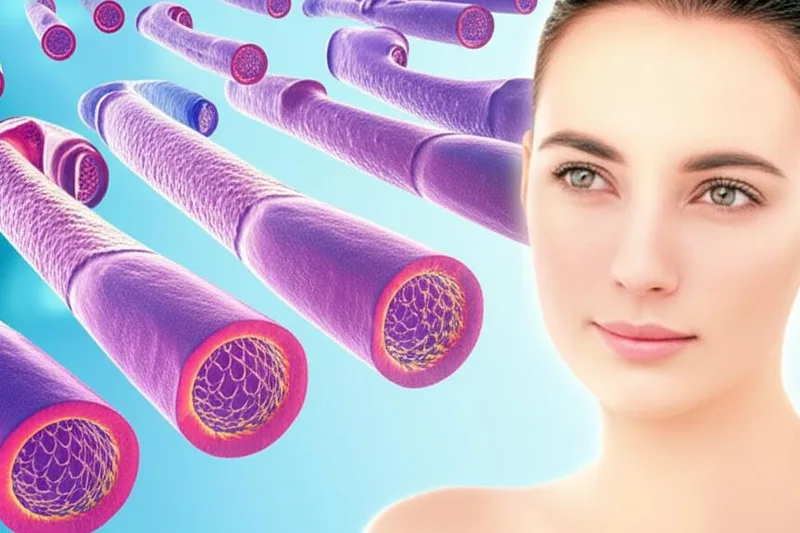
Have you ever wondered how important the tiny blood vessels inside our bodies, called capillaries, are? Some capillaries have tiny 'windows' like holes in them. That's what we call fenestrated capillaries. Today, let's talk about these amazing blood vessels, what they are, where they are, what they do, and how we can keep them healthy.
What are these fenestrated capillaries?
Okay, let's look at what these fenestrated capillaries are. The Latin word 'fenestrae' means 'window.' So these tiny holes in these capillaries, like windows, allow large particles and proteins, like blood, to pass through to our vital organs and glands. Simply put, they act like a special filter system . They are where our bodies exchange what they need and where they don't.
Where are these in our bodies? What is their function?
Now you might be wondering, 'Where are these in our bodies? What do they do?' Fenestrated capillaries are found in abundance in our kidneys , small intestine , pancreas, and endocrine glands . These organs constantly need to exchange nutrients and waste products between the capillaries and the tissues. The pores in these capillaries make this exchange very easy.
What is the role of these in the kidneys?
Fenestrated Capillaries are especially important for our kidneys. The kidneys have filtering units called nephrons . Just imagine, there are about a million of these nephrons in one kidney! Isn't that amazing? Inside each nephron is a cluster of fenestrated capillaries that are gathered together like a ball. This is called the glomerulus . This is what works as the main filter .
Not only that, but there are also a number of other fenestrated capillaries around the channels inside the nephrons. Together, these help the kidneys filter waste products from the blood, make urine, and reabsorb nutrients that the body needs. It's like the water filter in our house, but much more complex.
How do these help other senses?
- In the small intestine: These capillaries help absorb nutrients from the food we eat. These holes allow things like vitamins and minerals to easily enter the blood.
- If you take the pancreas: It is important to add enzymes and hormones to the blood that help digest food, especially sugar and fat.
- Endocrine glands: These glands release hormones throughout our body. These hormones control many things, including our mood and growth. These capillaries also help with this task.
What do these fenestrated capillaries look like?
Think about how small these capillaries are. Most capillaries are only 3 or 4 micrometers wide. That's about the size of a spider web! Very delicate, isn't it? They have two layers of cells.
The inner layer of cells is called endothelial cells . The outer layer is called epithelial cells . Sometimes doctors call this the basement membrane .
Fenestrated capillaries are characterized by the small holes in their inner layer. Each hole (or 'window') has a thin membrane. It acts like a diaphragm , a small lid that can be opened and closed. This membrane allows large particles (such as minerals) to pass through these holes easily.
What diseases affect these capillaries?
So, even fenestrated capillaries, which perform such an important function, can sometimes develop diseases.
- Chronic Kidney Disease (CKD): People with this condition often have problems with these capillaries. In particular, the peritubular capillaries in the kidneys can become damaged. These help filter waste products from the kidneys. Vitamin D deficiency, inflammation, and various diseases can damage these capillaries and reduce their density. Doctors call this condition capillary rarefaction . When this happens, your capillaries don't work properly. This can lead to hypertension , which is high blood pressure, and other health problems.
- Other kidney diseases: Other kidney diseases, such as glomerulonephritis, can also affect the entire filtration process of the kidneys. Kidney disease is actually very common. If not treated properly, it can lead to kidney failure .
None of us want to have kidney problems, so it's important to be aware of these things.
- Systemic Capillary Leak Syndrome (SCLS): This is a very rare, but potentially life-threatening condition. It causes damage to the walls of the capillaries. This can cause a sudden drop in blood pressure.
How do we keep these fenestrated capillaries healthy?
Now you might be thinking, 'Okay, if these are so important, how do we keep them healthy?' Actually, to keep these fenestrated capillaries healthy, we need to pay attention to our overall health . These capillaries help many systems in our body work properly. They are part of our circulatory system . That system includes all the other blood vessels, arteries, and veins.
Various types of vascular disease , or diseases related to the blood vessels, can affect the functioning of all types of capillaries. So, there are a few things we can do to protect ourselves from these diseases and other health problems:
- It's important to exercise and stay active. Getting some exercise every day is very important.
- Eating a balanced diet, limiting alcohol, and choosing heart-healthy foods. This is something everyone talks about these days, but it's really important.
- Maintaining a healthy weight. If you are overweight or obese , try to lose weight.
- If you have chronic diseases like diabetes mellitus and high blood pressure , it is important to control them well. You should follow the doctor's instructions carefully.
- If you are a smoker, stop. This is not something to be taken lightly, it is the root cause of many diseases.
When should we see a doctor about these capillaries?
We don't usually go to the doctor thinking about capillaries. However, if certain symptoms arise, it could be due to a problem with these fenestrated capillaries.
Symptoms of kidney disease:
You should seek medical advice immediately, especially if you are showing symptoms of kidney disease. Check to see if you have these symptoms:
- Changes in urine: This can include blood in the urine (hematuria) , protein in the urine (proteinuria) , or a frequent need to urinate.
- Constant fatigue, difficulty concentrating, or trouble sleeping.
- The food is tasteless.
- If there is swelling or puffiness around the eyes for more than a few days.
- Muscle cramps.
If you have one or more of these symptoms, please see a doctor immediately. While these are sometimes normal, it is important to recognize a kidney problem early.
Symptoms of Systemic Capillary Leak Syndrome (SCLS):
That very rare condition, Systemic Capillary Leak Syndrome (SCLS) , is a condition that causes a sudden drop in blood pressure. This is a medical emergency. If your blood pressure suddenly drops and you also have any of the following symptoms, you should see a doctor immediately or go to an emergency room:
- Stomach ache and nausea.
- Coughing and feeling like chest tightness.
- Swelling (edema), especially in the legs and arms.
- Excessive fatigue.
- Headache.
- Lightheadedness, dizziness and fainting.
The message we want to take home
Okay, so I think you have a good understanding of these fenestrated capillaries that we talked about today. Remember, these little 'windowed' blood vessels are a very important part of our circulatory system. They are essential for filtering waste from our kidneys, making urine, absorbing nutrients from our intestines, and sending hormones throughout our body.
So, to keep these tiny but powerful capillaries healthy, we need to take care of our overall health . Eat a well-balanced diet, maintain a healthy weight, stay active, and get regular checkups as recommended by the doctor. These things will do a great service to our little 'windows' as well as our entire body. Got it?
If you have any further questions about this, don't hesitate to talk to your family doctor. He or she will be able to give you more information.
` Fenestrated Capillaries, Capillaries, Kidneys, Nephrons, Blood Circulation, Health


💬 Comments (0)
No comments yet. Be the first to share your thoughts here.
Add Your Comment