
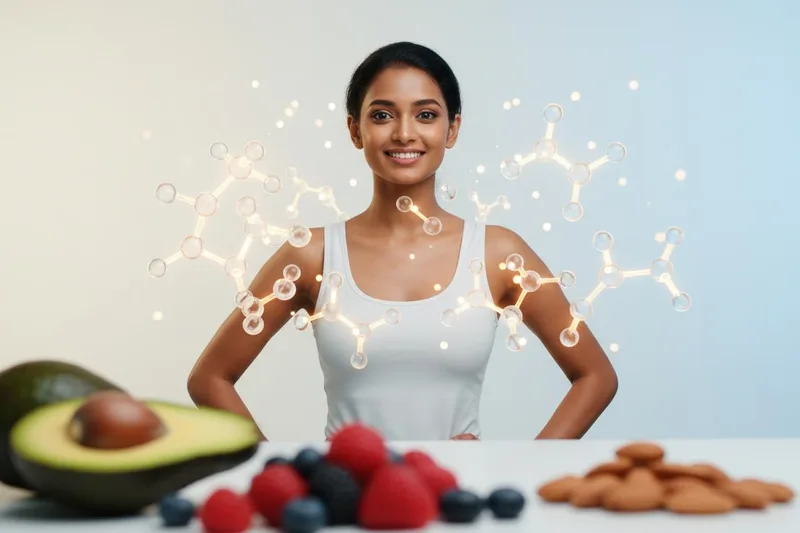
You've probably heard of 'Amino Acids', right? Maybe when talking about food, or among people who exercise. What exactly are these? Why are they so important to our bodies? Okay, let's talk about this today in a simple way that you can understand.
What are amino acids? Let's understand it simply.
Imagine, our Sinhala alphabet has letters. We form words by combining these letters one by one, right? That's how amino acids are. Amino acids are the small parts that make up proteins, like bricks. These amino acids come together one by one and form long chains to form proteins. There are thousands of different types of proteins in our body, each of which has a specific function to perform. Each protein has a unique sequence of amino acids. That sequence determines the shape of that protein, and the function it performs inside our body.
Simply put, if amino acids are letters, then proteins are the words made up of those letters. Just as words are put together to form sentences, proteins are put together to help build various things in our bodies, such as tissues and hormones.
Are there types of amino acids? Let's find out!
Our bodies need about 20 different types of amino acids to function properly. These twenty types are combined one by one to form the proteins in our bodies. Isn't that amazing?
However, of these amino acids, there are 9 types that our body cannot make, meaning we must get them from food. These are what we call 'Essential Amino Acids' . The other 11 types can be made by our body, so they are called 'Nonessential Amino Acids' .
Essential Amino Acids - These must be obtained from food!
These 9 essential amino acids must be obtained from the foods we eat and drink. Because our bodies cannot produce them. Let's see what they are and what service they provide to our bodies.
- Histidine: This helps make histamine, a chemical in our brain that is important for our immune function , digestion, sleep, and sexual function.
- Isoleucine: This is involved in muscle metabolism and the immune system. It also helps make hemoglobin, which carries oxygen in the blood, and regulates the body's energy.
- Leucine: Leucine helps our body build proteins and produce growth hormones . Not only that, it is also important for muscle tissue growth, repair, wound healing, and blood sugar levels . Imagine, if you are a gym user, this leucine is something that helps your muscles grow and get stronger.
- Lysine: Lysine plays a major role in hormone and energy production. It is also essential for the absorption of calcium, which is important for bones, and for the healthy functioning of our immune system.
- Methionine: Methionine helps in the growth of our body's tissues, metabolism (the process of converting food into energy) , and detoxification . It also helps the body absorb essential minerals like zinc and selenium .
- Phenylalanine: This is needed to make important chemical messengers in our brains, such as dopamine (related to feelings of happiness and satisfaction), epinephrine (a hormone that is activated in emergencies), and norepinephrine (related to attention and activity). It is also important for making other amino acids.
- Threonine: Threonine is essential for the proteins collagen (which gives skin strength and elasticity) and elastin (which makes skin stretchy). These proteins give structure to our skin and connective tissues. They also help form blood clots when we get injured, helping to stop bleeding. Threonine is also important for fat metabolism and the immune system.
- Tryptophan: This helps maintain nitrogen balance in our body. It also helps in making a brain chemical called serotonin . Serotonin controls our mood, appetite, and sleep. Sometimes, eating a banana or drinking some milk can make us feel good and sleepy, which may be because of this tryptophan.
- Valine: Valine contributes to muscle growth, tissue repair, and energy production. This is also a very important amino acid for those who exercise.
Nonessential Amino Acids - Those that our body can make!
As we mentioned earlier, the other 11 amino acids can be synthesized by our bodies. This means that we don't have to specifically seek them out in our diet, but we can get them naturally from a balanced diet. Examples of these are alanine, arginine, and asparagine.
Conditional Amino Acids - those that are only needed at specific times
There is another special group of amino acids called 'Conditional Amino Acids'. These are usually non-essential, meaning that the body can make them. However, when we are sick or under great stress, they become essential. This means that the body may not be able to make them in the required amount at such times, and then we have to get more from food. Arginine, Cysteine, and Glutamine belong to this group.
What is the structure of amino acids? Let's learn a little about it.
This is a bit of a scientific story, but in simple terms, every amino acid has a basic structure. It has several other groups attached to a central carbon atom. But each amino acid differs from the other because of a part called the 'R-group.' That R-group is what determines the chemical nature of that amino acid. Then these amino acids are connected to each other by something called 'peptide bonds.' That's how proteins are formed. Then these proteins fold into specific three-dimensional shapes. These shapes are what determine the function of the protein.
"Simply remember, amino acids come together to form proteins, just like beads come together to form a necklace."
What do amino acids do to our bodies? Their importance
We now know that our bodies use amino acids to build proteins. So, the function of each protein is determined by the type of each amino acid and the way they are combined. Therefore, amino acids are involved in many very important functions in our bodies. Let's see what the main ones are:
- Helps with digestion: These help the body properly digest the food we eat and absorb nutrients from it.
- Helps in the growth and repair of body tissues: Imagine you have a minor injury. These are essential for the healing of that injury, as well as for the growth and maintenance of things like muscles and skin in our body. After you exercise, your muscles hurt, right? At that time, these amino acids are the ones that repair them.
- Makes hormones and brain chemicals (neurotransmitters): These are needed to make hormones that control many of our body's functions, as well as brain chemicals that control things like our mood, sleep, and attention.
- Provides energy: Sometimes, if our body does not have enough energy from carbohydrates and fats, amino acids are also used as an energy source.
- Helps maintain healthy skin, hair, and nails: These contribute to the radiance of our skin, the strength of our hair, and the health of our nails.
- Builds Muscle: Amino acids are essential for building muscle, especially for those who exercise.
- Strengthens the immune system: Our immune system needs to be strong to protect us from diseases. These foods help with that too.
- Maintains a normal digestive system: These are also important for the health of our intestines.
How many amino acids do we need per day?
There is no rule that says you have to eat foods that contain amino acids at every meal. But it is important to maintain a balance of these throughout the day. There is a Recommended Daily Allowance (RDA) for how much each essential amino acid you need per day. For example, here are the recommended amounts per 1 kilogram (2.2 pounds) of body weight:
- Histidine: 14 milligrams
- Isoleucine: 19 milligrams
- Leucine: 42 milligrams
- Lysine: 38 milligrams
- Methionine: 19 milligrams
- Phenylalanine: 33 milligrams
- Threonine: 20 milligrams
- Tryptophan: 5 milligrams
- Valine: 24 milligrams
But if you go and eat these milligrams of food, it's a big problem. Simply put, if you eat a balanced, nutritious diet, you will naturally get the amount of amino acids you need. So don't think too much about these balances. Eat well, eat a variety, that's it.
What foods contain amino acids? Let's see what to eat.
Essential amino acids are found in a variety of foods. The best sources of amino acids are animal proteins. That means things like beef, chicken, fish, and eggs. These are easily absorbed and used by our bodies.
Complete Proteins - There are all kinds of names for these!
We call foods that contain all 9 essential amino acids we talked about 'Complete Proteins' . When we eat these, we get all 9 types. Examples are:
- Beef
- Chicken and other poultry meats
- Fish
- Eggs
- Milk and milk products (like yogurt, cheese)
- Soy ( like soy meat, tofu)
- Quinoa
- Buckwheat
Incomplete Proteins - You need to take several of these together.
There are some foods that contain only a few of the essential amino acids, not all. These are called 'incomplete proteins' . Examples:
- Nuts (like cashews, peanuts, almonds)
- Grains (seeds - like pumpkin seeds, sunflower seeds)
- Legumes like beans, peas, green beans, lentils
- Some grains (like whole grain bread, oats)
If you are a vegetarian or vegan, meaning you do not eat meat, fish, eggs, or dairy, you will need to eat several of these incomplete proteins in one day. Only then will you get all 9 essential amino acids. For example, you can do this by eating lentils with rice or peanut butter with bread. So there is nothing to be afraid of, as long as you plan your meals.
Is it good to take amino acid supplements?
If you eat a healthy, balanced diet, your body will get all the essential amino acids it needs. So, there is no need to take supplements . Some people take amino acid supplements to help them sleep better, improve their mood, or improve their exercise performance. However, these supplements are not approved by agencies such as the US Food and Drug Administration (FDA) .
" The most important thing is, you should definitely talk to your doctor before you start taking any supplement, even amino acid supplements. "
Only a doctor can tell you if you really need something like that, or if it could cause you any side effects. Don't waste your money and do something that is harmful to your body.
So, the final things to remember (Take-Home Message)
Okay, we've talked a lot about amino acids today, haven't we? I hope you have a good understanding of them now. In summary, here are the key points to remember:
- Amino acids are the basic building blocks of proteins, just like letters put together to form words.
- Our bodies need about 20 types of amino acids. 9 of these are 'essential' , meaning they must be obtained from food. The other 11 are produced by our bodies.
- Amino acids perform many important functions in our bodies: building and repairing tissues, making hormones, providing energy, and boosting immunity.
- The most important thing is to eat a balanced diet. That way you get all the amino acids you need. Include 'complete proteins' like beef, chicken, fish, eggs, and dairy products, as well as 'incomplete proteins' like nuts, beans, and lentils.
- Be sure to consult a doctor before taking supplements.
So, think about your diet and make sure you are getting the right amount of these valuable nutrients called amino acids. If you have any questions or doubts, it is best to consult a doctor or nutritionist for advice. To stay healthy, it is very important to be careful about what we eat!
` Amino acids, proteins, essential amino acids, nutrition, healthy eating, body growth, immunity




💬 Comments (0)
No comments yet. Be the first to share your thoughts here.
Add Your Comment