

Have you ever wondered how important your spine is? There are several parts of the spine that give us strength, keep us upright, and protect our spinal cord. Today we're going to talk about a very special, slightly longer part of it. That's the thoracic spine , or the top and middle of our back.
What exactly is the Thoracic Spine?
Simply put, your spine (also known as your ``Spine'' or ``Backbone'') is a collection of small, interconnected bones that run from the base of your skull to your tailbone at the base of your buttocks. This is what protects your spinal cord.
Now there are three main parts of this spine:
- Cervical Spine: This is the part of the spine in your neck.
- Thoracic Spine: This is what we're talking about today, the top and middle of your back. To be precise, it extends from the bottom of your neck to just below your rib cage. This is the longest part of the spine.
- Lumbar Spine: This is the lower part of your spine, known as the "lower back".
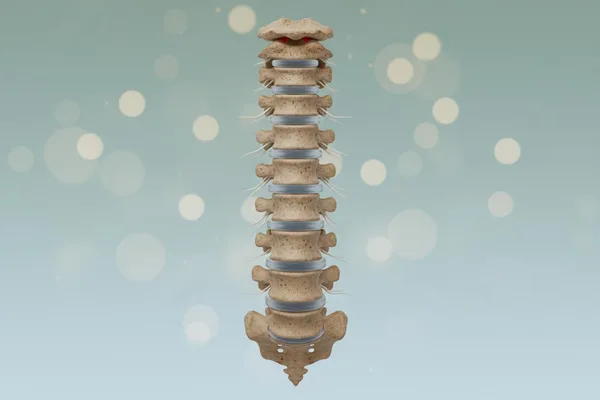
So, the thoracic spine is made up of 12 small bones called vertebrae . These are labeled T1 to T12 (the T stands for `Thoracic`). Think of these vertebrae as little blocks stacked on top of each other. Together, these make up your spine. In between these bones, like cushions, are soft parts called intervertebral disks . These are what allow you to bend and twist, and they also absorb shocks to your spine.
Another thing is, there are many things around this thoracic spine , such as muscles , nerves , tendons (these are what connect muscles to bones), and ligaments (these are what connect bones to each other). All of these things work together to help you move properly and give your body stability. Your spinal cord runs through the middle of this entire spine. Like a wire, it is this spinal cord that carries messages from the brain to the rest of the body, and it carries messages from the body back to the brain.
What benefits does the thoracic spine provide us?
The services that this thoracic spine provides to our body are no small feat. Take a look at these tasks:
- Protection of the spinal cord and nerves: When the vertebrae are stacked on top of each other, they form a large hole (`(vertebral foramen)`) in the middle. All of these holes come together to form a tube-like passageway for the spinal cord. This provides protection for the very sensitive spinal cord.
- Connection to the ribs: A unique feature of the thoracic vertebrae is that your ribs (`(ribs)`) come and connect to them. However, the two ribs below them do not connect in this way.
- Supporting the chest and abdomen: Your thoracic spine provides stability to your rib cage. In turn, your rib cage provides support to your thoracic spine. Together, these two protect vital organs like your heart and lungs. The amazing thing is that while these joints are very strong and protect these organs, they also allow you to move when you breathe (inhale and exhale).
- Allowing body movement: The soft discs between the vertebrae (`(intervertebral disks)`) that I mentioned earlier are what allow you to bend and twist without losing your back's strength. Of the entire spine, the thoracic spine is the area that can rotate to the greatest extent (`(rotation)`) . However, bending forward (`(flexion)`) and bending backward (`(extension)`) is a little less in this area.
Did you know? Our spine naturally has three curves. The cervical spine and the lumbar spine are curved inward in a "C" shape (`(lordosis)`). However, when the vertebrae of this thoracic spine come together, they form a curve that is protruding backward, like a "backward C" (`(kyphotic curve)`). These curves are very important for us to stay balanced and stand upright.
What nerves come out of the thoracic spine?
We mentioned earlier that the thoracic spine has 12 vertebrae (T1-T12). Nerves come out of the spinal cord for each of these vertebrae. These nerves are what provide sensation and movement to certain parts of your body. Let's see what they are.
- T1 and T2 nerves: These nerves run from your upper chest to your arms and fingers. The T1 nerve is part of a network of nerves (the ``brachial plexus'') in your shoulder. This network carries movement and sensory messages from the spinal cord to your arms and fingers.
- Nerves T3 to T5: These nerves go to your chest wall. Together, these nerves control your rib cage, lungs, diaphragm, and the muscles that help you breathe.
- Nerves from T6 to T12: These nerves affect the muscles in your abdomen and back. These nerves, along with some muscles, help you maintain your balance and posture, and they are also what help you cough.
What are the important organs associated with the thoracic spine?
The nerves that emerge from the spinal cord in the thoracic spine communicate messages between your brain and several major organs. These organs are:
- Lungs
- Heart
- Liver
- Small intestine
Additionally, as we mentioned before, the thoracic spine and rib cage work together to protect your lungs and heart like a shield.
What is the thoracic spine made of?
Let's look at some of the key things that make up this important section:
- Vertebrae: Of the 33 vertebrae in the entire spine, 12 are in the thoracic spine. These are stacked on top of each other to form the spinal canal. These vertebrae can move, which allows us to move into different positions.
- Facet joints: These are the joints where the vertebrae connect to each other. These joints have a slippery tissue called cartilage. This allows the vertebrae to slide over each other easily. These facet joints are what allow you to twist and turn. They also provide flexibility and stability to the body.
- Intervertebral discs: We've talked about these before. They're flat, round cushions between the vertebrae. They act as shock absorbers ('shock absorbers'). Each disc has a soft, jelly-like center and a flexible ring around it.
- Spinal cord and nerves: The spinal cord is a bundle of nerve fibers. It runs from the crown of the head to the base of the spine. About 31 pairs of nerves come out of this spinal cord on each side. 12 pairs of nerves come out of the thoracic spine alone. These nerves carry messages from the brain to the muscles.
- Soft tissues: Ligaments connect the vertebrae together and help keep the spine in place. Muscles provide support and help move the back. Tendons connect the muscles to the bones and help move the spine.
What are the common causes of thoracic spine pain?
The good news is that the thoracic spine is not as easily injured or painful as the cervical and lumbar spines, because it is a little stiffer and more stable than the other parts.
However, if you are experiencing pain in your upper and middle back, there could be several reasons for it. This is because there are many interconnected bones, nerves, muscles, ligaments, and tendons in this area. Let's look at some of the main causes:
- Muscle irritation or tension: This is often caused by sitting in the wrong position and sitting for long periods of time . This can cause the muscles to tighten and become painful.
- Ligament sprains: If something happens suddenly, such as a twisting of the upper back, the ligaments there can be stretched beyond their limits. Even then, pain will occur.
- Trauma: A fall or a hard blow to the back can cause pain. However, because the thoracic spine is stronger than other parts of the spine, it takes a lot of force to break a bone in this area (a ``fracture''). In addition, injuries to the ribs can also affect the thoracic nerves and cause pain.
- Overuse injuries: When you repeatedly perform the same movements, for example, lifting, bending, or twisting, small injuries (`(micro-injuries)`) can occur and cause back pain.
In addition to this, thoracic spine pain can also be caused by conditions directly related to the spine:
- Spinal tumors: Although they can develop anywhere in the spine, they most often develop in the middle and lower back. They are often part of a cancer that has spread (metastatic cancer) to another part of the spine. Whether malignant (cancerous) or benign (non-cancerous), the main symptom of spinal tumors is back pain. This pain is usually a dull, aching pain. This pain can be worse at night and can disrupt sleep.
- Spinal fractures: Although thoracic spine fractures are less common than other spine fractures, people with osteoporosis (a disease that causes bone loss) are at higher risk because their bones are weaker. A person with osteoporosis can break a thoracic vertebra if they twist suddenly or sneeze hard.
What are changes in the thoracic spine, or 'degenerative changes'?
These ``degenerative changes of the spine'' are also called spinal osteoarthritis , spondylosis, and degenerative disk disease . Simply put, as we age, the soft discs between the vertebrae wear out, dry out, and become smaller. Then the space between the vertebrae decreases, causing various problems.
However, these changes occur more frequently in the neck (cervical spine) and lower back (lumbar spine) than in the thoracic spine.
What are the common conditions that affect the thoracic spine?
There are several conditions that directly affect the vertebrae, spinal cord, or nerve roots of the thoracic spine:
- Kyphosis: This is a forward curvature of the spine, resulting in a "hunchback" or forward-slung posture. This occurs when the vertebrae of the thoracic spine become wedge-shaped. There are types of kyphosis, including congenital kyphosis, postural kyphosis, and Scheuermann's disease.
- Pediatric and adolescent scoliosis: This is a sideways curvature or curvature of the spine in a child. Scoliosis can range from mild to severe. Scoliosis most often affects the thoracic spine. Adults can also develop scoliosis.
- Thoracic radiculopathy: This is when a nerve root in the thoracic spine (upper back) becomes compressed, causing symptoms such as pain, numbness, and/or loss of sensation throughout the body. However, radiculopathy is rare in the thoracic spine.
In addition to this, other conditions that can occur anywhere in the spine, that is, in the thoracic spine, include:
- Bone spurs / Osteophytes: These are growths that protrude from the bones.
- Herniated disk: A herniated disk between the vertebrae.
- Myelopathy: A collection of symptoms that occur when the spinal cord is severely compressed.
- Osteomyelitis: A bacterial or fungal infection of the vertebrae.
- Spinal cord injury: This often occurs as a result of a sudden, severe accident.
- Spinal stenosis: Narrowing of the passageway of the spinal cord.
What is the most common injury to the thoracic spine?
Vertebral compression fractures (VCFs) are the most common injury to the thoracic spine . They occur when a vertebra in the spine becomes compressed and crushed. This can cause severe pain, spinal deformities, and loss of height.
These fractures are especially common in the lower thoracic spine. They are often caused by osteoporosis and minor accidents. However, even in people without osteoporosis, they can also occur after a serious accident (such as a car accident) or a spinal tumor.
What are the symptoms of a thoracic spine nerve injury?
If the nerves or spinal cord in the thoracic spine are damaged, the symptoms that occur depend on the nature of the damage (whether it is complete or incomplete) and where in the thoracic spine the damage occurs.
The main symptoms are pain, weakness, and/or numbness that radiates to the arms, legs, or around the ribs .
In addition, the following symptoms may also be present:
- Decreased or complete loss of sensation in the hands or feet.
- Difficulty breathing.
- Loss of sensation around the genitals or anus.
- Difficulty controlling urine or stool.
- Constipation.
Important: If you experience any of these symptoms after an accident, it is very important to seek medical advice immediately.
How do doctors diagnose thoracic spine diseases?
First, your doctor will ask about your medical conditions, the medications you take, ask about your symptoms, and examine you. Then, they will order any necessary tests and scans.
These tests may include:
- CT scan (Computed Tomography - CT scan): This uses X-rays and a computer to take detailed pictures of the inside of the body.
- MRI scan (Magnetic Resonance Imaging - MRI): This uses a large magnet, radio waves, and a computer to take detailed pictures. It is very helpful in finding problems with the spinal cord, nerves, and discs.
- X-rays: These take pictures of bones and soft tissues.
- EMG (Electromyogram - EMG) and Nerve conduction studies: These tests check the health and function of your nerves and muscles.
- Myelogram: This is a special imaging test that looks at the connections between the vertebrae and discs, the spinal cord, and the nerves.
What are the treatments for thoracic spine diseases?
Many conditions affecting the thoracic spine have non-surgical treatments (for example, physical therapy, epidural steroid injections (ESIs)) as well as surgical treatments.
The treatment you receive will depend on the cause of your condition, its severity, and your overall health. You and your doctor will work together to determine the best treatment plan for you.
How can I keep my thoracic spine healthy?
There are several things you can do to keep your spine healthy:
- Give your back a break while sleeping: Choose a comfortable mattress and pillows. Try to keep your spine naturally aligned while sleeping.
- Strengthen your back and abdominal muscles: When these muscles (`(core muscles)`) are strong, they provide good support for the spine.
- Maintain good posture and reduce prolonged sitting: Maintain good posture both when standing and sitting. Avoid sitting for long periods of time. Take regular breaks and get up.
- Wear good shoes: Good shoes help keep your spine aligned.
- Keep your bones strong: Get plenty of vitamin D and calcium in your diet. This is especially important for those who have osteoporosis or are at risk.
When should you see a doctor about the thoracic spine?
As we mentioned before, the thoracic spine is more easily damaged and less painful than other parts of the spine (such as the neck and lower back).
Most of the time, upper and middle back pain is caused by a temporary cause, such as a muscle strain or ligament strain.
But,
- If you have sudden, severe pain in your upper and/or middle back ,
- Or if the pain gradually increases ,
- It is especially important to see a doctor immediately if you have a history of cancer , as spinal tumors are more likely to develop in this area.
Also, if you injure your back in an accident, such as a fall or a car accident, it is essential to go to a hospital immediately.
Finally, a few things to remember (Take-Home Message)
The thoracic spine is a very important part of your spine. Although it is less likely to be affected than other parts, it is important to be concerned if you have persistent pain in your upper or middle back. It is best to see a doctor and get an examination to find out exactly what is causing the pain. Then you can get the right treatment. Take care of your spine and stay healthy!
` Spine, Thoracic Spine, Thoracic Spine, Back Pain, Nerves, Vertebrae, Spinal Cord




💬 Comments (0)
No comments yet. Be the first to share your thoughts here.
Add Your Comment