

Have you ever wondered how the blood in our body gets to the heart and then back to the rest of the body? It's an amazing process. Today we're going to talk about a very important type of large vein that helps with this job. It's called the Vena Cava . You've probably heard of it before. Let's take a look at what it is, what it does, and what problems it can cause.
What is the Vena Cava?
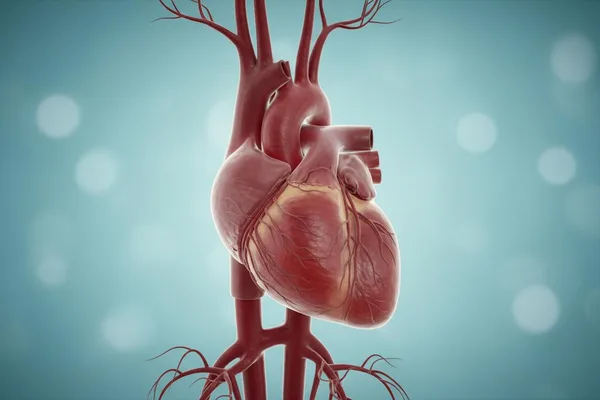
Simply put, the Vena Cava are two very large veins in our body. They collect used, deoxygenated blood from various parts of our body and bring it back to the right side of the heart. Think of it like two main arteries that bring the used blood back to the heart to be cleaned.
There are two types of Vena Cava:
1. Superior Vena Cava (SVC): This carries oxygen-poor blood from the upper part of our body, that is, from the parts above the chest (above the diaphragm) (for example, the head, neck, and arms), back to the heart. This is the second largest vein in our body.
2. Inferior Vena Cava (IVC): This is the largest vein in our body. It carries oxygen-poor blood from the lower parts of our body, that is, from the parts below the chest (below the diaphragm) (for example, the legs, abdominal organs) to the heart.
Think of it like a bus route. The small veins that come from the lower parts of our bodies (like the kidneys, liver, and spleen) are like the buses on the downtown line. All the deoxygenated blood from these buses joins together in a large bus called the inferior vena cava (IVC) . That bus is what carries this blood to the heart.
Also, the veins that come from the upper parts of our body (e.g., upper chest, upper back) are like buses on the Uptown Line. The deoxygenated blood coming from these buses joins a big bus called the Superior Vena Cava (SVC) . That also goes to the heart. The heart is the main hub, or destination, where the deoxygenated blood coming from all these lines, downtown and uptown, joins. Do you understand?
What exactly happens to the Vena Cava?
The most important function of the superior vena cava (SVC) and the inferior vena cava (IVC) is to carry oxygen-depleted blood to the right atrium of our heart. From there, that blood goes to the right ventricle of the heart. Then, from the right ventricle, this blood is sent to the lungs through the pulmonary artery .
The lungs are where the carbon dioxide in the blood is removed and new oxygen is added to the blood. It's like renewing the blood. The new oxygenated blood then returns to the left atrium of the heart through the pulmonary veins . From there, the blood goes to the left ventricle , and from there, through the aorta, it is distributed throughout the body. Look at how complex, yet very orderly, the system works!
Where is the Vena Cava located?
These two large veins, the inferior vena cava (IVC) and the superior vena cava (SVC), are both located on the right side of our heart .
Our right and left innominate veins (also called brachiocephalic veins ) join to form the superior vena cava (SVC) . This SVC is located to the right of the sternum , the bone in the middle of our chest. It connects directly to the right atrium of the heart.
The inferior vena cava (IVC) is a little longer. It starts in our abdomen, where the right and left common iliac veins join. From there, it travels up to the right atrium of the heart.
What does the Vena Cava look like? How big is it?
The superior vena cava (SVC) is a large vein that does not have valves inside it.
The inferior vena cava (IVC) is also a large, long vein, but it has a single valve where it connects to the right atrium of the heart.
These are the largest veins in our body.
- The superior vena cava (SVC) is about 7 centimeters (almost 3 inches) long and about 2 centimeters (less than an inch) wide.
- The inferior vena cava (IVC) is about 100 millimeters (about 4 inches) long and about 22 millimeters (almost an inch) in diameter.
What are these made of?
The superior vena cava (SVC) and the inferior vena cava (IVC) are mainly composed of:
- Endothelial cells: These help exchange nutrients with tissues.
- Connective tissue: These provide support to the veins.
- Nerve fibers.
- Elastic fibers: These are what give the veins their stretchy nature.
- Muscle tissue.
What are the common conditions that affect the Vena Cava?
Sometimes, there can be an obstruction in either the superior vena cava (SVC) or the inferior vena cava (IVC). This interferes with blood flow. This condition is called either Superior Vena Cava Syndrome or Inferior Vena Cava Syndrome , depending on the part that is obstructed.
There are several main reasons for these blockages:
- A tumor: For example , lung cancer , or another type of cancer, can spread and press on these veins.
- Blood clots: Sometimes blood clots can form in the superior vena cava in people with central venous catheters or pacemakers .
- Congenital malformation: This means something that does not form properly while still in the womb.
What are the symptoms of a problem with the Vena Cava?
When either the superior vena cava (SVC) or inferior vena cava (IVC) becomes compressed by something, or when blood flow is blocked from within, symptoms such as:
Superior Vena Cava Syndrome (obstruction or compression) Symptoms:
- Swelling of the upper body (face, neck, arms).
- Shortness of breath.
- Angina ( chest pain).
Symptoms caused by a blood clot or tumor in the superior vena cava (SVC):
- Swelling in the upper body.
- Shortness of breath.
Symptoms of a blood clot in the inferior vena cava (IVC):
- Swelling of the legs.
- Back pain.
- Weight gain.
- Severe pain in the legs.
Symptoms caused by a tumor in the inferior vena cava (IVC):
- Stomach pain.
- Swelling of the legs.
- Weight loss.
Symptoms of Inferior Vena Cava Syndrome (obstruction or compression):
- Low blood pressure.
- Swelling in the lower body.
- Tachycardia (rapid heartbeat).
Important: If you have one or more of these symptoms, see a doctor immediately. These can also be symptoms of other diseases, so it's important to find out exactly what's wrong.
What tests are performed to check the health of the Vena Cava?
Your doctor has several tests to check the condition of the Vena Cava. Some of them include:
- Chest X-ray (this is used to look at the superior vena cava).
- Coronary angiography (this can also look at the superior vena cava).
- Ultrasound examination.
- CT Scan (CT - Computed Tomography) test.
- MRI scan (MRI - Magnetic Resonance Imaging) test.
- Contrast venography or phlebography (this is an X-ray of the veins, but is not used much anymore).
What are the treatments for problems related to the Vena Cava?
When treating a problem with either the superior vena cava (SVC) or the inferior vena cava (IVC), similar treatment methods are often used.
- Diuretics ( medicines that cause increased urination) or steroids may be given to treat swelling.
- Steroids , thrombolytics (blood clot-dissolving drugs), and anticoagulants (blood clot-preventing drugs) may be given to treat blockages such as blood clots.
- A blood clot can be removed using a catheter .
- If the artery is narrowed (stenosis) due to a blood clot, angioplasty (pressing the blockage against the artery wall) may be performed and a stent ( a small metal tube) may be inserted.
- If there is a blood clot or tumor , bypass surgery can be performed.
- If there is a tumor, it can be removed surgically.
- Chemotherapy or radiation therapy can be given to treat tumors.
Also, if you have Deep Vein Thrombosis (DVT) (a condition in which blood clots form in the legs) and are at risk of a blood clot traveling from the legs or pelvis to the lungs (called a pulmonary embolism (PE) , your doctor may decide to insert a Vena Cava filter . This filter traps blood clots and stops them from traveling to the lungs.
How can you keep your Vena Cava healthy?
Like other blood vessels in your body, you can take care of this Vena Cava.
- Eat a healthy diet low in saturated fat.
- Exercise regularly.
- Reduce stress.
- Control conditions like high blood pressure , high cholesterol, and diabetes mellitus .
Finally, the most important thing
If you have a blockage in either the superior vena cava (SVC) or inferior vena cava (IVC), your doctor has several options for treating it. Talk to him or her about the best treatment for your condition. If your doctor prescribes medication, take it exactly as directed. If you have had any surgery or other treatment, be sure to keep your doctor's appointments until you are fully recovered. Your health is in your hands!
` Vena cava, heart, blood circulation, veins, deoxygenated blood, superior vena cava, inferior vena cava




💬 Comments (0)
No comments yet. Be the first to share your thoughts here.
Add Your Comment