
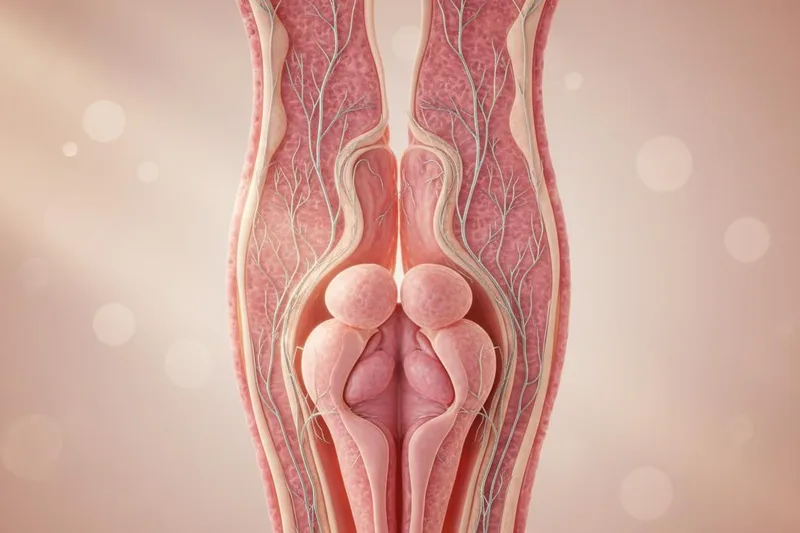
The clitoris is one of the main sexual pleasure centers in your body. Many people think of it as just a small lump of flesh at the top of the vulva. But in reality, you only see a small part of the clitoris. It's actually a complex system of erectile tissue and nerves that extends both inside and outside your body.
So what happens to this clitoris?
Simply put, the vagina's main function is to help you experience sexual pleasure . While your entire vulva is an erogenous zone, the vagina is the most sensitive of them all. This tiny organ has the potential to produce some of the most intense and pleasurable sexual responses your body has to offer.
The vagina is sensitive to any type of touch. However, the type of touch that brings pleasure can vary from person to person. For some, the vagina can be stimulated by oral sex, fingers, a sex toy, or your partner's genitals. Also, the vagina can be stimulated indirectly through the vaginal wall when a penis, fingers, or a sex toy is inserted into the vagina.
By experimenting with different types of touch, whether you're alone or with your partner, you can figure out what feels best to you. This will go a long way in making your sex life more enjoyable.
Where exactly is the clitoris located?
When most people think of the vulva, they think of the small, sensitive area at the top of your external genitalia (vulva). But the vulva actually extends throughout your pelvic cavity.
Parts outside your body
The part of your vagina that is visible from the outside of your body is located just above your vulva. Below that are your urethral opening, vaginal opening, perineum (the area between your vagina and anus), and anus. On either side of your vulva and vagina are two folds of skin called the labia minora. The larger folds of skin around these labia minora are called the labia majora. Above your vulva, the raised area of skin directly above your pubic bone is called the mons pubis.
Looking a little deeper, these are the parts of the vagina that are outside your body:
- Glans clitoris: When most people say "clitoris" or "clitoris," they are really referring to the glans. This is a small, knob-like area just above the urethral opening. It is packed with nerve endings, making it very sensitive to touch.
- Clitoral hood: Your labia minora (small lips) come together at the top of your vagina to form a hood over the clitoris. This hood may cover the clitoris completely, partially, or not at all.
The parts inside your body
Inside your body, the clitoris is shaped like an upside-down 'Y' . It starts at the clitoral body and divides into two branches, forming a 'V' shape.
- Body (Corpora): The body of the Goddess is located behind the head of the Goddess. Think of it as the undivided part of the letter 'Y' at the top. This body extends downwards and divides into two legs, the Goddess' legs (Crura).
- Crura: These are the two legs that extend from the body of the vagina. These are the longest part of the vagina. Together, these two make the 'V' shape of the letter 'Y'. They also surround your vaginal canal and urethra (the tube that carries urine out of the body).
- Vestibular bulbs (also known as clitoral bulbs): These vestibular bulbs are located between the crura and your vaginal wall. Like the clitoris, these bulbs are also paired structures. When you become sexually aroused, they fill with blood and swell, sometimes doubling in size.
- Root: The nerves that come from the erectile tissue that makes up the various structures of the penis join at this root. The root is located where the two crura of the penis join.
The connection between the vagina and the G-spot, or Grafenberg spot, is still being researched. The G-spot is a region located a few inches inside your vagina that is said to be particularly pleasurable to touch. You can feel this spot by inserting your finger into your vagina and making a "come hither" motion toward the front vaginal wall.
The reason this position is pleasurable may be because the vestibular bulbs of the vagina press against the vaginal wall. If so, vaginal orgasms may also be related to vaginal stimulation.
What does the clitoris look like?
The way you look at it changes depending on how you look at it.
The part you see outside (the glans) looks like a small ball of flesh. It is covered by a covering (the clitoral hood) and surrounded by folds of wrinkled skin (the labia minora). The glans is often likened to a pea or a flower bud. In diagrams showing the entire vagina, it is often shown in the shape of the letter 'Y', with the two legs (crura) of the vagina extending through the vaginal wall.
How big is the clitoris?
The entire penis, from the glans to the crura, is usually about 3 1/2 to 4 1/4 inches long and about 2 1/2 inches wide. The glans is about 3/4 to 1 inch in diameter.
What is the clitoris made of?
The clitoris is a complex network of erectile tissue and nerves, making it the most sensitive erogenous zone in your body.
Except for the glans, the rest of the vulva is made up of spongy tissue. When stimulated, it fills with blood and expands. This tissue is similar to the tissue in a man's penis. When you are sexually aroused, the crura and vestibule bulbs expand so much that your labia can swell. Your swollen labia can completely or partially cover the glans. Or, the swelling can make the glans more visible.
Inside the body, this swelling puts pressure on your vaginal wall. This pressure stimulates the secretion of lubrication inside the vagina. This not only increases pleasure, but also makes vaginal penetration easier.
The glans penis is incredibly sensitive because it is packed with a large number of nerve endings. It is so sensitive that direct, firm pressure or touch on the glans during sex can cause pain. Many different nerve bundles and nerve endings combine to create these sensations in the glans. Some of the important nerves in the glans are:
- Dorsal nerve
- Portions of your pudendal nerve
- Cavernous nerves
How many nerve endings are there in the clitoris?
There are about 8,000 nerve endings on the glans penis alone! No other part of your vulva has as many nerve endings. All of these nerves combine to create a variety of pleasurable sensations, depending on how you touch your penis and how sexually aroused you are.
What are the common diseases and disorders that can affect the clitoris?
- Clitoromegaly: This refers to the clitoris becoming larger than normal. This is often caused by excessive exposure to male hormones (androgens) during fetal life. This can be caused by a condition called Congenital Adrenal Hyperplasia (CAH). With CAH, your clitoris may look like a small penis. Conditions caused by hormonal imbalances, such as Polycystic Ovary Syndrome (PCOS), can also cause clitoris enlargement.
Many conditions that typically affect your vaginal area (vulva) can also affect your vagina.
Infections
- Yeast infections
- Bacterial vaginosis
- Trichomonas infection `(Trichomoniasis)`
- Chlamydia
- Gonorrhea
- Syphilis
- Herpes
Skin conditions
- Lichen sclerosus: This is an autoimmune disease. It can cause scarring in your vaginal area, including your clitoris.
- Clitoral adhesions: This is when your clitoral hood sticks to your clitoris. This can make it painful because it can't move freely. Infections, lichen sclerosus, and hormonal imbalances can cause this.
Cancer
- Vulvar cancer: Vulvar cancer most commonly affects the labia, but it can also affect the vulva.
- Cancer that has spread from other places (Metastatic cancer): Breast cancer, cervical cancer, and endometrial cancer can spread to the uterus.
What are the common signs or symptoms of a clitoris-related disease?
- Soreness: During sexual intercourse, when sexually stimulated using something like a vibrator, if the glans is directly and strongly pressed or stimulated, the glans may become sore and painful.
- Pain (Clitorodynia): The clitoris can be painful due to an injury, infection, or medical condition. Lichen sclerosus, clitoral adhesions, and vulvar cancer can cause pain in the vaginal area, including the clitoris.
- Itching: Itching of the vagina or vulva can be caused by an allergic reaction to the creams, lotions, or bath soaps you use. You may also be allergic to the ingredients in your partner's condom or your vibrator.
What are the common tests done to check the health of this organ of the body?
If your mole's appearance suddenly changes, a doctor may order imaging tests or a biopsy to check for cancer.
If a newborn's genitals are unusually large, blood tests may be ordered to check hormone levels. Genetic tests may also be recommended to detect disorders of sex differentiation, including atypical genitalia.
What are the common treatments for clitoris-related conditions?
- Infections: Infections caused by bacteria or fungi can be treated with prescribed creams and pills.
- Cancer: The doctor may cut out and remove (excise) the area of skin with cancer cells and some healthy tissue around it.
Historically, people with abnormal genitalia underwent surgery to change their genitals to look more male or female (Clitoroplasty). But now, more and more intersex people are deciding for themselves whether they want medical intervention. In most cases, surgery is not necessary unless the anatomical differences cause difficulty urinating (the tube that carries urine out of the body - the urethra).
Simple tips to keep your clitoris healthy
Do these things to keep your vagina healthy:
- Get regular pelvic exams and Pap smears: These regular tests can help your doctor detect any conditions that may affect your cervix early, so you can get the treatment you need sooner.
- Protect yourself from sexually transmitted infections (STIs): Getting the HPV vaccine can reduce your risk of cervical cancer. Using condoms or dental dams during sex can help protect you from infections that can affect your vagina.
Because of the connection between your vagina and sexual pleasure, you may feel embarrassed to talk about it or even think about it. But your vagina is a very important part of your sexual health. Explore your vagina for yourself. Then you can understand what kind of stimulation makes you feel pleasure without pain during sex. Tell your partner what feels good to you. This kind of exploration can help prevent pain during and after sex. It can also help you get closer to your relationship with your partner and your own sensuality.
The most important thing to remember (Take-Home Message)
So, you probably now understand what an amazing, sensitive, and important part of the female body the clitoris is. Being aware of this can go a long way in helping you understand your own body, as well as taking care of your sexual pleasure and overall health.
Never be shy about talking about it. Talking openly with your partner about your body and what makes you happy will not only strengthen your bond, but will also lead to a fulfilling sex life. Your body and your happiness are worth it!
` Bhagamanya, clitoris, sexual health, women's health, amulet, vaginal area, female body


💬 Comments (0)
No comments yet. Be the first to share your thoughts here.
Add Your Comment