
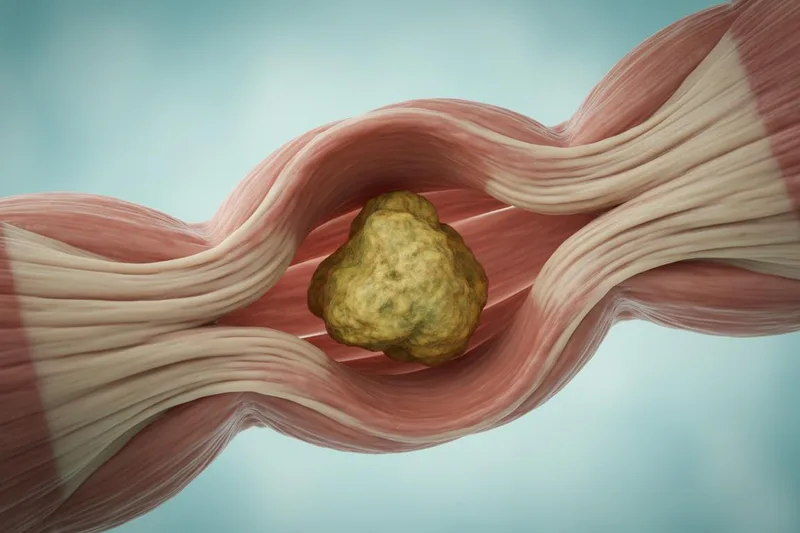
We eat food and drink water every day. But have you ever wondered how these foods and drinks, when we swallow them, go down our throats, travel a long way through the intestines, and finally exit the body as waste? Isn't it amazing? This whole process happens without us even realizing it, almost automatically. The reason for this is a special muscle movement that occurs along our digestive tract. That's what we call peristalsis . Today, we will talk about this in detail and simply.
What is this peristalsis?
Simply put, peristalsis is a spontaneous, involuntary muscle movement that occurs in our digestive system . Think about it, this process begins the moment you swallow food. It propels food and liquids from your throat, all the way through your gastrointestinal tract , all the way to your intestines, where waste is excreted.
You can imagine our digestive tract as a series of interconnected, hollow tubes. The tubes are lined with muscles and nerves. So, when food enters the digestive tract, the nervous system sends a signal to the muscles. That's when the muscles start to contract and relax in a wave-like manner . As the muscles continue to contract and relax, the food is pushed forward. It's like squeezing toothpaste from the bottom of a tube and the medicine comes out. The food that moves forward in this way is eventually excreted through the anus or through the urethra as waste.
What is the difference between peristalsis and segmentation?
Segmentation is another involuntary muscular movement in our digestive system. But unlike motility, segmentation occurs primarily in our intestines , not throughout the entire digestive tract. Segmentation involves the contraction of the circular muscles in the intestines, which move food back and forth. It's like washing clothes in a washing machine.
As the food moves around in this way, it is mixed well with gastric juices , breaking down larger pieces of food into smaller pieces, which aids in digestion. This fragmentation slows down the speed of the food moving through the intestines a bit. But don't worry, the motility continues to move the food forward.
Does peristalsis happen the other way around? – Reverse Peristalsis
Yes, sometimes these wave-like muscle contractions can go backwards instead of forwards. That's what we call retroperistalsis or reverse peristalsis . This is what happens when you vomit. The retroperistalsis can push food from your small intestine back into your stomach and out your mouth through your esophagus.
Also, if food normally travels through the digestive tract and encounters an obstruction , the food may move back a short distance and then try to move forward again.
What does this peristalsis do to our bodies?
In fact, motility is the very reason why the process of digestion happens . Without it, we wouldn't be able to eat, digest, and ultimately excrete waste. Imagine what would happen if that happened!
The slow, but continuous movement of the stomach gives our bodies time to break down food and absorb nutrients . It also helps to eliminate unwanted bacteria and waste products that accumulate in our digestive tract.
Important: If the rolling motion is not timed properly and occurs at the proper pace, meaning if it either increases in speed or decreases in speed, other digestive processes will also begin to be disrupted.
Where in the body does peristalsis occur?
The rolling motion occurs throughout our entire digestive tract. But it is especially active in the esophagus , the tube that carries food to the stomach when we swallow. When you swallow something, this process begins in the pharynx , the back of your throat, and pushes the food down into the esophagus.
There is a primary peristaltic wave in the esophagus, which starts when we swallow something. Sometimes, if a large piece of food gets stuck, this primary wave alone is not enough. At that time, a secondary peristaltic wave starts due to the stretching of the esophagus walls. If there is any problem with the peristaltic movement of the esophagus, difficulty swallowing (dysphagia) can occur.
After the esophagus, the rolling motion continues through the stomach and small and large intestines . However, in the intestines, this speed decreases slightly, because it needs to allow for the previously mentioned process of segmentation. During the segmentation, the rolling motion is what moves the bile produced by our gallbladder into the small intestine to help with digestion. Similarly, the urine produced by the kidneys is carried to the bladder with the help of this rolling motion.
At the end of the digestive process, urine is expelled through a twisting motion in the urethra, and feces are expelled through a twisting motion in the rectum and anus . Surprisingly, this twisting motion continues even when we are asleep, even on an empty stomach, removing any unwanted material left in the digestive tract.
How exactly does this peristalsis look?
The way the muscles work during the rolling motion is called a wave because the muscles are continuously contracting and relaxing in a regular pattern, pushing the food forward. Both the circular muscles that surround the tube in our digestive tract and the longitudinal muscles that run along the tube contribute to this. As the circular muscles contract and relax to push the food forward, the longitudinal muscles help to push the whole thing forward.
But this wave-like behavior is most common in the first part of the digestive tract. When the last part of the intestine, the part where the stool is expelled, is reached, the waste can be expelled by contracting the muscles several times.
What are the symptoms of peristalsis problems?
We also call motility disorders problems. Motility is the movement of food through our digestive tract. When there is a problem with motility, it usually means that the speed of food moving through the digestive tract is either increased (Hypermotility or Hyperperistalsis) or decreased (Hypomotility or Hypoperistalsis) .
- If the speed increases: Because food moves through the body too quickly, it doesn't have time to digest properly or absorb nutrients. This can lead to diarrhea and other digestive problems .
- If the speed slows down: Because food moves slowly, waste and bacteria are not removed in time. This can lead to conditions like constipation and bacterial overgrowth .
Movement disorders can cause a variety of symptoms. Some of them include:
- Constipation : Not being able to go to the toilet for several days.
- Diarrhea : Frequent loose stools.
- Gas and bloating.
- Abdominal pain .
- Abdominal distension .
- Bloated stomach : Feeling like your stomach is getting bigger after eating.
- Nausea and possibly vomiting.
- Regurgitation .
- Acid reflux : Like heartburn.
- Difficulty swallowing (Dysphagia) .
- Nutritional deficiencies : Because food is not absorbed properly by the body.
What are the causes of peristalsis problems?
Gastroesophageal reflux is a complex process involving muscles, nerves, and hormones . So, problems with this can be caused by either a problem with the muscles or a problem with the nervous system. These problems can occur anywhere along the digestive tract, or even along the entire digestive tract.
Certain medications, injuries, infections, diseases, hormonal changes, and electrolyte imbalances can affect the muscles or nerves involved in bowel movements. Sometimes, the cause is unknown (idiopathic) . Many gastrointestinal diseases are associated with bowel movements. However, sometimes, it is difficult to say for sure whether the disease is causing the bowel movements or whether the bowel movements are causing the disease.
Medications that can affect peristalsis
There are some medications that can reduce or increase the rolling motion.
- Opioid painkillers (e.g. tramadol, morphine).
- Anticholinergics (medicines used for conditions such as certain allergies and Parkinson's disease).
- Calcium channel blockers (some medications used for high blood pressure).
- Tricyclic antidepressants (some older medications used for depression).
Conditions that can affect peristalsis
- Local infection or inflammation .
- Surgery , especially abdominal surgery.
- Electrolyte deficiencies (e.g. low potassium).
- Thyroid disease .
- Neurological disorders (e.g. Parkinson's disease, neurological disorders).
- Nerve damage due to diabetes .
- Scleroderma and other connective tissue disorders .
- Intestinal ischemic syndrome (a condition in which the blood supply to the intestines is reduced).
- ``Chronic atrial and intestinal dysrhythmia (CAID)'' .
- Hirschsprung disease - This is a condition that most often affects young children and is caused by the nerve cells in the intestine not developing properly.
What other diseases can be caused by problems with peristalsis?
Spinal problems can cause or worsen the following conditions:
- `Achalasia` : A condition in which the muscles in the lower part of the esophagus do not relax properly, making it difficult for food to pass into the stomach.
- `Intestinal pseudo-obstruction` : A condition in which symptoms (bloating, pain, vomiting) appear as if there is an obstruction in the intestine, without there actually being an obstruction.
- Gastroparesis : A condition in which the stomach muscles are weak and food empties very slowly from the stomach.
- Esophageal spasms : A condition in which the muscles in the esophagus suddenly tighten, causing chest pain or difficulty swallowing.
- `Irritable bowel syndrome (IBS):` A condition in which symptoms such as constipation, diarrhea, and abdominal pain alternate due to increased sensitivity of the intestines.
- `GERD (Gastroesophageal Reflux Disease)` : A disease that causes chest inflammation due to frequent reflux of stomach acid into the esophagus.
- Paralytic ileus : Temporary cessation of intestinal movement after surgery or for other reasons.
How are these peristalsis problems treated?
Erectile dysfunction is a bit of a complicated issue . So, to treat it properly, you first need to understand what's causing it. Sometimes, you can fix the problem by changing the medication you take or making some changes to your diet.
But problems with the nervous system can be a little more complicated. Mental/emotional factors , hormones, and body fluids can all play a role, so it can take a bit of trial and error to figure out what's causing the problem. Sometimes, the cause of the rolling motion problem may be a larger, underlying medical condition. In that case, the underlying condition needs to be treated.
What are the medications used for motility disorders?
Depending on your condition, your doctor may suggest the following medications:
- Parasympathomimetic drugs : These work by stimulating the parasympathetic nervous system and increasing the movement of the digestive tract.
- Prokinetic agents : These medications stimulate the movement of the digestive tract, which has slowed down.
- Antidiarrheals : Medicines given to control diarrhea if there is diarrhea.
How do we maintain healthy peristalsis?
Under normal circumstances, you can maintain a healthy metabolism by following a few simple, healthy lifestyle habits .
- Get some exercise : Exercising for at least 30 minutes a day helps regulate digestion and bowel movements.
- Drink plenty of water : Drinking at least 8 glasses of water a day helps food move easily through the digestive tract.
- Eat foods with fiber : The fiber in whole grains, fruits, and vegetables adds bulk to stools and stimulates bowel movements.
- Reduce artificial and high-fat foods : These types of processed foods slow down digestion.
Finally, the most important things for you to remember
Propulsion is a process that happens automatically in our bodies every day, without us even thinking about it, and we rely on it. But what if it's not working properly?
You can try making some simple changes to your lifestyle first. Think about what medications you take and whether they have any side effects that affect bowel movements. If these things don't help, definitely see a gastroenterologist .
There can be many reasons for problems with the rotation of the spine. However, medical tests and expert advice will help you find the root cause of this problem and get the right treatment. So, if you have symptoms like these, it is best to seek medical advice rather than ignoring them.
` Peristalsis, digestion, intestines, constipation, diarrhea, alimentary canal


💬 Comments (0)
No comments yet. Be the first to share your thoughts here.
Add Your Comment